The Alex Pretti Shooting: It’s Black and White

The black and white narratives could not be more divergent


I am reeling in sadness today, and I realize my sadness is multi-layered. The shooting and death of Alex Pretti on the cold streets of Minneapolis yesterday is tragic, regardless of the narrative anyone believes about it. The narratives we believe also expose the polarization in the United States of America and, more specifically, the dark and tragic reality of the polarization in the body of Christ in this country.

Yesterday, as I read how believers from other countries are responding to the killing of Alex Pretti by ICE agents in Minnesota, I was struck by how united they were in their narrative of what happened – unlike believers in our country at the moment.

The narratives we are telling are wildly divergent, despite many videos from different angles. The narratives people began to tell immediately after live coverage was shared to a watching world diverged as dramatically as black and white, and people have planted Christian flags on both sides.

The President and the Department of Justice issued public judgments while the crime tape was still being stretched out to mark the area for investigation. Alex Pretti is a domestic terrorist, they said. He had a gun and intended to commit mass murder. He was at fault for opposing the efforts of ICE to carry out their duties. It was a tragedy that he he is dead but it was ultimately his fault for being there, getting in the way, and carrying a gun (which is ironic in itself).

At the same time, people immediately accusing ICE agents of cold-blooded murder while the blood still oozed out of Pretti’s lifeless body in the frigid street. Alex Pretti was an ICU nurse, they said. He was a great guy who cared for people. He had a conceal license protected by the 2nd Amendment. He stepped in to help a woman, and his hands were not on his gun. ICE, the President, and the DOJ are at fault for unjustly, mercilessly, and wantonly killing him for expressing his First Amendment rights.

I realize that people rush to judgment on these things because of their biases, including me. We have all seen the same videos, and we have reached opposite conclusions in keeping with our own beliefs and narratives. If you disagree with me on everything else, I hope you have the integrity and honesty to admit this much.

Christians who focus on Romans 13, law and order, the culture war, and support the President and governing authorities come down on the side of the administration’s narrative about what happened. Christians focused on the Biblical theme of justice for the poor and needy, not oppressing the foreigner, loving your neighbor, and caring for the least, come down on the side of the opposite narrative.

The facts are the same. We all saw the same videos. They differences lie in the the way we view the world and the basic assumptions that inform our worldviews.

But, how can that be? Shouldn’t Christians be unified in Christ? Don’t we all believe that Jesus is God, the second person of the Trinity, the Word of God through whom all things were made who gave up his life on the cross to save sinners from their sin and death and rose again to give us hope for our own salvation? Why aren’t we all unified in our “biases” over this incident?

As Christians, we have sung, “They will know us by our love.” We have read the words of Jesus, who said, “The world will know us by the love we have for one another.” We have read that “God so loved the world that he gave his only begotten Son, that whosoever believeth in him should not perish, but have everlasting life..” We follow a crucified savior who gave up his life because he loved us. We have all received by faith the righteousness extended to us by the grace of God, not because we earned it, but despite the fact that we didn’t.

Yet, we are divided by the narratives we have embraced as we watch the same videos and reach exactly opposite conclusions.

This troubles me, and it should trouble you if you are also a believer. Not necessarily because I think I am right or you think I am wrong about the narrative, but because it reveals that Christians, who claim to have a special hold on truth given by divine revelation from God with the guidance of the Holy Spirit, are no different than anyone else in the world. Our unity in Christ doesn’t seem to matter. It doesn’t even seem to exist.

Continue reading “The Alex Pretti Shooting: It’s Black and White”

Trust for Those Who Would Judge the World?

Living out our trust in God by waiting on Him


Do you trust God? Do you have faith? Those aren’t trite questions, and they don’t discount the desperation behind those who cry out to God for justice, for righteousness, for real change in the world and in our own circumstances.

Where is the justice in this world? The writer of Ecclesiastes looked for justice and observed, “In the place of justice – wickedness was there!” (Ecc. 3:16) I have seen injustice in the American court system myself. I see injustice every day in the news. Just today, I met with people who have suffered great injustice in the local legal aid clinic I run.

The injustice in this world is undeniable, and it can be utterly crushing for those on the wrong side of injustice. In truth, we have all been on the wrong side of injustice at times in our lives, big or small. Truly, the writer of Ecclesiastes was accurate when he said:

I saw the tears of the oppressed—
    and they have no comforter;
power was on the side of their oppressors—
    and they have no comforter.

(Ecclesiastes 4:1) Injustice feeds injustice in a seemingly never-ending cycle. (Think about the Hatfields and the McCoys or the Palestinians and the Israelis.)

In our human minds, we imagine that injustice must be met immediately with action and force. Justice cries out for redress. We lament when justice does not come. We pray and cry out to God. When justice does not come for us, we might even be tempted to believe that God does not care or worse – the God does not exist.

The questions I pose, therefore, are not glib or lightly asked: Do you trust God? Do you believe?

When we are tempted to take judgment into their own hands, we fail to trust God if we act on that temptation. We become judge and jury. We usurp God’s justice in the process. (Vengeance is mine sayeth the Lord.) And, when become the judge and executioner, we make a mess of it in the process. We warp God’s justice to our conceptions of justice.

“Justice is not God wielding ‘the stick.’ It’s His desire to restore, redeem, reconcile, and mend all that’s broken in the world.” Chris Gresham-Britt

When the world talks about justice, the focus is on punishment. We don’t realize it as Christians that our view of justice is often more colored by the world than by God. Worldly justice is punitive.

If we are going to trust and believe God, we accept what the prophet says: that God desires mercy, not sacrifice. (Hosea 6:6) God desires to save and not to judge. That is why God sent His only Son into the world: not to condemn the world, but to save the world. (John 3:17)

God’s goal is redemption and destruction. God is just, but justice seems to be lacking in the world. Why? Peter says, we need to trust and be patient, as God us patient with us:

“[T]he Lord is not slow in keeping his promise, as some understand slowness. Instead he is patient with you, not wanting anyone to perish, but everyone to come to repentance.” (2 Peter 3:9)

God is waiting (longing) to have mercy on us! (Psalm 30:18) “[God takes] no pleasure in the death of the wicked, but rather that they turn from their ways and live.” (Ezekiel 33:11)

So, God waits patiently, withholding His judgment – withholding ultimate justice. He does this because He desires that none would perish, that all would turn to him and be saved. He waits to be gracious to us.

But we are impatient. We don’t want to wait. We want everything to be made right immediately, especially the injustices done to us, the people like us, and the people we know. “With the Lord a day is like a thousand years, and a thousand years are like a day” (2 Peter 3:8), but a day seems like a thousand years to us when are suffering or see suffering.

We cannot imagine the delicate and complex balance of God’s patience in waiting for people to come to repentance so that He can have mercy and the judgment that He will inevitably allow to be imposed on those who refuse to turn and repent. All the while, God hears the outcries of people suffering the injustices of their own folly and wickedness and the folly and wickedness of others – sowing the wind and reaping the whirlwind.

But, we do not see as God sees, and we do not know as God knows. Judgment is God’s business. It is not our business to judge the world. (1 Corinthians 5:12) That is where real faith comes – to leave the judging to God and to love the world as God loves the world, which is His instruction to us.

The whole law is summarized in two principles: love God, and love your neighbor. (Matthew 22:37-40; Romans 13:8-10; Galatians 5:14) That’s it. Just do it.

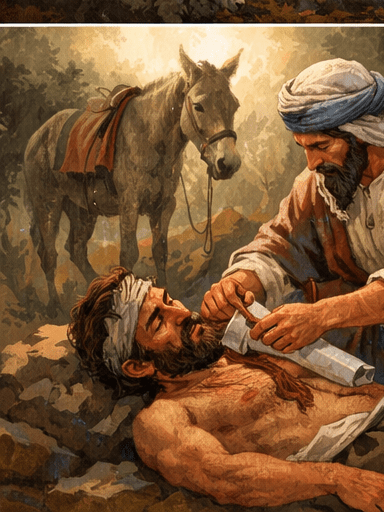
If you see a hurting neighbor, don’t judge; just help. Like the Good Samaritan, cross the road (go out of you way) to help your neighbor. Bear one another’s burdens. By doing these things, you will fulfill the law of love. (Romans 13:8-10)

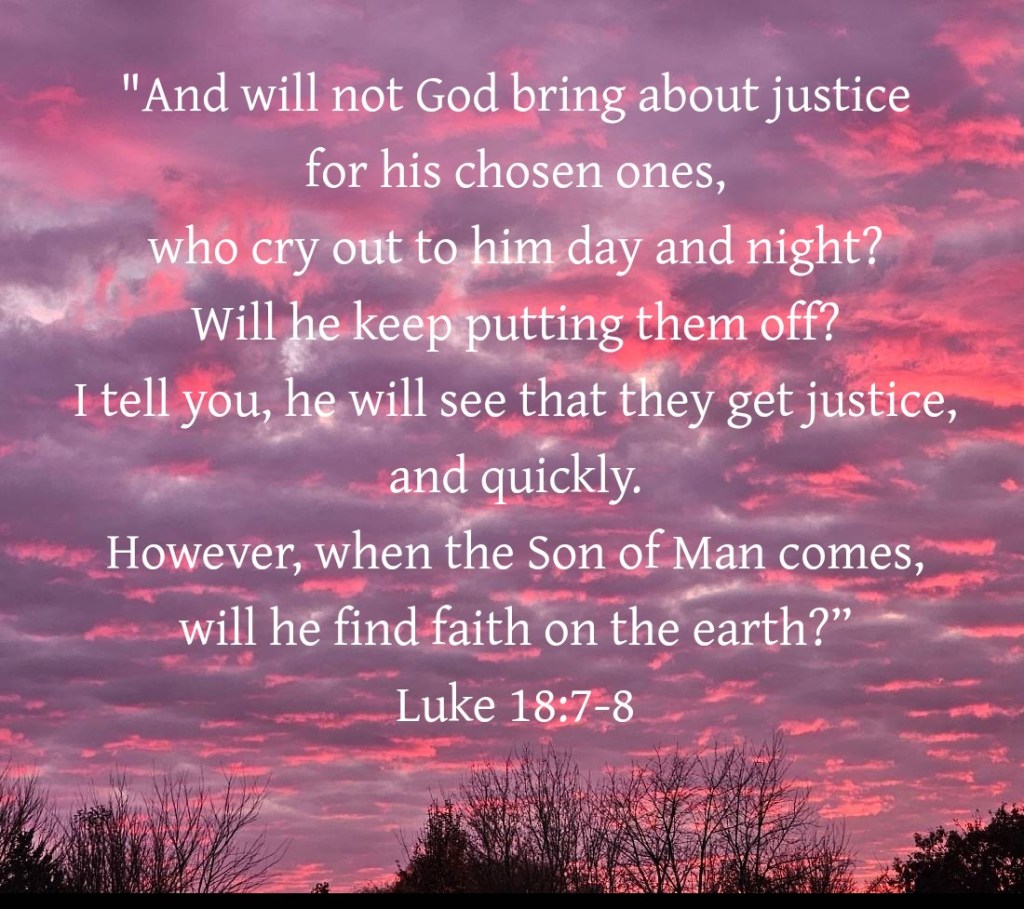
In the end, justice will come quickly, but will God find faith on earth?

Do you trust God? Show it by loving others and leave the judgment to God. Do you have faith that God will bring justice? God’s justice is always colored by his desire to be gracious and compassionate. Be a vessel of God’s justice that is tempered by mercy and love, and love your neighbor.

Did Jesus So Judge the World that He Came into the World to Condemn It?

When Jesus called us to follow him, he called us to adopt his posture toward the world.


I am writing today about something I have written before, but I think it bears repeating. I have not stopped thinking about it since these words from Paul virtually leapt off the page when I read them a few years ago:

What business is it of mine to judge those outside the church? Are you not to judge those inside? God will judge those outside.”

1 Corinthians 5:12-13 (emphasis added)

How many times had I glossed over those words without really seeing them? Did he really mean that? We are not to judge people outside the church? Isn’t that exactly what we do?

I have kept going back to Paul’s admonition often since that day. I didn’t see it right away, but I eventually noticed that Paul echoed the very words of Jesus in that statement: Jesus said,

“If anyone hears my words but does not keep them, I do not judge that person. For I did not come to judge the world, but to save the world. There is a judge for the one who rejects me and does not accept my words; the very words I have spoken will condemn them at the last day.”

JOhn 12:47-48 (emphasis added)

Elsewhere, Jesus said, “God did not send his Son into the world to condemn the world, but to save the world through him.” (John 3:17)

If Jesus bids us to follow him, should we not adopt the same posture toward the world? It is the same posture Paul admonished the Corinthians to model toward those outside the Church: Do not judge them because they have a judge! (And it isn’t us!)

Paul

1 Corinthians 5:12-13

What business is it of mine to judge those outside the church?

God will judge those outside

Jesus

John 12:47-48

I have not come to judge the world.

There is a judge for the one who rejects me.

When adopt the posture Jesus had toward the world and the posture Paul tells the church to adopt, we are freed up from the responsibility to judge so that we can love. Even if the world goes its own way, which it will, we can love the world. Even if the world hates us, we can still love the world.

We are free to preach good news to the poor, to give sight to the blind, to set the oppressed free, and to proclaim the favor of God to all who will receive Him. This was how Jesus characterized what he came to do when he read from the Isaiah scroll in his hometown synagogue, sat down, and said, “Today this scripture is fulfilled in your hearing.” (Luke 4: 21) This is our ministry also, if we will follow him.

We don’t have to be in the business of judging the world because the world has a Judge. We can leave that to God. In fact, it isn’t an option. It is God’s rightful place to judge, and it isn’t our place.

That means it isn’t up to us to make the world conform to the law of God. We are not responsible to require godly behavior and biblical morality from the world, and it isn’t our business to do that.

Rather, we are to love the world, though people in the world are yet sinners. We can do that because Jesus loved us and died for us while we were yet sinners.

“Are you not to judge those inside?” says Paul. The world has not subscribed to Jesus, but we have. Judgment begins in the house of God because Jesus counts on us to be the light and salt of the world. If we lose our flavor, we cannot be who God calls us to be.

Who among us were able to conform to the Law before Jesus? None of us! Which is why we needed him. We are saved by grace through faith, and not by anything we could do. The world, likewise, cannot conform to God’s law apart from Jesus. This is why the world needs a Savior: because it has a Judge.

Why, then, would we try to impose godly behavior and biblical morality on the world through human, legal means when the world is incapable of conforming to God’s law apart from Jesus?

Jesus sends us into the world as his ambassadors just as he came into the world: not to judge the world, because the world already has a judge. He sends us out as ambassadors not to condemn the world, but but to save it.

If we can adopt this posture toward the world that Jesus adopted and that Paul admonished, we can be unified in that purpose and calling of Jesus even in our own differences about how the world ought to operate. We can love each other as fellow ambassadors of Christ and give each other grace in the areas in which we disagree.

Our primary focus should be the purpose and focus of Jesus – not to condemn the world, but to save it by proclaiming good news to the poor, sight for the blind, freedom for the oppressed, and the favor of God’s love toward all who will receive Him. Everything else fades in light of that purpose and calling.

Jesus said, the world will know us by our love for each other. (John 13:35) Let us so live, then, that the world knows us for our love for one another and our love for the world that Jesus loved!

Who Are the “Least of These?”

Jesus considers “the least of these” his brothers and sisters

Have you ever noticed the odd qualification in the key statement of the Parable of the Sheep and the Goats: [W]hatever you did for one of the least of these brothers and sisters of mine, you did for me.” (Matthew 25:40)(NIV) Why did Jesus qualify “the least of these” with the phrase, “brothers and sisters of mine?”

I came at the same topic from a different angle in Who are Christians to love? I raised the question, then, whether “brothers and sisters of mine” limits the people we are to care for – limiting them to brothers and sisters of Jesus. What does that phrase mean in the context of the parable of the Sheep and the Goats?

Elsewhere, Jesus tells his disciples that the world will know they are his followers by the love they have for one another. (John 13:35) When Jesus learns from someone in a crowd that his mother and brothers are looking for him, Jesus says, “[W]hoever does the will of my Father in heaven is my brother and sister and mother.” (Matthew 12:50)

These verses in other contexts have prompted some scholars to conclude that we are only called to love fellow believers. They conclude that only the care we show for fellow believers who are hungry, thirsty, naked, a stranger, or a prisoner is showing care for Jesus in the Parable of the Sheep and the Goats. Some even narrow the focus further, taking the position that Jesus was only referring to his disciples (with whom he shared the parable).

This, however, is a minority view. Most of the early church fathers and theologians do not hold that view because of the many Bible passages that instruct us to love our neighbors and even our enemies. The Parable of the Good Samaritan makes this point rather clearly, as I show in the blog article linked in the opening paragraph.

In another article, I tackled the question, Why does Jesus repeatedly prioritize Christians loving one another? It seems that Jesus does prioritize our love for fellow believers. Paul also prioritizes Christian love for fellow believers when he says, “[A]s we have opportunity, let us do good to everyone, and especially to those who are of the household of faith.” (Galatians 6:10)

I note in the previous article that Jesus emphasized loving each other as he was preparing his disciples for the imminent reality of his death. In that context, he was encouraging them to stick together and to love each other. The context matters.

In other contexts, Jesus told his followers to love their neighbors and their enemies. Thus, Christian love is not exclusive to loving Christians.

Yet, Jesus does seem to prioritize love for fellow followers of Christ at some points.

Perhaps, Jesus was letting his followers (and us) know that we need to love each other, first, before we can love our neighbors (and then our enemies). If we cannot even love those who love us and think like us, how can we love our neighbors – and how in the world can we love our enemies?

I encourage you to read the previous two blog articles if you want a more compete analysis on the subject. In this blog article, I want to explore the majority way of reading “whatever you did for one of the least of these brothers and sisters of mine, you did for me.” (Matthew 25:40)

Continue reading “Who Are the “Least of These?””

Why Does Jesus Repeatedly Prioritize Christians Loving One Another?

Loving each other, our neighbors, and even our enemies


Jesus shocked his followers one day with the Parable of the Sheep and the Goats in which Jesus likened the love and care we show to people in need – the hungry, the thirsty, the stranger, the people lacking clothes, the sick, and the prisoner – to showing love and care for him. Jesus said, “[W]hatever you did for one of the least of these brothers and sisters of mine, you did for me.” (Matthew 25:40)(NIV)

Until recently, I had glossed over the qualifier to this statement: Whatever you did for one of the least of these brothers and sisters of mine, you did for me. When someone pointed out to me that the statement is qualified, it nagged at me.

What did Jesus mean when he said “these brothers and sisters of mine”? Did he mean only his biological family? Did he mean his followers? Or did he mean something else?

In another passage while Jesus was talking to a crowd, someone told him his mother and brothers were outside wanting to speak with him. He responded by pointing to his disciples, saying, “Here are my mother and my brothers. For whoever does the will of my Father in heaven is my brother and sister and mother.” (Matthew 12:49-50)

Does this mean that we only apply the Parable of the Sheep and the Goats to followers of Christ who are hungry, thirsty, in need of clothing, strangers, sick, and imprisoned? Does it mean that we have no divine obligation to love and care for other people (even in our own family)?

Along the same line, I previously noticed that Jesus qualified his prediction that the world would know his followers by their love. He said, “By this everyone will know that you are my disciples, if you love one another.” (John 13:35) That qualifier has nagged me for sometime, and for the same reasons as the qualifier in Matthew 25 was now nagging me. I knew I needed to dig into this and develop a better understanding of what Jesus is saying in these passages.

After meditating on these things and considering other Bible passages, I worked out my analysis in Who Are Christians to Love? Matthew 25 and John 13. I determined that we need to understand the bigger picture, and we need to understand context.

Many passages exist throughout Scripture from the Old Testament through the New Testament that convey God’s intention that we love all people. The Bible is rich with passages clearly and emphatically stating that we should love all people, just as God loves all people.

The second greatest commandment – to love your neighbor as you love yourself – is not qualified. The Parable of the Good Samaritan makes clear that our neighbors include people regardless of their ethnic, national, and religious identity – even people we are strongly tempted to despise.

Jesus eliminated all guesswork when he told us that loving our neighbors extends even to our enemies. The example Jesus gives is that God causes sun to shine on the good and the evil and rain to fall for the benefit of the righteous and the unrighteous. (Matthew 5:44-45) God doesn’t withhold good things like sun and rain from the evil and the unrighteous, and neither should we. We are to be like Him in showing basic love and care for all people.

Jesus added that even pagans love those who love them. We would be no different than a pagan if all we did was to love those who love us back. (Matthew 5:43-48) Rather, we are to “be perfect as God is perfect” and love all people like God loves people, the good and the evil, the righteous and the unrighteous.

When Jesus healed the sick, drove out demons, gave sight to the blind, and showed compassion to people, he did not distinguish between Jews and Gentiles or believers and unbelievers. Of the ten lepers that he healed, only one of them came back to thank him and give glory to God (Luke 17:11-19), but He healed them all anyway.

When Jesus announced his ministry in his hometown synagogue he recalled two stories that triggered the people to want to kill him. These stories demonstrate how God loves not just the Jews (and how the Jews had a hard time accepting that reality). These are the words that provoked his hometown people to want to kill him:

“I assure you that there were many widows in Israel in Elijah’s time, when the sky was shut for three and a half years and there was a severe famine throughout the land. Yet Elijah was not sent to any of them, but to a widow in Zarephath in the region of Sidon. And there were many in Israel with leprosy in the time of Elisha the prophet, yet not one of them was cleansed—only Naaman the Syrian.”

Luke 4:25-27

The Sidonians were Phoenicians, descendants of the Canaanites who constantly battled the Jews, and Sidon was the hometown of Jezebel, the foreign queen who led King Ahab and the nation of Israel astray. Naaman was a Syrian General who had attacked the Israelites. He was a foreigner, an outsider, from Samaria, which was despised by the Jews Jesus spoke to. Jesus was conveying to his people that he came not just for them; he came even for their enemies.

Just as the people in that synagogue, we struggle to love people we despise. We struggle to love people who have wronged us and don’t believe as we do. We struggle to love people who do not believe as we do. Frankly, we difficult actually loving people in the family of God, too.

The difficulty we have in loving people, even fellow believers, does not excuse us from taking the commandments Jesus gave us to heart. The greatest commandment – to love God – is ultimately inextricably intertwined with the second greatest commandment – to love our neighbors as ourselves. John makes this clear:

“For whoever does not love their brother and sister, whom they have seen, cannot love God, whom they have not seen. And he has given us this command: Anyone who loves God must also love their brother and sister.”

1 John 4:20-21

There is that qualifier again – brother and sister. But, we know from other passages of Scripture that the divine obligation to love extends beyond our spiritual family to our neighbors and to our enemies also. Why, then, do those pesky qualifiers keep appearing? I have some thoughts that I will share.


Continue reading “Why Does Jesus Repeatedly Prioritize Christians Loving One Another?”