
The Book of Jonah is an important story, but not for its historical significance. Whether the story is historical fact is not what’s important. If that is our only focus as we read and think about Jonah, we are missing the point.
Jonah is the story of a reluctant prophet. When God commands him to go to the wicked City of Nineveh and warn them to repent to avoid judgment, Jonah heads the opposite direction by ship. God stirs up a great storm, and Jonah is swallowed by a whale. After three days, Jonah prays and submits to God, and the whale vomits him up on the shoreline.
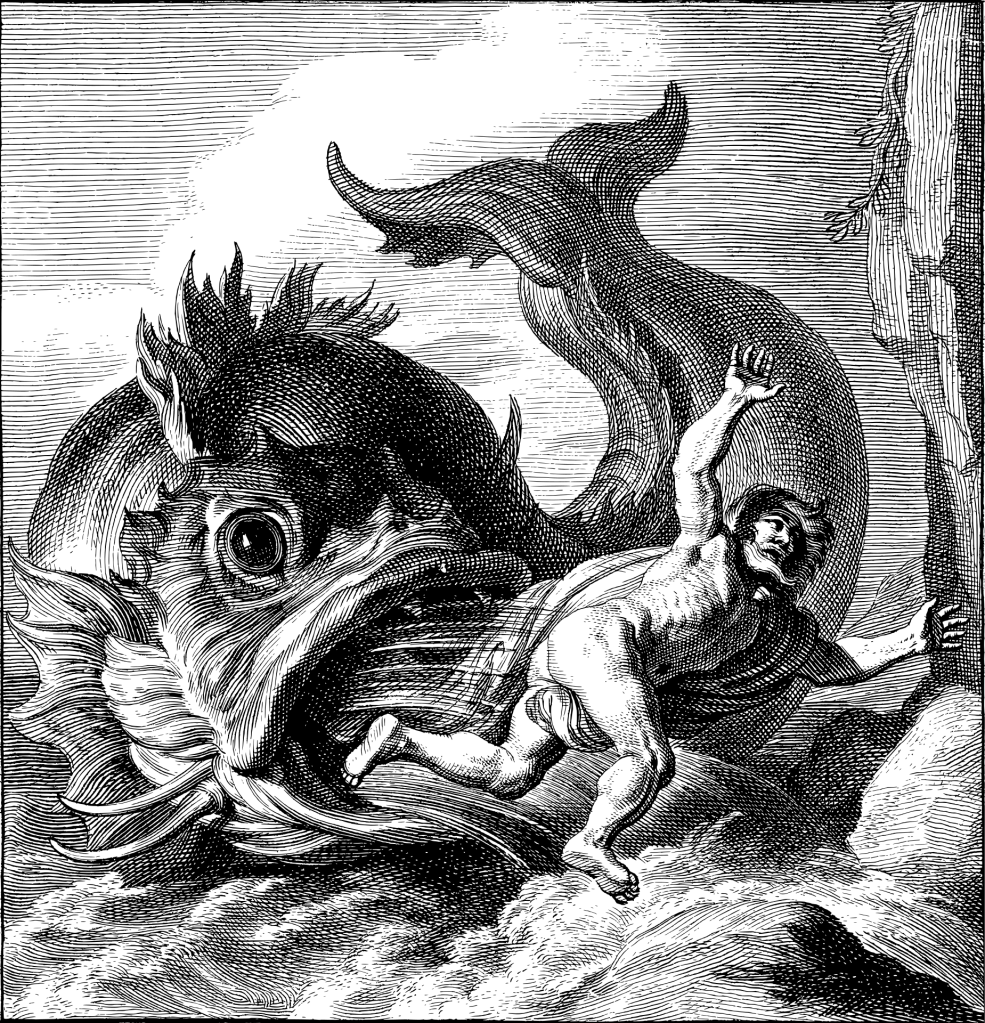
Unable to run from God’s command, Jonah heads off to Nineveh where he delivers the warning. The wicked people of Nineveh repent, and God relents from the judgment He planned, but God’s mercy on Nineveh causes Jonah to be bitterly disappointed and angry.
Jonah was disappointed because Jonah wanted what Jonah wanted. He didn’t want what God desired. He was focused on what he thought should happen. He thought Nineveh should pay the price for its wickedness, but God had different plans.
God was patient with him and went to great lengths to show Jonah His heart for a people Jonah despised. We might credit Jonah for his (reluctant) obedience, but Jonah doesn’t understand God’s sovereignty, mercy, and compassion, even at the end.
God’s determination to spare the people of Nineveh “seemed very wrong” to him, “and he became angry.” (Jonah 4:1) If it were up to Jonah, the people of Nineveh would have been destroyed like Sodom and Gomorrah. Jonah identified with God’s judgment, but he didn’t understand God’s compassion.
Jonah reminds me of Elijah, who was known for his boundless faith in (and preoccupation with) God’s power. Elijah is known for calling down fire to consume a sacrificial bull that he soaked with water, showing up the false profits who could not get their gods to consume a dry sacrifice. When Elijah exposed them for the false prophets they were, he agitated the crowd to march the false prophets down the mountain where Elijah slaughtered them.
I imagine Elijah and Jonah would have gotten along well…. Or maybe not. Though they are much alike, Elijah was a loner, and perhaps Jonah was also. Elijah complained that he was the last of God’s prophets, though 100 of God’s prophets remained in the land. Perhaps, Elijah thought he was too good for them.
Jonah and Elijah wanted to see God’s judgment. They wanted the people to burn for their wickedness. They were personally affronted when God showed patience and reluctance to rain judgment down on the people who deserved it.
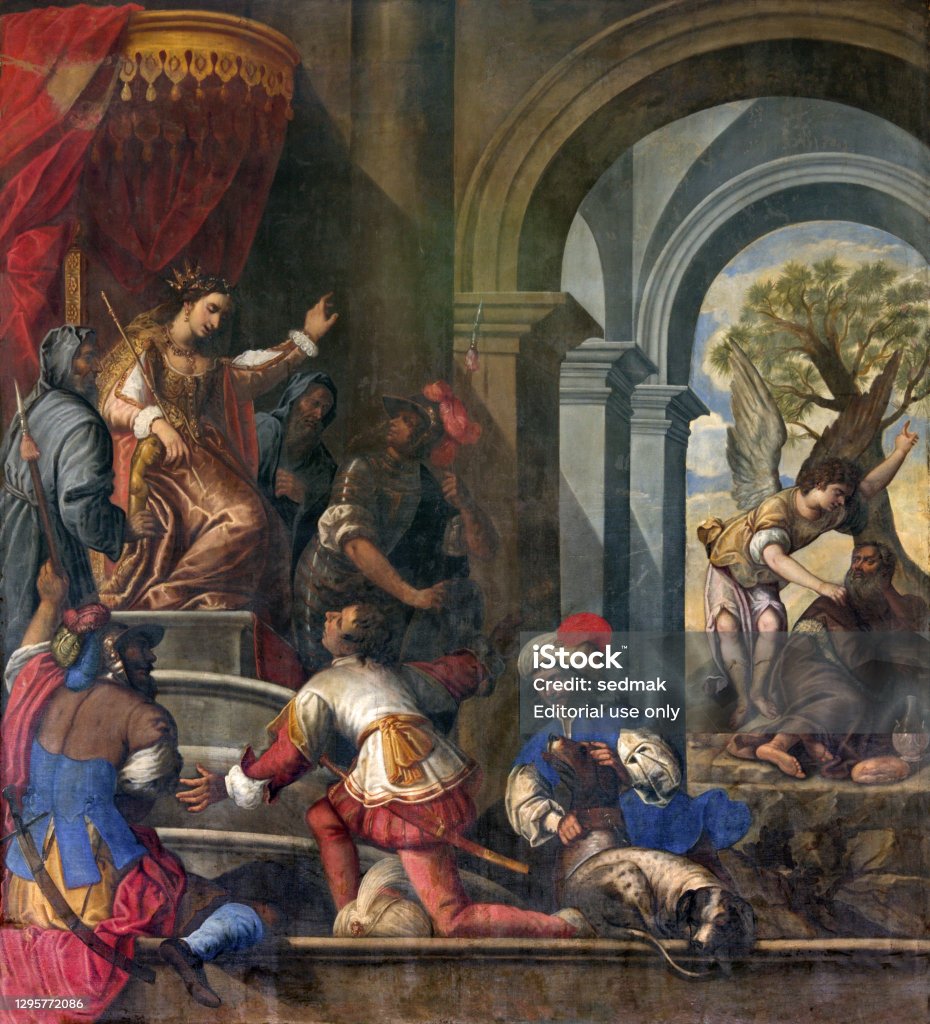
Despite the awesome display of God’s awesome power summoned by Elijah’s undaunting faith before King Ahab and his prophets, the wicked Queen, Jezebel, was not moved. She ordered Elijah to be arrested and killed on sight.
When Elijah heard her decree, he fled into the desert, where he sat down under a broom tree in bitter disappointment and anger at the way things turned out.
Couldn’t Elijah call fire down on Ahab and Jezebel? Why didn’t he do it? Elijah had just slaughtered all the King’s prophets after showing them up with fire from the heavens. When Jezebel wasn’t phased, Elijah fled in fear.
Elijah may have run in a moment of fear, but his fear turned to anger and disappointment, like Jonah. Both of them ended up under a tree that provided them shade. God ministered to both of them in their dejected state.
Elijah kept going south, all the way to the mountain where God met Moses on the Sinai Peninsula. In the cave where he took shelter, God came to him, asking, “Elijah, why are you here?” Then, Elijah let God have the full weight of his disappointment and anger:
“I have been most zealous for the Lord, the God of hosts, but the Israelites have forsaken your covenant. They have destroyed your altars and murdered your prophets by the sword. I alone remain, and they seek to take my life.”
1 Kings 19:10
But, God was patient. He told Elijah to stand at the mouth of the cave so the Lord can “pass by”. “A strong and violent wind rending the mountains and crushing rocks” came, but the Lord wasn’t in the wind. Then an earthquake came, but the Lord wasn’t in the earthquake. After the earthquake, came a fire, but the Lord wasn’t in the fire. (1 Kings 19:11-12)
Finally, “a light silent sound” came, and the Lord said to Elijah, again, “Why are you here?” God was not in the mighty displays of wind, earthquake, and fire. God was in a still, small voice.
Yet still, Elijah was fixated on his own disappointment and anger and responded exactly as he did before:
“I have been most zealous for the Lord, the God of hosts, but the Israelites have forsaken your covenant. They have destroyed your altars and murdered your prophets by the sword. I alone remain, and they seek to take my life.”
1 Kings 19:14
Elijah’s disappointment, anger, and indignation turned toward God. “They destroyed your alters and murdered your prophets!” Elijah said. It’s everyone’s fault but his. It’s ultimately God’s fault, right? Because Elijah knew what God could do. God could have destroyed Ahab and Jezebel in a ball of fire, but He didn’t.
In similar fashion, God asked Jonah twice, “Why are you angry?” (Jonah 4:1 and 4:9) Twice Jonah responds exactly the same way: “It is better for me to die!” (Jonah 4:3 and 4:8) It’s the same pattern for Elijah and Jonah.
At the end of Jonah, God asks the rhetorical question, “Should I not have concern for the great city of Nineveh?” But, Jonah doesn’t respond. (Jonah 4:10) Jonah didn’t want God’s compassion for Nineveh. He wanted them to burn.
We don’t know what became of Jonah, but we do learn the rest of the story of Elijah. God sends him back to Damascus to anoint a new King and pass his prophetic torch to Elisha. (1 Kings 19:15-18) When Elijah pronounced God’s judgment on the wicked King Ahab, the King humbled himself and repented, and God spared him (just like Nineveh). (1 Kings 21:27-29)
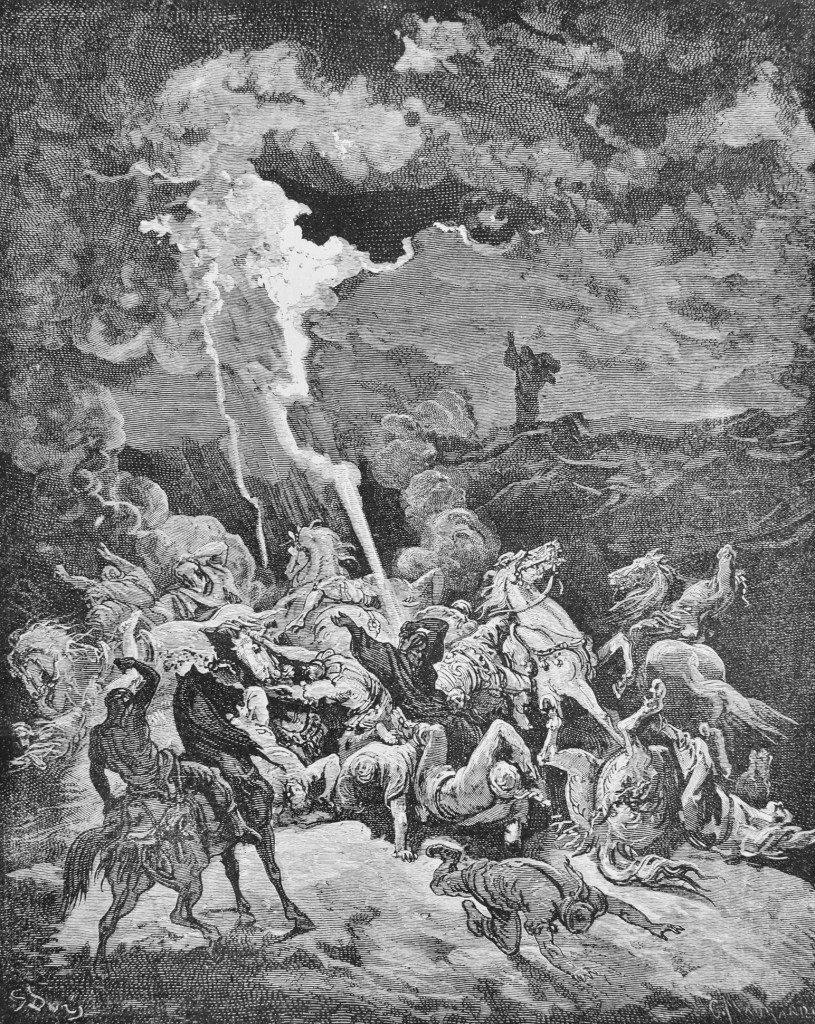
Eventually, Ahab’s son, Ahaziah, took over, and Elijah continued with his righteous taunts. Ahaziah sent fifty men to summon Elijah before him, and Elijah called down fire to destroy them. (2 Kings 1:10) Ahaziah sent another company of fifty men to summon Elijah, and Elijah called down fire again to destroy them. “(2 Kings 1:12)
Elijah is the prophet who called down fire. He was a man of great faith. He had great confidence in God. He was a firebrand, himself, in his sense of God’s righteousness and communication of God’s righteousness to the false prophets, the unrighteous and wicked leaders of his time, and even on the remnant of God’s prophets who escaped the sword only hid away in a cave.
Jonah had similar confidence in God. After the people of Nineveh repented and God relented, Jonah said, “I knew it! That’s what I said! That’s why I went the other way, because they don’t deserve it! Just take my life.” (Jonah 4:2-3)(my paraphrase)
Jonah and Elijah are held out in the Bible as God’s prophets and men of great faith, but they are flawed. They are self-righteous. They have a hard edge. The desire judgment, and they don’t love as God loves.
Their disappointment and anger stems from their desire to see the wicked people destroyed. God’s desire is ever to save, to have compassion, and for people to repent so God can show mercy. God’s great desire is not to judge, but to be gracious:
Truly, the Lord is waiting to be gracious to you,
truly, he shall rise to show you mercy;
For the Lord is a God of justice:
happy are all who wait for him!
(Isaiah 30:18) God’s justice is ultimately to be gracious and to show mercy. Justice and mercy are not divorced from each other; they are intertwined. His judgment is meant to bring us to repentance so that He can have mercy on us.
When we have our act together and have great faith, our temptation is to desire judgment for its own sake, but God is not like that. Jesus, who was the exact representation of God in the flesh, shows us God’s heart when his disciples returned from traveling the countryside to tell people about the kingdom. The disciples wanted to call down fire on the people who rejected them and refused to welcome them, and Jesus rebuked them.
When we find ourselves disappointed and angry at a world full of sinners who deserve judgment, we need to think of Elijah and Jonah and the counterexample of God in dealing with Nineveh and Jesus in rebuking the disciples. God is “merciful and gracious, slow to anger, and abounding in steadfast love.” (Exodus 34:6-7) God takes no pleasure in the death of the wicked. (Ezekiel 18:23 and 33:11)
We can laud Elijah and even Jonah for their faith and (ultimately) their obedience, but we need to recognize that they didn’t understand God’s heart of compassion for people. They didn’t understand God’s desire for mercy and grace. God ultimately wants more than our raw belief and cold obedience; He desires “mercy, not sacrifice.” (Hosea 6:6 and Matthew 9:13)
God wants out hearts, and He wants us to see the world as He sees it. He wants us to love even our enemies (the wicked) and to sacrifice ourselves for the good of others as He sacrificed Himself for us in Christ. Thus, Jesus emphasized forgiving as we have been forgiven and showing mercy as God has shown mercy to us:
“Judgment without mercy will be shown to anyone who has not been merciful. Mercy triumphs over judgment.”
(James 2:13) When we are tempted to be judgmental and righteous, we need to remember that God has been gracious to us, and He desires – above all – to be gracious to the world. When we are bitter and angry at the sin in the world, we need to remember that Jesus came into the world not to condemn it, but to save it, just he saved us.






 Navigating by Faith