Vengeance is Mine, Sayeth Donald Trump?

“‘It is mine to avenge; I will repay,’ says the Lord.'”


I try not to be too political, and I try pretty hard to stay out of the public political fray. I am convinced that Christians should be very circumspect about politics. We are citizens of the kingdom of God, first and foremost, and we owe our ultimate personal allegiance only to the King of all Kings.

I am also mindful of the tradition of the prophets. They stood as God’s mouthpieces to God’s people and to the priests and kings who lead them. While they didn’t hold back in pronouncing God’s judgments and warnings on surrounding nations, they directed most of their attention to God’s people, the nations of Israel and Judah.

I also have to note that the nations of Israel and Judah are unique in the history of God and man. The United States of America is not a nation of God’s chosen people like the nations of Israel and Judah were.

(The current state of Israel isn’t either! See the responses of Hank Hanegraaff, the Bible Answer Man, to a pointed questions put to him about the status of nation of Israel today in the postscript to this blog article.)

There is much I could say about these things, but I want to get to my topic today. God’s prophetic voice is most prominently focused on His own people, wherever they are situated. Thus, Jesus often confronted the religious leaders of his day – the Pharisees and Sadducees – though he hardly said a word about the Romans who were the governing authorities in Judea.

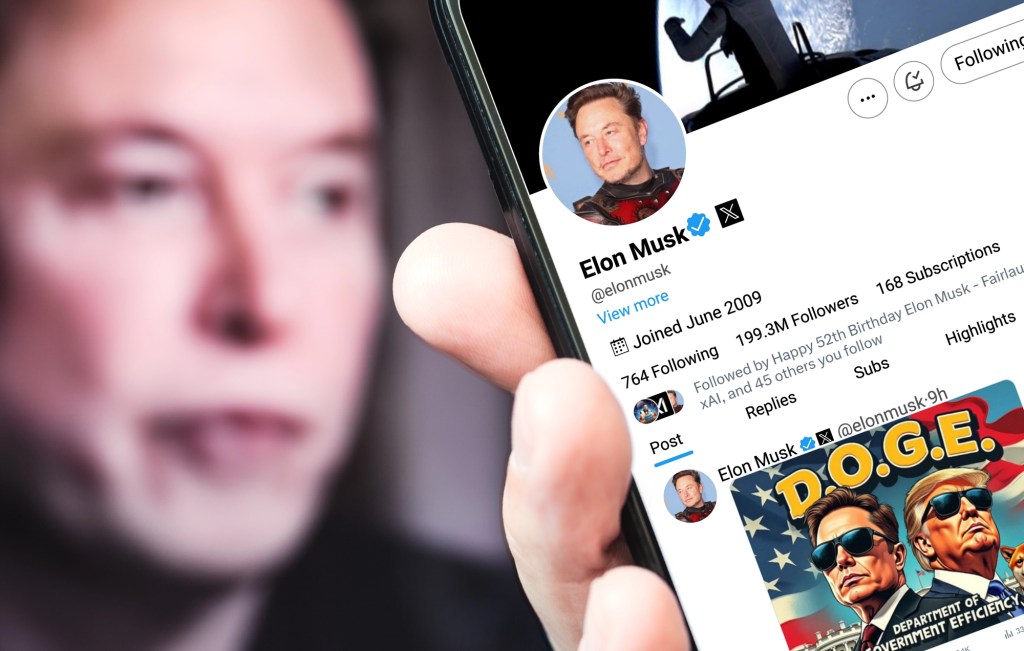
Similarly, I believe God’s attention is on the church in America, and I am focused on Donald Trump only because many American Christians have claimed him as their champion. Biden, and Clinton, and Obama didn’t claim to be aligned with the church, but Trump does.

Therefore, when I read the following headline in the New York Times recently, For Those Deemed Trump’s Enemies, a Time of Anxiety and Fear, I took notice. The statement that Donald Trump has vowed to exact vengeance caught my attention.

Trump’s public warnings to those who opposed him, searched his home, prosecuted him, etc. are have weight behind them because they are characteristic of the man. People have taken them deadly seriously, including Joe Biden who pardoned a record number of people in his last days of office, including preemptive pardons of his own family members and people on Trump’s hit list.

I could say a lot about these pardons, also, but I won’t do that right now. I will only say that the threats Trump has made are not empty, and conducting himself in that way has repercussions for both parties and the health and future of politics in America. “What goes around comes around,” as the saying goes.

My focus, though, is on what this means for the church and how we live out being salt and light, making disciples to the ends of the world, and living consistent with the kingdom of heaven on earth. Do we not have some responsibility to God, the Father, the Maker of heaven and earth, to speak prophetically about the state of the church and of its complicity in the rise to power of Donald Trump?

Continue reading “Vengeance is Mine, Sayeth Donald Trump?”

Can Christians Be Patriotic?

Christians should view themselves fundamentally as citizens of a kingdom that is not of this earth


Concerns about “Christian nationalism” have been raised in recent years from the political left. Some people in Christian circles, and specifically conservative Christian circles, have pushed back on those concerns and criticisms. At the same time, however, concerns about Christian nationalism have been voiced from within Christian circles, even from within conservative Christian circles.

The conversation has arisen, perhaps, because of the way that Donald Trump has courted Christians in his campaign to “Make America Great Again”. Many Christian voters have embraced Trump and his campaign slogan.

I am thinking about this in the context of a question raised about Christians being patriotic to John Dickson on a recent episode of the Undeceptions Podcast. (See Question Answer XIII at abut the 42 minute mark.) The person who raised the subject referenced the Bonhoeffer movie, observing that the issues for the church seemed to come when the church stopped thinking what it means to be a Christian and started thinking about what it means to be a German Christian.  

The question is, “Should Christians be patriotic?”

Putting the question in terms of patriotism, rather than nationalism, presents a slightly different twist on this conversation. “Christian nationalism” has become a pejorative term, but patriotism is seemingly more neutral and non-pejorative. At the same time, many people accused of Christian nationalism would likely say they are only being patriotic.

So, is patriotism ok for a Christian?

I like the fact that this question was put to John Dickson, an Australian who has no dog in the American political fight. Though he currently teaches at Wheaton College in Illinois, he approaches the issue from outside the roiling turmoil of American politics.

The question was also posed by a non-American listener to the podcast who was concerned about the way patriotism “potentially dehumanizes others and makes them seem lesser because they are not of our race”. He expressed concern about the mistreatment of refugees and others of different background to our own.

The “glaringly obvious” theological view proclaimed by Jesus and the New Testament writers, responds Dickson, is that Christians should view themselves fundamentally as citizens of a kingdom that is not of this earth. (Jesus said, “My kingdom is not of this world.” (Jn. 18:36); Paul said, “[O]ur citizenship is in heaven.” (Ph. 3:20); and Peter called Christians “sojourners and exiles” in this world. (1 Pet. 2:11) In my view, that means that none of us have a dog in the earthly political fight – ultimately.

Thus, we should “be shaped by the values of God and not the values of any particular nation”, according to Dickson. He observes that this admonition is everywhere in the teaching of Jesus, beginning with the first public words spoken by Jesus in the Gospel of Matthew, which we call the Sermon on the Mount. He summarizes,

“Everything in the Beatitudes [in the Sermon on the Mount] seems to stand against the nationalistic mindset of dominating others…. Blessed are the poor in spirit, for theirs is the kingdom of heaven. Blessed are those who mourn, blessed are the meek, for they will inherit the earth. Blessed are the merciful; blessed are the peacemakers; blessed are those who are persecuted because of righteousness for theirs is the kingdom of heaven [paraphrasing the Beatitudes]. The contrast with the nationalistic spirit of the day couldn’t be more striking.”

JOhn Dickson in Episode 146 of the Undeceptions podcast

Dickson urges us to consider the Beatitudes in light of the Roman domination of the world at the time and the Jewish expectations at that time. These are some song lyrics written in the 2nd Century BC by a Jewish author:

“See, O Lord, and raise up for them their king, the son of David,
At the time known only to you, O God, that he may reign over Israel your servant.
Gird him with strength, to shatter unrighteous rulers;
To purge Jerusalem of the nations that trample her down in destruction;
To expel, in wisdom and righteousness, sinners from the inheritance;
To smash the sinner’s pride like a potter’s vessel….”

Psalms of Solomon 17:21-23

This Jewish author’s sentiment is full of what we might call nationalistic pride. Contrast that sentiment with the words of Jesus. The meek inheriting the earth seems like a far cry from shattering unrighteous rulers. As John Dickson explains,

“Jesus is demanding that his followers live by the values of the future kingdom over the values of any particular present nation.”

JOhn Dickson in Episode 146 of the Undeceptions podcast

Everywhere Jesus went, he proclaimed the coming of the kingdom of God. (Luke 8:12) The kingdom of God (and being ready for it) is the subject of most of the parables Jesus told. He also announced that the kingdom of God is here now (in our midst), but he sad it is like a mustard seed, the yeast in bread, or a treasure buried in a field.

The kingdom of God now is not (yet) the ruling authority. It is here, but it has not taken over. It is emerging, but it is not yet what it will be. When that time comes, however, everyone will know it; and people need to be ready for it, or they will miss it and be left out.

The message of the kingdom of God – that it has come, but is yet to come fully – is consistent with the instruction of Jesus that the meek will inherit the earth. We do not rule in the kingdom of God presently with might and power; we “rule” by denying ourselves, but taking up our crosses, and by allowing God to rule and work in our hearts to conform us to Himself.

The Jews who expected their Messiah to come at the time of Jesus did not recognize Jesus because they thought he would be their champion, empowering them to shatter the nations that oppressed them and smash the pride of (more) sinful nations. They failed to recognize their own sinfulness and the promise to Abraham, which was to bless all the nations through Abraham’s descendants. (Genesis 12:3, 18:18, 22:18)

They were too full of nationalistic pride to see what God was doing, consistent with the very promise God made to the them – to bless all nations. As we will see, this is a key issue, and it is something we need to contend with, lest we enter into the error of the First Century Jews

Continue reading “Can Christians Be Patriotic?”

Making Sense of the 2024 Election Results: The Exit Polls Tell a Story

The 2024 election was a “Republican landslide”, and the question we should be asking is, “Why?”


I did not decide to vote until I approached the turn off to head to my home from my office. I wasn’t excited about voting this time, and I put off the decision to vote until the last second. A sense of obligation convinced me to make the short detour to my local polling place.

Even so, I punted on my vote for a president. I couldn’t pull the switch for red or blue. I just didn’t have it in me.

I know I am not alone in the way I felt this election season. A Relevant Magazine article published October 8, 2024, reported on survey results indicating that 41 million Christians did not plan to vote in this election. They are my tribe, and I was one of those 41 million.

A dialogue with a long time friend (who probably doesn’t see the world as I do) about why the election results turned out as they did inspired me to do some post-mortem review of the election. I chose a trusted source for that analysis: Bari Weiss, a former NY Times reporter who has established her own news outlet, the Free Press.

I spent some time today listening to the latest podcast episode on Honestly, with Bari Weiss, Why Trump Won. Bari Weiss is lesbian and liberal. Her panel of experts included a transgender woman, Brianna Wu, and her conservative representative was Batya Ungar-Sargon. Senior Editor of the Free Press, David Svadnik rounded out the panel.

I like to say, “Truth is truth”, and I appreciate people who are able to put aside their agendas and biases and speak to truth. We all have them (agendas and biases), but there is something highly valuable about the effort to cut through those personal values that motivate us and be honest about the way things really are.

Bari Weiss started the discussion with statistics from CNN exit polls that show Trump won about 13% of black voters in 2024 (up from 8% in 2020), and Trump won 45% of Latino voters (up from 32% in 2020.) She noted that Trump improved on his 2020 votes almost everywhere.

This seems to be at the center of the story of this election. Weiss says, “It’s indicative of a massive countrywide political realignment.” It was a “Republican landslide”, and the question we should be asking is, “Why?”

Continue reading “Making Sense of the 2024 Election Results: The Exit Polls Tell a Story”

Still Influenced by the Flesh? Division in Christ

What is your litmus test for who is in Christ? If you have a litmus test that is different than God’s standard, you need to put yours down!


I keep coming back to the theme of unity that Paul addressed in most of his letters. Christ tore down the dividing wall between Jews and Gentiles (Ephesians 2:14), and there is no longer any divisions in Christ: “There is neither Jew nor Gentile, neither slave nor free, nor is there male and female, for you are all one in Christ Jesus.” Galatians 3:28 (Emphasis added) Elsewhere Paul says,

“[T]here is no Gentile or Jew, circumcised or uncircumcised, barbarian, Scythian, slave or free, but Christ is all, and is in all.”

Colossians 3:11

We might add the major divisions we have today, like black or white, Republican or Democrat, liberal or conservative, capitalist or socialist, Palestinian or Israeli, American or Russian….

Did I lose anyone there?

Do you have a hard job believing that certain types of people can be considered Christians?

Are we not “all one in Christ”?

Of course, we need to define what is meant by “in Christ.”

According to John Piper, to be in Christ means to receive and embrace grace (1 Timothy 3:9) to be chosen by God (Ephesians 1:4), to be loved by God’s inseparable love (Romans 8:39), to be redeemed and forgiven (Eph. 1:7), to be justified and considered righteous (2 Corinthians 5:21), and to be a new creation. (2 Cor. 5:17) It means to be in relationship with God in Christ as sons and daughters, marked by God’s Holy Spirit.

“In Christ” means that we have a saving relationship with Christ in union with him:

Being one with Christ, means that those in Christ should be one with each other also. The one thing that binds us together is Christ Jesus. We may be very different from each other in many ways, but we are one if we are, indeed, in Christ.

It doesn’t matter how many differences we have with each other. If we are (indeed) in Christ, we are unified in Christ. Thus, it should not be surprising that Paul urged the Corinthians to be unified:

“I appeal to you, brothers and sisters, in the name of our Lord Jesus Christ, that all of you agree with one another in what you say and that there be no divisions among you, but that you be perfectly united in mind and thought.”

1 Corinthians 1:10

No divisions among you! Be united in mind and thought.

How do we do that? What keeps us from being united?

Continue reading “Still Influenced by the Flesh? Division in Christ”

In Response to the State of Our Culture, Do We Carry the Cross or the Sword?

Jesus told us to follow him by picking up our crosses, but many of us today are picking up our swords.


I recently heard Tim Alberta say that some modern evangelicals have picked up a sword, and that sword is Donald Trump. Such a sword is needed for success in a culture war, and a culture war mentality drives the politics of many, if not most, of evangelicals today.

Many evangelicals are concerned, if not fearful, of current cultural trends. People are pulling away from and rejecting traditional Christian values in the US. The change has been rapid (as far as cultural trends go). American society is going the way of Europe and Canada in letting go (and outright rejecting) Christian labels, overtly Christian thinking, and church attendance.

Perhaps, nothing demonstrates the cultural movement away from Christianity in the United States like the book, The Nones: Where They Came From, Who They Are, and Where They Are Going, by Ryan P. Burge. The author says that only five percent (5%) of Americans claimed “no religion” in a 1972 poll. That number rose to over twenty three percent (23%) by 2018. This made “nones” as numerous as Catholics or evangelicals in the US in 2018.

Nones are predominantly young Americans, but this trend does not just affect the nation’s youth, and it has picked up momentum since COVID. Robb Redman reports from various sources on community trends and culture for worshipleader.com, including the following:

  • 70% of Americans were church members in 1999 (Gallup);
  • Less than 50% of Americans were church members in 2023 (Id.);
  • 45 million Americans have stopped going to church in that time;
  • 41% of Americans 39-57 went to church regularly in 2020 (Barna);
  • 28% of Americans 39-57 went to church regularly in 2023 (Id.).

Ryan Burge partnered with Jim Davis and Michael Graham to explore the reasons for this precipitous decline in church membership and attendance and the rise in self-described nones in their recent book, The Great Dechurching. This book has become the topic of much conversation in the short time since it was published. I haven’t read the book yet, so I posed the question, “What are the top five reasons people have stopped going to church, listed from most common to least common”, to two different AI platforms. The results from Bing Co-Pilot are as follows:

  1. Judgmental attitudes (87%)
  2. Distrust of organized religion (74%)
  3. Too focused on Money (70%)
  4. Busy schedules (67%)
  5. Loss of Habit (58%)

The Co-Pilot response summarized studies done by the Pew Research Center, Gallup Polls, the Barna Group, the Public Religion Research Institute and various academic studies to generate this list. I note that the first three reasons people have given for not attending church are issues with the Church I am referring to the Church (capital C) because I don’t know how this breaks down among denominations. The other two main reasons are unrelated to the Church; they reflect personal and societal lifestyle issues.

Chat GPT reported different results, citing some of the same sources (Pew and Barna) and some different sources (General Social Survey and books and articles, generally, including Sociology of Religion by Diana Butler Bass, an academic book). The Chat GPT list is not as straight forward:

  • “A growing disconnection with church teachings or religious beliefs” (about 60%-70%);
  • “Negative experiences, such as feeling judged or encountering hypocrisy” (about 30%-40%);
  • “A perceived irrelevance of church” and disconnectedness of the church to modern issues (about 25%-35%);
  • Busyness, lifestyle, time constraints, and changing priorities (about 20%-30%); and
  • Exploring alternative spirituality and religious practices (about 15%-25%).

Again, the first three (3) (and the most prominent) reasons for not attending church deal with the Church, itself. Worldviews are shifting away from the views held by the Church (which seems to indicate we are losing this “culture war”). The Church is perceived as disconnected from modern life and the modern world and not relevant to it, and the Church is perceived as overly negative and hypocritical.

The one area of overlap is the high percentage of people who list judgmental attitudes, including negative experiences and hypocrisy) as major reasons of not attending church. This is obviously a key issue (ranking 1st and 2nd respectively).

I find this to be highly problematic for the Church because the Paul plainly said the Church should not be (presently) judging the world (according to Paul (See What Business Do We Have Judging the World?)) And, Jesus said we should be known by the love we have for each other.

It seems pretty obvious to me in my own anecdotal experience that the American Church, generally, has some significant issues in this regard. We are not following Paul’s instruction not to judge the world, and we are failing to love each other well.

I recently watched a Gavin Ortlund critique of fundamentalism in the Church today that focuses on these issues. He says it well when he describes a segment of the Church that is focused more on what followers of Christ should against, rather than than what we should be for. When our focus is on the negative, our positive message is likely to be eclipsed and obscured and it lost in the noise.

I realize, of course, that this “indictment” of the Church generally, is a very broad brush. The church I attend does not fit this mold. Most of the Christians I have close relationships with do not fit this mold. We don’t have to look very far or deep on social media, however, to see evidence of judgmental attitudes, hypocrisy, and negativity.

It’s interesting to me that resources Co-Pilot pulled from identify more negatives (distrust of organized religion and too focused on money) in the top three reasons for not going to church, while the Chat GPT sources identified “growing disconnection with church teachings or religious beliefs” and perceived irrelevance of church” and disconnectedness of the church with modern issues. Distrust and money-focused have nothing to do with message, but disconnection with church teachings and a perceived irrelevance with modern issues has everything to do with message (theology).

Exploring alternative spirituality and religious practices (the 5th reason noted by the Chapt GPT response is related to the disconnection responses. I don’t know whether these things are causal or just symptomatic. If people were finding what they were looking for in church, they wouldn’t disconnect and look elsewhere. If their church experience wasn’t negative, they might still be connected.

On the other hand, both sources identify other things that are going on. Busyness, lifestyle, time constraints, and changing priorities are “neutral” pressures that are affecting not just churches, but service organizations, fraternal organizations, and other traditional ways people have gathered together.

We see a spike in this trend of disconnection from Church membership and attendance after COVID (pun intended). COVID seemed to supercharge changes that were already in the works in many areas of life. People were already disconnecting from face-to-face contact with other people with the proliferation of hand-held devices and social media going back at least to 2012. COVID isolated people even further.

Sociologist, Jean Twenge, finds sharp changes in teen behavior and mental health starting in 2012, which she attributes to teen use of smartphones and other hand-held devices. Her findings about the changes in the behavior of teens is a yardstick to measure the pulse of society.


A published interview with Twenge as Time Magazine’s Person of the Week, reports that “Gen Z is in the grips of a historic mental health crisis, with teenagers struggling with record levels of depression, anxiety, and loneliness.” Twenge, who has studied many generations of teens, discovered “big and sudden” changes in Gen Z starting around 2012, when hand-held devices became normalized among teens.

Those changes included, among other things, a doubling in the diagnosis of clinical depression among 12-17 year-olds from 2011 to 2019. At the same time, teens reported significantly less face time with other people corresponding significantly with more screen time. I have heard her say that teen pregnancy is down (which seems to be a good thing) because teens spend more time on their phones in their bedrooms alone than spending time with each other (which is problematic).

So, what does this have to do with Donald Trump and Christians fighting a culture war to try to preserve their power and influence in a society that seems to be pulling away from us? I seem to have wandered far afield, but now I am going to pull it in and get to the point.


It seems our culture needs Jesus more than ever. At the same time, people are do not see the benefits of knowing Jesus. At the very time when people need the grace and love of Christ most, people are being pushed away by judgmental attitudes and negative experiences. As people are struggling with isolation, polarization, and mental health issues, the Church is becoming more irrelevant, disconnected, and inaccessible to them.

Ironically, it seems to me, we are not only losing this culture war, the culture war seems to be the very thing that is pushing people away and isolating them from us. As we are circling our wagons defending ourselves against these “outsiders”, and attacking them from behind our theological walls, we have lost sight of the fact that Jesus sent us out into the world to bring the Gospel to the lost.

We are failing in our most critical mission.

Continue reading “In Response to the State of Our Culture, Do We Carry the Cross or the Sword?”