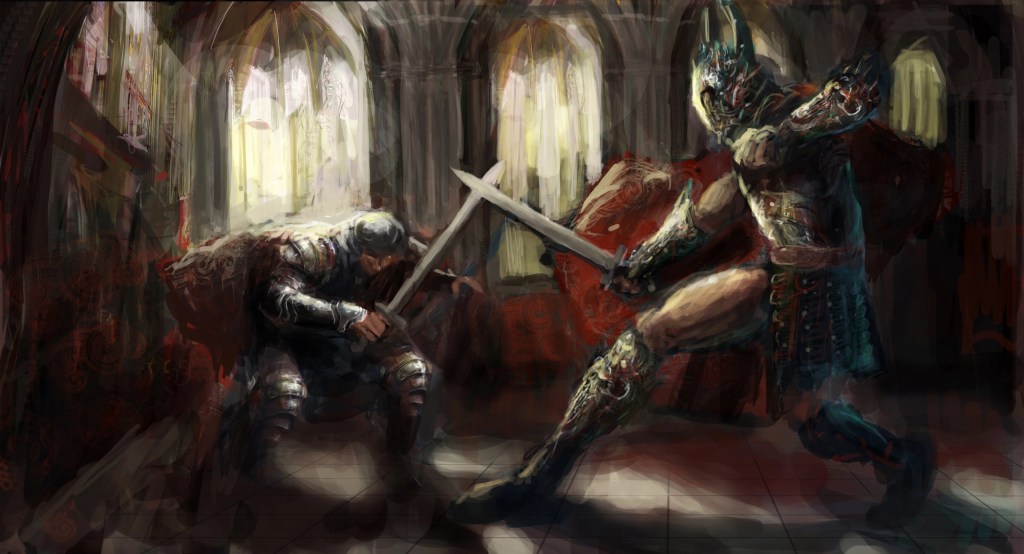
To Obey Is Better Than Sacrifice

What is the obedience God desires from us?


I became a follower of Jesus in 1979, though I was a wild, untamed stallion when I was first confronted with the Lordship of Christ and verbally submitted to him. I wandered down my own paths in the year that followed, leading me to a breaking point and more complete surrender. (A cycle I have unfortunately repeated more than once.)

Over the following two years, I was about as surrendered to God as I have been my whole life. I was all in – or as all in as I was capable of being at that time, perhaps. During that time, I became a big fan of Keith Green. I even saw him in concert in Des Moines Iowa in 1981 or 1982. He died in a place crash within a year or two after that, and his impact and memory has faded.

When I saw him in concert, though, his radical Christian commitment had been a huge impact on me, and that impact carried with me beyond his death. Thus, my daily reading today recalls to my mind these lyrics by Keith Green:


To obey is better than sacrifice
I want more than Sundays and Wednesday nights
If you can't come to me every day
Then don't bother coming at all

Keith Green was a musical child prodigy who was radically saved by Jesus. He used his great musical talent and platform to become a prophet of sorts to young Christians at the time who wanted an authentic faith.


I was very drawn to a monastic, cloistered life at that age that Keith Green represented, like a modern Essene. The truth is that I had long been drawn to that kind of thing going back to the book, My Side of the Mountain, that I read in grade school (about a boy who leaves his parents to hollow out a summer home in the trunk of dead tree in the Catskills).

That book seeded in me a longing for something authentic and pure. The idea took root in me that I could not find “it” in the bustle of the world. I needed to escape to solitude, self-reflection, and devotion to a simple life.

In a poignant moment in my senior year in college, I faced up to that longing and desire that ran deep in me, and I made a conscious decision to follow Jesus into the messy clamor of human society. Jesus often escaped to the mountains and the wilderness to be alone with God, but he always returned to the highways, and byways, and the public squares where people live.

Still, the Keith Green spirit of uncompromised obedience to Christ and Christ alone left an imprint on me. His prophetic insistence on radical commitment carried me forward in those early years of my journey with Christ.

Now, I find myself some 40+ years down a road that has taken many twists and turns. That road has taken me through long and winding wilderness areas that were darker than I care to dwell on. It has taken me to the other side of those dark times into the light of a new day, more weary and (hopefully) wiser for the experience. I am still following Jesus as best as I can, but I have a slightly different view of Keith Green’s words today. I hope I can give this the nuance it deserves.

Continue reading “To Obey Is Better Than Sacrifice”

Ode to the Church and to God Who Watches Over the Foreigner

O Church, remember who you are,
Called to love, to heal, not to bar.


Once, in Eden’s light, they walked,
In fear, mistrust, and pride they balked.
Their own way looked better than God’s,
So He cast them out to the odds.

Though God walled them out, yet He stayed near,
He watched them roam this earthly sphere.
He clothed their shame knowing His plan,
To redeem them from the dusty land.

When Abraham heard the voice divine:
“Go to a land that I’ll make thine.”
He wandered there, a stranger still,
Seeking the City of God’s will.

From Abraham’s loins a nation grew,
In Egypt enslaved, four centuries through.
Bound and broken, crushed and torn,
Yet God’s eye watched, where hope was worn.

And when they were freed by God’s hand,
The law that God, would make command:
“Be kind to the stranger, love them as you—
For once you were aliens too.”

The psalmist sang of a just cause
To guard the stranger one must because
God watches over the oppressed and poor,
His mercy flows to the foreigner.

The prophets warned with fire and might:
“Do not oppress, do not fight
The alien, the widow, the orphaned heart—
Deprive them not, lest from God you part.”

Then Jesus was born, in flesh, divine,
Refugee Son, in a troubled time.
To Egypt He fled, a stranger, a child,
God in the dust, both meek and mild.

He preached a kingdom for all men,
Every race and tongue and kin.
That he would save from cursed yeast,
According to how we treat the least.

And John envisioned a great throng,
From every tribe, with one great song.
Before the Lamb, all men unite,
Bathed in mercy, robed in white.

Yet now, the largest Church on earth,
Wielding wealth, claiming new birth,
Builds walls to keep strangers away,
Turning the poor from its doorway.

Refugees wander, oppressed and unseen,
Deprived of justice, crushed between
A gospel of love and hands that deny,
While heaven looks down, and angels cry.

O Church, remember who you are,
Called to love, to welcome, not bar.
For the walled-out Christ still calls to you,
“Whatever you’ve done, you’ve done to Me too.”

Come, O Church, to the narrow way,
Where love shines bright at break of day.
Lay down your walls, take up your cross,
And count the cost, not gain or loss.

Follow the One who bore your shame,
Who calls you now by His great name.
For hope is found in His pierced hands,
Where grace flows wide for all the lands.

The stranger waits, the orphan cries,
Will you reflect the Savior’s eyes?
Do justly, love mercy, walk humbly with God
Love deeply, with the gospel on your feet shod.

For Christ alone is our living hope,
A lifeline strong, a Savior’s rope.
Come back to Him, and walk His way,
Till all are gathered on that final day.

Christmas: The Triumph of the Almighty God Is Not Exactly As We Might Have Imagined It

The hope we reflect on in wonderment at this time of year

The words of the ancient prophet, Isaiah, are spoken often this time of year:

“For to us a child is born, to us a son is given, and the government will be on his shoulders. And he will be called Wonderful Counselor, Mighty God, Everlasting Father, Prince of Peace. Of the greatness of his government and peace there will be no end. He will reign on David’s throne and over his kingdom, establishing and upholding it with justice and righteousness from that time on and forever. The zeal of the Lord Almighty will accomplish this.”

Isaiah 9:6-7 NIV

These words were spoken many centuries before one, Jesus of Nazareth, was born in Bethlehem while his parents were in town for a census. This passage is full of triumph: “Mighty God”, an “Everlasting Father”, and “Prince of Peace”. “The government will be on his shoulders,” and he will “reign on David’s throne” – the “Lord Almighty!”

These words foretell of a mighty, conquering, benevolent God. (Benevolent after the conquering bit, of course). Human beings have always venerated and celebrated strength, and what could be more compelling to us than a conquering king (provided he is benevolent also!)

This is the way people view God and the world. This view of God inspired the crusades. It inspired many kings and nobleman through the ages like Stephen I, Szent István király. Born in 975, Stephen took the throne on December 25, 1000, and he became the last “grand prince of the Hungarians”, and he is the first King of Hungary.


I took the photos I have reproduced here when I was visiting my daughter in Hungary this time of year 6 years ago. The prominence of Steven and other kings in Hungarian lore is evident in the statuary around Budapest and in the stately basilica named after him that lies near the Danube in the center of the City.


Stephen succeeded his father as a grand prince of the Hungarians, but he had to fight for the throne against his own extended family. He fought many wars against surrounding tribes and chieftains, including his own uncle. He “converted his uncle’s ‘country to the Christian faith by force’ after its conquest,” and he “encouraged” the spread of Christianity “by meting out severe punishments for ignoring Christian customs.” (See Wikipedia)

Many modern minded people with sensibilities trained over the last generation likely squirm (or fume) over stories like Stephen’s, as children are taught in grammar school to recoil at the “imperialism” of our Western/Christian forebears. The so-called “Christian nationalists” among us likely count Stephen a hero of the faith.

Indeed, Hungarians today proudly celebrate Saint Stephen as a national hero, but this celebration seems more focused on nationalistic pride than the spread of Christian faith – if faith can be commandeered by force. Stephen is hailed for unifying the tribal regions around him under his kingship, giving birth to the nation of Hungary.

That the nation was unified under a Christian flag seems to be more of a national identity than a statement of faith. While I was visiting, I observed that Hungarians did not appear, as a whole, to be a people of devout faith.

A 2017 poll reveals that Hungarians, indeed, are not very religious. While about 76% of Hungarians self-identified as “Christian”, only about 8% of Hungarians attended church services on a weekly basis, “placing Hungary among the countries with the lowest church attendance in Europe” (according to my very cursory research using Chat GPT).

While the notion of a king conquering in the name of Christ may be a source of national pride for some, it makes other people feel uneasy. It makes me uneasy.

We celebrate at Christmastime the triumphal prophecies foretold by Isaiah of the Lord Almighty taking the government on his shoulders with zeal and reigning on David’s throne. Yet, this imagery contrasts with the images of the story of the birth of Jesus, born of a humble virgin in a lowly manger because they had no influence to make room for themselves anywhere else.

As this story goes, God incarnate was born in poverty, on the edge of the Roman empire, in the humblest of circumstances, to parents who were not even married. God came into the world as an infant, weak and vulnerable.

God is human form became a refugee when his parents fled to Egypt to avoid King Herod’s decree to kill the male babies in the region of Galilee. They returned after Herod’s death but moved to the more remote and neglected area of Nazareth where Jesus grew up in almost total anonymity apart from the small community of people who knew him.

These realities stand in stark contrast to the conquering and reigning king imagery of Isaiah and the images of kingly might we celebrate in people like Saint Stephen. We consider these paradoxical images this Christmas day, December 25, 2024, as we recall the birth of our Savior and Lord, Jesus, and what it all means for us.

Continue reading “Christmas: The Triumph of the Almighty God Is Not Exactly As We Might Have Imagined It”

Of Shepherds, Angels, the Glory of the Lord, and the Christ Child Born in Humble Estate

At Christmas, we celebrate God coming to us and revealing Himself to us in human form to draw us to Him


“An angel of the Lord appeared to them, and the glory of the Lord shone around them, and they were terrified. But the angel said to them, ‘Do not be afraid. I bring you good news that will cause great joy for all the people. Today in the town of David a Savior has been born to you; he is the Messiah, the Lord.'”

Luke 2:9-11 NIV

This is a classic Christian text remembered at this time of year about the birth of the Christ child. The birth of Jesus in the town of David would have drawn the attention of 1st Century Hebrews who knew their Scripture. The significance of that understanding is preserved for us today by Luke, the traveling companion of Paul the Apostle.

Bethlehem was the birthplace and early home of King David, who is Israel’s most venerated and celebrated king. (1 Samuel 16:1, 1 Samuel 17:12). The prophet, Samuel, who presided over the coronation of David, foretold that God would establish from the lineage of David a kingdom that would last forever. (2 Samuel 7:12-16)

The prophet, Isaiah, lived about three centuries after David. Fourteen kings reigned between David and King Hezekiah, Isaiah’s contemporary. After a span of time longer than the United States of America has been a country, Isaiah repeated and expanded on what Samuel foretold:

“For to us a child is born,
    to us a son is given,
    and the government will be on his shoulders.
And he will be called
    Wonderful Counselor, Mighty God,
    Everlasting Father, Prince of Peace.
Of the greatness of his government and peace
    there will be no end.
He will reign on David’s throne
    and over his kingdom,
establishing and upholding it
    with justice and righteousness
    from that time on and forever.”

Isaiah 9:6-7

The prophet, Micah, a contemporary of Isaiah, He riffed on the same theme:

“But you, Bethlehem Ephrathah,
    though you are small among the clans of Judah,
out of you will come for me
    one who will be ruler over Israel,
whose origins are from of old,
    from ancient times.”

micah 5;2

According to the biblical chronology, these predictions of a coming kingdom and a king “whose origins are from ancient times” were declared 700-1000 years before the birth of Jesus. Those predictions were memorialized in the writings we identify with Samuel, Isaiah, Micah and others, and they were preserved for many centuries before Luke penned his own words tying them to the birth of Jesus of Nazareth, who was born in Bethlehem.

Though it was an ignoble birth by all accounts, we still remember back almost 2000 years now, recalling the prophecies declared from of old. We remember the birth of Jesus, lying in “humble estate” in a manger in the same space where the animals lived.

Hold that thought…. because today, I want to focus on the first half of the verse with which I introduced this article. The passage began with these words:

An angel of the Lord appeared to them, and the glory of the Lord shone around them, and they were terrified….

This may seem like a strange twist to the way I have started this article, but I will bring it back around. I think you will be glad to stick with me as I take seems like a left turn.

Continue reading “Of Shepherds, Angels, the Glory of the Lord, and the Christ Child Born in Humble Estate”

Still Influenced by the Flesh: Jealous Much?

To avoid jealousy and dissension we need unity in the basics of our faith


The following words were Paul’s assessment of the Corinthians when he wrote to them in the letter we call 1st Corinthians:

“[Y]ou are still influenced by the flesh. For since there is still jealousy and dissension among you, are you not influenced by the flesh and behaving like unregenerate people?”
1 Corinthians 3:3 NET

Paul admonished the Corinthians for having jealousy and dissension among them. What Paul meant in that phrase (jealousy and dissension) may not be exactly as you imagine, however. Of course, I will explain.

First of all, though, we need to understand that Paul wrote this letter to the Christians at Corinth. He was writing to people who were born again who were “still influenced by the flesh” , causing those Christians to behave “like unregenerate people”.

Christians today are also still influenced by the flesh, and we sometimes act like unregenerate people. And, that’s not okay!

God’s plan for you is to be conformed to the image of Jesus Christ (Romans 8:29) who is the “the exact representation of [God’s] being”. (Hebrews 1:3) God had same plan for the Corinthian Christians, and He has the same plan for all Christ followers today.

If I have time and focus enough, I will make this a series. Today, though, I want to focus on the influence Paul specifically identified the Corinthians – jealousy. (If you read the whole letter, you find that jealousy wasn’t the only issue, but it’s the one Paul leads with.)

The word translated as jealousy in this verse is ζῆλος, ου, ὁ (zelos), meaning eagerness, zeal, rivalry. (Biblehub) It is an onomatopoeic term that mimics the sound of water bubbling over from heat. It may even derive from the Greek world, zéō (“to boil”).

Zeal comes from the same root word (), which means “hot enough to boil”. This word can be used in the positive or the negative. It can be used metaphorically with many emotions such as boiling anger, burning love, burning zeal, etc.

A person who burns with zeal for God is exhibits a positive form of zelos, but a person who burns with zeal for idols exhibits a negative form of zelos. Burning passion for one’s spouse can be good (unless it gets possessive), but burning passion for someone else’s spouse is not good.

Paul pairs zelos with ἔρις, ιδος, ἡ (eris) in the verse quoted above, which means strife and is often translated as contention, strife, wrangling, or quarreling. It means to have a contentious spirit. Thus, zeal (zelos) with a contentious spirit (eris) is how Paul assesses some people in the church in Corinth.

That kind of zeal is caused by the influence of the flesh. That kind of zeal, Paul says, is unregenerate behavior, and needs to stop. So, what is Paul specifically talking about?

Paul is talking about the quarreling among them over who they follow: “One of you says, ‘I follow Paul’; another, ‘I follow Apollos’; another, ‘I follow Cephas’; still another, ‘I follow Christ.'” (1 Cor. 1:12) He comes to the point again in Chapter 3 when he says, “Are you not acting like mere humans? For when one says, ‘I follow Paul,’ and another, ‘I follow Apollos,’” are you not mere human beings?”

Stop and think about that for a moment…. Don’t we still do that in the 21st Century, too? Paul says that this kind of attitude is worldliness; it is acting like “mere infants in Christ” (1 Cor. 3:1); it is acting as of we are unregenerate.

If we are going to take Paul (and God) seriously, we should not allow ourselves to burn with a contentious spirit that leads to dissension with fellow Christians. With that in mind, let’s take a deeper dive into what I believe Paul is saying.

Continue reading “Still Influenced by the Flesh: Jealous Much?”