The Boldness that Comes from Being Filled with the Holy Spirit … and Refilled


I wrote in the blog post before this one about fear and how God’s perfect love casts out all fear. The followers of Jesus feared when he was taken away by the Romans in the garden. They continued to fear while he was being mocked and beaten and hung on the cross. After he was dead and buried, they hunkered down behind locked doors for fear of the Jews. (John 20:19)

Even after Jesus appeared to them, risen from the dead in the flesh, the apostles continued to live in fear. It was not until they were filled with the Holy Spirit on the day of Pentecost that they emerged out of their funk from behind locked, closed doors to preach the Gospel boldly in the crowded streets of Jerusalem.

As I continue to read through the Bible, now in the book of Acts, I see something else that I hadn’t seen before. In Acts 3 & 4, we see Peter and John healing a lame man, being hauled in front of the Sanhedrin and being instructed to stop preaching in the name of Jesus. Afterward, Peter and John met with the other followers of Jesus in Jerusalem and prayed for boldness to keep speaking the gospel in the name of Jesus!

I previously observed that this change from fearful believers hiding behind closed doors to bold proclaimers of the Gospel on the crowded city streets happened only after they were filled with the Holy Spirit. It wasn’t Jesus appearing to them, risen from the dead, that overcame their fear; it was the Holy Spirit who filled them!

But there is more. They prayed for boldness while remembering the words of David in the Psalms (Psalm 2:1-2):

‘Why did the Gentiles [nations] rage,
And the peoples devise futile things?
‘The kings of the earth took their stand,
And the rulers were gathered together
Against the Lord and against His Christ [Anointed One/Messiah].’

Acts 4:25-26

There will be opposition when we preach in the name of Jesus. That’s why we need the boldness. We need to be able to overcome our fear of rejection and our unhealthy desire for favor from people to be able to preach the gospel. We can’t do it on our own; we need the help of the Holy Spirit.

I suffer greatly from this defect, myself, which I recognize as I read through these passages. I need that boldness that comes from God’s Holy Spirit, or I will continue hide “behind closed” doors – or maybe the keyboards of this computer on which I type!

And, there is one more thing before I get to the point. I think this is an area in which we could all use a little bit of dying to self. I certainly speak for myself when I say that I stand in my own way of being able to preach the Gospel boldly as Peter and John did. My self, my flesh, is in the way of me being who God wants me to be in Him. That flesh, that self that is in the way, needs to die. It needs to yield to God. It needs to be sacrificed to the purposes of God.

Not that I have overcome this self. I confess and admit to you as I write this that I have not. But, that brings me to the final point.

Continue reading “The Boldness that Comes from Being Filled with the Holy Spirit … and Refilled”

The Illusion of Happiness and the Kindness of Want

God put eternity into our hearts (Ecc. 3:11) so that we can, if we aren’t too distracted, sense that something more awaits us.

Photo cred to Deb Zeyher

To CS Lewis was posed the following proposition and question:

“Many people feel resentful or unhappy because they think they are the target of unjust fate. These feelings are stimulated by bereavement, illness, deranged working or domestic conditions, or the observation of suffering in others. What is the Christian view of this problem?”

Today, the same question has taken on a sharper edge. Similar questions are aimed like unfriendly fire at Christianity and the character of God: If God is all good and all powerful, why does God allow evil and suffering in the world? Either God isn’t all good; or God isn’t all powerful; or God simply does not exist.

CS Lewis answered the question put to him as follows:

“The Christian view is that people are created to be in a certain relation to God. If we are in that relation to Him, the right relation to one another will follow inevitably. Christ said it was difficult for the rich to enter the kingdom of heaven (Matt, 19:23; Mk. 10:23; Luke 18:24), referring, no doubt, to riches in the ordinary sense. But, I think it really covers riches in everything – good fortune, health, popularity, and all the things one wants to have.

“All these things tend, just as money tends, to make you feel independent of God. Because if you have them, you feel happy already and contented in this life. You don’t want to turn away to anything more, and so you try to rest in a shadowy happiness, as if it could last forever.

“But God wants to give you a real and eternal happiness. Consequently, He may have to take all these riches away from you. If He doesn’t, you will go on relying on them. It sounds cruel, doesn’t it?

“But I am beginning to find out what people call the cruel doctrines are really the kindest ones in the long run. I used to think it was a cruel doctrine to say that troubles and sorrows work punishment, but I find in practice that, when you are in trouble, the moment you regard it as a punishment it becomes easier to bear.

“If you think of this world as something simply intended for our happiness, you find it quite intolerable. Think of it as a place of training and correction, and it’s not so bad.

“Imagine a set of people all living in the same building. Half of them think of it as a hotel. The other half think it is a prison. Those who think it a hotel might regard it quite intolerable, and those who thought it was a prison might decide it was really surprisingly comfortable. So that what seems the ugly doctrine is what comforts and strengthens you in the end.

“The people who try to hold an optimistic view of this world become pessimists; the people who hold a pretty stern view of it become optimistic.”

I like to say that perspective changes everything. Because human beings are finite, our perspective is limited. Change your perspective, and the world looks different from the new angle.

Lewis had a perspective of this world that allowed him to see it as beautiful, for what it is worth. Perhaps, he was colored by his experience as a young man, not even out of his teens, fighting in World War I. He knew the worst the world had to offer.

When he became a believer in the death and resurrection of Jesus Christ, he found the “silver lining”. He found hope and light in the darkness of the world.

Many people who live in the late 20th and 21st centuries have had a relatively good time of “this life” compared to people just a few generations before us (and even more dramatically compared to people of centuries past). Our perspective is colored by our relative prosperity. In the United States today, even those who live below the poverty line live higher and better than most of the people in the rest of the world (and in times past).

The comparative riches we have tend to make us feel independent of God. Indeed, the shift in the question of the problem of evil from focusing on individual unfairness to thinking it is proof that God does not exist is a product of our perspective.

We have enough s that we are willing to accept that what we can have in this life is all there is. We have learned to be content with the hope of no more. We have embraced a shadowy happiness in lieu of true joy that God offers to those who seek Him.

Continue reading “The Illusion of Happiness and the Kindness of Want”

Justice in Messianic Prophecy

Behold my servant, whom I uphold, my chosen, in whom my soul delights; I have put my Spirit upon him;  he will bring forth justice to the nations.

I have written much over the last two years on the subject of justice in Scripture. I don’t think I have done the subject justice (pun intended), so I continue to find the rights words, the right perspective and seek better understanding of God’s heart for justice as it is revealed in Scripture.

John the Apostle tells us that God is love, and the Psalmist says that justice and righteousness are the foundations of His throne. Certainly God’s love, justice and righteousness are closely intertwined.

When Jesus read from the Isaiah scroll in the temple and said it was fulfilled by him in the presence of the people who heard him, the passage he read was full of images of justice (Luke 4:18-19 (reading from Isaiah 58:6; 61:1-2)):

“The Spirit of the Lord is upon me,
    because he has anointed me
    to proclaim good news to the poor.
He has sent me to proclaim liberty to the captives
    and recovering of sight to the blind,
    to set at liberty those who are oppressed,
to proclaim the year of the Lord’s favor.”

The reading from the Isaiah scroll is a theme to which I return often

We could read this passage to mean that Jesus came to preach to those who are poor (in spirit), to proclaim liberty to the captives (in spirit), recovering of sight to the (spiritually) blind and to set at liberty those who are oppressed (spiritually). I don’t think that is an inaccurate way of interpreting what Jesus said. Jesus often used figurative language for spiritual realities and principals.

It isn’t the only way to read those words, of course. Indeed, throughout the rest of his life, Jesus healed people, gave sight to the blind, opened the ears of the deaf, set free those who were oppressed, raised people from the dead and met the physical needs of people as he traveled around preaching the good news.

Thus, I believe Jesus meant those words to have dual meanings. He was concerned about the spiritual condition of people. We might even say he was primarily concerned with spiritual well-being, but he met people at the point of their physical circumstances and conditions.

Listen to the testimonies of people, and you will find the spiritual and the physical are intertwined. Jesus still meets people at the point of their circumstances and physical, emotional and spiritual needs.

The physical needs and difficult circumstances (perhaps) a metaphor for the more critical and ultimately more important spiritual infirmity, but they are a reality that elevates and underscores the need for more holistic resolution. Without the difficulties in our lives, we might never perceive the need for that resolution

Many are the people who only want the physical healing and not spiritual healing. At the same time, the physical infirmities of a person can be so overwhelming and demanding that a person can hardly recognize the spiritual need.

Regardless of the interrelationship, Jesus addressed both the physical needs and spiritual needs of people. Justice and righteousness are God’s foundation. They are front in center in the Messianic message that foretold the coming of Jesus:

“Behold my servant, whom I uphold, my chosen, in whom my soul delights; I have put my Spirit upon him;  he will bring forth justice to the nations. He will not cry aloud or lift up his voice, or make it heard in the street; a bruised reed he will not break, and a faintly burning wick he will not quench; he will faithfully bring forth justice. He will not grow faint or be discouraged till he has established justice in the earth; and the coastlands wait for his law.”

Isaiah 42:1‭-‬4 ESV

Jesus is the fulfillment of the promise God made to Abraham. God’s promise to Abraham was a promise to all the nations (Gen. 12:2-3):

“I will make you into a great nation,
    and I will bless you;
I will make your name great,
    and you will be a blessing.
I will bless those who bless you,
    and whoever curses you I will curse;
and all peoples on earth
    will be blessed through you.”

Embedded in Isaiah’s Messianic prophecy was this promise to Abraham: “he will bring forth justice to the nations…. he will faithfully bring forth justice. He will not grow faint or be discouraged till he has established justice in the earth; and the coastlands wait for his law”.

Justice is a theme that runs through the prophets and is directly and intimately connected to Messianic prophecy. We see the Messianic character of justice in Jeremiah also:

“In those days and at that time I will cause a righteous Branch to spring up for David, and he shall execute justice and righteousness in the land. In those days Judah will be saved, and Jerusalem will dwell securely. And this is the name by which it will be called: ‘The Lord is our righteousness.’

Jeremiah 33:15-16 ESV

Jesus, of course, has become our righteousness, as the prophet foretold. He also executes justice. Justice, in the biblical sense, is not simply punishment or retribution. Justice is redemptive. It goes hand in hand with righteousness. As followers of Jesus, we are called to participate in righteousness and justice as components of the Messianic purpose of God.

God’s Order for Living Beings, Human Beings and His Grand Design

“Then God said, ‘Let the earth bring forth living creatures after their kind….'”

I am starting a new Bible reading plan for the year, beginning in the beginning: in Genesis. Reading through the rich text of Genesis again I am seeing some things I hadn’t noticed before. Consider the following (with my emphasis added):

“Then God said, ‘Let the earth sprout vegetation, plants yielding seed, and fruit trees on the earth bearing fruit after their kind with seed in them‘; and it was so. The earth brought forth vegetation, plants yielding seed after their kind, and trees bearing fruit with seed in them, after their kind; and God saw that it was good.

Genesis 1:11-12

“God created the great sea monsters and every living creature that moves, with which the waters swarmed after their kind, and every winged bird after its kind; and God saw that it was good. And God blessed them, saying, “Be fruitful and multiply and fill the waters in the seas, and let birds multiply on the earth.’

Genesis 1:21-22

“Then God said, ‘Let the earth bring forth living creatures after their kind: cattle and creeping things and beasts of the earth after their kind‘; and it was so. God made the beasts of the earth after their kind, and the cattle after their kind, and everything that creeps on the ground after its kind; and God saw that it was good.”

Genesis 1:24-25

Then God said, ‘Let us make man in our image, after our likeness. And let them have dominion over the fish of the sea and over the birds of the heavens and over the livestock and over all the earth and over every creeping thing that creeps on the earth.’ So God created man in his own image, in the image of God he created him; male and female he created them. And God blessed them. And God said to them, ‘Be fruitful and multiply and fill the earth and subdue it….'”

I color-coded the various provisions that form the pattern that informs my thinking today. The provisions in each color correspond with the other provisions of the same color.

Now, let me see if I can put all my thoughts together in a coherent whole.

First of all, God ordered (in the sense of designed) all living beings to multiply after they own kind. We see this everywhere in nature: apple trees bear seeds that grow into new apple trees; asparagus plants bear seeds that grow into new asparagus plants; lions beget lions; polar bears beget polar bears; yellow polka dotted salamanders beget yellow polka dotted salamanders; bluefin tuna beget bluefin tuna; and purple finches beget purple finches.

This is the order of living things. Not only that, but we now know that something (call it evolution or something else) works powerfully within living beings to reproduce and even to adapt with changes over time.

Every living thing bears seed or otherwise reproduces more of its kind. Human beings included, but only humans are made in the image of God. (Hold that thought.)

God “blessed” the living things He created, saying, “Be fruitful and multiply” and fill the earth. (Gen. 1:22) He also blessed man who He made in His own image, and gave similar orders: “Be fruitful and multiply and fill the earth and subdue it….” (Gen. 1:28)

Note that God “ordered” (as in designed) the living things He created to reproduce after their kinds and to be fruitful and multiply, but God ordered (as in not only designed, but commanded) man to do the same. The difference is an important key to understanding what God is doing.

Unlike the other living creatures which are designed to reproduce and multiply after their kinds, humans have some agency in the matter. God designed them for the same purpose, but He also commanded them to do it because humans are created in the image of God who has agency – the ability to exercise will and to do (or not do) things.

Humans, of course, had no choice in their creation, but they do have choice in whether to “participate in God’s design” and how they would participate in God’s design. This choice was demonstrated in the one tree in the garden that was forbidden to them.

It was a real choice, and it had real consequences. It had to have real consequences or it wouldn’t have been a real choice. That choice was part of what it meant to be made in the image of God. Without the ability to choose, humans would have been just like the other living things God created. The ability to choose set humans apart.


As the story goes, humans ate the fruit of the one tree that was forbidden.

They exercised the choice God gave them. In eating the fruit of the tree of the knowledge of good and evil, humans opened up their world to all the ways they might choose to go against the order of creation.


Throughout Genesis 1, we read over and over again that what God did “was good” (Gen. 1:4, 10, 12, 18, 21, 25, 31). If what God designed was good, choosing to operate counter to that design would be evil (the opposite of good).

None of this is very revelatory so far, but I am getting there.

Genesis 1 reminds me of 1 Corinthians 15 where Paul says:

God gives [all living things] a body as he has chosen, and to each kind of seed its own body. For not all flesh is the same, but there is one kind for humans, another for animals, another for birds, and another for fish.

1 Corinthians 15:38-39

The order/design of life – of reality – is immutable. Life is ordered the way God created it, though humans have some choice (within limits) of whether to align with God’s design or to buck against it. Indeed, the story of the fall is the story of humans exercising that choice and of an adaptation that God built into His design to accomplish His ultimate plan.

Continue reading “God’s Order for Living Beings, Human Beings and His Grand Design”

Comments on Freedom and the Clash of Ideas

If any speech or expression is deemed unworthy of protection on the basis of its content, no speech or expression is safe.


“The clash of ideas is the sound of freedom.”  (Lady Bird Johnson)

I grew up in the 1960’s and 1970’s, bring born at the very end of 1959. My young, impressionable mind recalls the assassination of JFK, Robert Kennedy and Dr. Martin Luther King, Jr. I remember watching the riots during the Democratic National Convention in Chicago, the Kent State protest and shooting, the footage of the Vietnam War and the Nixon impeachment on the nightly news.

The world seemed a chaotic place, no less than it does today, on this 4th day of July, 2020.

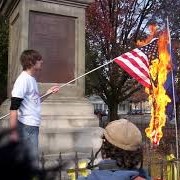
In the 1960’s, the dissident voice championed First Amendment rights that included the freedom of assembly and freedom of speech. I remember that freedom cry as a child superimposed over news footage of a burning US flag. The patriot in my young heart was equally shocked by the flag burning and impressed by the necessity of the freedom that allowed that flag to burn.

In law school, I learned the nuances of the jurisprudence that grows out of our US Constitution in which the First Amendment is enshrined. The clash of ideas is so sacred in our constitutional framework that it allows even the idea of abolishing that very framework to be heard.

In the 21st Century, many things have changed, while somethings have remained the same. Many of the dissident ideas from the 1960’s have become mainstream, and more “conservative” voices have become dissident. I am no longer shocked by the burning of the flag (and, perhaps, the point of burning a flag is no longer poignant for the same reason).

The angst of the 1960’s of my youth has been replaced by the angst of the 21st Century of my middle age. The reasons for my angst are much different, yet very much the same at their core. I have grown and changed in my views, but the emotional strain of the human condition remains.

I fear, at times, that the framework that protected the freedom to burn US flags in the 1960’s might, itself, be destroyed in my lifetime, or the lifetime of my children, by the fire of ideas that are antithetical to that freedom.


The ideas in colleges and universities around the country that seem to dominate those institutions promote the silencing of dissident voices. Speaker engagements are canceled as the loudest voices want not even a whisper to be heard in opposition.


One theme of the dominant social, philosophical and political ideologies that thrive on college campuses today is that certain voices should be silenced, while other voices should be magnified – a kind of totalitarianism of ideas. This worldview would destroy the foundation of the First Amendment if the First Amendment is not held firm.

I am shocked by this new predominant view as I was once shocked by the burning of a US flag. The shock stems not from the evils in society this ideological view aims to address, as I find some common ground in those concerns. I am shocked that the proposed remedy involves weakening the most fundamental freedom that protects freedom itself – the freedom of ideas and the right to express them.

The idea of “hate speech”, as well-intentioned as it sounds, is inimical to a framework of freedom that protects the clash of ideas. Nowhere is freedom more necessary to be protected, than at the intersection of ideas and the right to express them. One person’s hate speech is another person’s freedom of expression.

If we allow the idea of hate speech into the fabric of First Amendment jurisprudence, we threaten its very foundation. What we characterize as “hate” today is subject to change with changing societal norms tomorrow. No speech is safe from the label of “hate” if labels are allowed to silence speech.

While such a worldview has some appeal and laudable goals, it cannot be advanced by the abolition of freedom of speech. Yet, I realize at the same time, that freedom, real freedom, protects even those ideas that are antithetical to freedom and demands that they be heard.


As shocked as I was in my naïve youth to watch the US flag burn in the streets of America, I understood the importance of allowing that expression to be heard. That I am no longer shocked by that expression is of no consequence.


In fact, freedom of speech is nowhere more vital than the protection of speech that is offensive. Favored speech doesn’t need protection.  If any speech or expression is deemed unworthy of protection on the basis of its content, no speech or expression is safe.

Continue reading “Comments on Freedom and the Clash of Ideas”