Do We Have Any Evidence of the Resurrection? A Critique of Skepticism and Proof

People confuse proof, as in a mathematical proof, and proof, as in an offer of evidence that tends to support a proposition.


Some people say that we have absolutely no evidence for the resurrection (and no evidence that God exists in the first place). Nothing could be further from the truth. We have evidence. The issue isn’t a lack of evidence; the issue is how we approach the evidence and weigh it it.

A person who approaches “supernatural” phenomenon with purely materialistic assumptions will weigh the evidence differently than one who is open to nonmaterialistic possibilities. Jesus, though, lived in time and space in history. Many people in the first century who saw him die claim to have seen Jesus and interacted with him in the flesh after he died, and those people were willing to die for what they saw.

That is evidence. Full stop. People may be skeptical of it. People may assume Jesus couldn’t have risen from the dead, despite what people think they saw, because miracles don’t happen. But, now I am talking about how people approach and weigh the evidence.

People confuse proof, as in a mathematical proof, and proof, as in an offer of evidence that tends to support a proposition. Fallible, finite human beings deal almost exclusively in the latter realm of evidence, even in science, because we don’t know what we don’t know.

Mathematical proofs are an achievable goal in mathematics (though sometimes not even then). Such proof is impossible outside of mathematics.

Science does not provide us that kind of certainty, either. Science changes all the time on the basis of new evidence, and things we thought we knew in the past are constantly being adjusted, or even discarded, on the basis of additional evidence.

Finite beings such as ourselves are limited in our knowledge, our access to knowledge, and our understanding of how the knowledge we have fits together. We have to be humble as we cautiously put our confidence in the things we think we know because we are limited in our ability to know and understand our world, and we will always lack absolute proof for most, if not all, things.

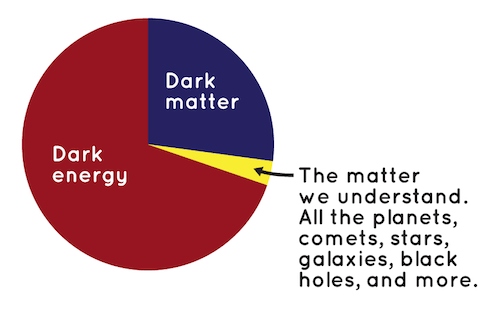
The extent of our limitations can even be quantified. For instance, 95% of the physical universe is invisible to us! The vast, unseen reaches of the universe are comprised of things like dark matter and dark energy that we cannot see and know little about, except for what we can infer about them. We aren’t sure what these things are, but we know they exist by the affects we see on the matter we see and know.


According to scientific consensus, the universe is about about 13.7 billions years old, and the earth is about 4.543 billion years old (give or take about 50 millions years), and homo sapiens appeared only 300,000 years ago (and maybe even only190,000 years ago). Assuming those calculations to be true, human-like beings have existed for only 0.0066% of the time the earth has existed and only 0.002% of the time the universe has existed. (If my math is correct.)

If we view the existence of the earth (not even the universe) on a 24-hour scale from the beginning to the present time, life began at 5:00 AM, the first vertebrates appeared at 8:00 AM, and human beings appeared just a fraction of a second before midnight.
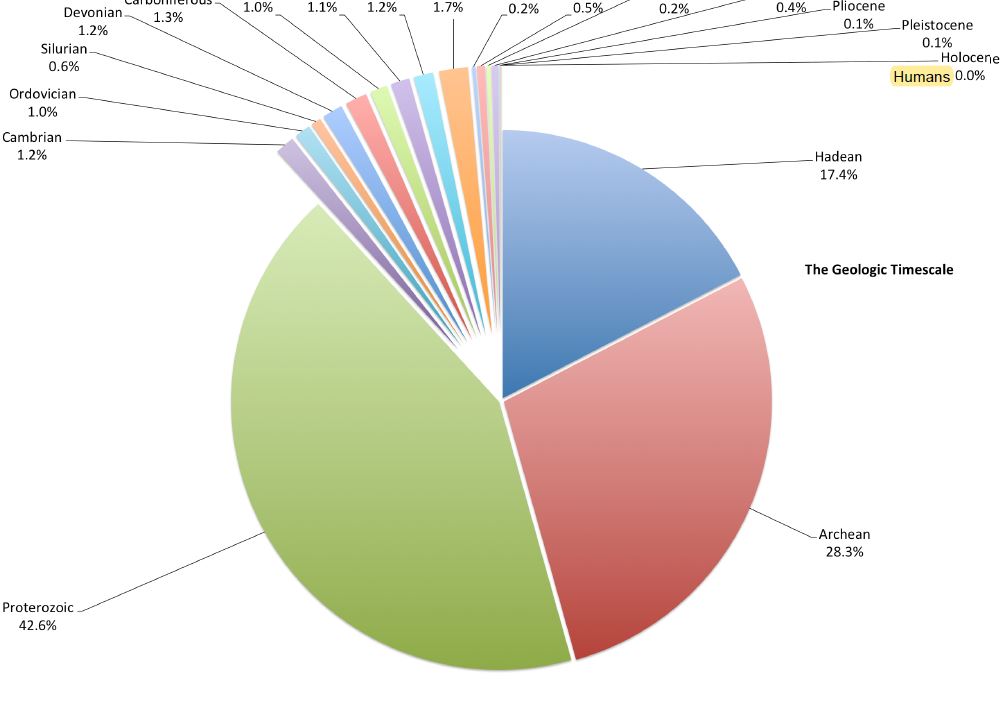
Homo sapiens have only developed knowledge and the ability to communicate and preserve a record of it for about 5,500 years. We have been developing and recording our knowledge for only 0.00022% of the time the earth has existed, which is only 0.00007% of the time the universe has existed.


During that relatively short, 5500-year time period we have developed the capability to see only about five percent (5%) of the universe, though we have actually examined very little of it – and then only at very great distances. We hnave only explored more than five percent (5%) of the oceans on this earth – a very small planet orbiting a very small sun in a very small solar system in the inconceivably large expanse of what we we call the universe.

The body of our scientific knowledge has grown tremendously, even exponentially, especially in the last 200 years, but we have only just begun to know and understand the universe we live in. If humans live another 5,500 years, we will not have explored all of the universe, and we will not know all that there is to know.

Our world is grand and almost inconceivably complex. The DNA of a single human cell contains so much information that if it were represented in printed words, simply listing the first letter of each base would require over 1.5 million pages of text! Imagine how much information exists in the universe and how much we don’t know.

We will likely never know all there is to know about the expanse of the universe and everything in it, large and small, in all the years mankind is on the earth. Thus, we are in no position to write off the possibility of God creating the universe and Jesus rising from the dead.

The title to this piece is (admittedly) a bit misleading, so I need to provide the following disclaimer. Some people will read the title and assume that I am attempting to prove the resurrection. I am not doing that. I am offering only the beginning of proof (as in offering evidence) in this article, but it is evidence. You can weigh it how you will.

We should at least be open to consider what evidence there is for the existence of God and not write off the possibility that God exists. If God exists and made the universe out of nothing, which is what the Bible claims in Genesis 1, John 1, and Hebrews 11, then He could certainly raise Jesus from the dead.

How arrogant it would be for us to determine for ourselves (categorically) that there is no God, that He did not create the universe, and that Jesus did not raise from the dead. We don’t know what we don’t know, and we don’t understand perfectly what we think we know.

With that said, I want to provide some minimal facts that provide some evidence that tends to support the resurrection. These things are not proof; they are an offer of proof. We cannot achieve definitive proof, but there is evidence for the credibility of the claims made that Jesus rose from dead.


Continue reading “Do We Have Any Evidence of the Resurrection? A Critique of Skepticism and Proof”

The Chicken or the Egg and basic Assumptions on Origins

The chicken and the egg question confronts the basic assumptions about life


Which came first? The chicken or the egg? This is a school child’s question, but sometimes the most profound questions about life and reality as we know it can be boiled down (to keep with the theme) to simple questions and simple propositions.

Spoiler alert: I am not going to take a position on the chicken/egg controversy. That was just a teaser. The questions I want to address are far more fundamental (though actually related).

The assumptions we make, even the greatest geniuses among us, are pretty simple at their core. And we can’t prove them. We have to take them on “faith”, yet we construct our view of the world and how it works on the basis of those assumptions.

Many people develop those assumptions from an early age without much critical examination. Though our basic assumptions are the filter through which we view everything, and we use those filters constantly to make critical examinations of the world around us, we rarely examine or critique those filters, themselves.

Because our assumptions are the basis on which we reason, do science, and live our lives, we tend to be reluctant to subject them to rigorous examination. Two of the most fundamental filters by which people see the world are diametrically opposed to each other: 1) the assumption that a divine being exists through which the universe was created, and 2) the assumption to no such divine being exists, and all that exists is physical matter and energy.

(A third view is that the divine “entity” is one with matter and energy, but this view can be lumped in with the view that all that exists is matter and energy since this third view equates the divine with matter and energy. Only the first view assumes that divine reality exists separate and apart from matter and and energy and caused it to come into being.

I note that many people try to mix and match these fundamental assumptions. The view that the divine is “one with” and undifferentiated from the matter and energy that makes up the universe is such an attempt, and it runs into problems as a result.)

The assumptions could not be more simply stated: either God exists, or God does not exist. We vigorously defend whichever of these two assumptions we have embraced. We cannot definitely prove either of these assumptions, but we are often loathe to subject them to critical examination.

That doesn’t mean that we don’t “test” them. In some ways, our daily lives are a continual test of those basic assumptions – consciously or unconsciously. As we live our lives, our assumptions are repeatedly put to the test as we apply the filters derived from our assumptions.

I think all people have encountered some disconnection between reality and their basic assumptions. I think we have all struggled with feeling like the world doesn’t make perfect sense – it doesn’t add up according to our assumptions. I submit that is the inevitable state of a finite being who doesn’t know what she she doesn’t know (and, perhaps, never will).

Human beings are nothing, however, if not resilient. We are good at ploughing forward with vague feelings of unease that our basic assumptions are not adding up. We may not always be conscious of this unease. Some people simply shrug their shoulders and resign themselves to it.

“Eat, drink, and be merry” (for tomorrow we die), is the attitude people often hold onto who have reached a state of mental and emotional confusion and resolved it with indifference. Life has a way of confronting that indifference, however, when loved ones die, injustice hits close to home, and the age old question, “Why?!” pushes to the surface like rocks in a New England yard after a hard rain.

I submit that our faith is revealed in the way in which we hold to those assumptions, believing that they will be vindicated, despite the incongruities between those assumptions and the reality that continually confronts us. We put our trust in those assumptions and plow forward, moving the rocks to the edges of our intellectual territory.

Frankly, what else is a finite being to do?

A friend of mine, when I posed the question about the chicken or the egg, said the answer is easy: the egg came first. I don’t know whether he was being facetious or serious, but his confidence illustrates the point that we have faith/trust in our basic assumptions. He can’t prove the egg came first, but he was confident in his assumption.

In the following presentation, Sy Garte unpacks the basic chicken and egg question about the origin of life. Sy Garte is a scientist, a biochemist, who is retired from a career in science. He is published in scientific journals, and he is very familiar with the challenge of unpacking those basic assumptions.

His father was also a scientist. He grew up in an atheistic household that was hostile to the idea of God. He assumed that no God exists, and the world consists only of matter and energy into his 40’s.

At that point, he changed his mind on his basic assumptions. It was science that led him to question his basic assumptions and, eventually, to examine them rigorously. He came away from that rigorous examination with a new set of basic assumptions that, he says, make much more sense of science and reality.

If you are interested in his story, he wrote a book about his journey from a purely materialistic view of the world to the view that God exists: The Works of His Hands: A Scientist’s Journey from Atheism to Faith. But that isn’t the subject of my writing today.

I write today on the subject of our basic assumptions, and how they affect the way in which we approach the world. I hope you will take the time to watch the following presentation, which demonstrates how those basic assumptions affect our thinking. The presentation is only about 27 minutes long with Q & A at the end.

He presents the chicken and the egg question in two syllogisms. The first one is the assumption he grew up with and which formed the basis of his views for over 40 years:

As noted above, he was led to reexamine his basic assumptions through science. First, it was physics that posed a challenge to his basic assumption that no God exists. Much later, his beloved biochemistry led him further down the path. The second syllogism is the one he know assumes:

I have often thought of the importance of perspective for finite beings such as humans. Our individual and collective perspectives are unique and fixed in time and space to a very small connection with the universe. We are parochial with our perspective, and we tend to be adverse to other perspectives breaking in on our little corners of the universe. But, the universe is vast, and we should not be so fearful or defensive as to shield ourselves from other perspectives.

The Surprising Significance of Being Made in God’s Image

The ultimate significance of human beings being made in God’s image is that we are to love (value) our neighbors and even our enemies.

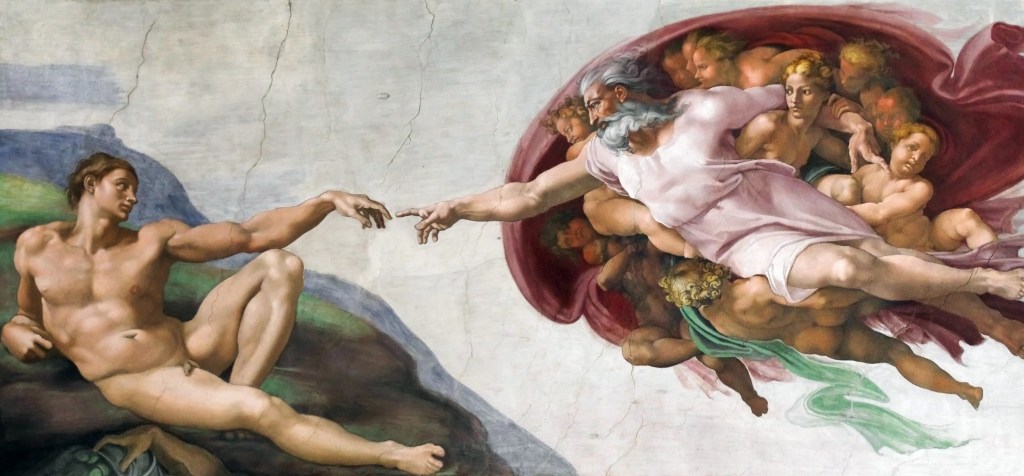
ROME, ITALY – MARCH 08: Michelangelo’s masterpiece: The Creation of Adam in Sistine Chapel

What does it mean that human beings are made in God’s image? What does it mean that God commands us not to take His name in vain? New answers to these interrelated themes might surprise you.

Carmen Imes wrote a book called Bearing God’s Name that explains for common folk like me the conclusions she developed in her doctoral dissertation. She just published a new book called Being God’s Image, a kind of prequel to the first book. I recently listened to her talk about these things with Skye Jathani on the Holy Post podcast that inspires my writing today. (The conversation starts at 54:20 if you want to hear it from her mouth.)

The commandment not to take God’s name in vain is where the conversation started, but being made in God’s image is actually the prequel to that “story”, and the significance of bearing God’s name (in contrast to being God’s image) is central to the story.

I am going to start with the backstory (in the beginning), what it means to be made in God’s image, and what it means to bear God’s name before opening a new understanding of the commandment not to take God’s name in vain, according to Carmen Imes.

Imes says that some theories entertained by the church misperceive the significance of the revelation in Genesis to people in that culture filled with false idols. They miss the mark and fall short of the reality that is expressed in Genesis.

Imes says, “The majority of the views out there through the centuries attached the image of God to some human capacity or function. That view makes the image of God something we do or are qualified to do by having a certain capacity.”

Some say human rationality is what it means to be made in the image of God. They reason that we are intellectually superior to animals; therefore, rationality is what it means to be made in the image of God.

Others have ascribed being made in the image of God to our social and political ability to govern ourselves. Still others believe our morality and conscience are what distinguish us from the animals as being made in God’s image.

These things certainly distinguish human beings from other creatures created by God, but Imes says these human capacities, true as they are, do not accurately convey what the biblical text actually says. Imes says that assuming the differences between humans and the animals is what being made in the image of God means s just “theological speculation” It is eisegesis – imposing our own thinking on the text – rather than exegesis – extracting the meaning from the text, itself.

Th view that special human capabilities are what it means to be made in the image of God is not true to the biblical text, and it is not justified by the text. Exegesis of the text (pulling the meaning from the text, and not from our conceptions applied to the text) reveals a different view for what it means to be made in God’s image.

Imes says we need to pay closer attention to what the text actually says to determine its meaning. She also reads the text in light of its context, the Ancient Near Eastern culture, to determine more precisely what it means that human beings are made in the image of God.

The backstory begins in Genesis 1:27:


God created mankind in his own image,
    in the image of God he created them;
    male and female he created them.


The Hebrew word translated “image” in this passage is tselem, meaning literally an image. Strong’s Concordance describes the word further as “a phantom, i.e. (figuratively) illusion, resemblance; hence, a representative figure, especially an idol — image, vain shew”. (See BibleHub)

We resemble or are representative of God, though we are not (yet) true representations of God. Given the Hebrew meaning of the word, tselem (with overtones of “phantomlikeness” and resemblance – implying something less than the real thing), perhaps we are merely phantom resemblances at this time.

I would note that we may only have the potentiality of being truly like God. In the New Testament, we find that we must be born again to become God’s progeny, His children, his ambassadors (representatives) and to be found “in” Christ, who alone (at this time) is the exact representation of God in the flesh (not merely a resemblance).

Perhaps, we only have the potentiality to be exactly like God, but that doesn’t discount the fact that we are created in His image – as Adam and Eve were created in His image. This understanding sheds new light, perhaps, on the first commandment: “Thou shalt have no other gods before me”; and it sheds new light on the second commandment: “Thou shalt not make unto thee any graven image.”

I am going beyond, now, what Carmen Imes says in the conversation, though I think it follows from her observations. I will also get to the surprising nuance she finds in reading Genesis 1:26-27* that sets this text apart in the Ancient Near Eastern culture.

Continue reading “The Surprising Significance of Being Made in God’s Image”

God Speaks to Each of Us in Our Own Love Language

The poignance of human longing, existential angst, and the intimacy of God with us

Photo credit to Carolyn Weber: author, speaker and professor

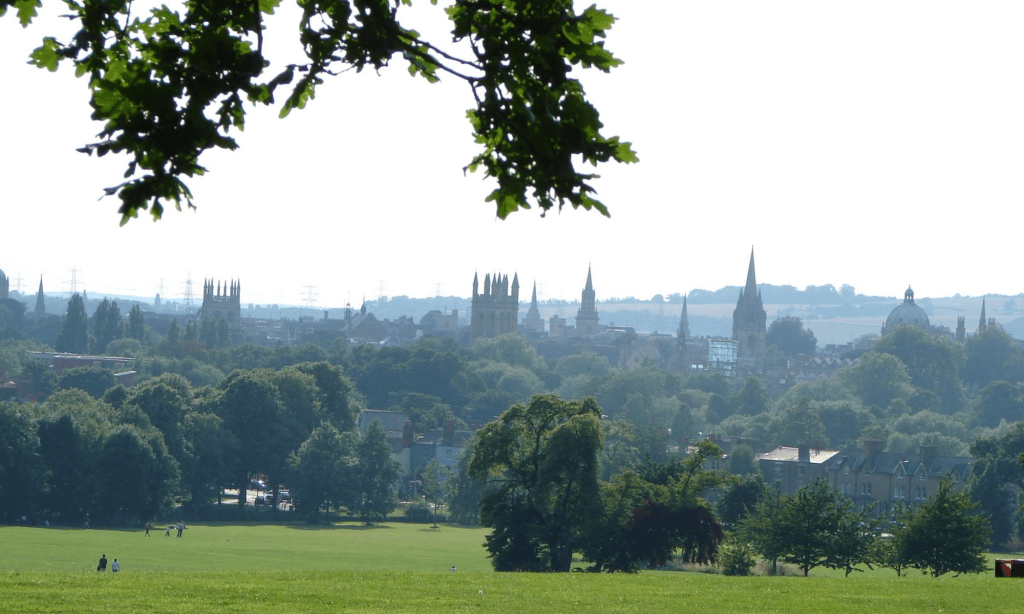
Carolyn Weber has always been an academic, but she is no longer an atheist. She has a B.A. Hon. from Huron College at Western University, Canada and a M.Phil. and D.Phil. from Oxford University, England. She has taught at faculty at Oxford University, Seattle University, University of San Francisco, Westmont College, Brescia University College and Heritage College and Seminary, and she was the first female dean of St. Peter’s College, Oxford.

My inspiration today comes from an interview of Carolyn Weber by Jana Harman on the Side B Stories podcast. You can listen to the hour long interview in episode 4, Finding God at Oxford – Carolyn Weber’s story. She turned her personal story into a book, “Surprised by Oxford”, which is being made into a screenplay staring Phyllis Logan from Downton Abbey and Mark Williams from the Harry Potter movies.

In the interview, Carolyn Weber shared that she was drawn to the romantic writers of the 17th and 18th centuries in her college years because they wrote about infinite longing. Carolyn long recognized a similar longing in her own life, and they romantic writers resonated with that longing in her. 

Carolyn was raised in a non-religious home. She had no experience with religion, and she was not familiar with the detail of Christianity or the Bible.

She recalls that she knew nothing of the Bible until she read the Bible for the first time in a college class. As an undergraduate literature major, her first impressions of the Bible included included recognition of how well the story of the Bible holds together in intricate detail, though it was written over many centuries by almost four dozen different writers.

These elements of Carolyn Weber’s story remind me of my own story. I was raised in a religious home. We were Catholic, and we went to church every Sunday, but I had never read the Bible. I knew next to nothing about the Bible before college, and church seemed to have no relevance for me.

I was also an English Literature major. I also read the Bible for the first time in a college class. I wasn’t particularly drawn to the romantic writers, but I did notice the theme of longing, and it intrigued me. (You can read my story here.) Our first impressions of the Bible were also very similar.

I recognize that my resonance with Carolyn Weber’s story may not translate to every reader (and maybe not to any reader). A statement she made in telling her story, however, may. She said, “God speaks to us in our love languages.”

I can identify with that, perhaps, because my “love language” seems to be so similar to hers. The same things that spoke to her, spoke also to me. I will explain below, but I invite you to consider as you read (or go back to listen to her story) what your love language is and how God has spoken intimately to you in your love language.

Continue reading “God Speaks to Each of Us in Our Own Love Language”

A Strategy for Reversing the Decline of Faith in the United States?

Over two-thirds of today’s immigrants to the United States are Christians

Statue at the Recoleta cemetery in Buenos Aires, Argentina

I read an article posted by the Free Press, A Church Grows in Brooklyn. The article draws a line between immigrants working jobs Americans don’t want and immigrants upholding faith traditions that Americans are abandoning. the author says:

“Over two-thirds of today’s immigrants to the United States are Christians, and prominent religious scholars forecast that immigrants will single-handedly reverse Christianity’s decline in America.”

Yet, a large segment of “the American church” monolith seems to be completely disconnected from this reality. Many American Christians are proudly “anti-immigration”. They will say they are in favor of “legal” immigration, but they would turn away hundreds of thousands of refugees and “illegals” – as if grace played no part in the salvation of immigrants.

If the American Church is positioned against generous immigration, we have not only forgotten our American heritage (“give me your huddled masses”); we have forgotten our spiritual roots:

“And you are to love those who are foreigners, for you yourselves were foreigners in Egypt.” (Deut. 10:19)

“‘Cursed is anyone who withholds justice from the foreigner, the fatherless or the widow.’” (Deut. 27:19)

“The alien who resides with you shall be to you as the citizen among you; you shall love the alien as yourself, for you were aliens in the land of Egypt: I am the Lord your God.” (Lev. 19:34)

“You shall not oppress a stranger, since you yourselves know the feelings of a stranger, for you also were strangers in the land of Egypt.” Ex. 23:9)

“For if you truly amend your ways and your doings, if you truly act justly one with another, if you do not oppress the alien, the orphan, and the widow, or shed innocent blood in this place, and if you do not go after other gods to your own hurt, then I will dwell with you in this place, in the land that I gave of old to your ancestors forever and ever.” (Jer. 7:5-7)

“You shall allot it as an inheritance for yourselves and for the aliens who reside among you and have begotten children among you. They shall be to you as citizens of Israel; with you they shall be allotted an inheritance among the tribes of Israel.” (Ezek. 47:22)

“Thus says the Lord of hosts: Render true judgments, show kindness and mercy to one another; do not oppress the widow, the orphan, the alien, or the poor….” (Zech. 7:9-10)

“’Then I will draw near to you for judgment; and I will be a swift witness against … those who turn aside the alien and do not fear Me,’ says the Lord of hosts.” (Mal. 3:5)

These are just a few of the verses that weave like a rich gold thread through the tapestry of Scripture. This thread began with the first step Adam and Eve took out of the Garden of Eden – banished from their home with God and doomed to walk the earth as aliens and strangers. The entire sweep of the Bible is about God’s plan to bring them home – to welcome the stranger back.

When we are home in this world, we are absent from God. when we become born again, we are no longer “of this world.” (John 15:19; 17:16) Our citizenship is in heaven. (Phil. 3:20) We have become strangers and exiles on earth like the great men and women of faith. (Heb. 11:13-16) If, indeed, we are of the faith.

Hebrews 11 urges us to model ourselves after the great people of faith. Those people did not call this earth their home because they were waiting for a city, the architect and maker of which is God. Peter says that we are (or should be) aliens and strangers in this world. (1 Peter 2:11) If we truly believe that, why do we resist sharing our temporary country with real aliens and strangers streaming in from the mission filed God has commissioned us to go into?

Continue reading “A Strategy for Reversing the Decline of Faith in the United States?”