What Does It Mean that the Word of God Was Inspired by God and Received and Passed on By Men?

The Bible, itself, doesn’t claim to be one hundred percent, word for word, accurate (or even inerrant). The closest we get to a statement like that is that it is “God-breathed” (inspired), and that the people who were “inspired” by God received that inspiration and passed it on.


The written word of God was so important to the Jewish culture that scribes were a distinguished, respected and critical role in Jewish society. The importance of the painstaking process and precision with which they copied Torah, the Prophets and Writings was embedded into the foundation of Jewish culture going back to Moses.

Moses produced the Ten Commandments etched in stone. Those stone tablets were carefully placed into the Ark of the Covenant, carried with the nation of Israel as they traveled through the desert, and kept with ritual attention to detail in the most sacred place in the Tent of Meeting in the middle of their camp wherever they came to rest.

Scribes who carefully and painstakingly copied Scripture were still honored at the top of Hebrew culture in the First Century when Paul, also known as Saul of Tarsus, was alive. Paul was trained as a Pharisee of Pharisees under Gamliel, the most respected Pharisee of his day.

For that reason, I find it interesting, to say the least, the way Paul described the process by which the word of God was given by God to the people. He would have been intimately acquainted with the disciplined, careful and thorough way a scribe would copy Scripture. Yet Paul says,

“All Scripture is God-breathed and is useful for teaching, rebuking, correcting and training in righteousness, so that the servant of God may be thoroughly equipped for every good work.”

2 Timothy 3:16-17

God-breathed, or inspired, is the way Paul described how people received God’s word and passed it on. If Paul wanted to convey the idea of verbatim dictation from God, as Muhammed claimed with the Quran, he would have likely described the process like a scribe painstakingly copying the text, but he didn’t.

Paul was intimate with the way scribes copied the scriptural text, but he didn’t describe the way people received God’s Word and passed it on that way. Paul, himself, received God’s Word and passed it on. That message he received from God and passed on has become scripture! Yet, he didn’t describe the process like a scribe copying verbatim.

I wrestled with what inspiration means in recent articles here and here. Given the way people like Paul described the way Scripture was conveyed and received, it is likely he didn’t mean verbatim dictation from God. If he meant verbatim dictation, he would have described the process more like a scribe copying scriptural text.

Instructive are the other ways Scripture is characterized in the New Testament. Peter, for instance, wrote the following in his second epistle:

“But know this first of all, that no prophecy of Scripture becomes a matter of someone’s own interpretation, for no prophecy was ever made by an act of human will, but men moved by the Holy Spirit spoke from God.”

2 Peter 1:21 (NASB)

Peter says that the prophecy was not initiated by human agency. People didn’t choose to prophesy; they were moved by divine agency. They didn’t interpret what they were moved to communicate; they simply communicated what they received.

The Greek word translated “moved” in this text is φέρω (pheró), meaning “to bear, carry, bring forth”. It has the same connotation as the idea of a conduit or conduction.

If Peter meant to say that the Word of God was “dictated” and copied down verbatim, like the scribes copied Scriptures, he would have likely used a word related to “scribe”, but he described a different kind of process. I think we have to assume that Paul’s inspiration is similar to Peter’s conduction.

Neither one used the well-known analogy of a scribe merely copying what was written, though Peter clarifies that the message prophets received and passed on was not interpreted by them. They passed it on with integrity and, presumably, accurately. Still, that is not the same thing as verbatim dictation.

Paul describes his own encounter with the risen Christ in this way. He says:

“For I would have you know, brothers and sisters, that the gospel which was preached by me is not of human invention. For I neither received it from man, nor was I taught it, but I received it through a revelation of Jesus Christ.” 

Galatians 1:11 (NIV)

Paul uses the same language in his first letter to the Corinthians when he says:

“For I handed down to you as of first importance what I also received….”

1 Corinthians 15:3 (NASB)

But what does it mean that the writers of Scripture were inspired, moved by God, did not initiate, or interpret or invent it. What does it mean that they passed on what they received?

If they didn’t take “dictation” from God, what does it mean that God inspired men and moved men with a message, and they passed on what they received?

Continue reading “What Does It Mean that the Word of God Was Inspired by God and Received and Passed on By Men?”

Perspective: As the Heavens Are Higher than the Earth

We can perceive and feel our way to understand that time had a beginning at the point of a quantum vacuum, but we can go no further even to perceive, but for speculation, what lies beyond. We are left to grasp by pure faith that God initiated the universe into being.

Photo from the James Webb Telescope

Perspective can make all the difference in the way we perceive and understand anything. Our view from a position under the canopy of a dense forest will be different than our view from a drone in the same location flying over the same forest canopy. The higher we fly that drone, the more our perspective expands and understanding of our location grows.

From a great height, we see the expanse and contours of the forest, the streams and rivers that run through and beyond it, the mountains in and the oceans in the distance where the forest transitions into the hills, the foothills, the mountains slopes and the peaks in one direction, and the openings, meadow, plains, and coastlands in another direction.

The higher we go and farther out we see, the more we see and understand the forest in relation to other geographical features that surround it and the savannas, valleys, deserts, and coastlands and oceans in the grater world beyond the forest.


“As the heavens are higher than the earth, so are my ways higher than your ways and my thoughts than your thoughts.”

Isaiah 55:9


This verse has become so often quoted that it might seem trite to us. “Yea, yea!” we say. “We need to trust God. I get it.”

It’s hard to grasp and trust in the perspective God has from our place where light filters sparingly through the forest canopy. Our perspective is not much better in the barren expanse of a vast desert or on the waves of a vast ocean as far as the human eye can see. Knowing that the forest canopy, barren desert or vast ocean gives way to a different reality can seem like a small consolation from where we stand.

We have a harder time grasping and appreciating that God sees out over the universe where our planet sits tucked among other planets circling the sun in an opportune place in the Milky Way solar system where we peer out, however tentatively, into an expanse of other solar systems stretching out in all directions beyond our capabilities even to observe.

Ninety five percent of the universe we can see is comprised of dark matter and dark energy that we know exists, but we cannot even observe. Mystery surrounds us in every direction and beyond our capability to go or even to glimpse.

We can perceive and feel our way to understand that time had a beginning at the point of a quantum vacuum, but we can go no further even to perceive, but for speculation, what lies beyond. We are left to grasp by pure faith that God initiated the universe into being by His very Word and expends still into some unknown future and “void”.

Continue reading “Perspective: As the Heavens Are Higher than the Earth”

The Dilemma of God Demanding Justice from Beings Incapable of Meeting God’s Standard

There is one critique of the Christian notion of sin and the justice of God that is troubling on its face. That key critique for anyone who claims that God demands justice for sin is that God is seemingly unjust to require justice of beings who can’t measure up.

Many modern people bristle at the Christian idea of sin, and they bristle even more at the idea that God would punish sinners. Frankly, I think many modern people simply don’t understand what sin is and who God is.

But, that aside, there is one critique of the Christian notion of sin and the justice of God that is troubling on its face. That key critique for anyone who claims that God demands justice for sin is that God is seemingly unjust to require justice of beings who can’t measure up.

Alongside the notion that the God of the Bible and demands judgment for not measuring up to God’s just standard is the notion that all people are sinners who don’t measure up. In fact, the New Testament is fairly read to say that people are incapable of living up to God’s standard.

The doctrine of original sin says that we are all corrupted because the sin of Adam and Eve has been passed down generation after generation. Even if we don’t believe in the doctrine of original sin, however, the Bible is clear from the Old Testament to the New Testament that human beings don’t measure up to God’s standard:


They have all turned aside; together they have become corrupt;
    there is none who does good,
    not even one.

Psalm 14:3


They have all fallen away;
    together they have become corrupt;
there is none who does good,
    not even one.

Isaiah 53:5


as it is written:

“None is righteous, no, not one;
   .
 All have turned aside; together they have become worthless;
    no one does good,
    not even one.”

Romans 1:10-12


Jesus said, “No one is good except God alone.” (Mark 10:18 (NIV)) Yet, he says, “Be perfect … as your heavenly Father is perfect?” (Matthew 5:48)

This is the dilemma: How can we be perfect?! “To err is human” the bard once said, and so it seems we are imperfect by our very nature.

Many people reject the idea that God can be just and demand justice from people incapable of measuring up to the standards God’s justice demands. They say it would be unjust for God to demand justice from beings who have no ability to act other than they do, and so fail to meet God’s standards.

God seems to be acting unfairly to demand that we meet His standards when we are 1) created beings, 2) born into sin, and 3) incapable of living up to the perfection God requires.

Other questions tumble after these thoughts: Why didn’t God create us perfect? If we are born sinful, how can God blame us for being sinful? If we are incapable of being perfect, how can God punish us for our imperfection?

Continue reading “The Dilemma of God Demanding Justice from Beings Incapable of Meeting God’s Standard”

The Best and Hardest Apologetic Argument

We place too much emphasis, perhaps, on the arguments when we “do” apologetics. Not that being intimate and proficient with the arguments for God are a bad thing; but they aren’t the only thing.

I like apologetics because I like the intellectual exercise. I enjoy loving God with my mind. Maybe the reason for that is that I became a Christian in the academic setting of college. I was a seeker then, and I have always been stimulated by the intellectual journey.

I have loved talking, writing, and reading about meaningful and significant matters since I emerged from an existential angst that I sought (unsuccessfully) to smother with alcohol and drugs in my teens. Once I stepped out of that haze to face the reality of life, I dove head first into the search for truth.

I had no patience for merely fanciful speculation. My keen interest and motivation became a quest to learn about and understand the nature of reality. If there was meaning to find there, I was dedicated to finding it.

My journey led me eventually to Jesus, and there my quest was fulfilled. I have found in Christ the truth for which I sought. In the Old Testament, which speaks of him and foreshadows him, and in the New Testament, which is a testament to Jesus, the Messiah, the savior of the world from all the existential angst that bears down on mankind, I have found explanations and nuance that make sense of reality.

I have found a home for my restless mind in learning to love God with my mind. The intellectual pursuit is part of loving God, but it’s easy to forget for someone like me that I also need to love God with my heart, soul, and strength. (See Luke 10:27)

I may get into what it means to love God in these various ways in another blog post, but first I am realizing it’s important to see that love is meant to be the primary object and focus of our hearts, souls, strength, and mind. Loving God is the ultimate goal of these things – not the other way around.

We engage our hearts, souls, strength and minds in order to know God. Knowing God in a Hebrew sense means much more than intellectual ascent and understanding. It means relationship. This makes sense because love is relational.

Knowing is also the primary focus of apologetics, but the emphasis on knowing in apologetics, especially for western-minded Christians, is often simply intellectual. In apologetics, we talk about learning various arguments for God, like the cosmological argument, the argument from fine-tuning, and the ontological argument, and so on.

We debate which arguments are the best arguments, which arguments are most effective, and which arguments are most difficult for a nonbeliever to counter. We talk as if we do apologetics like gladiators in an arena where knowledge is the ultimate weapon.

I have suspected for awhile now that we are missing the boat when we “view “do” apologetics this way. Maybe I am slow to this realization, and most other people are way ahead of me, but I suspect I may be more typical than I fear.

Continue reading “The Best and Hardest Apologetic Argument”

Christianity’s Ties to the Scientific Method

Christianity was the fertile soil in which scientific method and modern science began to grow


I have heard a number of people assert that Christianity gave birth to the scientific method. Perhaps, the first time I heard that claim was from John Lennox, the famous Oxford University professor of mathematics. I was intrigued, but I didn’t take the time to research his claim at the time.

I have heard the claim repeated multiple times, most recently by Dr. Michael Guillen the astrophysicist, former Harvard professor and TV personality. In fact, he devoted a podcast to the subject (embedded below), so I figured it was time to learn more.

I started with Wikipedia, which has a page on scientific method. Wikipedia begins with Aristotle and focuses on rationalism as the basis for scientific method.

Properly speaking, rationalism is not a method. It is a philosophy, a way to approach the world. Rationalism and Aristotle, though, seem to have led the way to the development of the scientific method.

Aristotle’s inductive-deductive method that depended on axiomatic truths and the “self-evident concepts” developed by Epicurus was an early conception of the way to do science. It was jettisoned, however, for something more like the modern scientific method beginning around the 16th Century. Perhaps, this is why Guillen doesn’t mention Aristotle, except in passing.

After those early pioneers, Wikipedia references some great Muslim thinkers who were influenced by Aristotle (including Avicenna (Ibn Sina) and Averroes (Abū l-Walīd Muḥammad Ibn ʾAḥmad Ibn Rušd)). They placed “greater emphasis on combining theory with practice”, focusing on “the use of experiment as a source of knowledge”. Guillen starts his history of scientific method with these early “flashes” of scientific method in the Muslim world.

These men of the Islamic Golden Age pioneered a form of scientific method, but the inertia did not continue. Moses ben Maimon (Maimonides), the great Jewish theologian, physician, and astronomer, developed a similar emphasis on evidence. He urged “that man should believe only what can be supported either by rational proof, by the evidence of the senses, or by trustworthy authority”. He foreshadowed a future scientific posture, but his prescience also did compel further advancement at the time.

Dr. Guillen credits Robert Grosseteste and Roger Bacon with the formation of the first actual principles of scientific method. Their ideas “caught fire” in Christian Europe from the tinder of academies that began just after the turn of the first millennium, igniting a blaze that would fuel scientific inquiry and endeavor for centuries to come.

“Concluding from particular observations into a universal law, and then back again, from universal laws to prediction of particulars”, Grosseteste emphasized confirmation “through experimentation to verify the principles” in both directions.

Roger Bacon, Grosseteste’s pupil, “described a repeating cycle of observation, hypothesis, experimentation, and a need for independent verification”, including the recording of the way experiments were conducted in precise detail so that outcomes could be replicated independently by others. Bacon’s methodology lead to the modern emphasis on peer-review in science, says Guillen.

Wikipedia mentions Francis Bacon and Descartes. Bacon and Descartes emphasized the importance of skepticism and rigid experimentation, expressly rejecting Aristotle’s dependence on first principles (axioms). Guillen, however, glosses over Descartes to get to Galileo Galilei and Isaac Newton.

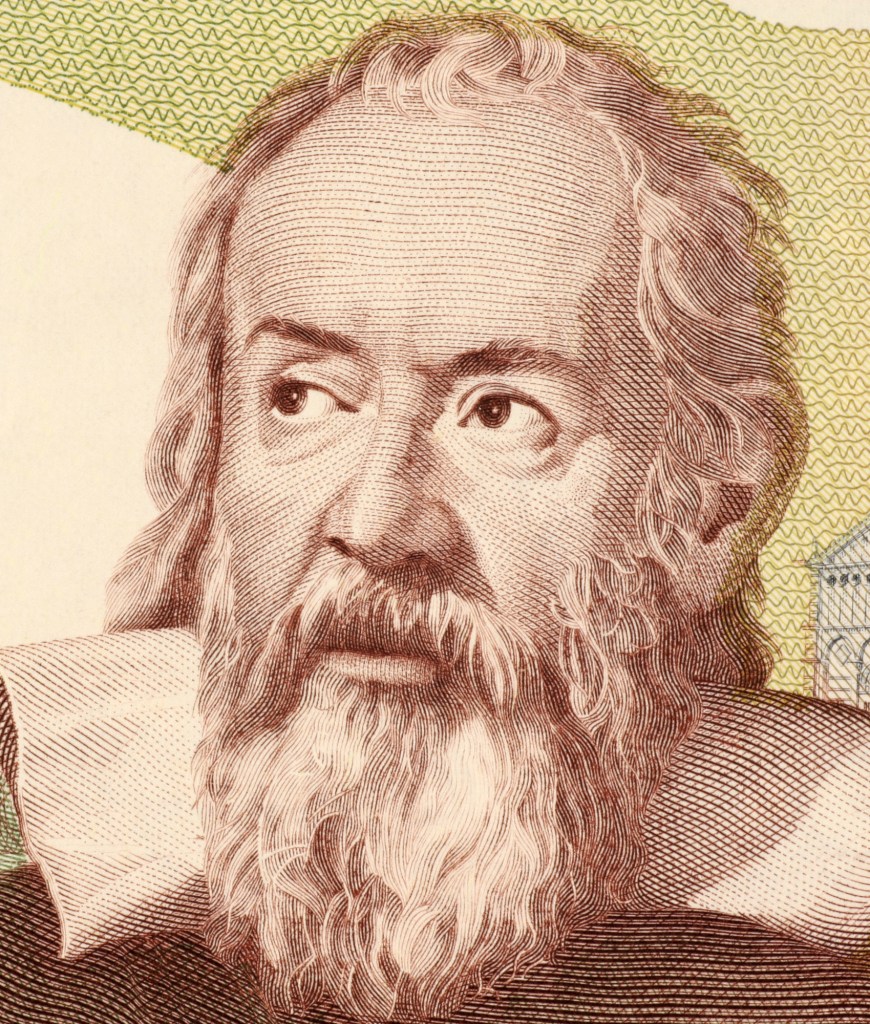
Galileo Galilei introduced mathematical proof into the process and continued to distance science from reliance on Aristotelean first principles. Galileo and Newton reformulated the terms of scientific method that would inform modern scientists ever afterward.


That the two latter men were men of faith, along with Grosseteste (a Catholic Bishop) and Roger Bacon, his student, is significant. Maimonides and the Islamic thinkers before him were also men of faith. These men who pioneered the way to modern science were all monotheists who believed in a creator God. 

Science did not really take off until the 17th Century. The trailblazers of the modern scientific method were religious men, and the modern scientific method was born in the religious environment in Christian Europe lead, primarily, by men of faith.

Why did science catch fire in Christian Europe and not in other parts of the world? Why not in China? Or in the world of the eastern religions? This is a question Guillen poses, and he provides a possible answer.

Continue reading “Christianity’s Ties to the Scientific Method”