Hope in the Midst of the Warnings in Hebrews

A believing heart turns toward God. As long as it is “today”, we can turn toward God, and we can have confidence that He will forgive.


“Therefore, since we are surrounded by such a great cloud of witnesses, let us throw off every encumbrance and the sin that so easily entangles, and let us run with endurance the race set out for us. Let us fix our eyes on Jesus, the author and perfecter of our faith, who for the joy set before Him endured the cross, scorning its shame, and sat down at the right hand of the throne of God.”

Hebrews 12:1-2[1]


These two verses in Hebrews 12 were shared with me by a gentleman at the church I go to who sends out daily verses by text to a group of men. Sometimes things like this are particularly timely and poignant. These verses inspires my thoughts today.

I have been wrestling with my own sinfulness lately. I have been painfully aware of areas of sinful behavior in my life and sinful attitudes in my heart that I have yet to conquer. The threads of this sinfulness go back to childhood, and they are rooted deeply.

I find myself stumbling over the same things time and again. I sometimes feel like a bird caught in a snare that cannot escape. I am tempted to be completely disgusted with myself, indignant, and condemning. Then, I recall that God is faithful to forgive; and I must ask myself, “Who am I to condemn?” Unless, of course, I am not really “saved”.

I have variously felt convicted, forgiven, hopeful, condemned, hopeless, and depressed in cycles for a long time. I tire of continually going back to God, asking for forgiveness…. again! I fear that my lack of success in overcoming these things means that I do not have the power of the Holy Spirit in me; and maybe I have fooled myself into believing in Christ’s power in my life.

I am reminded today that the letter to the Hebrews carries in it some of the most hopeful and some of the most despairing verses that can be found in the New Testament, like my cycle of feelings. I am digging deeper today to explore them. In doing so, I am reminded that the trajectory of Hebrews is hope!

The following verses provide great hope to the weary Christ follower:


“[S]ince we have a great high priest who has ascended into heaven, Jesus the Son of God, let us hold firmly to the faith we profess. For we do not have a high priest who is unable to empathize with our weaknesses, but we have one who has been tempted in every way, just as we are—yet he did not sin. Let us then approach God’s throne of grace with confidence, so that we may receive mercy and find grace to help us in our time of need.”

Hebrews 4:14-16


If we “hold firmly to the faith we profess” and “approach God’s throne of grace with confidence”, these verses promise mercy and grace to help us in our time of need. These words bring great comfort to a person like me.

Yet, thoughts arise in my mind that are concerning: What does it mean to “find grace to help us in our time of need”? How does this grace help us? Does this grace mean forgiveness in our time of need? If so, then I am thankful for that grace?

What is that grace in our time of need us the power to overcome the sin – to put a stop to it? What if the grace we receive is meant to empower us to stop, and I don’t stop? Does that mean I didn’t receive the grace that is offered? Am I doomed if I continue to fail?

A fear naturally arises that grace is not enough for me, that maybe it isn’t offered to me, or that I have spurned that grace by continuing to fail. If we go on sinning, we fear we will exhaust God’s well of mercy. The consequences of “falling away” loom ominously:


“It is impossible for those who have once been enlightened, who have tasted the heavenly gift, who have shared in the Holy Spirit, who have tasted the goodness of the word of God and the powers of the coming age and who have fallen away, to be brought back to repentance. To their loss they are crucifying the Son of God all over again and subjecting him to public disgrace.”

Hebrews 6:4-6


This passage is particularly ominous in its finality and the impossibility of coming back from “falling away”. I have tasted of the goodness of the word of God, If I go on sinning is there no repentance for me?

Am I the only who thinks like this? Am I the only one who fears being on the wrong side of this grace that is offered, doomed to a life of sin and, eventually, death? Fortunately for us, we have hope!

Continue reading “Hope in the Midst of the Warnings in Hebrews”
What Laws Must a Christian Follow?

The tension between the Law and the Gospel and how they relate to each other is the key to understanding Christianity.


The themes of law and grace are central to Christianity. Sorting them out gets to the very heart of the gospel message. Yet, many people inside and outside of the Christian community are unclear on what laws Christians must follow, what laws are no longer applicable, and why.

Someone recently posted the following question to a group to which I belong on social media:


I get the message of we are not under the law but under grace. But if we live through Christ we will follow the law. How do we know what law to follow? Does this go as far back as to not mix fabrics? 

Obviously everyone says we’re no longer under the law, but ”faith without works is dead” so I am confused. 

How do we know which laws to follow?


Human tendency is to want a list of rules to follow so we can check them off. The rich young ruler demonstrates that human tendency when he came to Jesus one day and asked, “Teacher, what good thing must I do to get eternal life?” (Matt. 19:16)

We also have a tendency to want to quantify rules, and to simplify them to make them easier to follow. Perhaps, that is what motivated someone to ask Jesus, “Teacher, which is the greatest commandment in the Law?” (Matt. 22:36)

Or we go the other direction: we add rules on top of rules on top of rules to make sure that we don’t miss anything. The Pharisees demonstrated this approach in how they handled the commandment to observe the Sabbath. The created a list of “work” that was forbidden including, among other things: sowing, plowing, reaping, binding sheaves, threshing, winnowing, selecting, grinding, sifting, kneading, and baking bread; twelve similar activities related to the preparation of clothing, from shearing sheep to sewing; and seven activities related to preparing the carcass of a deer for food or leather. (See What are some Sabbath Observance rules that the Pharisees made?)

Moses started with ten commandments. By the time the books of Moses were completed, there were 613 commandments! (Though not everyone agrees on exactly what they are.)

The Torah (the Five Books of Moses – Genesis, Exodus, Leviticus, Numbers & Deuteronomy) focused on laws. That focus carries through the entire Old Testament. Though the laws are often more prominent in the breach, than in the observance thereof!

The same focus continued into the New Testament. We see it in the question asked by the rich young ruler and the Pharisees’ questions to Jesus. We see it in the tension between Paul and Peter that threatened to divide the early church over whether believing Jews must follow the Law and what laws believing Gentiles must follow.

This is the tension between the Law and the Gospel. If we understand only one thing about the Gospel message, the relationship of the Law to the Gospel might be the most important thing! I have written about it often, including How the Moorings of the Gospel Were Secured.

For the sake of brevity, I won’t summarize everything here. You can click in the links in the last two paragraphs to get an overview from the articles linked there. Understanding what Jesus meant when he said he didn’t come to abolish the law, but to fulfill it is critical.

If you are not a Christian, or you are a Christian, but you are not sure you understand these things, please do not just gloss over them. The tension between the Law and the Gospel and how they relate to each other is the key to Christianity.

It was the focus of almost all of Paul’s writings. It is the major theme in Romans, Galatians, Ephesians, Hebrews and the other epistles. Take some time now to wrestle with it. Don’t stop until it makes sense to you!

Hopefully, the rest of my thoughts in this piece will help.

Continue reading “What Laws Must a Christian Follow?”

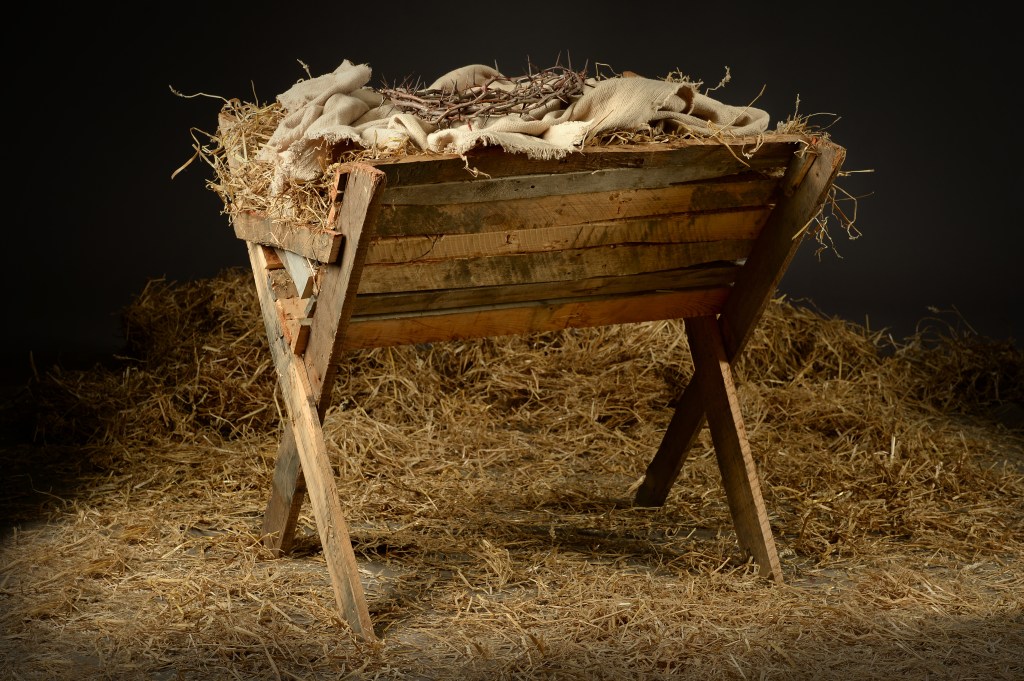
A Message in a Manger


I am going to revisit some of the Christmas articles I have written in previous years in the coming weeks, starting with this one. I may freshen them up a bit as I do so. This was one of the first articles I wrote on this blog, and I think the message still resonates today: A Message in a Manger.

Christmas thoughts: Humble Beginnings, Worldwide Ends

The Christmas story rises softly and quietly from the humblest of beginnings to sweep across history and the globe into the grandest of all stories.

kevingdrendel's avatarNavigating by Faith

canstockphoto7454869
(c) Can Stock Photo / Anke


Christmastime is a time to consider the birth of Christ. It’s “the reason for the season”, as the saying goes. Even with the busyness, commercialism and looming red eclipse of Santa, we usually pause to connect the dots to the birth of Jesus.

Whether you wish people a Merry Christmas or Happy Holidays, Christmas involves some acknowledgment of the birth of a man who was called Jesus who lived and died in the 1st Century in the region we identify as Palestine and Israel today. Here, in the confluence of Roman, Greek, Jewish and pagan influences, an obscure carpenter who lived maybe 33 years began a movement in human history that has spanned the globe and stood the test of time.

That movement has become the largest religion in the world today found on every continent and in every corner of the world. It…

View original post 863 more words

The Word of God Is Living and Active

Unlike the other sacred texts I read, the Bible was hard-edged, and it confronted me with me! It penetrated my heart, and I wanted to look away!


I have made the statement in a previous article that the truth of God is not hidden from those who truly seek Him and desire to know Him. The truth is only hidden to those who don’t really desire to know God for who He is.

The following statement was made in the sermon I heard today: “Holiness and wholeness are hidden where only the humble can find them”.

I recognize that it’s easy for someone who believes in God to say these things. A person might even say these things in an arrogant and elitist sort of way, but that attitude would be 180 degrees wrong.

God is not an elitist. Elitism is antithetical to God and the fruit of the Spirit that should characterize those who believe and know Him.

Jesus, who claims to have been God in the flesh, came not to be served, but to serve and give his life. God “emptied Himself, by taking the form of a servant, being made in human likeness….” (Philippians 2:7) These are not the actions of an elitist God.

The Gospel story of God descending from His place of privilege and power as creator of the world to enter His creation is not the story of an elitist God. He didn’t come as the greatest of all men with power and might. He came as a child, and He embraced the life of a servant, washing his disciples feet, healing lepers by touch, embracing prostitutes, and loving vulnerable people on the edges of society.

We also read that God created all humans in His image. Therefore, all human beings have intrinsic value. Since our value is given by God, it has nothing to do with our station in life. That value is not connected to how gifted or smart we are. It is not dependent on who our human ancestors were, or anything other than the image of God that we bear in ourselves by virtue of being born.

The flip side of that is the statement that God is “no respecter of persons” (He doesn’t show favoritism according to our standards). (Romans 2:11-16) If God is hidden to some people, His hiddenness is more a reflection of what people are looking for than who God is.

As a case in point, His own people, the nation to whom He spent hundreds of years revealing Himself, didn’t even recognize Him when He entered their world in real time and encountered them stripped down to human form:


He was in the world, and though the world was made through him, the world did not recognize him. He came to that which was his own, but his own did not receive him. Yet to all who did receive him, to those who believed in his name, he gave the right to become children of God….”

John 1:10-12


Jesus confronted the elite, religious leaders. He called them blind guides. They, of all people, should have been able to recognize Him, but they didn’t.

We see in those interactions that they were looking for a savior that would overthrow the Roman Empire and ascent to the throne of Israel. They wanted an earthly savior. They were jealous of his popularity. They didn’t expect God to come to them humbly as He did. They didn’t remember their own Scriptures that say,


“though the Lord is exalted, yet he regards the lowly”.

Psalm 138:6


They didn’t remember or perhaps understand that the long-awaited Messiah would not fit a worldly model of power and strength. They should have known that he would have “no beauty or majesty to attract us to him” and “nothing in his appearance that we should desire him”. (Isaiah 53:2) They should have known that he would be “despised and rejected by mankind”, “a man of suffering, and familiar with pain” who would be “held in low esteem”. (Is. 53:3)

At the same time, we can understand why they missed these details or didn’t understand them. God is the King of Kings and the Lord of Lords! Why would He stoop so low? The kings, lords and rulers of the world did not stoop.

God called the nation of Israel to separate from the nations around them and to be different, but they continually failed to do that. God’s revelation from the beginning was an exercise in demonstrating that He is different, and not like the other gods, but they like the familiarity of those gods.

God’s people demanded a king to be like all the other nations. In doing that, they were rejecting God as their King who was distinctly different. They embraced the other nations’ gods; and Israel became indistinguishable from the character of the other nations.

They were meant to be a city on hill, a light to show the uniquely different character of God to the nations around them. They were continually urged to welcome strangers, to care for widows and orphans, and to do justice. (See 25 passages, including 19 Old Testament passages, with these instructions.) God desired them to be different from the world around them, as He is different from the gods of the other nations, but they failed to be different.

It’s no wonder that the Jewish leaders in the days of Jesus failed to recognize him. The Pharisees were so focused on the minutia of of their religious observances they neglected the “weightier matters of the law: justice and mercy and faithfulness”. (Matthew 23:23) They failed in their religiosity to appreciate and embrace God’s character that is embedded in the concepts of righteousness and justice. (Psalm 89:14)

They didn’t recognize God in the flesh because they lost sight of His real character. They were religious, but they lacked a real understanding of God.

The prophets, like Jeremiah, warned the nation of Israel many years earlier that they were going astray. The human heart is deceitful. (Jeremiah 17:9) We fool ourselves too easily.

Our fears, insecurities, pride, desires to be like the Joneses (other nations) and many things that get in the way of knowing God for who He is take priority in our thoughts and attitudes. We buy into narratives of ourselves, others and God that are warped.

Religious people are not immune to self-deception, and Christians are no less susceptible to self-deception than others. This is the lesson of the Pharisees, the leaders of God’s people in the days that Jesus walked the earth. In fact, religious people may be even more susceptible to self-deception because we use religion to legitimatize and justify our deception!


“The eye is the lamp of the body. If your eyes are healthy, your whole body will be full of light. But if your eyes are unhealthy, your whole body will be full of darkness. If then the light within you is darkness, how great is that darkness!”

(Matthew 6:22-23)


What is the cure for this human malady?

There is one thing that is specifically designed by God to reveal (expose) the hearts of people. It may not work exactly as we might want it to work. It isn’t a magic device, and it doesn’t work unless we submit to it. Rather, it’s the tool God uses to do His surgery in our hearts if we allow it in to our hearts to do its work. That tool is the inspired word of God.


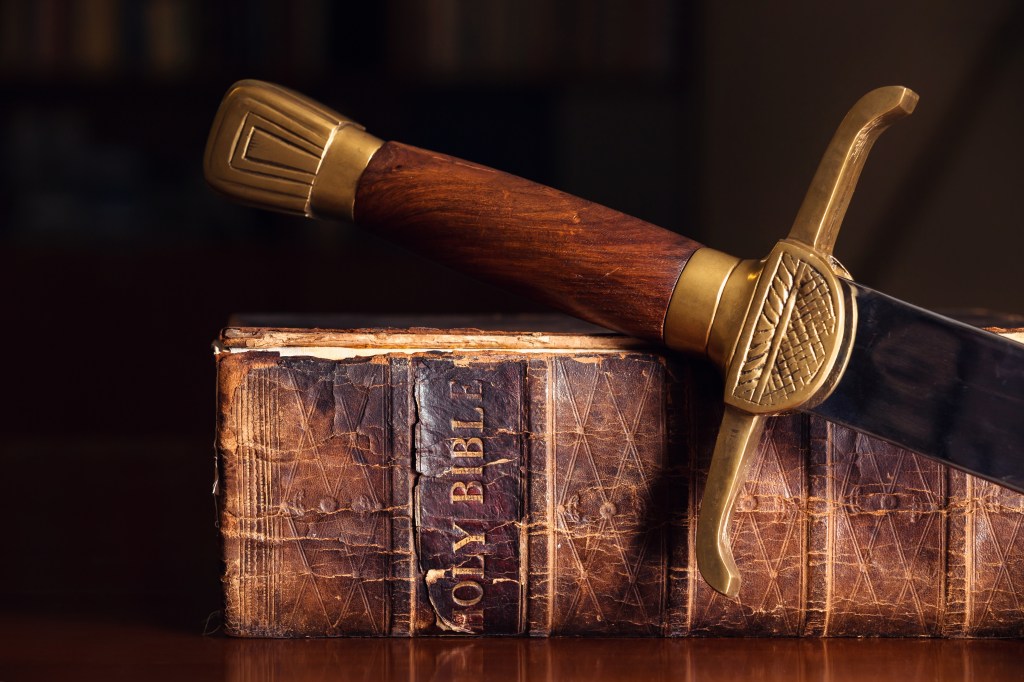
“[T]he word of God is alive and active. Sharper than any double-edged sword, it penetrates even to dividing soul and spirit, joints and marrow; it judges the thoughts and attitudes of the heart. Nothing in all creation is hidden from God’s sight. Everything is uncovered and laid bare before the eyes of him to whom we must give account.”

Hebrews 4:12-13


Continue reading “The Word of God Is Living and Active”