I have discussed in two blog posts the odd qualification in the key statement of the Parable of the Sheep and the Goats: [W]hatever you did for one of the least of these brothers and sisters of mine, you did for me.” (Matthew 25:40)(NIV) Who are Christians to love? is the topic of the first blog article I wrote, addressing the question whether the “brothers and sisters of mine” limits the people we are to care for.
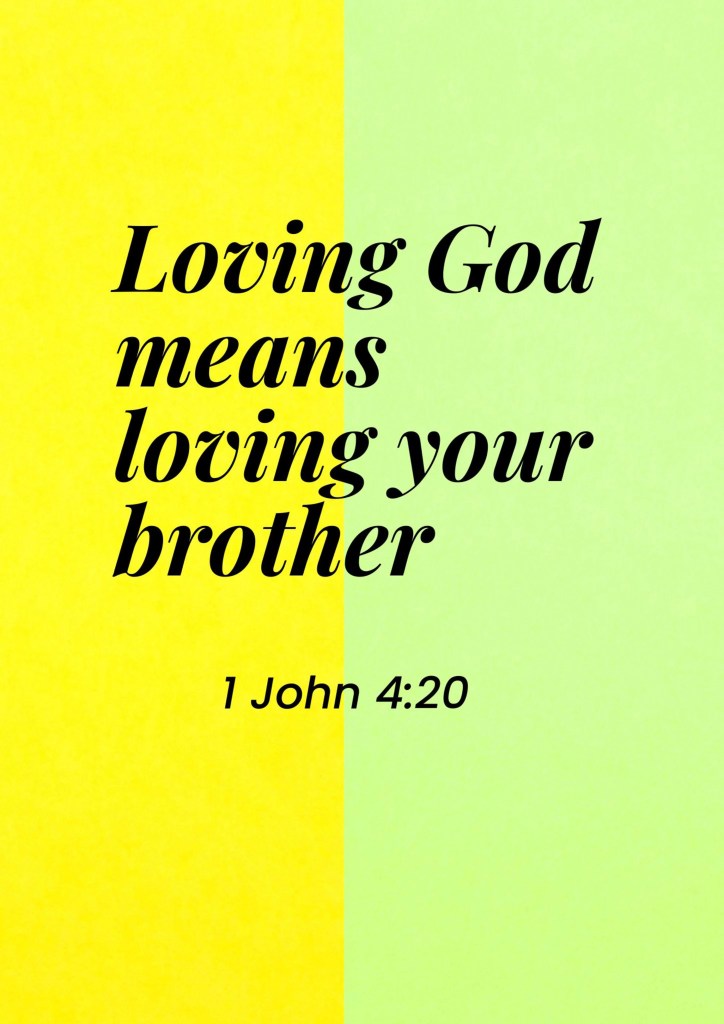
Elsewhere, Jesus tells his disciples that the world will know they are his followers by the love they have for one another (John 13:35), and John says, “[W]hoever does not love their brother and sister, whom they have seen, cannot love God, whom they have not seen.” (1 John 4:20) When Jesus learns from someone in a crowd that his mother and brothers are looking for him, Jesus says, “[W]hoever does the will of my Father in heaven is my brother and sister and mother.” (Matthew 12:50)
These qualifiers on who the followers of Jesus should love have prompted some scholars to conclude that we are only called to love fellow believers. They conclude that only the care we show to fellow believers who are hungry, thirsty, naked, a stranger, or a prisoner is showing care for Jesus in the Parable of the Sheep and the Goats.
This, however, is a minority view. Most of the early church fathers and theologians do not hold that view because of the many Bible passages that instruct us to love our neighbors and even our enemies. The Parable of the Good Samaritan makes this point rather clearly, as I show in the blog article linked in the opening paragraph.
In my second article, I tackled the question, Why, then, does Jesus repeatedly prioritize Christians loving one another? It seems that Jesus does prioritize our love for fellow believers. Paul also prioritizes Christian love for fellow believers when he says, “[A]s we have opportunity, let us do good to everyone, and especially to those who are of the household of faith.” (Galatians 6:10)
In short summary of the previous article, we should recognize that Jesus emphasized loving each other as he was preparing his disciples for the imminent reality of his death. In that context, he was encouraging them to stick together and to love each other.
In other contexts, Jesus told his disciples to love their neighbors and their enemies. Thus, Christian love is not exclusive to loving Christians, yet Jesus does seem to prioritize love for fellow followers of Christ.
Perhaps, he was also letting them know that they need to love each other, first, before then can love their neighbors (and then their enemies). If we cannot even love those who love us and think like us, how can we love our neighbors, and how in the world can we love our enemies?
I encourage you to read the previous two blog articles if you want a more compete analysis on the subject. In this blog article, I want to explore a different way of reading “whatever you did for one of the least of these brothers and sisters of mine, you did for me.” (Matthew 25:40)
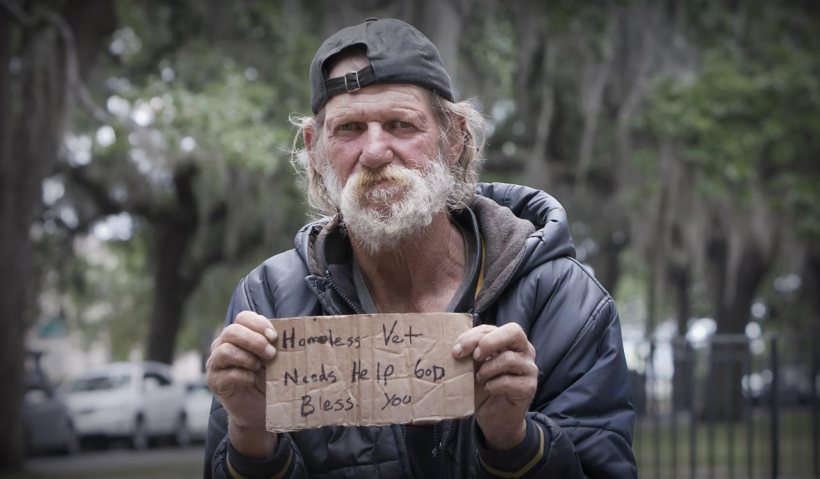
Jesus shocked his followers one day with the Parable of the Sheep and the Goats in which Jesus likened the love and care we show to people in need – the hungry, the thirsty, the stranger, the people lacking clothes, the sick, and the prisoner – to showing love and care for him. Jesus said, “[W]hatever you did for one of the least of these brothers and sisters of mine, you did for me.” (Matthew 25:40)(NIV)
Until recently, I had glossed over the qualifier to this statement: Whatever you did for one of the least of these brothers and sisters of mine, you did for me. When someone pointed out to me that the statement is qualified, it nagged at me.
What did Jesus mean when he said “these brothers and sisters of mine”? Did he mean only his biological family? Did he mean his followers? Or did he mean something else?
In another passage while Jesus was talking to a crowd, someone told him his mother and brothers were outside wanting to speak with him. He responded by pointing to his disciples, saying, “Here are my mother and my brothers. For whoever does the will of my Father in heaven is my brother and sister and mother.” (Matthew 12:49-50)
Does this mean that we only apply the Parable of the Sheep and the Goats to followers of Christ who are hungry, thirsty, in need of clothing, strangers, sick, and imprisoned? Does it mean that we have no divine obligation to love and care for other people (even in our own family)?
Along the same line, I previously noticed that Jesus qualified his prediction that the world would know his followers by their love. He said, “By this everyone will know that you are my disciples, if you love one another.” (John 13:35) That qualifier has nagged me for sometime, and for the same reasons as the qualifier in Matthew 25 was now nagging me. I knew I needed to dig into this and develop a better understanding of what Jesus is saying in these passages.
After meditating on these things and considering other Bible passages, I worked out my analysis in Who Are Christians to Love? Matthew 25 and John 13. I determined that we need to understand the bigger picture, and we need to understand context.
Many passages exist throughout Scripture from the Old Testament through the New Testament that convey God’s intention that we love all people. The Bible is rich with passages clearly and emphatically stating that we should love all people, just as God loves all people.
The second greatest commandment – to love your neighbor as you love yourself – is not qualified. The Parable of the Good Samaritan makes clear that our neighbors include people regardless of their ethnic, national, and religious identity – even people we are strongly tempted to despise.
Jesus eliminated all guesswork when he told us that loving our neighbors extends even to our enemies. The example Jesus gives is that God causes sun to shine on the good and the evil and rain to fall for the benefit of the righteous and the unrighteous. (Matthew 5:44-45) God doesn’t withhold good things like sun and rain from the evil and the unrighteous, and neither should we. We are to be like Him in showing basic love and care for all people.
Jesus added that even pagans love those who love them. We would be no different than a pagan if all we did was to love those who love us back. (Matthew 5:43-48) Rather, we are to “be perfect as God is perfect” and love all people like God loves people, the good and the evil, the righteous and the unrighteous.
When Jesus healed the sick, drove out demons, gave sight to the blind, and showed compassion to people, he did not distinguish between Jews and Gentiles or believers and unbelievers. Of the ten lepers that he healed, only one of them came back to thank him and give glory to God (Luke 17:11-19), but He healed them all anyway.
When Jesus announced his ministry in his hometown synagogue he recalled two stories that triggered the people to want to kill him. These stories demonstrate how God loves not just the Jews (and how the Jews had a hard time accepting that reality). These are the words that provoked his hometown people to want to kill him:
“I assure you that there were many widows in Israel in Elijah’s time, when the sky was shut for three and a half years and there was a severe famine throughout the land. Yet Elijah was not sent to any of them, but to a widow in Zarephath in the region of Sidon. And there were many in Israel with leprosy in the time of Elisha the prophet, yet not one of them was cleansed—only Naaman the Syrian.”
Luke 4:25-27
The Sidonians were Phoenicians, descendants of the Canaanites who constantly battled the Jews, and Sidon was the hometown of Jezebel, the foreign queen who led King Ahab and the nation of Israel astray. Naaman was a Syrian General who had attacked the Israelites. He was a foreigner, an outsider, from Samaria, which was despised by the Jews Jesus spoke to. Jesus was conveying to his people that he came not just for them; he came even for their enemies.
Just as the people in that synagogue, we struggle to love people we despise. We struggle to love people who have wronged us and don’t believe as we do. We struggle to love people who do not believe as we do. Frankly, we difficult actually loving people in the family of God, too.
The difficulty we have in loving people, even fellow believers, does not excuse us from taking the commandments Jesus gave us to heart. The greatest commandment – to love God – is ultimately inextricably intertwined with the second greatest commandment – to love our neighbors as ourselves. John makes this clear:
“For whoever does not love their brother and sister, whom they have seen, cannot love God, whom they have not seen. And he has given us this command: Anyone who loves God must also love their brother and sister.”
1 John 4:20-21
There is that qualifier again – brother and sister. But, we know from other passages of Scripture that the divine obligation to love extends beyond our spiritual family to our neighbors and to our enemies also. Why, then, do those pesky qualifiers keep appearing? I have some thoughts that I will share.
The article, Why U.S. Population Growth Is Collapsing, by Derek Thompson in a recent issue of the Atlantic reminds me of a trend I have been following for quite a few years, now, of declining population growth in Europe and the United States. I first became aware of the trend maybe 8 years ago, and most European countries were already (at that time) at unsustainable growth levels. The US wasn’t far behind.
The article linked above picks up the story as it has advanced in the last two years with COVID. Changing societal norms and expectations have led to significant declines in population growth as younger generations are getting married later in life, having children later in life and having fewer children or no children at all. COVID has rapidly accelerated the decline.
One interesting note from this article is the statement that “America’s bias against immigration is self-defeating in almost every dimension.” The article asserts (with no citation to authority) that immigrants are vital to our national economy, but I have read the studies and know the beneficial affects of immigration on an economy.
Anecdotally, I know a young woman who is a “Dreamer”. I will call her Sofia. She is the daughter of two undocumented immigrants who found themselves on the “wrong” side of the border with an infant (Sofia) after 911. They figured things would go back to pre-911 conditions when people came and went with no documentation required. That never happened, of course.
She shared with me that her father is a businessman. He has multiple businesses. He employs many people, and he teaches other people to be entrepreneurial. He pays taxes. He pays into Social Security, but he will never reap any benefit from it.
He doesn’t qualify for Social Security, and he never will. If he overpays his taxes he gets no refund. He is always afraid of being found out and deported to a country that he no longer considers his home.
Sofia grew up with the same fear. She grew up with the burden of having to be a perfect citizen. Any negative attention could expose her to to deportation to a country she has never known. She told me she knew from an early age that she would never qualify for student aid or student loans, so she would have to earn way to obtain the education she aspired to.
I didn’t realize this, but I have since learned that the IRS will assign a number to anyone, with or without a Social Security number. The IRS doesn’t care, as long as people pay taxes.
When I met Sofia, she had graduated from high school in three years with a perfect GPA, and she was on pace to finish college in three years. She had a perfect 4.0 GPA, and she planned to go to law school. She was exceptional in every way. (Since then she went to law school where she currently is.)
This story is anecdotal, but it’s indicative of the data that shows that undocumented immigrants are not a drain on our economy. Undocumented immigrants pay into the system, but they don’t qualify (in most ways) to take from the system they pay into. The statistical difference (on average) is $80,000 per person paid into the system more than what is taken out.
We actually make money off of undocumented immigrants. They shop at our stores, eat at our restaurants, pay real estate taxes, pay income taxes, pay into Social Security, provide labor for our employers (who are happy to pay them minimal wages), and more. (The popular assumption that immigrants commit more crime turns out to be false also.)
Not only are we turning our backs on the boost to our economy that more generous immigration policies would provide, but we are entering a “population danger zone” according to the author of the article cited above
All of this is to bring me to the point in writing this article, which is a little different than the points made in the article. I borrow these things from the article and from my research to get to a different point.
I am taking a break from considering the difference between “the righteous” and “the wicked” in Scripture to return to a related topic that erupted publicly in recent weeks: racial injustice. It is related because God’s character is righteousness and justice at His core.
As an attorney, I have had the privilege (and sacred duty) to devote some time to a local organization known as Administer Justice that serves the poor, vulnerable and under-privileged in communities around the country. A great many of “those people” are minorities, immigrants and “the working poor”. I’ve had the honor of getting know some real servants of the Gospel in the process, like Bruce Strom, the founder and executive director of this organization.
I am reading through his book, Gospel Justice. I’ve owned the book for a long time, probably years. I started it a long time ago, and I am still not through it yet because ( I admit) that other, more “interesting” subjects and diversions have distracted me from the seemingly mundane subject of justice.
If I truly want to know God’s heart, to follow Jesus and to work out my salvation as God works within me to will and to act according to His good purpose, though, I need to be concerned about justice – because it’s at the foundation of God’s throne. (Psalm 89:14)
We can’t talk about justice in the United States in the 21st century without talking about racial disparities resulting from centuries of racial injustice. The recent events following the killing of George Floyd (and others) have focused national attention on the issue. As the national dialogue continues, we in the Body of Christ need to engage.
There is a great need for the Body of Christ collective to participate as God would have us get involved in the discussion, action and changes necessary to address racial injustice. My own neighborhood in the Body of Christ is the American evangelical church. Thus, I write this with my evangelical brothers and sisters in mind.
The following passage in Bruce Strom’s book inspires my thoughts today:
“The division between Jews and Gentiles was the great divide of the first century.
“In America that great divide is race, and it remains a leading contributor to injustice. In their book, Divided by Faith, Michael Emerson and Christian Smith examine the role of white evangelicalism in race relations. Based on extensive interviews and study, they conclude that the evangelical church, with its focus on individual salvation, not only misses the opportunity to break down the great divide between the races, but also contributes to it.
“This view is shared by my friend Ed Gilbreath, who wrote Reconciliation Blues. ‘A sad tendency of evangelical faith is to elevate the act of evangelism over the humanity of the people we want to reach…. Apparently, any time an ethnic minority speaks out against race-related injustice, he risks being branded a malcontent in need of therapy.’
“Racial injustice is real….
“We must not walk on by [like the priest and Levite in the parable of the Good Samaritan] as if racial injustice does not exist. We should listen to our neighbors of color who understand well the injustices in their community. And our friends of race should not give up, but seek opportunity to lead by example.”
I am reminded that the evangelical tradition is informed by people like Luther and Wycliffe. They championed the principal that salvation is by faith in the grace of God, not by works that we can do. That and the primacy of Scripture and the need for individual members of the Body of Christ to read Scripture for themselves and to pray to God our Father – not through some intermediary, but directly – one on one.
These things have driven the evangelical church to seek and save the lost, proclaiming the Gospel with the message of salvation to individuals who believe, repent of their sins and put their faith in the lordship and salvation wrought by Jesus on the cross. These are hallmarks of evangelicalism. They are indeed central to the purposes of God.
I am reminded further that, when Jesus stood up in the Temple to announce the beginning of his ministry in Luke 4, he read this from the Isaiah scroll:
The Spirit of the Lord is upon Me,
Because He anointed Me to preach the gospel…. (v.18)
When the evangelical church considers the Great Commission – “[G]o and make disciples of all nations….” (Matt. 28:19-20) – preaching the Gospel comes primarily to mind. Evangelicalism has been a champion of preaching the Gospel.
But, I think that sometimes we forget that Jesus didn’t stop there. The passage in Isaiah from which Jesus read continues on well past preaching the good news (quoting from Isaiah 61:1):
He anointed Me to preach the gospel to the poor. He has sent Me to proclaim release to the captives, And recovery of sight to the blind, To set free those who are oppressed, To proclaim the favorable year of the Lord.
What is the fruit of the Holy Spirit? What does loving your neighbor look like? These are not idle questions. These are questions that will separate sheep from goats.
Over the weekend, I posted a simple message on Facebook: presidents don’t say things like that. I am referring to the “sh*thole nations” statement of course. That simple post spawned hundreds of comments, and many of the comments were from Christians defending Trump, or at least not denouncing what Trump might have said.
Durbin might have mistaken what Trump actually said. It’s possible. It’s highly likely that Durbin was motivated by his dislike of Trump and by political objectives when he reported what he claimed Trump said. While it’s possible that Trump didn’t say those words, at least not exactly as they were reported, it also doesn’t really matter.
It’s one thing to question the veracity of Durbin’s report, but it’s another thing to defend or overlook what was claimed to have been said. If he said what he is accused of saying, we shouldn’t be defending it.
I find the continued, unquestioned support for the president, no matter what he says or does, by the Christian community to be disturbing. Are we following Christ? Or are we following a political party? I can’t tell.
Some of the things that have been said include the following: 1) yeah but look at the good that he is doing; or 2) he’s not perfect, he’s a flawed human being; or 3) other presidents have said much worse, and 4) all presidents have said things in private meetings that they would not say in public (to repeat some of statements I have seen).
Those statements may be accurate (or not), but regardless of that, let’s look at these things from a Gospel perspective.