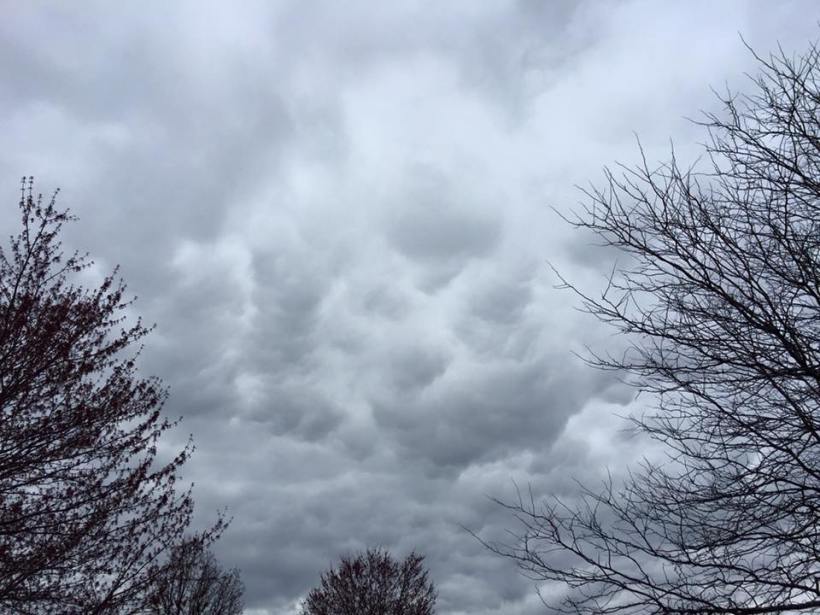
The Temptation to Complain

Photo by Beth Drendel

Why should any living man complain?[i] You are alive! Therefore, you have hope.

Your life, no doubt, has not gone the way you hoped it would. Looking back, there may be many regrets. You may deeply wish that you had known then what you know now, and if only you had some foresight, some sheer luck perhaps, things would be much different.

But things are what they are, and no amount of wishful thinking will change the course of events that have happened to this point.

Have you made mistakes? Be honest! We all make mistakes, and not just mistakes of choice – we all do things we should not have done. We have all done things that we knew we should not have done because they were not right.

We try to “redeem” those mistakes. Sometimes, we try to redeem them by re-characterizing our actions, thoughts and decisions, owning them as if they were right because they are who we are.

That is the temptation of modern life. “Be who you are” – whatever that may be. “Never apologize for who you are”.

But who are you?

Are you your own person?

Continue reading “The Temptation to Complain”

Taking the Emotion out of Sin: A Study in the Substance of Death and Life

Let’s put aside the issue of morality, take the emotion out sin and see what we have left.

 (c) Can Stock Photo


“[T]he wages[1] of sin[2] is death, but the free gift of God is eternal life in Christ Jesus our Lord.” Romans 6:23.

We tend to view sin in moralistic terms, but I wonder sometimes if we might look at sin in non-moralistic terms. The adage, “we are what we eat”, is an apt description for sin. How we eat is a moral issue for some people, but most people (or many at least) don’t view eating that way.

We tend to view sin in moralistic terms, as in reaping what we sow. [3] What if we try to take the morality out of the discussion? What would we have left?

Although sin is a moral issue at heart, the emotion of morality in this modern, post-Christian age in the US may obscure how we view sin and the relationship between sin and death.

Men have tried to hijack morality and claim it as a product of their own making. If God exists, however, He is the author of morality. God, Himself, is the moral standard. I would say that, without God, there is no such thing as objective morality.

If God doesn’t exist, we create our own morality, and your morality might be different than my morality. The morality that is predominant in my community, may not be the morality to which your community subscribes. No one is ultimately right, and no one is ultimately wrong, except that those with the power and influence get to set the standard.

But that’s not what this piece is about. Let’s put aside the issue of morality and take the emotion out of the equation. Let’s take the emotion out of sin and see what is left.

Continue reading “Taking the Emotion out of Sin: A Study in the Substance of Death and Life”

How Can God Judge Good People: Examining the Problem In More Detail

https://www.flickr.com/photos/daynoir/2180510779/in/photolist-4jFFTr-4jKHMd-jWQJXK-odioQr-ocsW2d-odinbH-ocxZSt-g4hBCg-ocE5s6-9bjxyt-8NZVci-8RHoRH-8P41aG-oeUc8U-8NZVcZ-owufDH-ocAr9z-8kEjNt-odx8YU-chcGb-owxMQc-jWQpsn-oe1m1N-8LFfce-ouzTQs-jWR4Hi-osKV4U-jWSQS5-hrLbx1-6utpwj-apBGdk-owEuZp-em3Gxk-oeQ9Rf-9bjxxF-8Vkhtj-8VhsPF-ovviDV-8RHoSc-ou8Fd6-odpLFj-6hLRVK-QKB3p-nzWLGM-osEBRN-DBdANc-ouGvh8-oegftL-oyffAa-hvLNE6
Dayna Mason on Flickr

In a previous blog post, I explained how God is the standard of goodness, and we all fall short of that standard. We have a false view of goodness when we measure ourselves against other people. When we measure ourselves against God, we do not measure up.

And, this is the problem: if God is perfectly good, and there is no bad in Him, we would corrupt Heaven if we entered there. Even the comparatively little bit of bad in the best person would pollute the perfect goodness of God. Just as the physical characteristics of people are virtually indistinguishable 110 stories atop the John Hancock Building, our relative goodness is indistinguishable from the perspective of the perfect goodness of God.

It is not that God would refuse us because of our imperfection; our own corruption (sin) is the problem. As Ezra pined, “Here we are before you in our guilt, though because of it not one of us can stand in your presence.” (Ezra 9:15) Our own sin keeps us from God; our sin separates us from God. The problem is us, not God.

We can not enter Heaven in our present state, the “place” where God dwells, because whatever “bad” we have in us would prevent us from entering. Like an invisible force field, we could not enter in. Our sin would catch us short.

A discussion of goodness and badness, however, really misses the point altogether. As I have said, “goodness” is defined by God, and only God is God. We are not. That may seem elementary, and it is – in the sense that it is essential to understanding our problem. To understand more completely, we have to go back to the beginning. Continue reading “How Can God Judge Good People: Examining the Problem In More Detail”

Lead Us Not Into Temptation

3987743756_40c0140c55_z


“And do not lead[i][ii] us into temptation[iii]….” (Matt. 6:13) is one of the things Jesus taught to us to pray to the Father. Does that mean that God might lead us into temptation (if we did not pray for Him not to)? Clearly not!

We must always be careful when reading Scripture to put a verse in context. Every verse should be read in harmony with the rest of Scripture. The Greek word translated “temptation” here can mean either temptations or tests (or trials), and the meaning of it in a particular passage must be derived from the context. It can mean sufferings that test or try or allurements that tempt us into evil. “Of these the former is the dominant meaning in the language of the New Testament, and is that of which we must think here.Continue reading “Lead Us Not Into Temptation”

Revisiting Life and Death: The Gospel from Beginning to End

We can have every choice (but eternal life) without God, or we can let go of every other choice to choose God (and gain eternal life).

Chris Frayley On Rock at River Bend


“O death, where is your victory?

O death, where is your sting?”

These familiar phrases from 1 Corinthians. 15:55 (quoting Hosea 13:14) jumped out at me as I read them again. Of course, I know that God has swallowed up death in victory through the resurrection of Jesus Christ! But, what does that really mean for us?

This statement is the tip of the iceberg, and it occurs to me that we cannot understand without remembering and contemplating “how we got here”. Therefore, we must go back to the beginning. Continue reading “Revisiting Life and Death: The Gospel from Beginning to End”