Lead Us Not Into Temptation

3987743756_40c0140c55_z


“And do not lead[i][ii] us into temptation[iii]….” (Matt. 6:13) is one of the things Jesus taught to us to pray to the Father. Does that mean that God might lead us into temptation (if we did not pray for Him not to)? Clearly not!

We must always be careful when reading Scripture to put a verse in context. Every verse should be read in harmony with the rest of Scripture. The Greek word translated “temptation” here can mean either temptations or tests (or trials), and the meaning of it in a particular passage must be derived from the context. It can mean sufferings that test or try or allurements that tempt us into evil. “Of these the former is the dominant meaning in the language of the New Testament, and is that of which we must think here.Continue reading “Lead Us Not Into Temptation”

Revisiting Life and Death: The Gospel from Beginning to End

We can have every choice (but eternal life) without God, or we can let go of every other choice to choose God (and gain eternal life).

Chris Frayley On Rock at River Bend


“O death, where is your victory?

O death, where is your sting?”

These familiar phrases from 1 Corinthians. 15:55 (quoting Hosea 13:14) jumped out at me as I read them again. Of course, I know that God has swallowed up death in victory through the resurrection of Jesus Christ! But, what does that really mean for us?

This statement is the tip of the iceberg, and it occurs to me that we cannot understand without remembering and contemplating “how we got here”. Therefore, we must go back to the beginning. Continue reading “Revisiting Life and Death: The Gospel from Beginning to End”

Born This Way

IMG_6922~~~~~~~~~~~~~~

I took the phrase for this article from an interview with Dr. Rosario Butterfield. The context is homosexuality. For years, the gay community has been telling the world that they are born with same sex desire. People refuted that in the beginning. I think it is more or less accepted as factual now. I realize that I may lose some Christian friends at this point, but I hope you stick around.

I realize that what I am about to say might turn away my non-Christian friends, and even some of my Christian friends. I hope you will look past my next statement and keep reading too. The Bible is pretty clear that acts of same gender sex are sin (along with sexual lust, sexual exploitation, sex with multiple partners, sex outside of marriage, adultery, etc.)

It only seems right, now, that I offend everyone. I say that only somewhat tongue in cheek. But here goes – We are all sinners.

Before I lose everyone, think about it: do you not at times of brutal, personal honesty feel as though you are just not quite right? I suppose the brutal honesty comes in the form of thinking that those around you are just not quite right. (That is an easier conclusion to reach for most of us.) Something is just off.

Things are not the way any of us think they ought to be.

Most of us have come to accept that “this” is just the way it is. “This” is normal, and, indeed it is normal! What we know, what we all know, is the normal state of man – this not-quite-rightness.

Depending on how we view the world, we focus on certain aspects of not-quite-rightness. Some focus on homosexuality, the “attack” on the family and abortion. Others focus on threats against the right to bear arms, business and the erosion of capitalism. Others focus on the damage we do to the environment, cruelty to animals and economic disparities. Many focus on the cruelty of war, the barbarism of torture and over-aggression of police forces. Racism, greedy capitalism, domestic abuse, child abuse, adulterous affairs that ruin marriages, child neglect, the over-sexualization of women, oppression of women, human tracking, pornography, dams on our rivers, phosphates in our waters, dark clouds of pollution spewing into the air, dictators oppressing entire nations, drunk drivers, flaws in the legal system that leave people without justice – something is not quite right with the world.

We tend to feel of ourselves that we are better, or at least not as bad, as many, if not most, people. We have primarily good intentions. We do not generally wish people harm. We try not to hurt people, but sometimes we do. Sometimes, in spite of our best intentions, we are unkind, say things we should not say and do things we should not do.

If you stop and really think about it, there are all sorts of things we should do, but don’t. If all the people in the world did things we should be doing, we would eliminate poverty and war and all kinds of troubles. We tend to think that we are not part of the problems in the world, and we probably are not, directly. When we look at the “World”, we tend to compare pretty well. If we look only at ourselves very long, we see there are places that we fall short, even in spite of those feelings of good intentions.

Why is that?

We were born into this not-quite-rightness, and we are part of the not-quite-rightness. We are each not-quite-right ourselves.

Be honest now. Do you do all the things you know you should do? Do you never do things you know you should not do? Even if you do not subscribe to a “Christian” moral code, do you keep your own moral code? Does the world live up to it? If you have read this far, you must admit that the world is not quite right.

I am not quite right, and I have never been quite right. I have never succeeded at being the person I thought I was and thought I should be. I am just being honest.

I know I am not alone in that (though I might have once thought so). I figured out somewhere along the way that others are not quite right as well – whether they see it or admit it. (Think “plank in my eye” analogy here.)

We are “born this way.” I was born with a very strong will, a strong infatuation for girls, a strong competitive instinct and a strong desire for comfort. In my life I have had to face that I am selfish, lustful, jealous, unkind, quick to anger and just plain lazy. I am not being hard on myself; I am just being honest.

I was born that way.

But there is hope! The story of Dr. Rosario Butterfield brings me to tears, because it is my story; and I am grateful.

That same hope took hold of me many years ago, and I just want the world to know that there is glorious, beautiful, life-changing hope in the person of Jesus Christ who was God shedding his position of power and detachment to become one of us. He showed that He cares and that He understands in being willing to suffer and die for us. He showed that there is hope for us in rising again  to conquer sin and death.

God so loved the world that He gave his only begotten son…. that we might live.

You can find the living reality of that love and the hope He gives in the story and life of Dr. Rosario Butterfield:

What about People Who Never heard of Jesus?

Dramatic Aerial view of Rio De Janeiro

One of the most asked questions about Christianity goes something like this:

If Jesus is the only way to heaven, what about the people who lived before Jesus was born?

A corollary question is: What about the people who have never had an opportunity to hear about Jesus? I am no biblical scholar, but I have wondered about these things myself. Continue reading “What about People Who Never heard of Jesus?”

Two Trees in the Garden

Connecting with nature

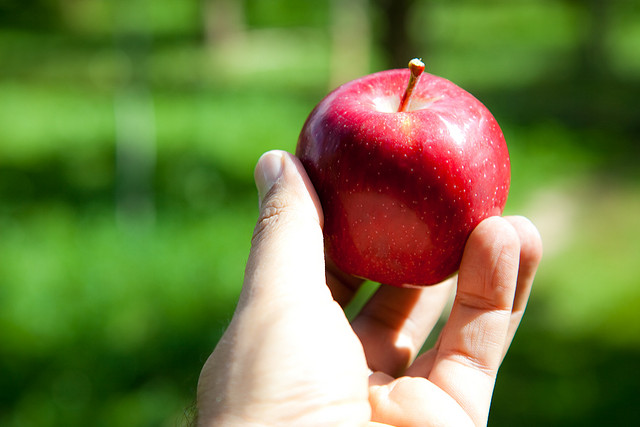
“In the middle of the garden were the tree of life and the tree of the knowledge of good and evil.” Gen. 2:10

Sometimes things jump out when I read the Bible. Two days ago, I was reading Genesis, and it struck me:

 There were two trees mentioned in the garden

The tree of life and the tree of the knowledge of good and evil….

and God only told Adam and Eve they could not eat from one tree – the tree of the knowledge of good and evil.

God did not forbid them to eat of the tree of life.

That suggests that they could have eaten of the tree of life without prohibition, and it struck me: What if Adam and Eve had chosen life? Would there have been a fall? Would God have allowed them to remain in the garden with the tree of knowledge after having partaken of the tree of life?

We can only speculate because Genesis tells us Adam and Eve chose knowledge instead of life. They were drawn to the one tree that God forbade them to eat. It dawns on me that the very act of choosing was a sort of an introduction to that knowledge, and I suspect God knew that they would choose it: the one thing He told them they could not have. What is it in us that we are drawn to the things that we cannot have? Why are we drawn to the things we know we should not have, even over the things that we would rather have?

I suppose some people might choose knowledge again, even knowing that life would be forfeited. Even so, one theme of great literature and art over the centuries is a longing for eternal life. The fountain of youth is the coveted grail. Nothing strikes more darkly at the heart than the certainty of death and takes more of toil on the human heart than the loss of a loved one to its clutches.

I am certain that God foresaw and knew the path that His crowning creation would take. We are created in God’s image and for a purpose higher than our own designs. God must have known that Adam and Eve may have chosen (wold choose?) knowledge over life. He gave them that choice, and he must have been prepared to respond to it. In that sense, it seems to me that knowledge was a part of the plan, even if meant that we would be separated from life and separate from God by it.  

Ironic it is that partaking in the knowledge of good and evil would mean loss of fellowship with God and loss of a personal knowledge of God.

It had to be part of God’s plan as, without the ability to choose, and without the knowledge of good and evil, there would be no truly free will, and without free will, no true love. There would be no place for God’s mercy, no reason for Him to extend it. Without the knowledge of good evil and the opportunity to exercise truly free will, people would be one directional beings, not different in kind from every other animal, unable to appreciate God or to love Him fully.

Knowledge, however, could only come with a price. After gaining the knowledge of good and evil, there would need to be additional work done in the hearts of men, work which could not have been done without that knowledge, work that could not have been accomplished if knowledge were combined with eternal life, work that could take root only in the shadow of inevitable death, separation from God and the need for God’s redemptive mercy.

I do not believe that God could have (or would have) allowed the knowledge of good and evil to be gained along with eternal life. Knowledge, alone, puffs up. Indeed, it was the temptation to know what God knows and to be like God that induced Eve to eat. Sin, separation from God, toil, pain and inevitably death remind us that we are not in control, that knowledge, alone, cannot save us from this condition – that we are the creatures and not the Creator.

Knowledge alone does not make us like God. It does not ensure character, heart, mercy, justice, kindness, goodness and ultimately love. Those things must be chosen, and evil must be rejected. The knowledge of good and evil ensures that there is a choice to be made. It cannot be avoided. And in having to make the choice to embrace good, even though the tendency of man is to choose that which is forbidden, is where God meets the heart and does His work.

God placed the trees side by side; He forbade one, but made them both available. God made eternal life available in the Garden, and He makes it available to us still. God put eternity in the hearts of men. (Eccl. 3:11) He gave us the desire for eternal life. God desires that no one perish; and that all come to eternal life. (John 3:16) … but, men must choose. We must choose God, who is good, and His ways over ourselves and our ways. We must choose the merciful redemption of God, embrace the goodness of God and reject our own ways.

In the end, believers will have both knowledge and life, and that life that God gives freely will be given precisely because we choose goodness – because we choose God. The knowledge that was chosen in disobedience to God puts the horrible responsibility on us to choose, and by choosing, to end up with goodness and God for eternity … or  separation from God. It would have been so much simpler and better for us if we had chosen life, instead of knowledge. Instead, it is a matter of life and death.