Finding Hope in Death: Lessons from Ecclesiastes, Shakespeare, Pascal, and C.S. Lewis

What the inevitability of death and our response to its inescapable grasp suggests

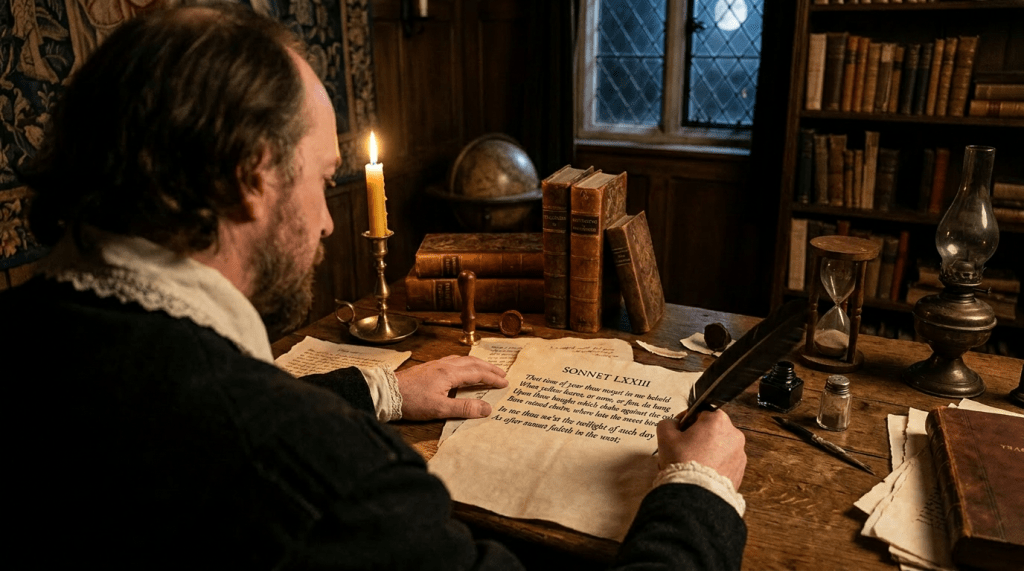
Man in historical attire writing Shakespearean sonnet with quill and candle

I have been listening to Pensées by Blaise Pascal, who has become a favorite philosopher, theologian, and thinker for me. I resonate with his sentiments about reason and intuition in particular. He was brilliant in science, mathematics, and theology – way ahead of his time. He lived during the initial headwind of the Enlightenment. He was a contemporary of René Descartes, yet he was able to remain objective. He wasn’t swept up in the current of the Enlightenment. He managed to remain aloof from it.

I am inspired to think of death today from my reading of Pensées. Death is the great equalizer. It will come to all of us. The longest-lived among human beings may live to be 110. Most of us will not see 100 … or even 90; and many of us will not see 80 or 70 or even 60. Try as we might, we do not control our fate. We will die, and that reality is inescapable.

Pascal talks about the people who distract themselves from the reality of death. I suppose it’s natural to want to ignore something that is as grim as death. We can’t add a day to our lives by worrying and being anxious about it. Yet, anxiety about death is also natural for the same reason – we dread it, but we can’t avoid it.

I imagine that my cat has never thought a day in its life about the fact that it will die, but I have rationality, consciousness, and awareness of myself that my cat does not seem to have, certainly not in the same measure. To the extent that we have that ability, it seems to me that ignoring the reality death that we can certainly grasp is to be something less than human. To ignore the reality of death is, therefore, beneath us. It denies the qualitative difference between us and other animals.

The proverbial deer standing frozen in the headlights of a hurtling vehicle has little idea of the imminent impact those headlights impend. Like the deer we might shut our minds off in the grim headlights of death … but we know better. The deer doesn’t know any better.

Not that we should have any pride in the fact that we have greater capacity than the other animals. It wasn’t anything we did. It simply is what it is.

Thus, to live into our capacity seems only fitting. Our anxiety about death is fitting for creatures with rationality, consciousness, and awareness of themselves.

I was first impressed about this humanly poignant characteristic – preoccupation with death – in college as an English Literature major. Death was the subject of many a novel, sonnet, and other forms of literature. Death is a common theme across the literary ages. The desire to escape the inevitability of death runs strong in creative and artistic minds living into the fullness of what it means to be human.

It was in a class on William Shakespeare, focusing on the sonnets, that the reality of the creative preoccupation about death crept into my own awareness. In that same time period, I must have been reading Ecclesiastes, because I associate Ecclesiastes 3:11 with that time in my life. Indeed, it has become my favorite verse in the Bible:


For God has made everything beautiful in its time, and eternity has been set in the heart of man, but not so that he could see the beginning from the end.”


We do live in a world full of beauty, even if the world is also full of pain, struggle, and anxiety. The contrast between beauty and the ugliness of pain and death does not escape us. Ultimately, these things are painful reminders of our own finitude that we would rather not face.

To put it in biblical fashion, the reality is that we are like a mist. We are like a flower that blooms one day and dies the next. Like the writer of Ecclesiastes said, “Everything is meaningless” in a world like that.

In that sense, we are no better off than the animals. From dust we were born and to dust we will return. We end up in the ground just like they do.

Everything that we accomplish fades into other people’s memories when we die. Most if not all of those memories will long be forgotten in a few generations. The things we accumulate that do not rust or rot while we live will be left to rust or rot for someone else. In more modern, poetic terms, no one tows a Cadillac to the grave.

And yet, the very fact that we wrestle with the poignance of death is something that arouses hope. This was the realization I made in that class on Shakespeare.

Why do we even care? Why does it even enter our mind to be anxious about it? Why aren’t we, like my cat or a deer in the headlights, clueless about it? The fact that we think about it and long for a different reality suggests the possibility of such a reality.

Continue reading “Finding Hope in Death: Lessons from Ecclesiastes, Shakespeare, Pascal, and C.S. Lewis”

What Is the Christian Hope for a Better Life?

What are God’s plans to prosper you and not to harm you, plans to give you hope and a future?


Most people hope for a better life. Many people turn to Jesus because of hope for a better life, but what is the Christian hope for a better life? Sometimes I think even believers lose sight of it.

I was at church yesterday for a meeting I was leading, and I talked to someone who was there for another reason. We talked about the service there the day before for a 25-year old young man who lost his life in a car accident. It was hard.

I made the comment that we are all going to die. I didn’t say it just like that. I recognized with her that it’s hard for someone so young to die suddenly. It isn’t the natural order of things. We miss our loved ones terribly. The ache and the pain is real. A “life cut too short”, as we say, is a tragedy.

But, we should never lose sight of the bigger picture.

We are all going to die.

Sometimes … maybe most of the time … we don’t live like that reality is a fact.

I am not talking about the “eat, drink and be merry for tomorrow you die” kind of attitude. Yet, the people we know who live like that are living with the reality of death, perhaps, more than we might do. Without God, everything is meaningless under the sun!

That reality should point the Christian to Jesus, who rose from the dead, conquering sin and death, and who gives us a better hope. That hope, however, is not just that we will live a better life, but that we will be resurrected to a better life!

Yes, we will live a better life here with Jesus, but this life is not the end game. That’s what I am getting at today. Jesus does not guaranty that we will live a more prosperous life now, a pain-free life, or even a happier life on this earth (under the sun). To the contrary, he said, “In this world you will have trouble!”

Ecclesiastes tells us in no uncertain terms that everything under the sun is meaningless; if this is all there is, this life is vanity; we die like animals and turn back to dust; it doesn’t matter how good we are, how much we accumulate, or how many people like us, know us or honor us. We go down to the grave and live no more, the king and the pauper alike.

This line of thinking prompts me to question: Why do we put so much effort and energy into hope for this life?

The message at church when I began writing this piece was from Hebrews 11. If this topic resonates with you, take some time to read Hebrews 11.

Continue reading “What Is the Christian Hope for a Better Life?”

Risky Living: Tempting Death

Most of us try to avoid risks, but the risk of death for all of us is 100%!

Evel Knievel (Robert Craig Knievel), an American motorcycle daredevil and entertainer. Photo from http://cliffordsphotography.com/

This is a continuation of Risky Living: God Risk and Bad Risk. In that piece, I explored the difference between good risks and foolish risks. I was prompted to begin writing on the subject by a dream that I explained in the previous piece and the “lockdown” order covering most of the United States in April of 2020.

It is now April 2021. Much has happened, though much remains the same. This article I started a year ago has evolved. The path these thoughts have lead me down end in death, which is where the path of each of us will end. Before we get there, though, I will pick up again with the subject of my reckless youth.

I should have known at a young age that I had an affinity for recklessness. As a pre-teen, I loved the idea of somersaulting from a high dive, and I was even tempted into thinking I could jump extremely close to the edge of a concrete pool from a high dive without hitting the edge. Fortunately, I never attempted it, but no one who knew my thoughts or inclinations would be surprised at the series of unfortunate misadventures I experienced in high school.

I was no Evel Knievel, but I totaled two cars before I was 18. I climbed three water towers in the dark after nights of drinking. I don’t remember driving home after some of those nights of drinking. I once jumped from a dead tree overhanging a cliff into the dark waters of a quarry in rural Vermont. I was run over by the car I was riding in driven by a 15-year old with no license.

There is more, but the point isn’t to glorify anything that I did. The point isn’t to beat myself up for it either. I was seeking. Maybe I was seeking a little harder than other people. It may have started out as attempts to gain attention, fit in and be noticed, but it became much more than that.

I was trying to fill a void. I was fighting back against the apparent meaninglessness and purposeless of the world. I just didn’t know it, then.

I thought that gaining the attention and what I thought was the respect of my peers at the time would be fulfilling. I thought the thrill of overcoming fear would satisfy me. I thought that drugs and alcohol would fill up the emptiness in me and drown out the self-loathing.  None of the things accomplished those nebulous goals (or much of anything for that matter).

Evel Knievel took risky living to a whole new level, of course. My run-of-the-mill recklessness doesn’t hold a candle to Evel Knievel and the fame, fortune and international attention he gained by his precipitous endeavors (at significant cost to his own body). But, for what purpose? For what ultimate end?

I don’t presume to know what his answer might be if he was still alive to tell us. According to Wikipedia, Evel Knievel died in 2007 of pulmonary disease at the age of 69. He wanted a museum to be built in his name that would contain all of the memorabilia from his career, but that dream was never fulfilled. His memorabilia is scattered among transportation museums and private collections. In a generation or two, he will likely be just a footnote in history.

Continue reading “Risky Living: Tempting Death”

At the Curve of a Waterfall: Matter Flowing Through Us

Harrison Wright Falls at Ricketts Glen State Park by Chris A. Fraley

A person posed this question to N.T Wright: “If my body decays, and goes on to become reconstituted into plants and animals and things, what remains? What is essentially me?” NT Wright responded by noting, first, that Tertullian and Origen discussed this question in the 2nd and 3rd centuries, and CS Lewis picked up the same theme in the 20th century in his book, Miracles.

CS Lewis observed that fingernails, hair, skin and the entire the human body are in a constant condition of flux. “Bodies change their entire molecular kit once about every seven (7) years”, Wright noted.

I am not the same person physically that I was when I was born, or graduated from college at age 22, or graduated from law school at age 31 or when my last child was born when I was 39. I am not the same person, physically, at 60, as I was when I was 39.
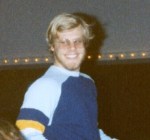
All of the molecules in my body have switched out many times over those years, yet I am still recognizably me. Maybe a bit larger, with gray hair and visibly aged from my mid-twenties, but I am still me even though none of the same molecules exist in my 60-year body.

NT Wright re-phrased the question in different ways: If a ship goes into a port and one year later, after all parts of it have been replaced, it goes into port again, is it the same ship? If my grandfather has a spade, and replaces the blade and handle several times, is it the still the same spade?

I don’t know about a ship or a spade, but as for me, I know that I am still me even though I don’t have a single molecule left over from my 22-year old self. I have more experiences; I have gained more memories. People can see in my body and mind some resemblance of the “me” they might remember.

Though memories aren’t physical things I can show anyone, I can describe them, and people who share those experiences with me can recognize them. Those nonphysical memories are undeniably “part” of “me” – things I have picked up along the way in addition to the extra weight in my physical body.

CS Lewis says that people are like the curve in a waterfall. They have continuity of form but discontinuity of matter. Matter pours through us. The “us” matter pours through is the real thing – not the matter.

On this day six (6) years ago, Facebook informs me that I posted this quotation from CS Lewis:

“You don’t have a soul. You are a Soul. You have a body.”

I don’t know if CS Lewis is exactly right, but he is getting at the same idea – that we are something more than our physical selves. We aren’t reducible to our physical selves. Our physical selves aren’t even made up of the same molecules that once existed in us. Not one molecule remains from my 22-year old self – yet my self remains.

This mystery is extended in the death and resurrection of Jesus. Through Jesus, God promises to give us new bodies. Our bodies will be changed, Scripture says, but each one of us will remain the same person and be recognizable. Biblical scholars say we will be more fully us then we were before.

In a sense, it’ will be the opposite of the saying about a sick person who is “just a shadow of himself.” Except, the perspective will be reversed. We will see that our bodies were just a shadow of what we will become. Wright says there is a “real you” that is much more like you, vividly more like you, then you are now.

Getting around to attempt an answer to the question posed, NT Wright says, “Nowhere in the New Testament does it describe a soul leaving a body and going to heaven.” What does he mean?

Continue reading “At the Curve of a Waterfall: Matter Flowing Through Us”

Pilgrimage to Another World

Pilgrims along the way of St. James – Spain

The baser instinct in me wants to write about the great frustration that is politics and the incongruity of people believing, perhaps, that they are preaching to a unified choir when they post their rants and memes on social media. Several people posted in my feed recently about how the Democrats unbelievably killed “the Coronavirus Bill” without a single vote in favor of the relief offered by the Republicans. While several people in my feed posted about how the Republicans tried to pass a Coronavirus bill that only benefited corporations to the detriment of all hardworking Americans.

Do we bother to listen to what each other is saying?

But I will resist the temptation to jump into that fray. Again.

I would rather write about the coronavirus… and death.

Not that I am being unduly morose. The reality of a deadly virus, and of death itself, is top of mind in these trying times of sheltered isolation social distance.

In more normal times, we are pretty good at keeping the thoughts of death at bay, even when they creep close to the threshold. We seem to have no end to the diversions gladly available to escape them or to drown them out.

It’s a brute fact, though, that one day we will die, and probably much sooner than we like to think. Not even taxes are as relentless as the inevitability of death.

In times like these, we are much more aware of it. We can’t escape it. It’s everywhere we turn, and we aren’t used to it.

We have it pretty good in these often not very United States. We haven’t had a war on our own soil since 1865. We are healthy and wealthy in comparison to much of the world. We have many diversions: national pastimes, myriad hobbies for every kind of enthusiast and we have as much entertainment at our fingertips as we can access beyond our front door.

But death inevitably lurks. With the current corona virus outbreak, the United States is experiencing something like the emotions we might feel in a war. Like Britain in WWII, death lurks closely to all of us in a way that most people alive in the United States have never really experienced unless they fought overseas.

As CS Lewis said to his British audience during the last World War[i], it (war then, the corona virus now) forces us to remember death. We have learned to deal with (and hold at abeyance) the cancer that steals the unfortunate life of a 60-year old, 80-year old, or even a child, accident statistics and such things.

The deaths that take the unfortunate and the vulnerable seem distant to most of us, but a war or a pandemic sneaks death into the bedroom of our thoughts where they presently haunt us.

And maybe that is just as well. We are going to die. “All the animal life in us, all schemes of happiness that centred in this world, were always doomed to a final frustration. In ordinary times only a wise man can realise it. Now the stupidest of us know.”

Nothing has changed. It’s just that we are now more aware of “the sort of universe in which we have all along been living”, and we have to deal with it. Humanist hopes are shattered in times like these. “If we thought we were building up a heaven on earth, if we looked for something that would turn the present world from a place of pilgrimage into a permanent city satisfying the soul of man, we are disillusioned, and not a moment too soon.”

The disillusionment inevitably, eventually will come sooner than we think, even if we escape these times with our lives, which most of us will do.

For the Christ believer, we have occasion to question: “Death, where is thy sting?” And we can answer: “This world is not the end game; it is the pilgrimage to another world.”

~~~~~~~~~~~~~~

[i] Yet war [the coronavirus] does do something to death. It forces us to remember it. The only reason why the cancer at sixty or the paralysis at seventy-five do not bother us is that we forget them. War [the pandemic] makes death real to us, and that would have been regarded as one of its blessings by most of the great Christians of the past. They thought it good for us to be always aware of our mortality. I am inclined to think they were right.

All the animal life in us, all schemes of happiness that centred in this world, were always doomed to a final frustration. In ordinary times only a wise man can realise it. Now the stupidest of us know. We see unmistakably the sort of universe in which we have all along been living, and must come to terms with it. If we had foolish un-Christian hopes about human culture, they are now shattered. If we thought we were building up a heaven on earth, if we looked for something that would turn the present world from a place of pilgrimage into a permanent city satisfying the soul of man, we are disillusioned, and not a moment too soon. But if we thought that for some souls, and at some times, the life of learning, humbly offered to God, was, in its own small way, one of the appointed approaches to the Divine reality and the Divine beauty which we hope to enjoy hereafter, we can think so still. (C.S. Lewis, “Learning in War-Time”, The Weight of Glory and Other Addresses (Harper San Francisco, 1980), pp. 62-63)