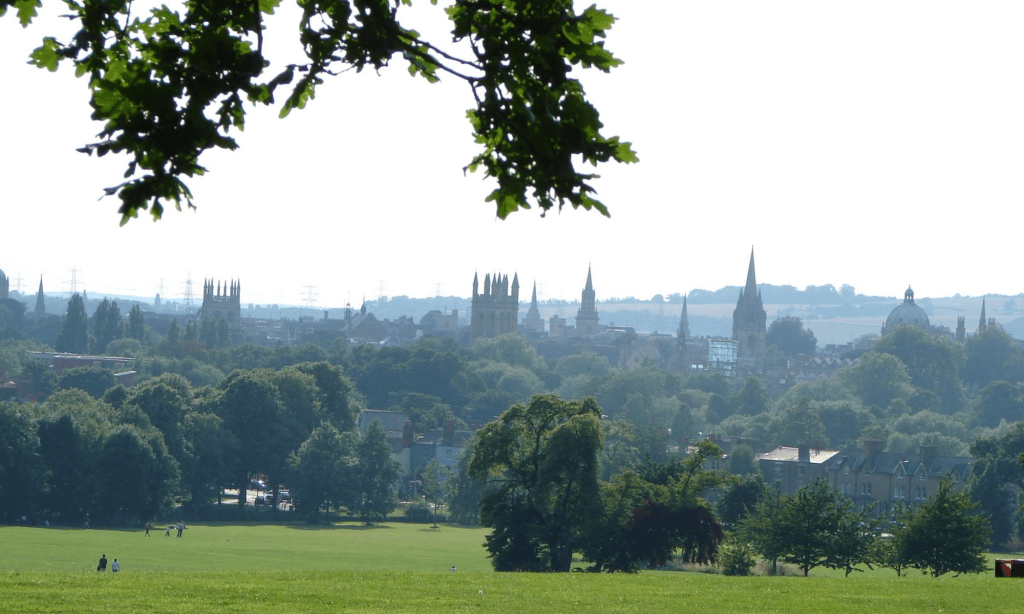
Carolyn Weber has always been an academic, but she is no longer an atheist. She has a B.A. Hon. from Huron College at Western University, Canada and a M.Phil. and D.Phil. from Oxford University, England. She has taught at faculty at Oxford University, Seattle University, University of San Francisco, Westmont College, Brescia University College and Heritage College and Seminary, and she was the first female dean of St. Peter’s College, Oxford.
My inspiration today comes from an interview of Carolyn Weber by Jana Harman on the Side B Stories podcast. You can listen to the hour long interview in episode 4, Finding God at Oxford – Carolyn Weber’s story. She turned her personal story into a book, “Surprised by Oxford”, which is being made into a screenplay staring Phyllis Logan from Downton Abbey and Mark Williams from the Harry Potter movies.
In the interview, Carolyn Weber shared that she was drawn to the romantic writers of the 17th and 18th centuries in her college years because they wrote about infinite longing. Carolyn long recognized a similar longing in her own life, and they romantic writers resonated with that longing in her.
Carolyn was raised in a non-religious home. She had no experience with religion, and she was not familiar with the detail of Christianity or the Bible.
She recalls that she knew nothing of the Bible until she read the Bible for the first time in a college class. As an undergraduate literature major, her first impressions of the Bible included included recognition of how well the story of the Bible holds together in intricate detail, though it was written over many centuries by almost four dozen different writers.
These elements of Carolyn Weber’s story remind me of my own story. I was raised in a religious home. We were Catholic, and we went to church every Sunday, but I had never read the Bible. I knew next to nothing about the Bible before college, and church seemed to have no relevance for me.
I was also an English Literature major. I also read the Bible for the first time in a college class. I wasn’t particularly drawn to the romantic writers, but I did notice the theme of longing, and it intrigued me. (You can read my story here.) Our first impressions of the Bible were also very similar.
I recognize that my resonance with Carolyn Weber’s story may not translate to every reader (and maybe not to any reader). A statement she made in telling her story, however, may. She said, “God speaks to us in our love languages.”
I can identify with that, perhaps, because my “love language” seems to be so similar to hers. The same things that spoke to her, spoke also to me. I will explain below, but I invite you to consider as you read (or go back to listen to her story) what your love language is and how God has spoken intimately to you in your love language.






 Navigating by Faith