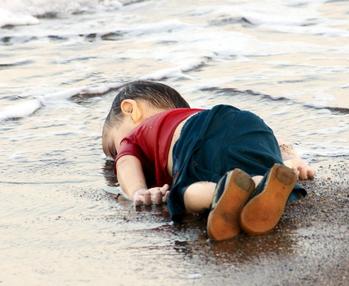
In 2014, during the Syrian refugee crisis, I watched the flood of humanity escaping from the ruthless butchery that occurred during that time in that region of the world. I recall the controversy in the various countries to which this seemingly unending stream of people fled in desperation and anger. Some countries like Germany opened the floodgates; other countries like Hungary closed their borders.
I empathized with people who didn’t want their countries overrun by foreign refugees. I watched the mass of displaced foreigners overwhelming the roads and rails in Europe, and I read stories of mobs of young Arab men taking out their anger on the countries they entered and women they encountered there.
I saw mothers and fathers with desperation in their eyes and fearful children in tow. The image of a lifeless little boy washed up on a sandy Mediterranean beach still haunts me.
Syria was home to the oldest population of Christians on earth, and Christians were caught in a sectarian and political power struggle between largely Muslim factions fighting for and against Democracy. Both Christians and Muslims fled from the conflagration between the deadly governmental crackdown against the popular rebel uprising, and the ruthlessly uncompromising, opportunistic butchers of ISIS who joined in the fight.
Though many of the refugees were Christians caught in the cross fire, and the though the rebels fought for Democracy, President Obama resolutely refused to open American borers to more than a handful of Syrian refugees. As the flood of humanity streamed into Turkey and Europe, we stood aloof.
I was torn. The throngs of young and angry Muslim men mixed with desperate parents and fearful children pulled me in different directions, and I didn’t know how to respond.
I had recently done an apologetic study of Christianity vs. Islam, and my concern about the angry, displaced Muslims was keen. President Obama and the Democratic majority acted as if the moral fabric of the universe would rend in two if we verbalized what everyone knew and thought: that angry young men indoctrinated by radical Islam are dangerous.
Yet, the faces of those parents and children and the haunting visage of the 3-year old Alan Kurdi lying lifeless and washed up on a Mediterranean shoreline begged for a compassionate response.
I realized in that conflict of opposing strains of response to the Syrian crisis that I really had no idea how a Christian should look at these things. I realized that I didn’t know what, if anything, a robust reading of Scripture might suggest.
So, I did what I should have done a long time before that. I did a deep dive into what the Bible has to say about immigrants.
For anyone who does not honor or respect or believe in the Bible, this won’t mean much to you. For me, it was important to know whether the Bible addressed the subject and, if so, what the Bible has to say about it.
We cannot grow in maturity and holiness if our focus is on the sin of other people. We have a hard enough time recognizing and dealing with our own sin!
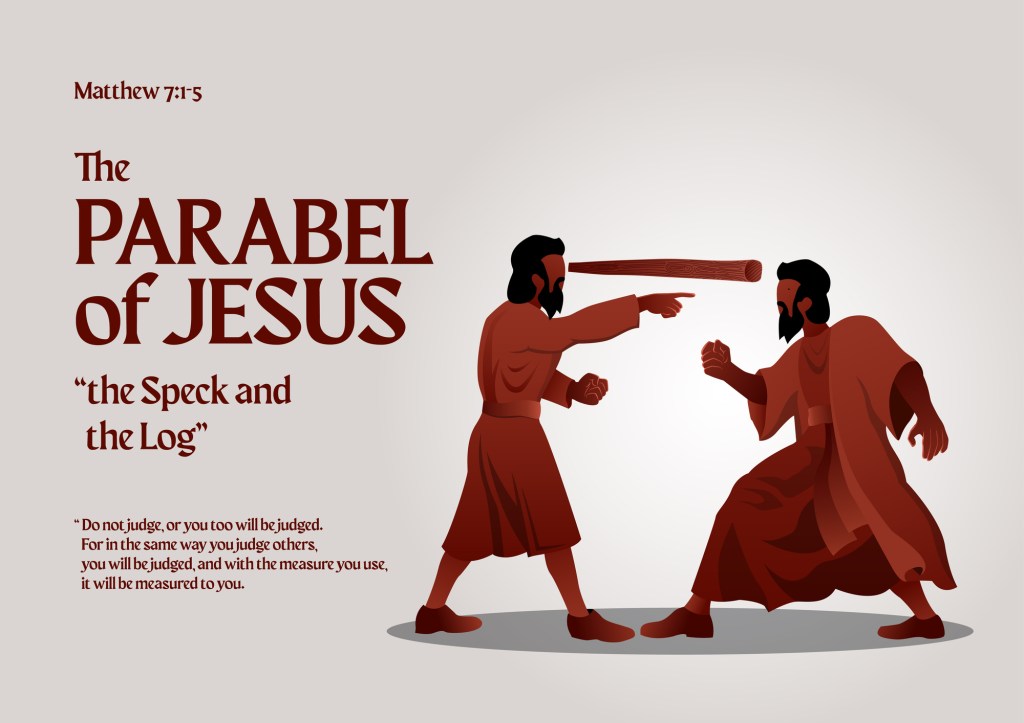
I have written previously about the parable of the log in a person’s eye who sees a speck of saw dust in another person’s eye. (See 8 Important Points about Judging and Judgment) Jesus says that we need to be careful about focusing on the specks in others’ eyes because of the logs in our own eyes. (Matthew 7:1-5)
Jesus is expressly talking about judging others, but the implications are much larger than that. They are about loving others, especially our brothers and sisters in the Lord. It is also about our posture to the world (those who do not know God in Christ, who gave Himself up for us).
We might be tempted to read what Jesus said and walk away thinking that we should not judge other people. That isn’t quite what Jesus says. Jesus says be careful in the way you judge others because the way you judge others is the way you will be judged. (Matt. 7:1-12)
We can’t get away from making judgments, which is nothing more, really, than the conclusions we reach based on what we know. We make judgments about innumerable things every day.
This is also not about Judgment (capital J). Only God has the authority to judge people, and God alone is a true Judge who can weigh all the facts accurately and completely. God alone knows our thoughts and our hearts. We can only judge by appearances, and we judge only from ground level.
When we see a speck in our brother’s eye, the parable should cause us to consider the logs in our own eyes, first. It’s a matter of perspective. What seems like a speck in someone else’s eye appears like a log when that speck is in my eye. Even so, humans have an unusual capacity to get used to those “logs” and forget they even exist.
One point of this parable is that we need to be dealing with our own sin as a matter of first priority. If sin is discovered in our brother, that discovery should cause us to consider first our own sin. I believe this is a fair reading of what Jesus is saying.
Jesus also does not tell us to leave our brother alone with a speck in his eye. Rather, he tells us to be considerate as we determine what to do about. We need to start by considering our own sin sinned (missing the mark) in our own lives. Then we need to approach our brother in the right attitude of heart, with empathy, realizing that we are not any better then our brother who’s speck we have observed.
Today, I have read what Paul says in Galatians 6:1-2 in my daily reading, and the parable about the log and the speck comes rushing back to me. I realize that Paul’s admonition in Galatians 6:1-2 harmonizes with what Jesus was taught his disciples in this parable:
“Brothers and sisters, if a person is discovered in some sin, you who are spiritual restore such a person in a spirit of gentleness. Pay close attention to yourselves, so that you are not tempted too. Carry one another’s burdens, and in this way you will fulfill the law of Christ.”
Galatians 6:1-2 NET (Emphasis added)
I previously observed that we must be in relationship with others to do what Jesus has said (judge rightly). We should not be approaching anyone about a speck in their eye if we do not do it from the perspective of loving relationship (as brothers and sisters). We have to do this in the right relationship, or we will not do it right.
I am not sure how to write about the things that I believe God has laid on my heart today. I will start, though, by explaining the combination of things that give rise to my thoughts, and I will try my best, relying on the leading of the Holy Spirit and whatever wisdom I have, in humility and full reliance upon the grace of God, to address these things that weigh on my heart today
My thoughts rise out of a combination of my daily scripture reading and regular podcast listening. I have been reading through the New Testament on a year long plan created by the Bible Project. I am in Romans 14 today. These are some excerpts from Romans 14 that stand out:
“Now receive the one who is weak in the faith, and do not have disputes over differing opinions…. “Who are you to pass judgment on another’s servant? [speaking of followers of Christ as servants of God]…. “But you who eat vegetables only – why do you judge your brother or sister? And you who eat everything – why do you despise your brother or sister? For we will all stand before the judgment seat of God…. So then, let us pursue what makes for peace and for building up one another.”
Romans 14:1,4, 10, 19
I have not reproduced the entire Chapter here to be efficient with space, but I encourage anyone who wants to dig in deeper to read all of Romans 14. I have added emphasis where the text has spoken to me.
Paul’s example of eating meat vs. not eating meat is one that doesn’t divide people in churches today, though it might divide vegans and vegetarians from “meat eaters” in our contemporary secular society. (What we eat and our religiosity about it has divided people, I guess, for 2000 years.)
“One person believes he may eat anything, while the weak person eats only vegetables. Let not the one who eats despise the one who abstains, and let not the one who abstains pass judgment on the one who eats, for God has welcomed him.”
Romans 14:2-3
Frankly, people tend to become divided over just about anything and everything. Paul uses the example of eating and of sacred days to illustrate his point about not despising and not judging each other when we have disagreements:
“One person esteems one day as better than another, while another esteems all days alike. Each one should be fully convinced in his own mind. The one who observes the day, observes it in honor of the Lord. The one who eats, eats in honor of the Lord, since he gives thanks to God, while the one who abstains, abstains in honor of the Lord and gives thanks to God.”
Romans 14:5-6
Paul says that each of us must give account to God for our own lives. Each of us must follow our own consciences that guide us with the help of the Holy Spirit, and we need to allow space with an attitude of grace for other people to work out their own salvation with fear and trembling in the same way.
Of course, we also have the Holy Spirit to guide us. How our own consciences and the Holy Spirit guide us is a bit of a mystery, though. They are not the same things. We have the Holy Spirit, but we also have our individual consciences. Paul references them both in his writings, and each plays a part in the way we understand and follow Christ in our lives.
The Holy Spirit, of course, is infallible, but our consciences are not.
And, that is the rub. We have this treasure in earthen vessels. We are finite beings, and our individual (and collective) perspectives are limited by the age we live in, the country and culture we are born in, our own abilities, experiences, and myriad factors that influence and shape us. How we internalize and process what the Holy Spirit “says” to us is going to vary from person to person and from people to people.
I recently heard someone say that we each approach Scripture from where we sit. People sit in difference “places” in respect to the Gospel at different times in history, in different cultures, and in different areas of the world. Experts in missions warn of the danger of unwittingly smuggling in our own human perspectives when we take the Gospel to different people groups.
The differences in perspective are not just factors for disparate people groups in far flung regions of the world. People in the seemingly homogenous sphere of the United States of America in the 21st Century are not so homogenous – even among Bible-believing, Jesus-loving people.
I’ll give you an example that stopped me in my tracks in 2016. Polls report that about 80% of people who identify as evangelical (which means white in political polls) voted for Trump, while 80% of blacks who attend church on a regular basis and are theologically conservative did not vote for Trump.
These are people who would largely agree with each other on traditional Christian values, but they “sit” in different places in respect to how they live out following Jesus politically. For white evangelicals, abortion is the political benchmark. For churchgoing blacks, racial and minority issues are paramount.
I should not have to say that God grieves all injustice and all sin. It’s easy to label each other “white supremacists” or “woke progressives” and miss the obvious fact that we all claim Jesus as our Lord and Savior. We all have the Holy Spirit to guide us, and we do the best we can from where we sit to follow the Spirit and our consciences.
Having listened to many black voices since 2016 (because I realized I was missing something), I learned that most black Christians believe that abortion is wrong. They believe in traditional family values, and they are at odds with the Democratic party on those issues. I also learned that a large segment of those “white evangelical’s” in political polls don’t even attend church more than once or twice a year, if that.
Another less controversial example from my own life illustrates what Paul talks about in Romans 14. I grew up in a family of responsible social drinkers. Family gatherings included a “cocktail hour” before meals, but I never observed family members getting drunk.
During my rebellious youth, and before I became a believer, however, I was a reckless, irresponsible drinker. I drank often and to great excess. When I became a Christian, I didn’t touch alcohol for many years, and I was tempted to believe that no one else should either.
My views on this subject have been tempered by the wisdom that comes with age and experience and the gentle grace of the Holy Spirit. Paul would say I was weak in my faith, and I admit that I became judgmental over it because I projected my weakness onto everyone else.
Paul says in Romans 14 that people who are weak in their own faith become judgmental. The danger of people who have a strong faith and a secure conscience is to despise those who are weaker. Paul urges us to resist both tendencies.
But, let me get to my point. I am increasingly concerned with judgmental attitudes over issues on a par with eating, drinking, and sacred days are doing damage in the modern Church. Paul would say that we need to focus our attention on “pursu[ing] what makes for peace and for building up one another.” Unfortunately, we spend far too much energy judging each other and tearing each other down.
This is nothing new, of course. Paul wrote an entire letter to the Church in Corinth that he led off with this exhortation:
“I urge you, brothers and sisters, by the name of our Lord Jesus Christ, to agree together, to end your divisions, and to be united by the same mind and purpose.”
Paul famously says in Roman 1:20 that people everywhere are without excuse in their denial of God and suppression of the truth because God’s invisible attributes and His eternal power and divine nature have been clearly seen and are understood through the creation. This is one of the most often quoted verses in the first couple of Chapters of Roman.
I have often quoted Romans 1:20 as a defense of the faith to unbelievers, but Romans 2:1 catches my eye today. It begins with same phrase, “Therefore, you are without excuse….” Except this verse is clearly directed to an audience of Roman believers.
I wonder how I have missed the parallel nature of this statement to believers. Just as nonbelievers are without excuse in their unbelief, Paul says believers are without excuse in a different sense:
“Therefore you are without excuse, whoever you are, when you judge someone else. For on whatever grounds you judge another, you condemn yourself, because you who judge practice the same things.”
Romans 2:1
I have to admit my own tendency to focus on Romans 1 and Paul’s statements that the world is without excuse, because God made himself known, and people in their depraved minds chose not to honor God, embracing sin instead. I tend to focus on the list of sins, including men and women trading natural relations for unnatural ones.
It seems that the world focuses on those things as well. Christians and non Christians alike, and this list of sins has become become a dividing line in the ongoing battle of a “culture war” that wages in the United States.
While Romans 1:20 and the list of sins that follow it seems to have captured our attention, I wonder today why we seem to glossed over what Paul says in Romans 2:1?
The parallel nature of the two verses demands some attention. We dare not focus on one half of the equation to the exclusion of the other half of the equation.
Paul says in Romans 1:14 that he is a debtor to Greeks and barbarians and to the wise and the foolish because the Gospel has the power for salvation. (Rom. 1:16) The righteousness of God is revealed in the Gospel from faith to faith. (Rom. 1:17)
Then, Paul says that the wrath of God is revealed against the ungodliness and unrighteousness of people who suppress the truth (Rom. 1:19) because God has made it plain to them…. Therefore, they are without excuse.
Paul doesn’t stop there, however, and neither should we. In Romans 2, Paul starts out saying that people who judge others are also without excuse! On whatever grounds we judge others, we condemn ourselves because we practice the same things.
This is a sobering statement, and one which we ignore to our detriment and the detriment of the preaching of the gospel.
Again, it’s important to note that Paul is talking to the believers in Rome. He is not talking to heathens and barbarians and people who are given over to their carnal desires.
Five chapters later Paul talks personally about believers’ struggles with sin (Romans 7:15-20), doing the things we don’t want to do and not doing the things we know we should do. Paul is brutally honest about the fact that sin is still a problem for the believer. If anyone ways he is without sin, he makes God out to be a liar! (1 John 1:10)
Of course, believers should resist sin and learn to overcome it. This is a lifelong process, and we only overcome by the work of the Holy Spirit in us as we yield to His direction in our lives.
Yet, the holiest of people – Paul – admits to failing from time to time and giving into or returning to some form of sin. It doesn’t what what the sin is. The sin that causes us to stumble may be different for each one of us. That fact is that we sin, even though we don’t want to sin anymore.
The import of this for the believer, Paul is saying, is that we, should not adopt a judgmental attitude toward anyone. Not even to those who God has given over to their carnal desires. In judging others, we condemn ourselves, says Saint Paul. Paul also days,
“What business of mine is it to judge those outside the church? Are you not to judge those inside?”
1` Corinthians 5:122
The timing of this fresh revelation from my daily scripture reading is interesting. My social media feed has been full of judgmental tirades over the opening ceremonies at the Paris Olympics. I did not watch them, but I have certainly become aware of how everyone feels about those ceremonies, particularly Christians.
I know I am late to the discussion, but I have resisted the temptation to jump into the fray. It seems there is much to be offended about, yet the parallelism of Romans 1:20 and Romans 2:1 gives me pause. The judgmentalism of offended Christians screams for a response.
Many people bristle at the Christian idea of sin, and many people fault Christianity for its emphasis on sin. Richard Dawkins criticized Christianity in his book, The God Delusion, that it’s all about sin, sin, sin. His sentiment seems to be a popular one.
As a long-time Christian, I have a “robust” view of sin not just because I have robust respect for the Bible. I see sin in myself, and I see it in mankind, generally. I see it as a fact, like gravity, that makes sense of the foibles, failures, and futility of people and human systems I see in the world.
Not that people are incapable of doing good. Even who do not believe in God can do good. Even in doing good, though, I believe most of us do it good “selfishly” – because it makes us feel good; because of peer pressure; because we want people to honor us; because we want other people to be nice to us; or simply because of the utilitarian ideal that it makes the world a better place for me and my tribe to live in.
Most people, I assume, would be uncomfortable with my assessment. Maybe what I see in myself shouldn’t be “projected” onto other people. Maybe I am right, though. I wouldn’t believe it if I didn’t think it is a fair assessment.
I think one issue people have with the idea of sin is that they don’t know what to do with it. It doesn’t fit into an evolutionary paradigm that celebrates the progress of humanity from primordial ooze to ape to rational being.
Absent a cosmic redeemer, people have no “solution” for sin. Reject the One, and the other makes no sense. Many people don’t want a cosmic redeemer interfering with their self-determination (even people, ironically, who believe we have no self-determination, because we merely dance to our DNA).
People don’t see any “value” in sin. The idea of sin makes people feel uncomfortable. They blame the concept of sin for making them feel bad about themselves. When people measure their goodness against others, they either feel shame or self-righteousness, because they see themselves as better or worse than others.
People blame judgmental attitudes, intolerance, lack of empathy for others, and a host of other evils on the Judeo-Christian concept of sin.
On the other hand, do people who have rejected the Christian concept of sin stop feeling bad about themselves or stop being self-righteous? In my experience, no, they don’t.
Abandoning the idea of sin doesn’t seem to help people not feel bad about themselves, and it doesn’t stop people from being self-righteous. People still compare themselves to others. People still struggle with self-image, and some people still seem to think themselves morally superior to others even after rejecting the concept of sin.
The Christian vocabulary that includes sin has no place in alternative cultural constructs, like cultural Marxism, and the host of critical theories that flow from it. Judgment of others, however, is baked into those constructs, and virtue is signaled for group approval in ways that seem, to me, just as inimical as any bad church environment.
People are shamed and labor under judgmental attitudes perfectly well without the help of Christianity. In fact, I believe the shame and self-righteousness is even worse because other cultural constructs lack the Christian concepts of redemption, grace, and forgiveness.
But, I believe in sin simply because it makes sense of all my experiences and everything that I see in people and the world that is run by people. I have never thought of sin as a value proposition, other than to think that sinfulness is generally bad. I have certainly never thought of the idea of sin as good!