Why I Write About Immigration Issues

The truth is complicated, but God’s heart is certain

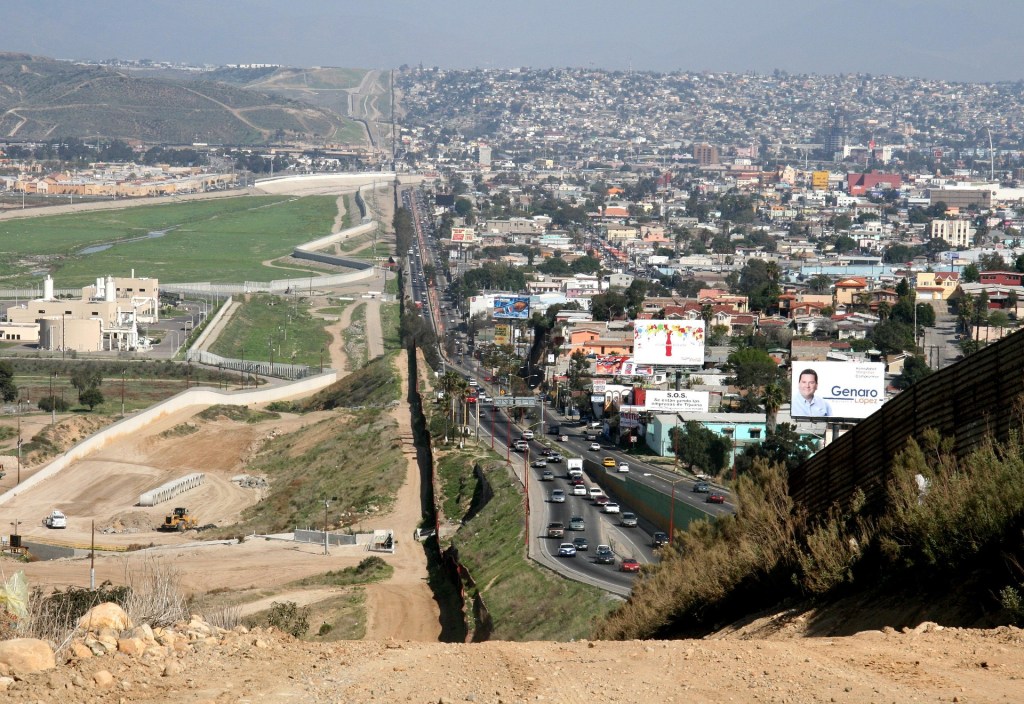
Mexican Border

I have friends who keep me honest, and I am grateful for that. They don’t always agree with me. In fact, they often disagree with me on various things, but they remain my friends, and I remain grateful for them.

Anyone who follows me on social media knows that I am virtually fixated on the issue of immigration right now. It may seem like a new thing—that all of a sudden I have become woke, liberal, or progressive. Some people who don’t know me well, I am sure, think that about me. The truth is more complicated than that.

I am a lifelong Republican and conservative by nature. I’m also a follower of Jesus, though, and I find that Jesus defies modern political categories and stereotypes. If Jesus looks to me like a Republican or Democrat, “my Jesus” probably is not the real Jesus, and my politics have likely influenced my view of Jesus.

Many people might look at my posts on immigration and feel like I have abandoned all sense of patriotism and national pride. They might think I have become a hater of the United States of America. Again, the truth is more complicated than that.

I grew up with a love for my country and a strong sense of patriotism and pride. I was educated, like most people my age, on the goodness of the United States of America, celebrating Christopher Columbus and Thanksgiving this time of year with idyllic depictions of pioneers living in harmony with Native Americans as our forefathers lived out their manifest destiny in keeping with a divine mandate from our creator to form the greatest, freest country on earth.

I still believe we live in the greatest, freest country on earth, but the truth is messier and more complicated than I once believed. I am grateful for a strong sense of the goodness of the United States of America I learned as a child, and I appreciate the positives in that idealized memory of America. But it’s more complicated than that.

Humanity is nothing if not messy. We are fallen, sinful creatures. We know that, but our idyllic, comforting images die hard.

The pioneers displaced the Native Americans who were here long before us. They were pushed out of their ancestral lands. They were marched in a “trail of tears” to godforsaken territories where they have had to scrape out a meager subsistence ever since then in the literal dust of the barren, rocky places to which they were consigned.

Slavery is a pox on our idyllic history. That it was supported, promoted, and defended by Christians who sought comfort in the Bible while they exploited, oppressed, and dehumanized people for the color of their skin (and wealth they could generate) is a testament to the utter bankruptcy of human beings – even religious ones.

Let’s be honest about this, also: religious people who use their religion to justify their unjust ways are not doing anything different than non-religious people who are unjust. It’s just more insidious for the fact that they contort love of neighbor to love of self.

I have learned to be honest and not to look away from these contrary images of our history and our past. God calls for repentance, and repentance requires honesty. Repentance and heart change are the only proper response to the evil of idolatry and injustice.

Honesty does not mean I do not love my country, and it does not mean that I am not thankful for being born here. I still believe that the good we have brought into the world is not any less good. It’s just complicated, and I want us to live up to the ideals we ascribe to.

In case you could not tell, I am not an idealist, though I certainly do have idealistic tendencies. Not that I am any different than anyone else. We are complicated and complex creatures; human beings. Despite the polarized simplicity of social media that pigeon holes us into two-dimensional, stereotypical ideologues, people and societies are complex.

On the issue of immigration, my “awakening” happened more than a decade ago – in 2014. During the Obama administration, as I watched the Syrian refugee crisis unfold in the news, I realized that didn’t have a robust biblical view on the subject of immigration. I have written about this often, so please bear with me if you have read what I have written before.

Continue reading “Why I Write About Immigration Issues”

Are We Alien and Strange Enough in Our World?

Are you looking for a heavenly country?


Aliens and strangers in our world: that is an apt definition of Christians. We are made for more than the present heavens and present earth that we live in. Though we are born of perishable seed, we have been born again of imperishable seed, and we look forward to the day when we, like the acorn, will die so that we may rise again.

I say these things as I think about the chaos, or law and order, of our times, depending upon your perspective. I see it as chaos from the perspective of the immigrants who have come to the United States for a better life. It is just law and order from the perspective of the person who defends the current immigration laws of our country.

Of course, it isn’t that simple. Slavery was once legal in our country. Is it really just law and order? Or is it something else?

Our ancestors came here for a better life. Unless, of course, our ancestors are Native American. My father’s ancestors came here in 1846. they entered a commercial port in New York City before Ellis Island existed and before there was any process in place to receive immigrants. My mother’s ancestors came here long before that.

When I was young, we celebrated the pilgrims and other sojourners who came here for a better life. Seeking a better life for ourselves and our families, our children and our children’s children was the American way. We were proud of the pioneer spirit brought people to our shores.

It’s also a bit more complicated for Christians, as we believe this world is not all there is, as I often say. Followers of Christ know that a place has been prepared for each one of us. We know that storing up treasures on this earth is a futile and fruitless endeavor at the end of our days. The only thing that ultimately matters are the treasures we store in heaven – if, indeed, we are actually people of faith.

We store our treasures in heaven by following the narrow path, by taking up our crosses and following Jesus. We do this by laying down the desires of our own flesh, and living for the love of God and the love of our neighbor.

To those of us who are clinging to the rock of this country, who are trying to defend the law and order that protects our comfort, our future, and our way of life, I say, you are clinging to the wrong thing. In fact, it really isn’t really a rock at all.

A nation is actually shifting sand. Like the sands of the great civilization of Babylon that lies today in deserted ruins, on a wind-swept dessert expanse without inhabitant. A nation is an empty and parched hope that turns to dust. People, however, have eternal value.

As I look at the way the present administration of this country is carrying out the agenda of President Donald Trump, I am saddened all the way around. I am not unpatriotic. I am not empty of all nationalistic pride, but the older I get and the more deeply I commit to Jesus, the more I identify as an alien and stranger in our world. My citizenship is not ultimately in the United States of America – or in any worldly nation. My citizenship is in heaven.

And as I turn down another stretch in this journey of my life, I am learning to be more focused on life after life, which is the life that Jesus urges us to focus on. The kingdom of God, which is not a kingdom of this world, is a foretaste of the next. That is the aim of people of faith.

By faith Abraham made his home in the promised land like a stranger in a foreign country. Isaac and Jacob did the same. They were waiting for “the city with foundations, whose architect and builder is God.” (Hebrews 11: 9-10) All the people offered to us as examples of faith in Hebrews 11 welcomed the promises of God from a distance as “welcomed them from a distance, admitting that they were “foreigners and strangers on earth” (Heb. 11:13) because they were longing for a “heavenly country” (Heb. 11:16) – not an earthly country.

So, as Christians on either side of the modern immigration issues, we cannot lose sight of our heavenly home, of that city whose architect and maker is the Lord. We longingly wait for the new heavens and the new earth that will come down and that day when the Lord, Himself, will dwell among us. That is our destiny and that is our destination.

Nations come and go. The grand monuments to our national identities will become like the Babylonian ruins, the heavens and earth will fade away, but a person who is born of imperishable seed lives forever. What, then, is a nation? Nations do not last.

We live by faith in the hope of the new Jerusalem where people from every tribe and nation and tongue will gather before the throne of the Lamb, crying, “Holy! Holy! Holy! Lord, God Almighty!” No human eye has seen nor mind conceived what is the greatness of the world that lies in store for us.

Why cling to the comforts and the privileges and the things that we can accumulate in this life when we are promised a life we cannot even imagine? Perhaps it is because we have a hard time imagining it. Yet, that is the substance of true faith – the certainty of things hoped for.

We should ask ourselves as we look at the great examples of faith God chose to parade before us in Hebrews 11 whether we would be honored to be counted among them? Or whether we think they were foolish to be tortured, jeered at, flogged and imprisoned for such a hope? They are commended for their faith in the promises of God they didn’t receive in this life.

Perhaps, the immigration issue separates sheep from goats. The laws and order of this country that wall out a field that is ripe unto harvest for the imperishable seed of the gospel are of illusory value to the person of faith. Are we willing to gain our country at the loss of our citizenship in heaven?

That is a question we all must ask ourselves. Even if we do not ask that question, though, we are all deciding which side of the wall we are on in the decisions we make daily. Are we aliens and strangers in our world? Or have we chosen the world as our portion?

On the Flying Fickle Finger of Fate and Reeds Blowing in the Wind

Should Christians be influenced by shifting political winds?


I recall today the Flying Fickle Finger of Fate award from Rowan and Martin’s Laugh In back in 1968. When I was 8 years old, Laugh In was a hip variety show of biting political humor that was mostly lost on my young mind. The award was a dubious honor ceremoniously presented each week to public figures, corporations, and government agencies for ridiculous “achievements”.


The Fickle Finger of Fate suggests the unpredictable and arbitrary nature of luck or destiny. As finite human beings, we don’t control our fates, and we cannot know the twists and turns that await us in the future.


The award has an ironic backstory. Star Trek was moved from the coveted 7:00 PM spot to the dreaded 10:00 PM “death slot” by NBC to make room for Laugh In. The hip, comedic variety show, however, was popular only for a relatively a short stint from 1968 to 1973 and has largely been forgotten by all but impressionable young minds.

Star Trek, on the other hand, went on to become an iconic science fiction series. It was ahead of its time, and it became a hit in off-network syndication, inspiring sequels and movies for almost 50 years.

Fate is certainly a fickle thing. Driven by polls and ratings to attract the largest audience, NBC obviously did not foresee the lasting success of the Star Trek brand. They also did not expect the short-lived lifespan of their cutting edge variety show that replaced Star Trek.

As Christians, we don’t believe in fate, of course. We don’t believe in random chance. We believe in God who designed and ordered the universe and established our place in it.

The future, however, is equally unknowable to us. As the writer of Ecclesiastes said thousands of years ago, “God set eternity in the heart of man, but not so that he can know the end from the beginning.” (Ecc. 3:11). The Prophet Isaiah said it this way,

“’For my thoughts are not your thoughts,
    neither are your ways my ways,’
declares the Lord.
‘As the heavens are higher than the earth,
    so are my ways higher than your ways
    and my thoughts than your thoughts.'”

Isaiah 58:8-6

God famously, but lovingly, rebuked Job for insisting on understanding things he could not fathom. As with Job, we are invited to have faith and to trust God, but we have more reason for hope and trust than Job, because we know our redeemer lives. He rose from the dead!

We understand that God can be trusted because of His willing demonstration of love for us in emptying Himself to become a man and laying down His life for us. We have no option but to trust Him, but we know we can trust him because of His love for us that He demonstrated on the cross.

Still, we easily are easily swayed and influenced by external pressures. We may think that we understand the times when we are only blowing in the shifting winds of “fate” (powers and principalities that want to blow us off course).


Paul says these powers and principalities are operative in the world. They are “spirits of the age” that play us like instruments if we are not grounded in the Word of God and led by His Holy Spirit.

Jesus used the phrase, reed blowing in the wind, when he addressed a crowd that went into the wilderness to see John the Baptist: “Did you you go to see a “reed swayed in the wind?” (Matt. 11:7-18)


John the Baptist was not just a curiosity. He was not a fleeting personality (like Rowan & Martin) with no lasting importance or purpose. He was the messenger of the Messiah, foretold by the prophets preparing the way for Jesus, the suffering servant who would take away the sins of the world. John was an agent in God’s eternal plan, and Jesus was (and is) the key figure in that plan.

Though he was foretold by the Prophets, no one knew exactly how things would unfold – not even God’s own people. In fact, they didn’t recognize God’s Messiah or receive him when he came. (John 1:11). Crowd of common people were drawn to Jesus, but smarter and more prestigious religious leaders were not.

Many have come, and many have gone. Many have claimed to be the harbingers of promise and special knowledge in their times, but many have proven wrong in their predictions.

The reality is that we do not know what we do not know. We must ever remain open to letting God’s Word shape us and direct us, and we must ever remain attentive to allow the Holy Spirit to guide us in applying His Word in our times.

Even now, smart people – including learned, religious people – believe and act as if they know the times. It is the same in every age and every generation, but we are easily swayed and blown by the winds of fate and human influence that seek to drive the course of history not always in ways that are aligned with God’s plan and purposes. To that generation, and to ours, Jesus said:

“They are like children sitting in the marketplaces and calling out to others:
‘We played the pipe for you,
    and you did not dance;
we sang a dirge,
    and you did not mourn.’”

Matt. 11:16-17

Human tendency is to trust ourselves. The smarter we are, the more we trust in our own ability to figure it out. Perhaps, this explains why so many scientists and PhD’s are atheists. Perhaps, this is why so many of the religious leaders in the time of Jesus were blind leaders of the blind. Perhaps, we are susceptible to the same error.


We don’t know the end from the beginning. We don’t know God’s thoughts unless He reveals them. God doesn’t dance to the tunes we play. Our tunes are often just riffs on the spirits of our age changing as those spirits change their tunes that we follow.


I reflect on these things as I think through changes in the winds influencing the evangelical church in my lifetime.. We need to be grounded in the Word of God and in tune with the Spirit of God. (See Hearing the Voice of God for Today) if we are not, we become reeds blowing in the wind.

A few weeks ago, I created a short list of issues on which Evangelicals (my tribe) have swayed in the political winds during my lifetime. I have done some research to confirm and correct my intuitions, and that exercise has confirmed my suspicions that we have, indeed, been reeds blowing in the political winds over the last 60 years. Following are just a few examples.

Continue reading “On the Flying Fickle Finger of Fate and Reeds Blowing in the Wind”

What is the Attitude Christians Should Have on Immigration?

A Christian’s attitude on immigration should be informed by the Bible


In 2014, during the Syrian refugee crisis, I watched the flood of humanity escaping from the ruthless butchery that occurred during that time in that region of the world. I recall the controversy in the various countries to which this seemingly unending stream of people fled in desperation and anger. Some countries like Germany opened the floodgates; other countries like Hungary closed their borders.

I empathized with people who didn’t want their countries overrun by foreign refugees. I watched the mass of displaced foreigners overwhelming the roads and rails in Europe, and I read stories of mobs of young Arab men taking out their anger on the countries they entered and women they encountered there.


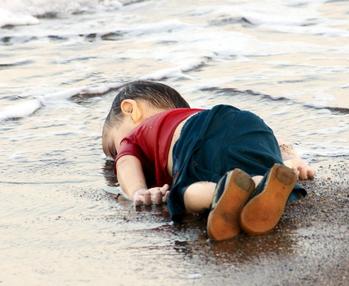
I saw mothers and fathers with desperation in their eyes and fearful children in tow. The image of a lifeless little boy washed up on a sandy Mediterranean beach still haunts me.


Syria was home to the oldest population of Christians on earth, and Christians were caught in a sectarian and political power struggle between largely Muslim factions fighting for and against Democracy. Both Christians and Muslims fled from the conflagration between the deadly governmental crackdown against the popular rebel uprising, and the ruthlessly uncompromising, opportunistic butchers of ISIS who joined in the fight.

Though many of the refugees were Christians caught in the cross fire, and the though the rebels fought for Democracy, President Obama resolutely refused to open American borers to more than a handful of Syrian refugees. As the flood of humanity streamed into Turkey and Europe, we stood aloof.

I was torn. The throngs of young and angry Muslim men mixed with desperate parents and fearful children pulled me in different directions, and I didn’t know how to respond.

I had recently done an apologetic study of Christianity vs. Islam, and my concern about the angry, displaced Muslims was keen. President Obama and the Democratic majority acted as if the moral fabric of the universe would rend in two if we verbalized what everyone knew and thought: that angry young men indoctrinated by radical Islam are dangerous.

Yet, the faces of those parents and children and the haunting visage of the 3-year old Alan Kurdi lying lifeless and washed up on a Mediterranean shoreline begged for a compassionate response.

I realized in that conflict of opposing strains of response to the Syrian crisis that I really had no idea how a Christian should look at these things. I realized that I didn’t know what, if anything, a robust reading of Scripture might suggest.

So, I did what I should have done a long time before that. I did a deep dive into what the Bible has to say about immigrants.

For anyone who does not honor or respect or believe in the Bible, this won’t mean much to you. For me, it was important to know whether the Bible addressed the subject and, if so, what the Bible has to say about it.

Continue reading “What is the Attitude Christians Should Have on Immigration?”

What Is Due Process, and Why Does It Matter for Christians?

Any first year law student knows the importance of due process as the basic structure of American law


The news waves are buzzing with reports of summary deportations with a mixed reaction of angst and anger on the on hand and zeal on the other hand. Social media is overtaken by the reports and the opposite reactions in a vortex of swirling vitriol.

I am as guilty as the next person of the desire to post knee-jerk reactions, I realize we need cooler heads to prevail if we are going to find a positive way forward as a nation.

The same swirling vortex of reaction is evident in the Church, even in the evangelical church, which is my “tribe”, and the same need for cooler heads to prevail exists. We also need biblical grounding and direction if we are going to maintain any sense of unity in Christ.

The latest news involves the visit to the White of El Salvadoran President, Nayib Bukele. The staged meeting of the two presidents comes in the wake of the mass deportation on March 15, 2025, of hundreds of men to a notorious Salvadoran prison known for its harsh and inhumane treatment of prisoners.

The deportations happened so fast that an emergency motion filed in court and an emergency order blocking the deportation came too late as the plane rushed off the runway just as the order was handed down. The White House maintained that every one of the several hundred men were violent criminals, though about half of them had no criminal records, and none of them received even a cursory hearing.

On April 10, 2025, the matter made its way up to the US Supreme Court in lightning fast fashion (for the court system), and the Court weighed in. (See Kristi Noem, Secretary, Department of Homeland Security, et al. v. Kilmar Armando Abrego Garcia, et al.) The appeal was prosecuted by the government to overturn the trial court injunction to block the deportation.

Homeland Security insisted to the trial judge that the plane had already left the runway when the order was issued. According to the Supreme Court, however, “The United States acknowledges that Abrego Garcia was subject to a withholding order forbidding his removal to El Salvador, and that the removal to El Salvador was therefore illegal,” suggesting that the order was in place before the plane took off.

The court found further that “[t]he United States represents that the removal to El Salvador was the result of an ‘administrative error.’” Thus, Homeland Security admits they made a mistake in deporting him. One of the reasons for “due process, which I will get into, is to avoid such mistakes.

Nevertheless, Homeland Security justifies the action taken by claiming that Abrego Garcia “has been found to be a member of the gang MS–13, a designated foreign terrorist organization, and that his return to the United States would pose a threat to the public.” They maintain they have done nothing wrong.

The subject of this post is due process, so I will ignore some of the other elements of this case, such as the Supreme Court’s affirmation of the order to facilitate the return of Abrego Garcia, the fact that the decision was 9-0, and Donald Trump’s insistence this was a victory for him (perhaps because he got away with it with no repercussions – yet).

While the Supreme Court remanded the matter back to the trial court for clarification, the Court did weigh in on the substance of the issues in various ways. The Supreme Court said:

  • “The order properly requires the Government to “facilitate” Abrego Garcia’s release from custody in El Salvador and to ensure that his case is handled as it would have been had he not been improperly sent to El Salvador.”
  • “To this day, the Government has cited no basis in law for Abrego Garcia’s warrantless arrest, his removal to El Salvador, or his confinement in a Salvadoran prison. Nor could it.”
  • The government is bound by a 2019 order effectively granting Abrego Garcia legal refugee status in the United States.
  • “Instead of hastening to correct its egregious error, the Government dismissed it as an ‘oversight.’”
  • The government’s request to be able to allow them to leave Abrego Garcia in El Salvador is based on “no reason recognized by the law.”
  • “The only argument the Government offers in support of its request, that United States courts cannot grant relief once a deportee crosses the border, is plainly wrong.”
  • “[T]he Government must comply with its obligation to provide Abrego Garcia with ‘due process of law,’ including notice and an opportunity to be heard, in any future proceedings.”
  • “Federal law governing detention and removal of immigrants continues, of course, to be binding as well. See 8 U. S. C. §1226(a) (requiring a warrant before a noncitizen ‘may be arrested and detained pending a decision” on removal)….”
  • “In the proceedings on remand, the District Court should continue to ensure that the Government lives up to its obligations to follow the law.”

These are direct quotes from the Supreme Court ruling. As you should be able to discern easily, this is not a victory for the Trump Administration, and it is not a vindication of what they have done (and continue to do) in detaining, arresting, imprisoning and deporting people without due process.

Continue reading “What Is Due Process, and Why Does It Matter for Christians?”