The Surprising Significance of Being Made in God’s Image

The ultimate significance of human beings being made in God’s image is that we are to love (value) our neighbors and even our enemies.

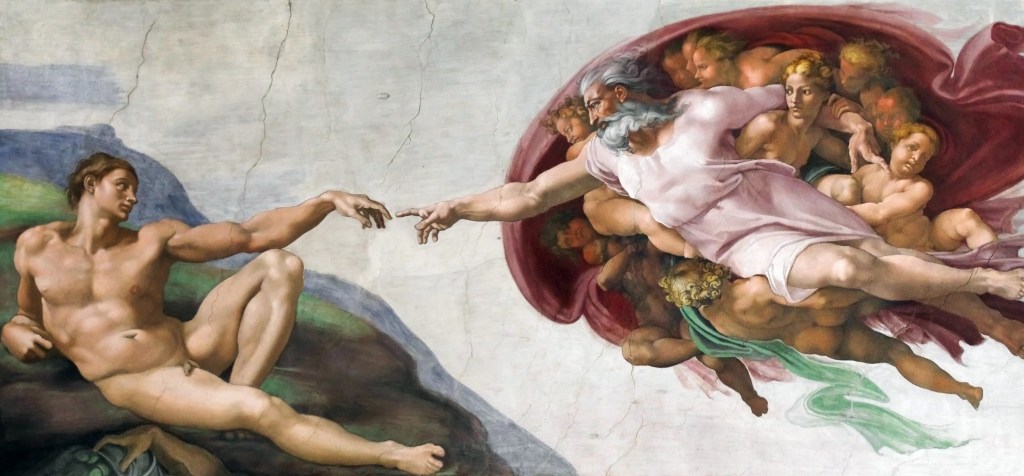
ROME, ITALY – MARCH 08: Michelangelo’s masterpiece: The Creation of Adam in Sistine Chapel

What does it mean that human beings are made in God’s image? What does it mean that God commands us not to take His name in vain? New answers to these interrelated themes might surprise you.

Carmen Imes wrote a book called Bearing God’s Name that explains for common folk like me the conclusions she developed in her doctoral dissertation. She just published a new book called Being God’s Image, a kind of prequel to the first book. I recently listened to her talk about these things with Skye Jathani on the Holy Post podcast that inspires my writing today. (The conversation starts at 54:20 if you want to hear it from her mouth.)

The commandment not to take God’s name in vain is where the conversation started, but being made in God’s image is actually the prequel to that “story”, and the significance of bearing God’s name (in contrast to being God’s image) is central to the story.

I am going to start with the backstory (in the beginning), what it means to be made in God’s image, and what it means to bear God’s name before opening a new understanding of the commandment not to take God’s name in vain, according to Carmen Imes.

Imes says that some theories entertained by the church misperceive the significance of the revelation in Genesis to people in that culture filled with false idols. They miss the mark and fall short of the reality that is expressed in Genesis.

Imes says, “The majority of the views out there through the centuries attached the image of God to some human capacity or function. That view makes the image of God something we do or are qualified to do by having a certain capacity.”

Rationality is ascribed by some to being made in the image of God. The reasoning is that we are intellectually superior to animals; therefore, rationality is what it means to be made in the image of God.

Others have ascribed being made in the image of God to our social and political ability to govern ourselves. Still others believe our morality and conscience are what distinguish us from the animals as being made in God’s image.

These things certainly distinguish human beings from other creatures created by God, but Imes says these human capacities, true as they are, do not accurately convey what the biblical text actually says. Imes says that applying the differences between humans and the animals to the text is just “theological speculation” (eisegesis – imposing our own thinking on the text).

This view of what what it means to be made in the image of God is not true to the biblical text, and it is not justified by the text. Exegesis of the text (pulling the meaning from the text, and not from our conceptions applied to the text) reveals a different view for what it means to be made in God’s image.

Imes goes back to the source material (Genesis) to rediscover a meaning that is truer to what the text actually says. She also reads the text in light of its context, the Ancient Near culture, to determine more precisely what it means that human beings are made in the image of God.

The backstory begins in Genesis 1:27:

God created mankind in his own image,
    in the image of God he created them;
    male and female he created them.

The Hebrew word translated “image” in this passage is tselem, meaning literally an image. Strong’s Concordance describes the word further as “a phantom, i.e. (figuratively) illusion, resemblance; hence, a representative figure, especially an idol — image, vain shew”. (See BibleHub)

We resemble or are representative of God, though (perhaps) we are not (yet) true (100%) representations of God. Given the Hebrew meaning of the word, tselem (with overtones of “phantomlikeness” and resemblance – implying something less than the real thing), perhaps we are merely phantom resemblances at this time.

I would note that we may only have the potentiality of being truly like God. In the New Testament, we find that we must be born again to become God’s progeny, His children, his ambassadors (representatives) and to be found “in” Christ, who is the exact representation of God in the flesh (not merely a resemblance).

Perhaps, we only have the potentiality to be truly like God, but that doesn’t discount the fact that we are created in His image – as Adam and Eve were created in His image – as we are. This understanding sheds new light, perhaps, on the first commandment: “Thou shalt have no other gods before me”; and it sheds new light on the second commandment: “Thou shalt not make unto thee any graven image.”

I am going beyond, now, what Carmen Imes says in the conversation, though I think it follows from her observations. I will also get to the surprising nuance she finds in reading Genesis 1:26-27* for what it says in the context of the Ancient Near Eastern culture.

Continue reading “The Surprising Significance of Being Made in God’s Image”
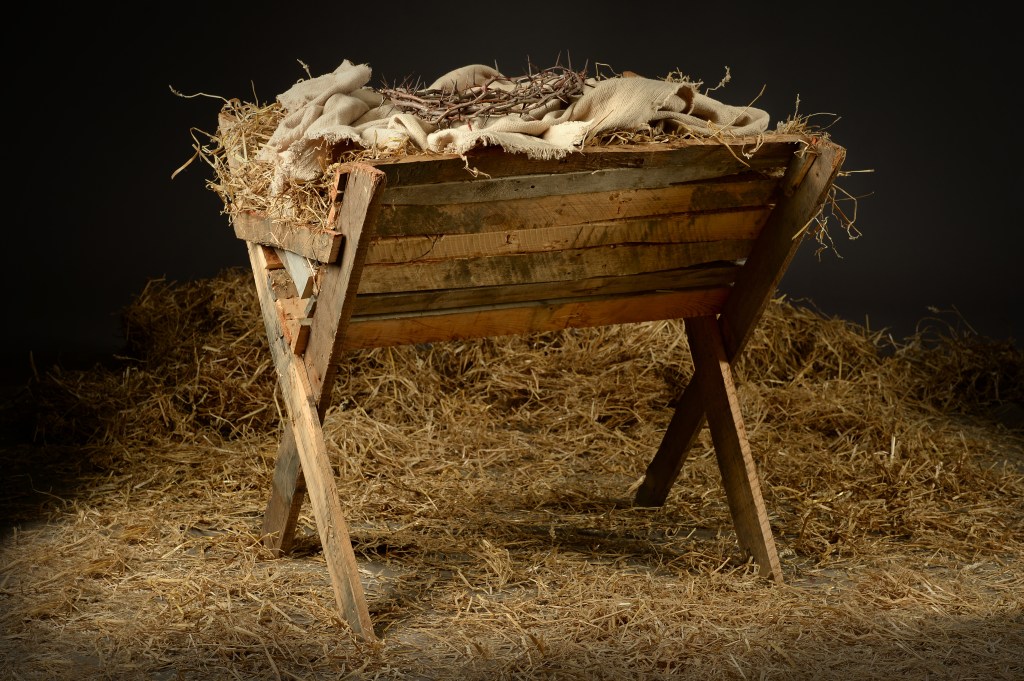
A Message in a Manger


I am going to revisit some of the Christmas articles I have written in previous years in the coming weeks, starting with this one. I may freshen them up a bit as I do so. This was one of the first articles I wrote on this blog, and I think the message still resonates today: A Message in a Manger.

What Did Jesus Mean When He Said We Should Give to God the Things that Are God’s?

Having been created in the image of God, we bear the imprint of God, but we must still offer ourselves back to God if we are to be aligned with God.

The creation of Adam – Vatican Sistine Chapel in Rome, Italy. Created by Michelangelo Buonarroti.

I took some interest in a Facebook post at Bible Archaeology[1] about the image of Tiberius Caesar on a Roman coin like the one Jesus referenced in Matthew 22:15-22.[2] Some scriptural references and back ground facts are the subject of my writing today.

The story is well-known. Some Jewish leaders challenged Jesus with the question, “Is it lawful to pay taxes to Caesar, or not?”

It was a ruse. They were trying put Jesus into the impossible position of aligning either with the Jews (against the Romans, losing credibility with them) or with the Romans (against the Jews, risking punishment for opposing Rome) on the issue of paying taxes.

Jesus famously asked for a coin, and then he asked whose image was imprinted on the coin. It was Caesar’s image, of course. Then Jesus said, “Therefore render to Caesar the things that are Caesar’s, and to God the things that are God’s.”

Perhaps, my interest was piqued because I have written about the story before. I talk about rendering unto Caesar in the context of how Christians should respond to secular authority.[3] I wrote about Jordan Peterson’s comment, crediting the words of Jesus to the creation of the modern principal of the separation of church and state.[4] But I haven’t focused on what it is we are to “render” to God.

I am always excited to learn something new, and the Bible Archaeology post added some details I didn’t know. The first details provide the backstory to the story, which involves Judas the Galilean. The interrelationship of the two stories shows how intertwined, complex, nuanced and harmonious Scripture is within itself and with external facts discovered through historical and archaeological sources, among other things.

I appreciate the historians and archaeologists, like Bible Archaeology, that dig up corroborating details. In the Facebook post, they cite additional scriptural passages on Judas the Galilean that give us insight into why the Pharisees in Galilee challenged Jesus on the issue of paying taxes.

Continue reading “What Did Jesus Mean When He Said We Should Give to God the Things that Are God’s?”

From the Image of God to the Likeness of God: from the Old Self to the New Self

In Genesis 1:27, we learn that God created human beings in His image:

God created mankind in his own image,
    in the image of God he created them;
    male and female he created them.

In his letter to the Ephesians, Paul urged them (and us),

to put on the new self, which in the likeness of God has been created in righteousness and holiness of the truth.

Ephesians 4:24

Thousands of years have passed between those two statements. God has been working out His purposes in the heavens and the earth from before the beginning. Creating man in His image and establishing man in His likeness has been central to that purpose.

Reading the words of Paul in Ephesians, which clearly echo the description of God’s creation of human beings, got me thinking about the difference between the image of God that was built into human beings from the start and the “new self” that Paul urges us to put on that is created in the likeness of God.

What is the image of God in which we were created?

What is the likeness of God that we must put on? (A new self created in righteousness and holiness)

Why must we put on a new self created in the “likeness of God” when human beings have already been created in the “image of God”? What is the difference between the two?

I try not to lean on the assumptions that come first to mind when approaching Scripture. I often go back and work through a text looking for things I haven’t seen before. As I write this, I don’t know exactly what I will find. I was intrigued by the echoes of Genesis in Paul’s words to the Ephesians and prompted to dig into them freshly.

Continue reading “From the Image of God to the Likeness of God: from the Old Self to the New Self”

God’s Order for Living Beings, Human Beings and His Grand Design

“Then God said, ‘Let the earth bring forth living creatures after their kind….'”

I am starting a new Bible reading plan for the year, beginning in the beginning: in Genesis. Reading through the rich text of Genesis again I am seeing some things I hadn’t noticed before. Consider the following (with my emphasis added):

“Then God said, ‘Let the earth sprout vegetation, plants yielding seed, and fruit trees on the earth bearing fruit after their kind with seed in them‘; and it was so. The earth brought forth vegetation, plants yielding seed after their kind, and trees bearing fruit with seed in them, after their kind; and God saw that it was good.

Genesis 1:11-12

“God created the great sea monsters and every living creature that moves, with which the waters swarmed after their kind, and every winged bird after its kind; and God saw that it was good. And God blessed them, saying, “Be fruitful and multiply and fill the waters in the seas, and let birds multiply on the earth.’

Genesis 1:21-22

“Then God said, ‘Let the earth bring forth living creatures after their kind: cattle and creeping things and beasts of the earth after their kind‘; and it was so. God made the beasts of the earth after their kind, and the cattle after their kind, and everything that creeps on the ground after its kind; and God saw that it was good.”

Genesis 1:24-25

Then God said, ‘Let us make man in our image, after our likeness. And let them have dominion over the fish of the sea and over the birds of the heavens and over the livestock and over all the earth and over every creeping thing that creeps on the earth.’ So God created man in his own image, in the image of God he created him; male and female he created them. And God blessed them. And God said to them, ‘Be fruitful and multiply and fill the earth and subdue it….'”

I color-coded the various provisions that form the pattern that informs my thinking today. The provisions in each color correspond with the other provisions of the same color.

Now, let me see if I can put all my thoughts together in a coherent whole.

First of all, God ordered (in the sense of designed) all living beings to multiply after they own kind. We see this everywhere in nature: apple trees bear seeds that grow into new apple trees; asparagus plants bear seeds that grow into new asparagus plants; lions beget lions; polar bears beget polar bears; yellow polka dotted salamanders beget yellow polka dotted salamanders; bluefin tuna beget bluefin tuna; and purple finches beget purple finches.

This is the order of living things. Not only that, but we now know that something (call it evolution or something else) works powerfully within living beings to reproduce and even to adapt with changes over time.

Every living thing bears seed or otherwise reproduces more of its kind. Human beings included, but only humans are made in the image of God. (Hold that thought.)

God “blessed” the living things He created, saying, “Be fruitful and multiply” and fill the earth. (Gen. 1:22) He also blessed man who He made in His own image, and gave similar orders: “Be fruitful and multiply and fill the earth and subdue it….” (Gen. 1:28)

Note that God “ordered” (as in designed) the living things He created to reproduce after their kinds and to be fruitful and multiply, but God ordered (as in not only designed, but commanded) man to do the same. The difference is an important key to understanding what God is doing.

Unlike the other living creatures which are designed to reproduce and multiply after their kinds, humans have some agency in the matter. God designed them for the same purpose, but He also commanded them to do it because humans are created in the image of God who has agency – the ability to exercise will and to do (or not do) things.

Humans, of course, had no choice in their creation, but they do have choice in whether to “participate in God’s design” and how they would participate in God’s design. This choice was demonstrated in the one tree in the garden that was forbidden to them.

It was a real choice, and it had real consequences. It had to have real consequences or it wouldn’t have been a real choice. That choice was part of what it meant to be made in the image of God. Without the ability to choose, humans would have been just like the other living things God created. The ability to choose set humans apart.


As the story goes, humans ate the fruit of the one tree that was forbidden.

They exercised the choice God gave them. In eating the fruit of the tree of the knowledge of good and evil, humans opened up their world to all the ways they might choose to go against the order of creation.


Throughout Genesis 1, we read over and over again that what God did “was good” (Gen. 1:4, 10, 12, 18, 21, 25, 31). If what God designed was good, choosing to operate counter to that design would be evil (the opposite of good).

None of this is very revelatory so far, but I am getting there.

Genesis 1 reminds me of 1 Corinthians 15 where Paul says:

God gives [all living things] a body as he has chosen, and to each kind of seed its own body. For not all flesh is the same, but there is one kind for humans, another for animals, another for birds, and another for fish.

1 Corinthians 15:38-39

The order/design of life – of reality – is immutable. Life is ordered the way God created it, though humans have some choice (within limits) of whether to align with God’s design or to buck against it. Indeed, the story of the fall is the story of humans exercising that choice and of an adaptation that God built into His design to accomplish His ultimate plan.

Continue reading “God’s Order for Living Beings, Human Beings and His Grand Design”