As often happens with me, the things I have been listening to and reading have converged in a meaningful way. Whether we attribute these “convergences” to God’s presence in our lives or dumb luck, pure happenstance, or “coincidence” is a matter of speculation and faith.
Whatever you want to call it, I take special notice of these things. I pay attention. I take them seriously, and they become signposts on my journey through life.
Perhaps, I am just being a good attorney. I am trained to find harmony and contrast in nuanced fact patterns and to apply legal principals to them. Finding harmonies and contrasts and applying spiritual principals to them operates in the same vein. That’s the way my mind works.
Yesterday, I listened to an interview of Jonathan Pageau by Justin Brierley. Pageau is an interesting character and a critical thinker. His recent conversation with Brierley inspires my writing today.
Raised in Montreal influenced by French Catholicism in a French Baptist Church community, Pageau has moved over to Eastern Orthodoxy by way of 4-year and 3-year stints in the Congo and Kenya. He has an undergraduate degree in postmodern art. He returned from Africa to obtain a degree in Orthodox Theology and Iconology from Sherbrooke University in Quebec. Along the way, Jonathan Pageau has become a cutting edge Christian thinker who is in demand as a speaker.
One line of discussion caught me ear in the interview with Justin Brierley that I want to explore. The subject touches on post-Enlightenment, neo-religious thinking and the proof of God.
In 2014, during the Syrian refugee crisis, I watched the flood of humanity escaping from the ruthless butchery that occurred during that time in that region of the world. I recall the controversy in the various countries to which this seemingly unending stream of people fled in desperation and anger. Some countries like Germany opened the floodgates; other countries like Hungary closed their borders.
I empathized with people who didn’t want their countries overrun by foreign refugees. I watched the mass of displaced foreigners overwhelming the roads and rails in Europe, and I read stories of mobs of young Arab men taking out their anger on the countries they entered and women they encountered there.
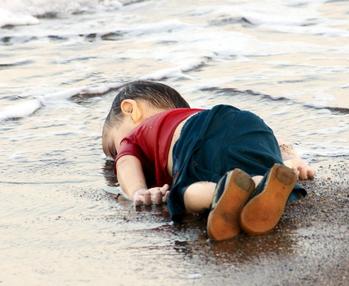
I saw mothers and fathers with desperation in their eyes and fearful children in tow. The image of a lifeless little boy washed up on a sandy Mediterranean beach still haunts me.
Syria was home to the oldest population of Christians on earth, and Christians were caught in a sectarian and political power struggle between largely Muslim factions fighting for and against Democracy. Both Christians and Muslims fled from the conflagration between the deadly governmental crackdown against the popular rebel uprising, and the ruthlessly uncompromising, opportunistic butchers of ISIS who joined in the fight.
Though many of the refugees were Christians caught in the cross fire, and the though the rebels fought for Democracy, President Obama resolutely refused to open American borers to more than a handful of Syrian refugees. As the flood of humanity streamed into Turkey and Europe, we stood aloof.
I was torn. The throngs of young and angry Muslim men mixed with desperate parents and fearful children pulled me in different directions, and I didn’t know how to respond.
I had recently done an apologetic study of Christianity vs. Islam, and my concern about the angry, displaced Muslims was keen. President Obama and the Democratic majority acted as if the moral fabric of the universe would rend in two if we verbalized what everyone knew and thought: that angry young men indoctrinated by radical Islam are dangerous.
Yet, the faces of those parents and children and the haunting visage of the 3-year old Alan Kurdi lying lifeless and washed up on a Mediterranean shoreline begged for a compassionate response.
I realized in that conflict of opposing strains of response to the Syrian crisis that I really had no idea how a Christian should look at these things. I realized that I didn’t know what, if anything, a robust reading of Scripture might suggest.
So, I did what I should have done a long time before that. I did a deep dive into what the Bible has to say about immigrants.
For anyone who does not honor or respect or believe in the Bible, this won’t mean much to you. For me, it was important to know whether the Bible addressed the subject and, if so, what the Bible has to say about it.
A funny thing happened to me one evening recently. I received a text from a number that was not in my contacts. The texter introduced himself and said he was from “VBC”. He said he emailed me, but I didn’t respond, so he was sending me a video of the child I sponsor from Uganda with a link for me to click.
I didn’t know the person. I didn’t get an email, and I don’t sponsor a child from Uganda.
Since scamming people is a billion dollar industry, I was cautious,. I do sponsor a child from Africa, but she lives in Ethiopia. The initials, “VBC”, are the initials for the church I go to, so I didn’t just delete it. I looked up name of the texter, but I couldn’t find his name in the directory.
I wanted to respond positively if he was a brother in my church, but I didn’t know him. What if someone hacked into the church directory? What if they found just enough information to make it sound good and to get me to click on a malicious link?
I texted him back and asked what email he had for me. The email he sent back was one letter off. He also sent an email with a shortened version of my former wife’s name, but it isn’t the shortened version she uses. It was close, but wrong. He had just enough of the right information for me to think it was legitimate but just enough of the wrong information for me to pause.
Finally, I texted the campus pastor, and he confirmed that the man was from VBC (but a different campus). He also did go to Uganda where the church has an ongoing missionary presence.
Then, I remembered: there is a young man in the church with exactly my first and last name. I have only met him once because he is a distant relative, and he goes to a campus of the church that is furthest from the one I go to. With this information, I called the man who texted me, and we had a good a laugh.
My name isn’t common. We both sponsor children in Africa. We both were marred to women with the same first name (different nicknames). The similarities were uncanny, but the differences signaled the need for caution.
I was thinking about this after doing my routine reading the next morning. The reading plan focused on James’s letter “to the twelve tribes scattered among the nations” (James 1:1), and it posed this question:
Have you ever been confused about who sent a text, email, or note?
In light of my experience the previous night, I realized that God might be talking to me! The follow up questions ask whether not knowing who sent the message confuses the meaning and whether knowing who the sender is changes our understanding.
The answer is definitely, yes and yes! I was confused when I wasn’t sure who sent me the original text, and knowing it came from a trusted source changed everything.
The context in which this story and my thoughts arise this morning is the confusion in the church caused by Donald Trump and his sidekick, Elon Musk. I have seen red flags since 2015 and reason for caution. The topic has been much on my mind, because some Christians champion these men and defend everything they do, and other Christians don’t.
It seems to boil down to who you trust and whether we should ignore look the other way at the things that seem a little “off”.
What are we to think? Can we trust them? Do we know who they are? Do we ignore the red flags? Perhaps, more importantly: Do we know who we are?
I am afraid I can’t get very deep into this subject without writing a tome, and I have already written much, so I want to stick with the context out of which this experience and these thoughts flow. Specifically the controversy over Elon Musk’s comment to Joe Rogan: “The fundamental weakness of western civilization is empathy.”
Many things are said about judging, and confusion persists about whether Christians are to judge or not to judge. I wrestled through the seeming conundrum – to judge or not to judge – a number of years ago and came up with 8 Important Points About Judging and Judgment. I didn’t realize, then, how these principles tie into the way we should look at immigration.
In very brief summary, Jesus said, “Judge not, that you be not judged” (Matt. 7:1), and followed immediately with the statement, “For in the way you judge, you will be judged; and by your standard of measure, it will be measured to you.” (Mt. 7:2) He was not telling us not to judge; he was telling us to be careful how we judge. This is critical.
The statements in Matthew 7 cited above are the set up for the short parable of the person with a log in his eye trying to take the speck of his brother’s eye. The parable ends with Jesus telling us first to take the log out of our own eye; then we can see accurately to take the speck out of our brother’s eye.
Paul riffs on this theme Jesus preached when he said, “If we would judge ourselves, we would not be judged.” (1 Cor. 11:31 NKJV) Paul also picks up on something I missed for years in the log and speck parable. In that parable, Jesus is talking about “judging” our brother. Who we judge is just as critical as how we judge.
When I first discovered this, I realized that I and most Christians I know had it all wrong. That lightbulb went on when I read these words by the Apostle, Paul:
“What business is it of mine to judge those outside the church? Are you not to judge those inside?”
1 corinthians 5:12
Jesus only talked about judging our brothers, and Paul makes it clear this means people in the church. We have no business judging people outside the church. “God will judge those outside.” (1 Cor. 5:13) (This is why we need to preach the gospel to them!)
Of course, when we feel compelled to judge someone else, we should always examine ourselves first. We should always be careful how we judge, because we how we judge others is how we will each be judged. We should never judge people outside the church – because Jesus came not to condemn – and neither should we; he came to save.
Notice these themes that Jesus preached:
We will be shown mercy as we show mercy to others (Matt. 5:7)
We will be forgiven as we forgive others (Matt. 6:15); and
We will be judged as we judge others (Matt. 7:2);
Consistent with what Jesus preached, the themes of judgment and mercy are tied together by James:
“[J]udgment without mercy will be shown to anyone who has not been merciful. Mercy triumphs over judgment.”
JAMES 2:13
When James adds that “mercy triumphs over judgment,” he is highlighting a standard that is based on God’s character. God desires mercy and not sacrifice (Hosea 6:6); God desires mercy, which is why Jesus came to call sinners to himself (Matt. 9:13); and God desires us to be merciful as He is merciful. (Luke 6:36)
So many people view God as an angry God who is full of wrath and judgment. Nothing could be further from the truth. “The Lord is merciful and gracious, slow to anger, and abounding in steadfast love.” (Psalm 103:8) “The steadfast love of the Lord never ceases; his mercies never come to an end.” (Lamentations 3:22)
God is just because he is merciful! Biblical justice is characterized by mercy. Thus, justice without mercy is not biblical justice:
“Therefore the Lord waits to be gracious to you; therefore he will rise up to show mercy to you. For the Lord is a God of justice; blessed are all those who wait for him.”
Isaiah 30:18
But what does this have to do with judging neighbors? Why did James ask the rhetorical question: “Who are you to judge your neighbors?” This question ripples back to the question, “Who is my neighbor?” The context in which God told us to love our neighbors is a good place to start with answers to these questions.
The Parable of the Good Samaritan has a backstory in Hebrew Scripture I previously didn’t know, and it relates to our present times. Specifically, it relates to the issue of immigration.
The context of the parable is a question put to Jesus by an expert in the law: “What must I do to inherit eternal life?” Jesus turned the question back on the expert, asking, “What is written in the law? … How do you read it?”
It’s interesting that Jesus does this. Maybe he wanted the legal expert to think it through for himself, rather than repeat what others have told him.
The expert answered, “’Love the Lord your God with all your heart and with all your soul and with all your strength and with all your mind’; and, ‘Love your neighbor as yourself.’”
Jesus affirmed his response, and said, “Do this and you will live.”
But, the expert in the law wasn’t satisfied with that answer. He asked Jesus, “Who is my neighbor?” This is where the backstory begins. To understand the backstory, we need to know where in Scripture the law expert was pulling his answers from and what he (and Jews of his time) likely thought about them.












 Navigating by Faith