What Laws Must a Christian Follow?

The tension between the Law and the Gospel and how they relate to each other is the key to understanding Christianity.


The themes of law and grace are central to Christianity. Sorting them out gets to the very heart of the gospel message. Yet, many people inside and outside of the Christian community are unclear on what laws Christians must follow, what laws are no longer applicable, and why.

Someone recently posted the following question to a group to which I belong on social media:


I get the message of we are not under the law but under grace. But if we live through Christ we will follow the law. How do we know what law to follow? Does this go as far back as to not mix fabrics? 

Obviously everyone says we’re no longer under the law, but ”faith without works is dead” so I am confused. 

How do we know which laws to follow?


Human tendency is to want a list of rules to follow so we can check them off. The rich young ruler demonstrates that human tendency when he came to Jesus one day and asked, “Teacher, what good thing must I do to get eternal life?” (Matt. 19:16)

We also have a tendency to want to quantify rules, and to simplify them to make them easier to follow. Perhaps, that is what motivated someone to ask Jesus, “Teacher, which is the greatest commandment in the Law?” (Matt. 22:36)

Or we go the other direction: we add rules on top of rules on top of rules to make sure that we don’t miss anything. The Pharisees demonstrated this approach in how they handled the commandment to observe the Sabbath. The created a list of “work” that was forbidden including, among other things: sowing, plowing, reaping, binding sheaves, threshing, winnowing, selecting, grinding, sifting, kneading, and baking bread; twelve similar activities related to the preparation of clothing, from shearing sheep to sewing; and seven activities related to preparing the carcass of a deer for food or leather. (See What are some Sabbath Observance rules that the Pharisees made?)

Moses started with ten commandments. By the time the books of Moses were completed, there were 613 commandments! (Though not everyone agrees on exactly what they are.)

The Torah (the Five Books of Moses – Genesis, Exodus, Leviticus, Numbers & Deuteronomy) focused on laws. That focus carries through the entire Old Testament. Though the laws are often more prominent in the breach, than in the observance thereof!

The same focus continued into the New Testament. We see it in the question asked by the rich young ruler and the Pharisees’ questions to Jesus. We see it in the tension between Paul and Peter that threatened to divide the early church over whether believing Jews must follow the Law and what laws believing Gentiles must follow.

This is the tension between the Law and the Gospel. If we understand only one thing about the Gospel message, the relationship of the Law to the Gospel might be the most important thing! I have written about it often, including How the Moorings of the Gospel Were Secured.

For the sake of brevity, I won’t summarize everything here. You can click in the links in the last two paragraphs to get an overview from the articles linked there. Understanding what Jesus meant when he said he didn’t come to abolish the law, but to fulfill it is critical.

If you are not a Christian, or you are a Christian, but you are not sure you understand these things, please do not just gloss over them. The tension between the Law and the Gospel and how they relate to each other is the key to Christianity.

It was the focus of almost all of Paul’s writings. It is the major theme in Romans, Galatians, Ephesians, Hebrews and the other epistles. Take some time now to wrestle with it. Don’t stop until it makes sense to you!

Hopefully, the rest of my thoughts in this piece will help.

Continue reading “What Laws Must a Christian Follow?”

What It Means to Be Called According to God’s Purpose

Abraham understood that God’s purposes were much greater than Abraham and Sarah, much greater than the land promised to them, much greater even than all his descendants that would populate the earth like the stars in the sky and sand on the seashore.

Photo by Peter Avildsen

God calls us according to his purpose. He calls us as beings He created in His own image. He calls us as His image bearers, and He gives us the responsibility for being fruitful and multiplying and tending to the creation that He made.

We messed up His creation. We got it all wrong. We went our own ways. We sought to make a name for ourselves. We pursued our own ends.

Then God became flesh. He became a man and lived among us. He subjected Himself to the worst of our messiness. Unbelievably, He gave Himself up to us – and for us – to redeem us from our own devices. AND to redeem us for His purposes.

God invites us to become His children by accepting this great sacrifice that He made for us. He now invites us to give ourselves up to Him and to let Him take His rightful place in our lives and hearts and to make His purposes our purposes.

Sometimes, I believe, we have too small a view of God and His purposes. We tend to be satisfied to think that God merely desires to save us from ourselves, and we do not have a robust view of God’s purposes.

Continue reading “What It Means to Be Called According to God’s Purpose”

The Dilemma of God Demanding Justice from Beings Incapable of Meeting God’s Standard

There is one critique of the Christian notion of sin and the justice of God that is troubling on its face. That key critique for anyone who claims that God demands justice for sin is that God is seemingly unjust to require justice of beings who can’t measure up.

Many modern people bristle at the Christian idea of sin, and they bristle even more at the idea that God would punish sinners. Frankly, I think many modern people simply don’t understand what sin is and who God is.

But, that aside, there is one critique of the Christian notion of sin and the justice of God that is troubling on its face. That key critique for anyone who claims that God demands justice for sin is that God is seemingly unjust to require justice of beings who can’t measure up.

Alongside the notion that the God of the Bible and demands judgment for not measuring up to God’s just standard is the notion that all people are sinners who don’t measure up. In fact, the New Testament is fairly read to say that people are incapable of living up to God’s standard.

The doctrine of original sin says that we are all corrupted because the sin of Adam and Eve has been passed down generation after generation. Even if we don’t believe in the doctrine of original sin, however, the Bible is clear from the Old Testament to the New Testament that human beings don’t measure up to God’s standard:


They have all turned aside; together they have become corrupt;
    there is none who does good,
    not even one.

Psalm 14:3


They have all fallen away;
    together they have become corrupt;
there is none who does good,
    not even one.

Isaiah 53:5


as it is written:

“None is righteous, no, not one;
   .
 All have turned aside; together they have become worthless;
    no one does good,
    not even one.”

Romans 1:10-12


Jesus said, “No one is good except God alone.” (Mark 10:18 (NIV)) Yet, he says, “Be perfect … as your heavenly Father is perfect?” (Matthew 5:48)

This is the dilemma: How can we be perfect?! “To err is human” the bard once said, and so it seems we are imperfect by our very nature.

Many people reject the idea that God can be just and demand justice from people incapable of measuring up to the standards God’s justice demands. They say it would be unjust for God to demand justice from beings who have no ability to act other than they do, and so fail to meet God’s standards.

God seems to be acting unfairly to demand that we meet His standards when we are 1) created beings, 2) born into sin, and 3) incapable of living up to the perfection God requires.

Other questions tumble after these thoughts: Why didn’t God create us perfect? If we are born sinful, how can God blame us for being sinful? If we are incapable of being perfect, how can God punish us for our imperfection?

Continue reading “The Dilemma of God Demanding Justice from Beings Incapable of Meeting God’s Standard”

Abraham, Isaac, the Blood Path, Christ and Him Crucified

I started on a journey exploring the story of Abraham and Isaac deeper and with more nuance in my previous article, The Story of Abraham and Isaac Revisited: Introduction. The story of God’s seeming demand to Abraham to sacrifice his son, and Abraham being seemingly willing to do it, is quite misunderstood, especially without reference to the Ancient Near East context.

Child sacrifice was ubiquitous among the religions with which Abraham was familiar. Abraham would have thought the demand for the sacrifice of Isaac unsurprising among the arbitrary and capricious gods in the Ancient Near East world he knew.

The story is of the first 11 chapters of Genesis and of Abraham is a revelation that the God of Abraham is different than all the other Ancient Near Eastern gods. In the subsequent article, The Story of Abraham and Isaac Revisited: Here I am!, we explore the interpersonal dynamics of Abraham and Isaac that set the stage for much greater revelation of which God is.

Through Abraham’s dutiful and faithful obedience to the demand he feared would be required of him, God demonstrated His character in a way that was indelibly etched into the experience and psyche of Abraham and Isaac. They would learn that God does not make the same kinds of demands as the other gods: God would provide the sacrifice Abraham feared that God required of him.

In Abraham, Faith and a Hope Deferred, I may seem to take a sideways turn off the path of revelation of God’s character to Abraham, but I will finish the story in this article and get to that point.

The ground we covered in that last article included a blessing by God to Abraham, but the experience of God’s momentary blessing was dampened by the cold reality of God’s yet unfulfilled promise.

In Genesis 15, Abraham sought more assurance from God that the land he lived as a stranger would really become the land of his descendants and, more fundamentally, that he would actually have descendants. Many years had passed, and Abraham was still childless.

In response, God asked Abraham to set up a covenant with five animals of specific types to be slaughtered, cut in half and placed opposite each other on either side of a depression. The blood of those animals drained into the depression creating a blood path. This, Abraham knew, was the stage for entering a covenant with God.

These types of covenants were familiar to ancient Middle Easterners. I understand that similar covenant rituals are practiced today by Bedouins.

Abraham would have known the drill. As the lesser party to the covenant, he would go first, signifying that God should do to him (stomp on a pool of his blood) if Abraham didn’t keep his part of the bargain. With the lesser party committed to the covenant, the greater party would seal the deal, and go last, walking through the blood path.

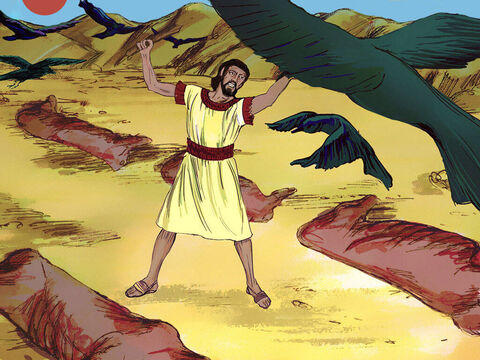
Only Abraham doesn’t initiate the covenant by walking through the blood path. He waits so long that he must drive the birds of prey away from the rotting carcasses. Then Abraham falls into a fitful and dark sleep.

Why did Abraham hesitate? Maybe he realized the significance of what God was setting up – a covenant between a fallible person and the Almighty God! Abraham was not likely worried so much about the commitment God would be making to him, but about the commitment Abraham would be making to God!

So, Abraham, perhaps, feared to enter in to the covenant. He falls into a restless sleep, and God comes to Abraham in his sleep. The “assurance” Abraham receives in his dreams is far from satisfying: God says the promise to Abraham’s descendants would not be finalized for 400 years!

Abraham would be long dead and gone.

This is where we pick up the story. This is where we get the next revelation of the kind of God the God of Abraham is. If we aren’t tracking with the story, we won’t appreciate what happens next:

Continue reading “Abraham, Isaac, the Blood Path, Christ and Him Crucified”

Abraham, Faith, and the Hope Deferred

I ended the article, The Story of Abraham and Isaac Revisited: Here I Am, with a promise to come back to the story of Abraham and Isaac one more time. Recall that Abraham had the intuition to tell Isaac “God would provide” when Isaac asked him where the lamb was for the sacrifice.

We do not know whether Abraham really believed what he told Isaac, whether he was simply being hopeful, or whether he was merely dodging Isaac’s question. We learn in Sunday school that Abraham truly believed it. Perhaps, that is the right answer.

I say that, not because of a Sunday lesson, but because of Abraham’s experience and particularly his experience with God in moments of great doubt and angst. One such moment was described in Genesis Chapter 15. The set up is interesting.

Four kings conspired together to attack Sodom and Gomorrah. They attacked and routed the inhabitants, seizing their goods and carrying off Abraham’s nephew, Lot, and his possessions. (Genesis 14:5-12) Abram (as he was still known at the time) responded immediately with “318 trained men in his household”. He pursued them, routed them, pushing them all the way to Damascus, and recovered Lot and all the goods. (Genesis 14:13-16

Melchizedek, “priest of the God Most High”, pronounced Abraham blessed by “God Most High”, and Abram tithed a tenth to him. (Genesis 14:18-20) After this great victory and blessing from Melchizedek, we read that the word of the Lord came to Abram in a vision:

“Do not be afraid, Abram.
    I am your shield [sovereign],
    your very great reward.”

Genesis 15:1

We might expect Abram to be exalting in the afterglow of his decisive routing of the four kings and blessing by Melchizedek, but he wasn’t. Abram appears to be struggling with the lack of fulfillment of the promises God gave him so many years before.

Abram is human. He has held onto the promise, but his faith is waning. The doubts are rising. Though God had just given him an encouraging word, Abram is focused on the unfulfilled promise:

“But Abram said, ‘Sovereign Lord, what can you give me since I remain childless and the one who will inherit my estate is Eliezer of Damascus?'”

Genesis 15:2

The text continues with Abram still talking. That means God hasn’t responded, and so Abram continues:

“And Abram said, ‘You have given me no children; so a servant in my household will be my heir.'”

Genesis 15:3

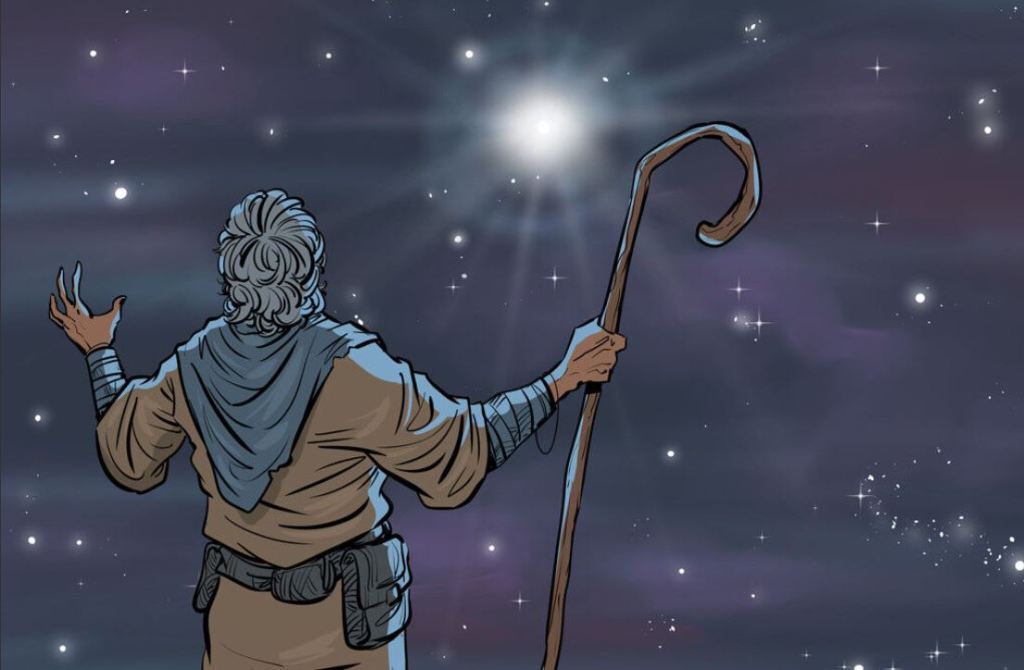
Finally, God breaks in, telling Abraham that his legacy would come from his own flesh and blood, taking Abram outside to look at the sky and telling him his offspring would be like the stars. (Genesis 15:4-5)

We are told that Abram believed in that moment, and God, who sees the hearts of men and knows the thoughts and the intents of mean’s hearts, credited that belief to Abram as righteousness. (Genesis 15:6) God also reminded Abram that He brought Abram out of Ur to the land Abram stood on to give it to him. (Genesis 15:7)

Though Abram believed, and though God had just given him more assurance, Abram kept pressing:

But Abram said, ‘Sovereign Lord, how can I know that I will gain possession of it?’”

Genesis 15:8

It wasn’t for lack of belief that Abram kept pressing God. We were just told Abram believed. In fact, this was the very moment that God credited Abram with righteousness for his faith!

At the same time, Abram was pressing God for something more than a bare promise. Doubt is not the absence of faith, and pressing God for assurance is not a lack of faith. I hear echoes here of another father who cried out for his son when Jesus promised deliverance, “I believe; help my unbelief!” (Mark 9:24)

God doesn’t rebuke Abram, and he doesn’t take away the righteousness God had just credited to Abram. In the same vein, Jesus didn’t rebuke the father who asked for help in his believing unbelief. Jesus commended him, and God tells Abram,

“Bring me a heifer, a goat and a ram, each three years old, along with a dove and a young pigeon.”

Genesis 15:9

If you are scratching your head right now, that is good! God’s response begs for some understanding and insight. Just as Abram pressed God, we should be pressing right now for understanding.

Continue reading “Abraham, Faith, and the Hope Deferred”