The Borderlines: A Place Called Earth

When we stand at the borderline and understand the limitations and futility of our lives, we have begun to see as God intended for us to see.

Oh, how I long for heaven in a place called earth
Where every son and daughter will know their worth
Where all the streets resound with thunderous joy
Oh how I long for heaven in a place called earth

Song writers have common themes and images that run through their work. Jon Forman is one of my favorite song writers because he resonates with a theme that has run through my thinking over the last decade: the transience of this life and the transcendence of the life to come.

In the song, A Place Called Earth, he focuses on the “borderlines” between the transience of our lives and the longing for transcendence. It’s an age-old theme. It’s a theme that has been the subject of some of the greatest writers in the history of world from the author of Ecclesiastes to Shakespeare.

The video embedded above was a recent live performance of this song off the new EP, Departures. Linked below is the studio recording of A Place Called Earth that was written by Jon Foreman with his brother, Tim, and Lauren Daigle. I encourage you to listen to it in all of its orchestral fullness.

The hope of the Christ follower is the longing for heaven, a place where everyone knows their worth through the eyes of Jesus. Our hope to know even as we are fully known. Meanwhile, we see dimly as in a mirror, and we have this hope, the treasure of the Holy Spirit who gives us assurance, in earthen vessels. (2 Corinthians 4:7) We long for heaven in a place called earth.

Oh, the wars we haven’t won
Oh, the songs we’ve left unsung
Oh, the dreams we haven’t seen
The borderlines

Jon Foreman’s plaintive voice captures the angst of these lines perfectly. We try to notch our belts with victories, but what of all the defeats? The songs we have left unsung? The great dreams we dared to dream that we haven’t seen?

All our victories are hollow trophies at the end of our days. Memories of them begin to fade from the moment of victory. Like the entropy to which our universe is subjected (Romans 8:20), those memories will fade into utter obscurity long after we have taken our last breaths.

We see this on the borderlines. On the borderlines, where we peer out over an endless expanse yawning out into a far distant future, and beyond it into an eternity we can’t even fathom. We realize our utter insignificance as we peer out beyond what we can see and comprehend.

Continue reading “The Borderlines: A Place Called Earth”

Is Saul Among the Prophets? On Prophecy and a Heart for God

Anything that we rely on, trust in, and dream about and pour ourselves into more than God, Himself, can become a stumbling block and an idol to us.

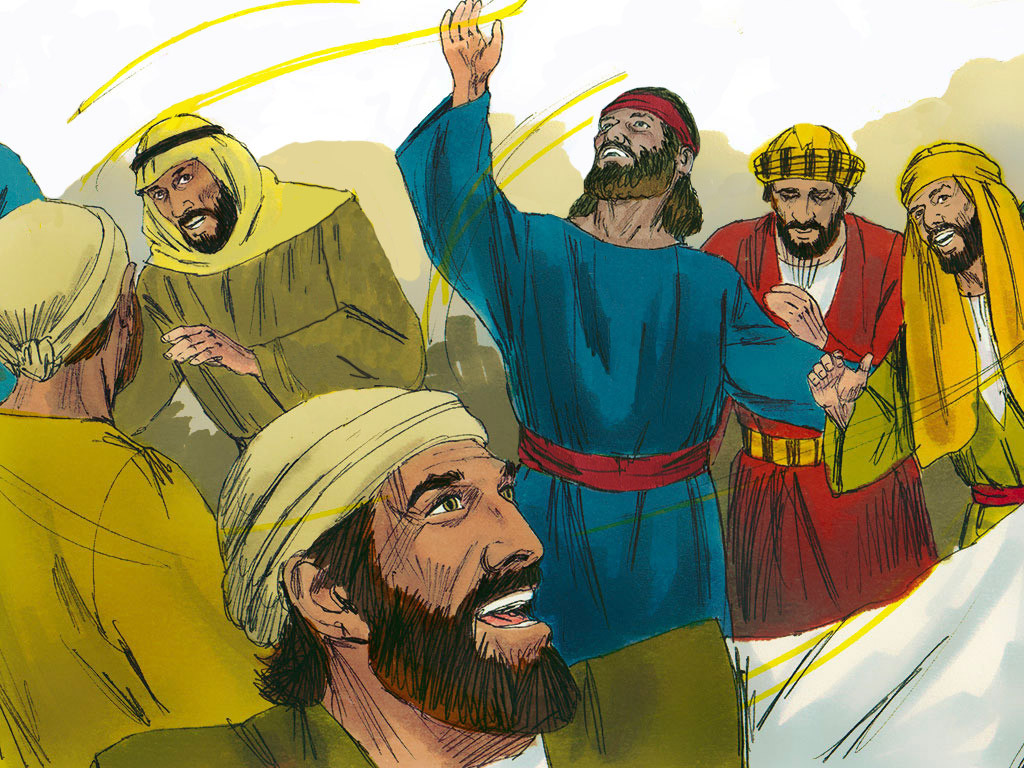
These things all happened as Samuel said. When he arrived at Gibeah, a procession of prophets met him. The Spirit of God came powerfully upon him, and he joined in their prophesying. ‘What is this that has happened to the son of Kish?’ people asked, ‘Is Saul now a prophet?’ – Slide 16

The question – “is Saul among the prophets?” – was a question that was a matter of public discussion in Israel in the 11th Century BCE, which is when King Saul lived according to the biblical timeline. The incident that gave rise to the question was such a big deal that the question became known as a “proverb”. (1 Samuel 10:12)

What is it with this question? How and why did it become a “proverb”? What is the back story?

Twice Saul prophesied with the prophets. These incidents were considered so remarkable that the Israelites were abuzz about it. The attention those incidents received, however, was probably not a compliment. They were remarkable because Saul was an unlikely prophet.

Saul wasn’t a very good king, either. Saul, of course, was the first king of Israel, but he wasn’t known for his leadership or his spirituality. He was tall and handsome, but that’s where his talents ended.

Saul’s story begins while he is searching for his father’s lost sheep. His path leads him to the prophet, Samuel. Before they meet, God tells Samuel that Saul will be Israel’s king. As a side note, Samuel warned the people against having a king, but they wanted one, like all the other nations.

Therefore, Samuel orchestrates a big dinner and anoints Saul to be the future king among a small group of people. (You can read a good summary of the details here.) Saul had been out looking for some lost donkeys for his father, so the turn of events was wholly unexpected by him.

It seems Saul was a bit unsettled by Samuel’s news to him, and Saul wasn’t ready to be a king. Even after Samuel predicts three signs meant to convince Saul of the authenticity of the kingly anointing, Saul seems less than willing to embrace God’s anointing.

Two of the signs Samuel gave him come true, but Saul doesn’t grasp what he is supposed to do. The third sign comes true when Saul encounters some prophets, and this encounter gives rise to the proverbial question: “[T]he Spirit of God rushed upon him, and he prophesied among them”. (1 Samuel 10:11)

Saul continues to seem clueless, though, even after the fulfillment of three unlikely predictions. When he gets back home, he doesn’t tell his uncle that Samuel said he would be king or about the anointing. He doesn’t talk about the signs, all of which came true on his way home.

When Samuel finally comes to “seal the deal, to declare Saul the King of Israel publicly, Saul is nowhere to be found. Saul is hiding among some baggage!

Given Saul’s less than hardy reaction to the declaration that he would be king, we know that Saul wasn’t “playing along” or faking it when he prophesied. At best, he was a reluctant participant. He might have even been an unwilling vessel!  

Thus, the question: Is Saul among the prophets? Saul was not known to be a prophet. Saul wasn’t a particularly spiritual man. This wasn’t the only time, though, that Saul prophesied with the prophets. The second time was even more “out of character”.

I have been puzzling on these things in light of more current events – the prophesies about Donald Trump and a certain emphasis on prophecy in a segment of the church today. The tie in to more recent events prompts me to dig deeper into the story of Saul.

Continue reading “Is Saul Among the Prophets? On Prophecy and a Heart for God”

Wounds that Never Fully Heal: An Easter Reflection on Frodo Baggins — by Laura Schmidt

What have the Hobbit and Easter in common? They are the myth and the True Myth.

wadecenterblog's avatarOff the Shelf

Broken plate Image: CHUTTERSNAP, https://unsplash.com/photos/Odc4dcsjUBw

Stories hold a special ability to deeply impact their readers. Those who enjoy reading imaginative fiction like The Chronicles of Narnia and The Lord of the Rings by the Wade Center’s authors already know the truth of that statement. From the page to the screen, from the parables Jesus used for the spiritual benefit of his audiences to the trials of two small hobbits struggling up the slopes of Mount Doom, stories engage the heart in ways that other forms of expression cannot accomplish. We yearn for that kind of engagement and feel nourished once we find it, like taking a breath of fresh spring air or a drink of water after a long thirst.

J.R.R. Tolkien calls this nourishment “recovery” in his essay “On Fairy-Stories,” explaining that stories can help us see life afresh and reawaken or illuminate spiritual truths:

“Recovery (which includes return and renewal…

View original post 2,281 more words

10 Fundamental Truths about Creation on which Christians Can Agree

Science and faith have been at odds with each other in the United States since before the Scopes Trial. Rather, should I say that people of science and people of faith have been at odds. I don’t believe there should be (or is) any real tension between science and faith.

Issues arise in the way people integrate or separate the two areas of discipline. Issues arise in the assumptions and presumptions people make about science and faith and how people interact (or don’t interact) with them.

The subject of creation among people of faith has also been fraught with much tension in the last 10-20 years (at least). People separate broadly into young earth and old earth camps. People in the old earth camp separate into groups informed by creationism, theistic evolution or a third way defined as “intelligent design”. The “gap theory” is another way to approach these issues – combining old universe and young earth principles.

Many people just don’t know where to fall on the spectrum of possibilities. Not many of us are so well-informed on the science and expert in our biblical exegesis that we can sort it out confidently for ourselves. We might wonder to God, “Is this going to be on the test?”

Of course, there is no test to get into heaven. Jesus took the test and passed it for all of us! The only test to get into heaven is what we do with Jesus. Do we embrace the gift of salvation that God offered us in Christ? Or do we reject it?

Still, the tension over how we should view creation, evolution, science and faith is real. It can cause quite a bit of consternation and doubt. Some people even wonder if people in different creation can fellowship with each other.

In a recent presentation that Krista Bontrager gave to the Chicago Chapter of Reasons to Believe with which I am affiliated, she reminded us of the call to unity in faith: “In essentials, unity. In non-essentials, liberty. In all things, charity.” I think she is right that we should be mindful of these things, not just i n this area.

More practical and helpful than that, though, she introduced to us ten (10) foundational points on the subject of creation on which all Christians should be able to agree. By focusing on the points of agreement, we can put our differences into better (more manageable) perspective.

Following are the ten (10) fundamental beliefs that unite Christians on the subject of creation:

Continue reading “10 Fundamental Truths about Creation on which Christians Can Agree”

What Does Archaeology Have to Do with Racial Justice in Modern Times?

A new voice is rising up that is reconnecting social justice to the truth of scripture

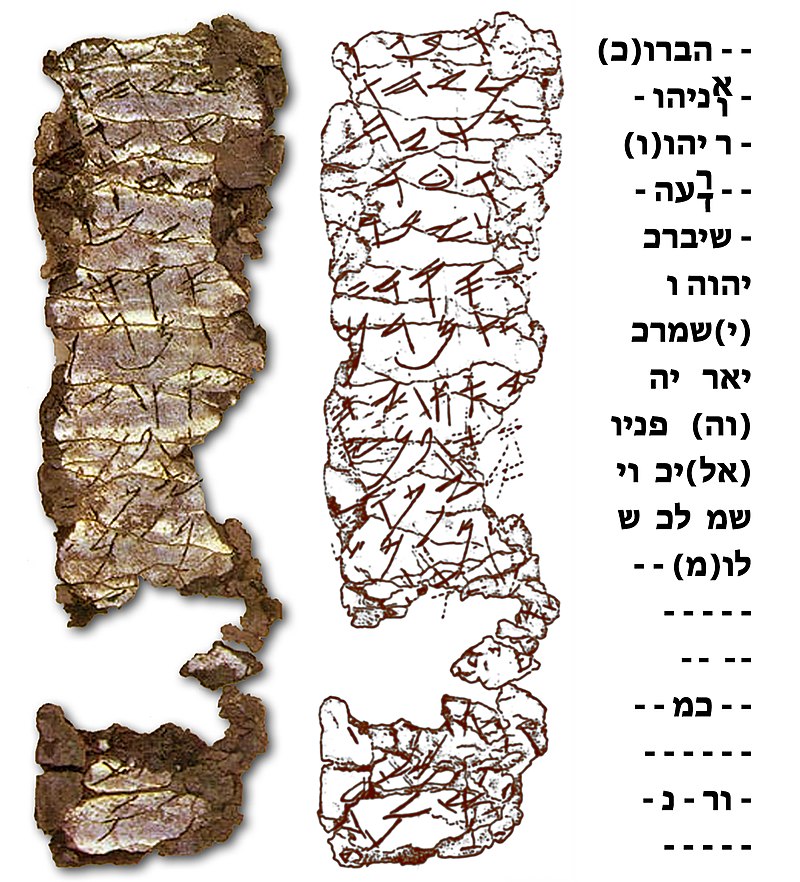
The Dead Sea Scrolls on display at the caves of Qumran that located on the edge of the Dead Sea in Israel.

“These are the things you are to do: Speak the truth to one another, render true and perfect justice in your gates. And do not contrive evil against one another, and do not love perjury, because all those are things that I hate – declares the Lord.” Zechariah 8:16-17

A major archaeological discovery was made recently in some remote caves in the Judean Desert. Among the discoveries were, coins from the time of the Bar Kochba Revolt, the skeleton of a child dating back some 6,000 years, and a 10,000-year-old exceptionally well-preserved basket. (From 2,000-year-old biblical texts found in Israel, 1st since Dead Sea Scrolls by Rossella Tercatin for the Jerusalem Post, March 16, 2021.)

These items were found in “the Cave of Horror” in the Nahal Hever area of the Judean Desert. The Nahal Hever is an intermittent stream in in the West Bank, flowing from Yatta to the Dead Sea. At the head of the stream are two caves, the “Cave of Letters“, and, further up, the “Cave of Horror“.

Though the caves are hard to access, looters have raided them over the years. Archaeological efforts many years ago netted portions of the Book of Numbers, Psalms and Deuteronomy. Until recently, people might have assumed all artifacts to be found in those caves had already been removed.

The Greek scroll of the minor prophets found at Nahal Hever may even be the most significant find to date. Some date these fragments in the 50 years before Christ, and others date them in the 50 years after Christ. We don’t really know, but scholars seem to agree that the fragments come from “an early revision of the Septuagint in alignment with the Hebrew text”.


Modern archaeological finds continue to affirm Scripture and the continuity of Scripture through the ages. Poignantly for today in these times, the discovery of the scroll of the minor prophets found in the Nahal Hever speaks to an age old theme.

The passage in Zechariah 8 quoted above was found among the fragments. From old, from ages and ages past, we find that God desires truth and justice from His people.

“Speak the truth to one another, render true and perfect justice in your gates.”

I am reminded that God’s desire for justice and truth from His people is the same today as it was then. I think about these things after listening to the Disrupters podcast in which host, Esau McCalley, spoke to the political strategist, Justin Giboney. As they were talking about faith and politics, I realize that justice and truth continue to be priorities for God, and only the circumstantial details have changed.

Continue reading “What Does Archaeology Have to Do with Racial Justice in Modern Times?”