Is the Story of Jesus a Story of Divine Vengeance or Love?

Many people interpret the story of Jesus as if God was looking for someone on whom to take out his vengeance, and His son got in the way – so that somehow makes it right.


NT Wright made a statement on Justin Brierley’s new podcast recently, Ask NT Wright Anything, that is worth repeating. He says that people read John 3:16 (“That God so loved the world that he gave his only begotten son….”) this way: “that God so hated the world that he killed his only son.”

People, especially today, view God as an angry bully. They interpret the story of Jesus, Wright says, “as if God was looking for someone on whom to take out his vengeance, and His son got in the way – so that somehow makes it right”. The people who interpret the story in this way don’t think it is right. They recoil from God as from a cosmic bully.

Of course, many people who moralize about God are simply refusing to acknowledge God as God. They sit in judgment of God. At least they sit in judgment of “the God of the Bible” as they perceive Him.

Many who hold these views also don’t believe God exists, so they are really sitting in judgment of God as they perceive God to be who other people believe in. (Nevermind that this cosmic bully god is not the god other people actually believe in.)

Skeptics aside, I think believers may also view God as more of a cosmic bully than a loving Father, sometimes. It isn’t just skeptics; sometimes believers wrestle with a muddled view of God.

Continue reading “Is the Story of Jesus a Story of Divine Vengeance or Love?”

Are Christians Hypocrites?

Calling Christians hypocrites is like shooting fish in a barrel. It’s that easy. You literally can’t miss.
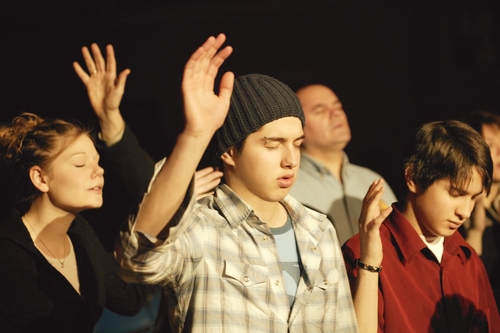

The charge that Christians are hypocrites is a common one. Many people cite the hypocrisy of Christians as a reason they don’t go to church or consider themselves Christian. According to Webster, a hypocrite is “a person who puts on a false appearance of virtue or religion” or “a person who acts in contradiction to his or her stated beliefs or feelings”. As a Christian, I take this charge seriously, and so I feel compelled to address it.

In this world of fake news, we seem to be on hyper alert to what is fake. If Christians claim to be virtuous or religious, but they act like everyone else, most people would consider them “fake”. If Christians have ascribed to certain standards of morality and conduct, but don’t live up to those standards themselves, most people would call them hypocrites.

As I survey the Christians that I know and have known in my life, I find myself having to concede that Christians are guilty as charged. In fact, I need look no further than myself to come to that conclusion. I fail in my life on a regular basis to live up to the standards I believe in, though I recoil at the thought of putting up a false front about it.

Still, the answer is clear and obvious: Christians are hypocrites.

We are religious. It isn’t a pretense, for most of us. We try to be virtuous. That usually isn’t a pretense either, but we fail to live up to the standards we hold out. There can be no doubt of that.

Calling Christians hypocrites is like shooting fish in a barrel. It’s that easy. You literally can’t miss.

But, that isn’t the end of the story. Not by a long shot. It’s only the beginning.

Continue reading “Are Christians Hypocrites?”

Sin, Salvation and Righteousness – God’s Plan for Us

Getting into some detail on basic principles of the Christian faith that yield rich and deep truths for the believer.


I set stage for this blog with the question, What is Christian Salvation and Why Would Anyone Want It? If you haven’t read that blog first, you might want to take some time to read  it. I set this piece up with my own story, but I am no different than anyone else who has encountered the God of the Bible and the salvation that He offers.

In this piece we will get into some detail on the meaning of salvation, sin that poses the problem for which salvation is the solution, and righteousness, which is, perhaps, more misunderstood than the other two.

To begin with, salvation means, generally, “preservation or deliverance from harm, ruin, or loss”; theologically, it means “deliverance from sin and its consequences” according to Google. Righteousness means, generally, “the quality of being morally right or justifiable” according to Google.

These definitions are simple and easy enough to understand generally, but they have very specific and nuanced meanings in context of faith that belie the richest and deepest of Christian truths.

Continue reading “Sin, Salvation and Righteousness – God’s Plan for Us”

What Is Christian Salvation and Why Would Anyone Want It?

What does it mean that salvation is a free gift? What are we saved from? Why is it freely given?


One of the simplest and most fundamental principles of Christianity is that salvation is a free gift. It is nothing that we earn. God gives salvation to us freely.

A closely associated principle is that righteousness is nothing that we achieve. God attributes righteousness to us freely. Again, we don’t achieve righteousness; God considers us righteous when are rightly related to God.

These words, salvation and righteousness, are among the most basic of Christian principles. These words are used with a great deal of presumption that everyone knows what they mean, but that isn’t necessarily the case.

What is salvation? Why should we want to be saved? Saved from what?

Righteousness may be even more misunderstood. Are we talking about moral superiority? Self-righteousness? Holier than thou?

I will try to illuminate these very central ideas to the Christian faith in this blog. Few things are more central to Christianity than the idea of salvation and righteousness.

My own experience may serve as a good example of what these terms mean and how they apply to Christian faith. Though I was raised Catholic, and went to church every Sunday with my parents, I was not a “Christian” in the sense of having a personal faith and relationship with God before the summer between my freshman and sophomore years in college. I had read the Bible (for the first time in a college World Religion class), and I assumed there was a God, but I had no personal connection.

Continue reading “What Is Christian Salvation and Why Would Anyone Want It?”

Repentance from Dead Works

For it is impossible, in the case of those who have once been enlightened, who have tasted the heavenly gift, and have shared in the Holy Spirit, … and then have fallen away, to restore them again to repentance

depostphotos Image ID: 5379147 Copyright: Iurii

These are some of the most terrifying words in the New Testament:

For it is impossible, in the case of those who have once been enlightened, who have tasted the heavenly gift, and have shared in the Holy Spirit, and have tasted the goodness of the word of God and the powers of the age to come, and then have fallen away, to restore them again to repentance, since they are crucifying once again the Son of God to their own harm and holding him up to contempt.” (Hebrews 6:4-6)

For anyone but the hardest core Calvinist, these words are enough to make one shudder. No one wants to fall away. But we often do what we know we shouldn’t. The mind is willing, but the flesh is weak. Though we may be born again, the old man lurks incessantly beneath the service and around every corner. The struggle is real.

Most people, however, (me included) tend to read these words out of context. As an isolated statement, we might be strongly tempted to believe these words speak to sin, especially those nagging, habitual, ingrained sins that we have a hard time overcoming. We feel as if, one day, we will sin one too many times and will have fallen away – completely lost and irredeemable!

But the context speaks to something different than the direction our mind is prone to go.

The statement in Hebrews 6 quoted above is prefaced with the following introduction:

“Therefore let us leave the elementary doctrine of Christ and go on to maturity, not laying again a foundation of repentance from dead works and of faith toward God ….” (Hebrews 6:1)

What is the “elementary doctrine of Christ”? What are these “dead works” from which we must repent? This is the key to keep from “falling away”.

Continue reading “Repentance from Dead Works”