Was the Garden of Eden Really Perfect?

Six times in the creation narrative God reviews His creation in different stages, and He calls it “good”.


Sandra Richter in her book, The Epic of Eden, toes the orthodox, evangelical line, that the Garden of Eden was created perfect by God. This echoes the orthodox, western position that Eden was perfect, and Adam (and Eve) ruined the perfection of Eden in rebellion against God.

This is the traditional view: that God’s world was perfect until man ruined it by sinning.

Not that Adam didn’t have some help in this rebellion. I am using Adam in the generic sense, meaning those initial humans who made that one fateful choice that God prohibited, committing the first sin that led to death and banishment from the Edenic paradise God gave man.

This is what I learned as a new Christian. Sandra Richter is a theologian, and I am not. At least, I am not a theologian by trade, academic degree, or career.  I respect Richter, which is why I am reading her book, but I am not sure this view is exactly right.

At least, there is another view that I think has some merit. I have come to see some nuance in Genesis that I had not seen before, and it gives me pause when I hear the traditional line. I don’t think I have ever written on it, so here goes.

Continue reading “Was the Garden of Eden Really Perfect?”

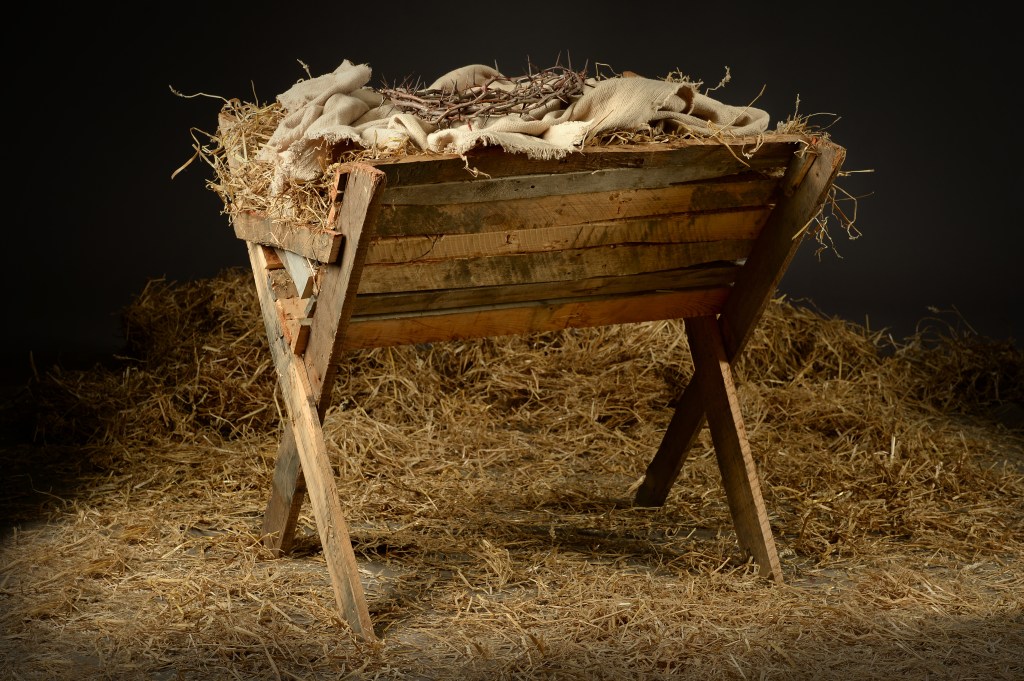
A Message in a Manger


I am going to revisit some of the Christmas articles I have written in previous years in the coming weeks, starting with this one. I may freshen them up a bit as I do so. This was one of the first articles I wrote on this blog, and I think the message still resonates today: A Message in a Manger.

Called to the Purpose for which Christ Died

. We may be tempted to assume that we are just biding our time here as God prepares rooms for us in heaven – an escape from the present futility of the world


If we are truly in Christ, we know the love the Father has for us. “For his Spirit joins with our spirit to affirm that we are God’s children.” Romans 8:16 Often, however, our sense of God’s greater purpose can get lost in the immediacy of our lives in this world.

As heirs of the Father in Christ, together with Christ, we await God’s glory. We may be tempted to assume that we are just biding our time here as God prepares rooms for us in heaven – an escape from the present futility of the world – but there is a catch:

“if we are to share his glory, we must also share his suffering.”

Romans 8:17

God emptied Himself of His glory to come to us in human form, and he entered into our suffering. This was God’s purpose from before the foundation of the earth. God became human in Christ as part of the fulfillment of that purpose.

Likewise, Jesus calls us to take up our crosses and to follow him, just as He followed the Father in the fulfillment of God’s ultimate purpose.

This notion of entering into Christ’s suffering, and even rejoicing in suffering, was central to the message Paul preached. Suffering was also the familiar experience of early Christ followers.

As with Abraham, those early Christian knew they were not at home on this earth. They were waiting for a “city with foundations, whose architect and builder is God“. Suffering in this life reminds us that we are not home yet. Our home lies beyond.

More importantly, God has a purpose, and His purpose includes us. Just as Abraham lived out his life in seeking to fulfill the purpose for which and to which God called him – by which he was going to be a blessing to all the nations of the earth – we are called to this greater purpose of God.

Most Christians in the western world know practically nothing about suffering for Christ. “Cancel culture” and political disagreements, are not the same as what Christ suffered or even what many Christians in other parts of the world suffer.

Not that we should wish suffering upon ourselves. The reality is, though, that we don’t really have a good personal and intimate sense of what it means to suffer, and to embrace suffering, as Paul and the early Christians experienced it. For that reason, perhaps, these words Paul spoke are not as poignant for us as they should be:

“Yet what we suffer now is nothing compared to the glory he will reveal to us later.”

Romans 8:18

In the United States, we are tempted to fight back against the insults of the world, to assert our political, social, cultural, and even (sometimes) our physical power – to gain advantage. We do this “for the Church”, we say. We say, “We do it for God”, to put God back in schools, to save the family, to reclaim this nation for Christ, etc.

But is that really God’s greater purpose?

Continue reading “Called to the Purpose for which Christ Died”

The Dilemma of God Demanding Justice from Beings Incapable of Meeting God’s Standard

There is one critique of the Christian notion of sin and the justice of God that is troubling on its face. That key critique for anyone who claims that God demands justice for sin is that God is seemingly unjust to require justice of beings who can’t measure up.

Many modern people bristle at the Christian idea of sin, and they bristle even more at the idea that God would punish sinners. Frankly, I think many modern people simply don’t understand what sin is and who God is.

But, that aside, there is one critique of the Christian notion of sin and the justice of God that is troubling on its face. That key critique for anyone who claims that God demands justice for sin is that God is seemingly unjust to require justice of beings who can’t measure up.

Alongside the notion that the God of the Bible and demands judgment for not measuring up to God’s just standard is the notion that all people are sinners who don’t measure up. In fact, the New Testament is fairly read to say that people are incapable of living up to God’s standard.

The doctrine of original sin says that we are all corrupted because the sin of Adam and Eve has been passed down generation after generation. Even if we don’t believe in the doctrine of original sin, however, the Bible is clear from the Old Testament to the New Testament that human beings don’t measure up to God’s standard:


They have all turned aside; together they have become corrupt;
    there is none who does good,
    not even one.

Psalm 14:3


They have all fallen away;
    together they have become corrupt;
there is none who does good,
    not even one.

Isaiah 53:5


as it is written:

“None is righteous, no, not one;
   .
 All have turned aside; together they have become worthless;
    no one does good,
    not even one.”

Romans 1:10-12


Jesus said, “No one is good except God alone.” (Mark 10:18 (NIV)) Yet, he says, “Be perfect … as your heavenly Father is perfect?” (Matthew 5:48)

This is the dilemma: How can we be perfect?! “To err is human” the bard once said, and so it seems we are imperfect by our very nature.

Many people reject the idea that God can be just and demand justice from people incapable of measuring up to the standards God’s justice demands. They say it would be unjust for God to demand justice from beings who have no ability to act other than they do, and so fail to meet God’s standards.

God seems to be acting unfairly to demand that we meet His standards when we are 1) created beings, 2) born into sin, and 3) incapable of living up to the perfection God requires.

Other questions tumble after these thoughts: Why didn’t God create us perfect? If we are born sinful, how can God blame us for being sinful? If we are incapable of being perfect, how can God punish us for our imperfection?

Continue reading “The Dilemma of God Demanding Justice from Beings Incapable of Meeting God’s Standard”

Abraham, Isaac, the Blood Path, Christ and Him Crucified

I started on a journey exploring the story of Abraham and Isaac deeper and with more nuance in my previous article, The Story of Abraham and Isaac Revisited: Introduction. The story of God’s seeming demand to Abraham to sacrifice his son, and Abraham being seemingly willing to do it, is quite misunderstood, especially without reference to the Ancient Near East context.

Child sacrifice was ubiquitous among the religions with which Abraham was familiar. Abraham would have thought the demand for the sacrifice of Isaac unsurprising among the arbitrary and capricious gods in the Ancient Near East world he knew.

The story is of the first 11 chapters of Genesis and of Abraham is a revelation that the God of Abraham is different than all the other Ancient Near Eastern gods. In the subsequent article, The Story of Abraham and Isaac Revisited: Here I am!, we explore the interpersonal dynamics of Abraham and Isaac that set the stage for much greater revelation of which God is.

Through Abraham’s dutiful and faithful obedience to the demand he feared would be required of him, God demonstrated His character in a way that was indelibly etched into the experience and psyche of Abraham and Isaac. They would learn that God does not make the same kinds of demands as the other gods: God would provide the sacrifice Abraham feared that God required of him.

In Abraham, Faith and a Hope Deferred, I may seem to take a sideways turn off the path of revelation of God’s character to Abraham, but I will finish the story in this article and get to that point.

The ground we covered in that last article included a blessing by God to Abraham, but the experience of God’s momentary blessing was dampened by the cold reality of God’s yet unfulfilled promise.

In Genesis 15, Abraham sought more assurance from God that the land he lived as a stranger would really become the land of his descendants and, more fundamentally, that he would actually have descendants. Many years had passed, and Abraham was still childless.

In response, God asked Abraham to set up a covenant with five animals of specific types to be slaughtered, cut in half and placed opposite each other on either side of a depression. The blood of those animals drained into the depression creating a blood path. This, Abraham knew, was the stage for entering a covenant with God.

These types of covenants were familiar to ancient Middle Easterners. I understand that similar covenant rituals are practiced today by Bedouins.

Abraham would have known the drill. As the lesser party to the covenant, he would go first, signifying that God should do to him (stomp on a pool of his blood) if Abraham didn’t keep his part of the bargain. With the lesser party committed to the covenant, the greater party would seal the deal, and go last, walking through the blood path.

Only Abraham doesn’t initiate the covenant by walking through the blood path. He waits so long that he must drive the birds of prey away from the rotting carcasses. Then Abraham falls into a fitful and dark sleep.

Why did Abraham hesitate? Maybe he realized the significance of what God was setting up – a covenant between a fallible person and the Almighty God! Abraham was not likely worried so much about the commitment God would be making to him, but about the commitment Abraham would be making to God!

So, Abraham, perhaps, feared to enter in to the covenant. He falls into a restless sleep, and God comes to Abraham in his sleep. The “assurance” Abraham receives in his dreams is far from satisfying: God says the promise to Abraham’s descendants would not be finalized for 400 years!

Abraham would be long dead and gone.

This is where we pick up the story. This is where we get the next revelation of the kind of God the God of Abraham is. If we aren’t tracking with the story, we won’t appreciate what happens next:

Continue reading “Abraham, Isaac, the Blood Path, Christ and Him Crucified”