Ode to the Church and to God Who Watches Over the Foreigner

O Church, remember who you are,
Called to love, to heal, not to bar.


Once, in Eden’s light, they walked,
In fear, mistrust, and pride they balked.
Their own way looked better than God’s,
So He cast them out to the odds.

Though God walled them out, yet He stayed near,
He watched them roam this earthly sphere.
He clothed their shame knowing His plan,
To redeem them from the dusty land.

When Abraham heard the voice divine:
“Go to a land that I’ll make thine.”
He wandered there, a stranger still,
Seeking the City of God’s will.

From Abraham’s loins a nation grew,
In Egypt enslaved, four centuries through.
Bound and broken, crushed and torn,
Yet God’s eye watched, where hope was worn.

And when they were freed by God’s hand,
The law that God, would make command:
“Be kind to the stranger, love them as you—
For once you were aliens too.”

The psalmist sang of a just cause
To guard the stranger one must because
God watches over the oppressed and poor,
His mercy flows to the foreigner.

The prophets warned with fire and might:
“Do not oppress, do not fight
The alien, the widow, the orphaned heart—
Deprive them not, lest from God you part.”

Then Jesus was born, in flesh, divine,
Refugee Son, in a troubled time.
To Egypt He fled, a stranger, a child,
God in the dust, both meek and mild.

He preached a kingdom for all men,
Every race and tongue and kin.
That he would save from cursed yeast,
According to how we treat the least.

And John envisioned a great throng,
From every tribe, with one great song.
Before the Lamb, all men unite,
Bathed in mercy, robed in white.

Yet now, the largest Church on earth,
Wielding wealth, claiming new birth,
Builds walls to keep strangers away,
Turning the poor from its doorway.

Refugees wander, oppressed and unseen,
Deprived of justice, crushed between
A gospel of love and hands that deny,
While heaven looks down, and angels cry.

O Church, remember who you are,
Called to love, to welcome, not bar.
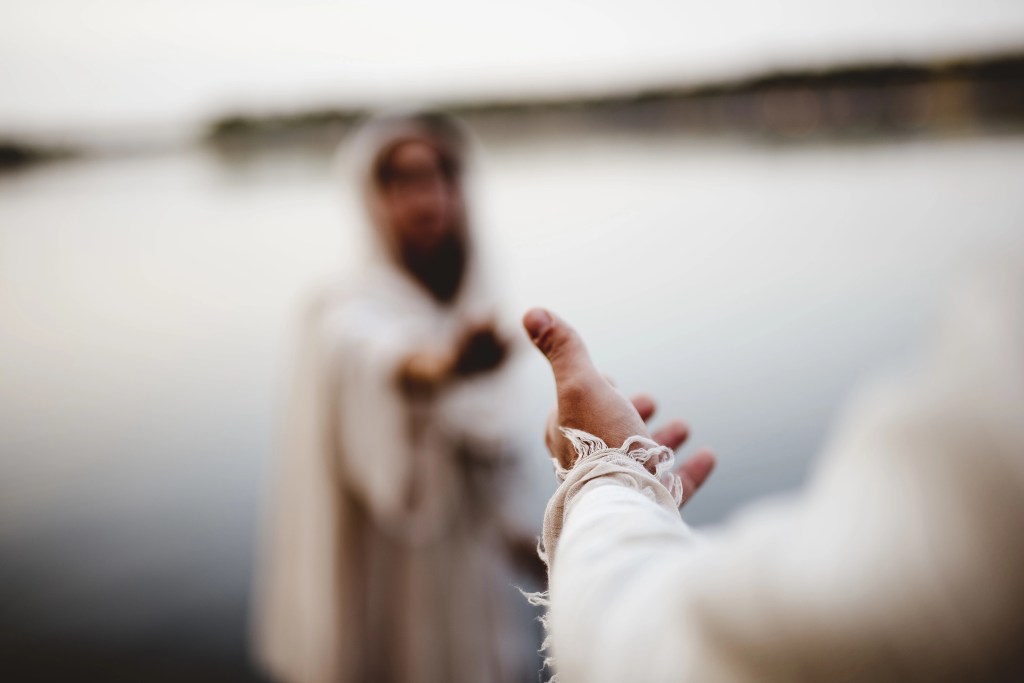
For the walled-out Christ still calls to you,
“Whatever you’ve done, you’ve done to Me too.”

Come, O Church, to the narrow way,
Where love shines bright at break of day.
Lay down your walls, take up your cross,
And count the cost, not gain or loss.

Follow the One who bore your shame,
Who calls you now by His great name.
For hope is found in His pierced hands,
Where grace flows wide for all the lands.

The stranger waits, the orphan cries,
Will you reflect the Savior’s eyes?
Do justly, love mercy, walk humbly with God
Love deeply, with the gospel on your feet shod.

For Christ alone is our living hope,
A lifeline strong, a Savior’s rope.
Come back to Him, and walk His way,
Till all are gathered on that final day.

Perspective, The Universe, and God

Perspective is critically important for finite creatures such as ourselves because we view everything from “where we sit”.


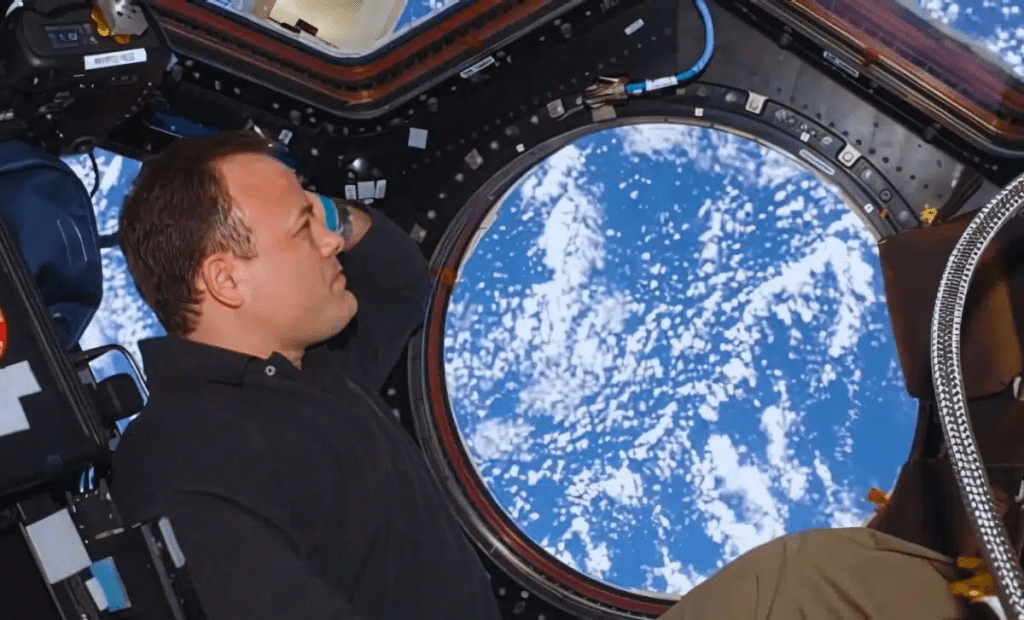
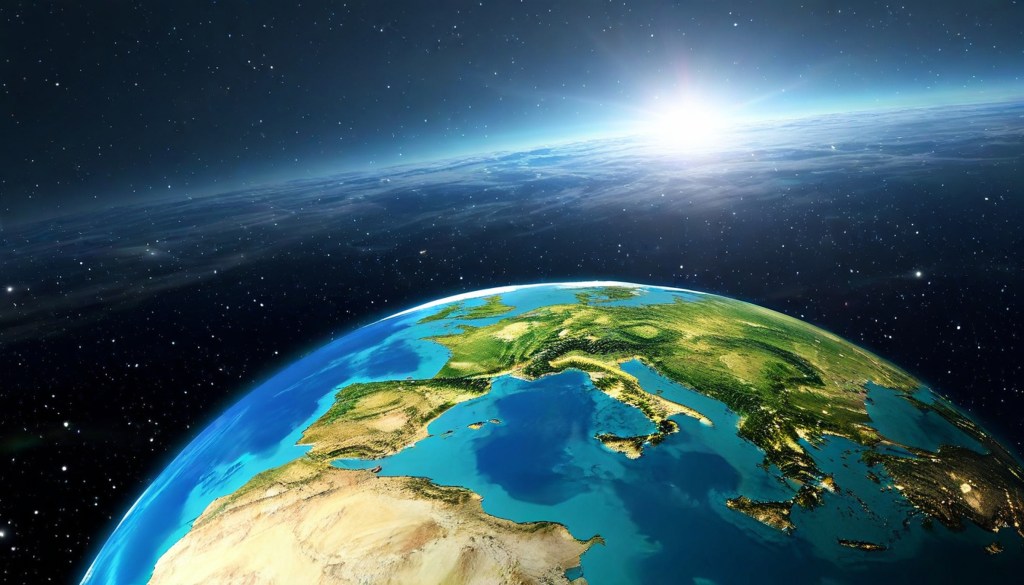
My thoughts are inspired by a Daily Galaxy article today, Astronaut’s ‘Lightbulb Moment’ in Space Reveals Humanity’s Biggest ‘Lie’s. Ignoring the obvious clickbait character of the title, I read the article, which is about the importance of perspective. A less sexy summary of the article might go like this: “Seeing the Earth from the vantage point of space provides a different perspective that should lead to a change in priorities.”

Astronaut’s ‘Lightbulb Moment’ in Space Reveals Humanity’s Biggest ‘Lie’ – © The Daily Galaxy –Great Discoveries Channel

The photo associated with the article illustrates the idea of perspective: that an astronaut viewing the earth from space, seeing the earth from the perspective of distance, hits home in a way that few of us have experienced. This is a perspective few of us have the privilege of attaining. We can imagine what it is like to view the earth from this perspective, but actually viewing the earth from this perspective is more impactful than imagining it.

I can only speculate on this, as I have not experienced it. Even viewing the astronaut’s perspective in a photo, though, hits home in a different way than simply imagining it. This is because our perspective (where we sit in relation to a thing) matters.

Perspective is critically important for finite creatures such as ourselves because we view everything from “where we sit”. We necessarily have a limited perspective. Our perspectives are limited by our location in space/time, geography, and position.

Our perspectives are also limited by our sociology, culture, education, worldview, personal experiences and a host of other physical and metaphysical factors. Many of these factors are external to us (like sociology, culture, and education). Many of these factors are more internal to us, like worldview, experience, and individual psyches (for lack of a better descriptor).

Our perspective can “shift”, as the article states, as we change “location”, experience new things, and view things from a different “angle”. Thus, a change in vantage point provides a potential change in perspective – a change in how we view the world and prioritize things.

“Walking a mile in another’s shoes” speaks to the kind of shift we experience when we gain a different vantage point. Walking a mile in another’s shoes speaks to the impact of experiencing a difference of perspective, and not just considering it abstractly.

Ronald Garan, the astronaut identified in the article, “was struck by the stunning beauty and fragility of Earth’s thin atmosphere” as he viewed the Earth from the distance of space. The reality of the earth’s beauty and fragility is nothing new, but the actual experience of viewing the earth from such a distance hit him in a more visceral way than simply knowing these things intellectually.

Tethered to the small oasis of a space station on the edge of the infinitely vast regions of a dark, cold, and apparently lifeless universe, Garan was struck by the thinness of the Earth’s atmosphere that harbors all the living beings on its surface. Experiencing the small and vulnerable bubble we call Earth from the yawning chasm of space, Garan gained new appreciation of the need for humans to prioritize care and stewardship of this highly privileged planet.

Perspective and its impact on us is not just a matter of physical location. Another person sitting immediately next to Garan with the same view of Earth might have “missed” what Garan “saw” because perspective is more than just physical location.

Continue reading “Perspective, The Universe, and God”

How Will the World Know You?

How will the world know you?

Will the world know you by your family, your ancestors and the legacy that comes after you?

Will the world know you by your wealth, your fiscal responsibility and ability to turn a profit?

Will the world know you by your great intellect, by the diplomas on your wall, the articles you have written? and the collection of books on your shelf you have read?

Will the world know you by your creativity, your command of a color palette, graceful and unique strokes of the brush and eye for design?

Will the world know you by your fame, by the number of people who know your name?

Will the world know you by your physical prowess, your ability to come through in the clutch, and your wins?

Will the world know you by your command of the English language, your artful turn of a phrase and your ability to move people with the written word?

Will the world know you by the instrument you play, the finesse of notes and rhythms, and the virtuosity with which you play your instrument?

Will the world know you by your professionalism, by your reputation for excellence in your field, and the accomplishments you have achieved?

Will the world know you by your stunning good looks, your impeccable fashion taste, and the company of beautiful people you keep?

Will the world know you by your eloquence, the depth and richness of your voice and your ability to command the attention of a crowd?

Will the world know you by your scientific mind, your understanding of technical details, and ability to apply scientific method and sound logic?

Will the world know you by your leadership, the number of people who follow you and your influence?

Will the world know you by the music you compose, the divine harmonies and intricate melodies you weave together in symphonic wonder?

Will the world know you by your politics, the platforms you have championed, and the dedication to your party allegiances?

Will the world know you by the roles you have played, the tears you have coaxed from fawning audiences, and the adoring fans you have?

Will the world know you by your architecture, by your complex end subtle designs, by the magnificence of the structures created from your drawings?

Will the world know you by your dedication, reliability and number of sick days you did not take?

How will the world know you?

In the end, we all go down to the grave, and the world is passing away. When an Ode to a Grecian Urn fades from collective memory, Jesus said we will be known as his disciples simply by our love for each other.

“Love one another. As I have loved you, so you must love one another. By this everyone will know that you are my disciples, if you love one another.

John 13:34-35

“We know that we have passed from death to life,  because we love each other.  Anyone who does not love remains in death.”

1 John 3:14

“Be devoted to one another in brotherly love.  Outdo yourselves in honoring one another.”

Romans 12:10

“Love never fails. But where there are prophecies, they will cease; where there are tongues, they will be stilled; where there is knowledge, it will pass away….” And now these three remain: faith, hope and love. But the greatest of these is love. “

1 Corinthians 13:8,13

East and West Meet at the Tower of Babel

I have been listening to the BEMA podcast. I highly recommend it. As defined on the website, “‘BEMA’ (or bimah) is a Hebrew word that refers to the elevated platform in the center of first-century synagogues where the people of God read the Text.”

The early Christians knew their Scripture. They built their lives around it. They devoted themselves to it, and to prayer, and the apostles reaching, and to fellowship and shared meals. (Acts 2:42) The bema in was where early Christians gathered in first century synagogues before they were persecuted and scattered.

The BEMA podcast attempts to approach Scripture the way easterners would have approached Scripture – the way the early Christians in the Middle East would have approached Scripture. The idea that Hebrew people were more “eastern” in their thinking was first pointed out to m by my Jewish professor in college over 40 years ago, so following up with that concept intrigues me.

Christianity quickly became westernized, but the origins of Christianity are eastern, growing out of the Hebrew culture and scriptures. For that reason, we would do well to gain some new perspective from a more eastern way of thinking. I encourage you to listen to the first couple of episodes of the podcast linked in the opening paragraph if you want an introduction to an “eastern” perspective of the Bible.

Reading the first 11 chapters of Genesis from an eastern, Hebraic perspective, opens up new insights. Not the least of which is the genre of literature these chapters represent. They are poetry. They are written in chiasms with intricate organization and emphasis that is found in the structure of the chiasms.

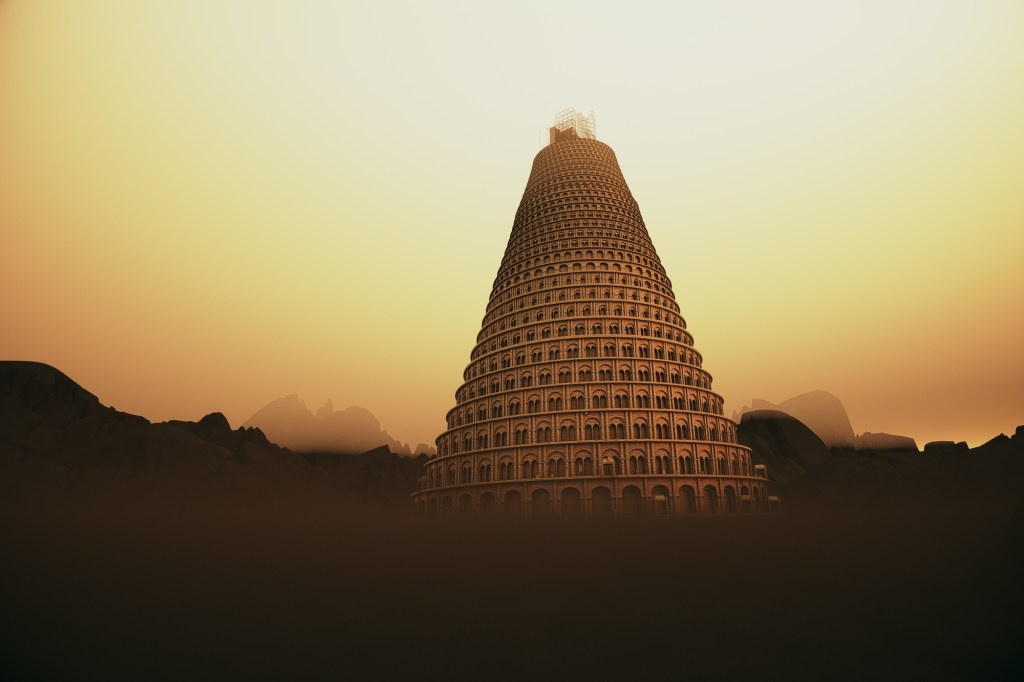
The Tower of Babel story is one of those chiastic passages in Genesis. The story actually begins in the Hebrew with the last verse of Chapter 10 (as it is organized in English Bibles), and it goes like this (ESV):

These are the clans of Noah’s sons, according to their lines of descent, within their nations. From these the nations spread out over the earth after the flood.

Now the whole world had one language and a common speech. As people moved eastward, they found a plain in Shinar and settled there.

They said to each other, ‘Come, let’s make bricks and bake them thoroughly.’ They used brick instead of stone, and tar for mortar. Then they said, “Come, let us build ourselves a city, with a tower that reaches to the heavens, so that we may make a name for ourselves; otherwise we will be scattered over the face of the whole earth.

But the Lord came down to see the city and the tower the people were building. The Lord said, ‘If as one people speaking the same language they have begun to do this, then nothing they plan to do will be impossible for them. Come, let us go down and confuse their language so they will not understand each other.’

So the Lord scattered them from there over all the earth, and they stopped building the city. That is why it was called Babel—because there the Lord confused the language of the whole world. From there the Lord scattered them over the face of the whole earth.

Hebrew has no vowels, only consonants. Rather, vowel signs are placed over the consonants to denote where breaths should be taken for anyone reading Hebrew out loud. 

The consonants in this chiasm are repetitive: N, B, L, H; then H, L, B, N in reverse. There is a front half and a back half to the structure. The middle of the chiasm is verse 11:4, which I have emphasized by bolding it.

The verse in the middle of the chiasm is where the emphasis lies: the peoples’ concern about being scattered over the face of the earth. They didn’t want to be scattered.

Why not? That’s the question we should be prompted to ask according to the emphasis we find built into the structure of that story.

I am not sure I can do any justice to the layers of meaning and the questions that arise in these verses in a short blog post. I can only scratch the surface, but here goes….

Continue reading “East and West Meet at the Tower of Babel”

Rainbow Seekers Passing Through


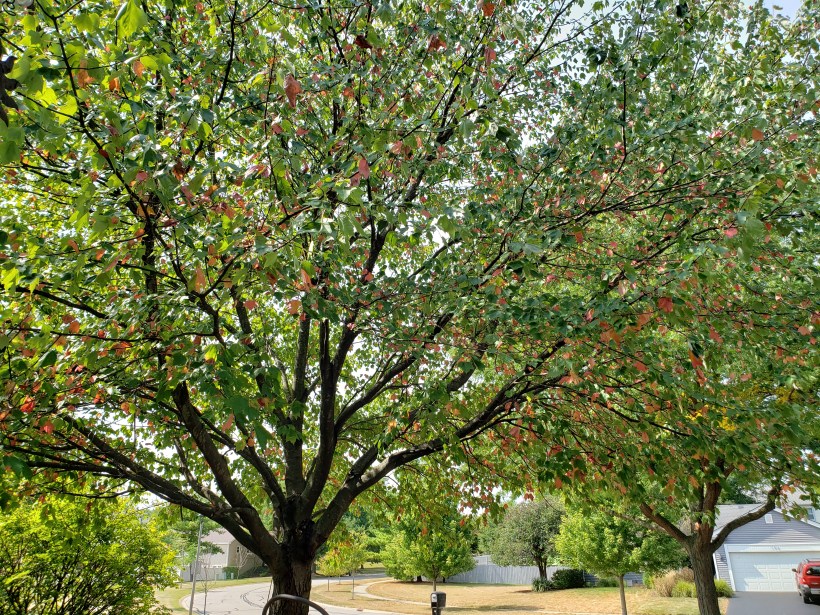
Gently, autumnal breezes

Whisper over brown grasses

Through summer greens

Yielding now yellow and orange.

Like the caress of sweet Chernobyl air

Is life in surrender to death

Forboding a familiar numbness

Opaquely covering the soft nuance

Of a summer day giving way

To the inexorable coming of winter.

Longing, memories already fading

Into dreams and Paper Castles.

We are Rainbow Seekers passing through.