Justice Means Working in the Fields Among the Wheat and the Weeds

Jesus warned us that weeds would grow up with the wheat, but the fields are ripe for the harvest.


The recent turmoil that was triggered by the killing of George Floyd has put a focus on justice in our country. In a sense, justice is on trial. Racial justice is the primary focus, but justice generally is implicated.

Most people are focusing on racial justice right now, but I have seen people with signs at rallies with messages aimed at “police brutality” generally. The spark of emotional reaction has ignited the flames of passion in all people who believe that injustice exists in our systems of justice.

One good example of that more general focus on justice is the “autonomous zone” created by protestors in the City of Seattle, WA.  (Seattle protesters set up ‘autonomous zone’ after police evacuate precinct by Danielle Silva and Matteo Moschella for CBS News June 11, 2020) The police have abandoned the East Precinct in response, and the protestors have replaced the sign on the police station to read “Seattle People Department”.

Many Christians, especially evangelicals, who tend to be conservative, having traditional values and respect for authority, react negatively to such extreme radicalism, and for good reason. In doing so, though, we fail to see, ignore, or gloss over real justice issues that should be addressed.

Our God is just. Righteousness and justice are the foundation of God’s character. (Ps. 89:14) Righteousness and justice should be priorities to us as they are to God.

We might think of justice in terms of punishment, but that is a very warped and inaccurate view of biblical justice. “Biblical references to the word ‘justice’ mean ‘to make right.’ Justice is, first and foremost, a relational term — people living in right relationship with God, one another, and the natural creation. From a scriptural point of view, justice means loving our neighbor as we love ourselves and is rooted in the character and nature of God. As God is just and loving, so we are called to do justice and live in love.” (What does social justice really mean? by Adam Taylor, World Vision February 20, 2012)

Many Christians get tripped up by the term, social justice, because of secular baggage associated with the term. Indeed, social justice has taken on connotations that might by antithetical to some biblical principles. Because justice is a primary characteristic of God, however, we can’t let competing visions of what justice looks like to get in our way of doing justice.

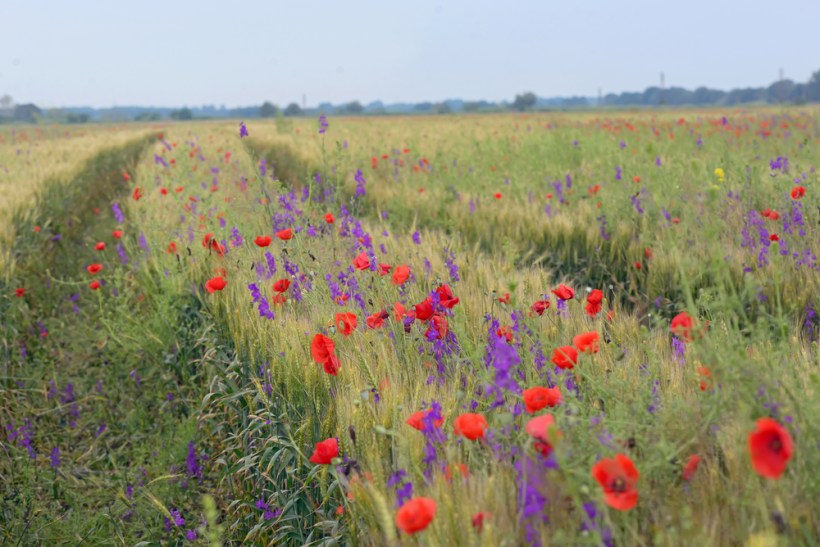
God desires for us to be salt and light in the world. That means getting involved. Jesus warned us that weeds would grow up with the wheat (Matt. 13:24-30), but the fields are ripe for the harvest. To be involved in the harvest, we need to venture out into the fields, weeds and all.

Continue reading “Justice Means Working in the Fields Among the Wheat and the Weeds”

Focus on Love to Remain on the Narrow Path

The narrow road is where the innocent and the wise travel in the maturity of love.


When the church reaches “unity in the faith and in the knowledge of the Son of God and become mature, attaining to the whole measure of the fullness of Christ…. [t[hen we will no longer be infants, tossed back and forth by the waves, and blown here and there….” Ephesians 4:13-14

This a verse that ended a sermon in a series on the love chapter – 1 Corinthians 13, given by Jeff Frazier at Chapelstreet Church, The Greatest of These, May 24, 2020.

The sermon began with the observation that 1 Corinthians 13 is not really the “ode to love” that we often think it is. The First Century Corinthians probably didn’t embroider 1 Corinthians 13 and hang it on their walls. Paul was chiding them for all the things they were not doing and doing wrong.

The Corinthians were a worldly, wealthy, educated and diverse people. If Corinth had magazines, they would have been candidate for the list of 10 best towns in which to live in the First Century Roman Empire. They were sophisticated in all the ways of the world.

But they fell short when it came to love.

Love, of course, is the greatest attribute of a Christian. That’s the point of 1 Corinthians 13. (1 Cor. 13:13) Though the Corinthians were rich in many things like eloquent speaking, even prophecies and faith, Paul says even those things mean nothing without love. (1 Cor. 13:1-2) A person could even give all his wealth away and offer his body to hardship, but without love, nothing is gained, says Paul. (1 Cor. 13:3)

The Corinthians thought they were pretty hot stuff. They had much in this world and much in the way of talents and resources, and because of that they were boastful and proud.

The beautiful list of what is love is a list of what the Corinthians lacked.

We could read it this way: the Corinthians are not patient or kind. They are envious, boastful and proud. They dishonor others and are self-seeking, easily angered and keep records of all the wrongs done to them. They delight in evil and do not rejoice in truth. They aren’t protective, trusting or hopeful, and they don’t persevere. (1 Corinthians 13:4-7)

The Corinthians were full of jealousy and pride about their own spirituality, and they didn’t appreciate each other. (1 Cor. 12:16 -22) They were puffed up with their own knowledge. (1 Cor. 8:1) They were given to argument, strife and disunity over which leaders to follow. (1 Cor. 1:10-12) At the same time, they tolerated sexual sin, greed, idolatry cheating, slander and drunkenness in their members. (1 Cor. 5:1-5, 9-11)

The Corinthian church was rich in the way of worldly wealth and talents. They were even full of the gifts of the Holy Spirit, but they were poor in the fruit of the Holy Spirit (love, joy, peace, forbearance, kindness, goodness, faithfulness, gentleness and self-control (Gal. 5:22-23)).

Paul goes on to say that love is the greatest fruit of the Holy Spirit. Love is the ultimate goal of the Christian, because God is love (1 John 1:9), and He desires us to be transformed into His image. (Rom 8:29) We don’t need wealth, resources, talents, knowledge or even the gifts of the Holy Spirit if we have love.

Love, including all the fruits of the Holy Spirit, is the sign of mature Christianity.

Jeff Frazier said that Paul could have written the love chapter to much of the American church, and I think he is right.

Continue reading “Focus on Love to Remain on the Narrow Path”

Where Are You Going?

Where we are going is more about the journey than the destinations, and the journey is about who we are becoming.

I read recently in the book, Gospel Justice, about the parable of the good Samaritan. The book focused on the priest who failed to cross the road to help an injured man. Bruce Strom offers a few possibilities about where the priest was going and why he was in too big of a hurry to help the injured man.

As I reflect back on what Bruce wrote, I can imagine God asking the question to the priest that hangs in the air: where are you going?

Where are you going?

God might ask that question not because He doesn’t know. God knows our every move and the words we are about to speak even before we say them. God might ask that question because He wants us to stop and think about it.

Where are you going?

Most people would have an answer of course. My 20-year-old might say that she is going to take a semester off of college to work, not knowing what college will look like in the fall with the virus outbreak still ongoing. My 25-year-old might say he is taking a year off before starting grad school. My 27-year-old might say that he is working, saving enough money for a security deposit, and the first and last months of rent for an apartment that he will need if he gets the job as a grad assistant that he has applied for.

My 30-year-old might say he is going into his second year of seminary. My 33-year-old might say he is going to keep mulching and working from home until the stay-at-home order is lifted and he can go back to work. My 34-year-old might say that he is going to patent a UV light that kills the coronavirus.

We might have longer term answers, too. I joke that I am going to work until I am 80 to pay off the college debt I incurred for my kids. I think about the possibility of retirement, as remote as it seems.

The priest in the parable might have been going home or going to church or going to visit a friend. He might have even being going to help someone in need. The priest might have had a good destination in mind, but the parable is clearly meant to contrast the priest to the “Good Samaritan”.

Of course, “good” and “Samaritan” were two words that Jews in first century Judea would not have put together. Samaritans were heretics and second-class citizens in the Jewish world at that time.

And of course, Jesus chose a Samaritan to drive home the point that the Good Samaritan, not the priest, did the “right” thing in that parable. He did the better thing. He stopped to help the injured man on the side of the road.

It didn’t matter where the priest was going, ultimately; he passed up the divine opportunity to help the man right in front of him.

If God was asking the priest, “Where are you going?” I don’t think he would be looking for the immediate answer. If the priest said he was going to the temple to perform his priestly duties, I think God might have asked him again, “Where are you going?”

We all have places to go, things to do, people to see. We all have goals and aspirations. I imagine God asking this question, not about the destinations, goals and aspirations we have planned, but about the journey: what direction are you moving in?

When two of my sons were wrestling, I would sometimes say to them (and myself): “It’s not about the winning and losing; it’s about the journey.”

The ultimate question about the journey of life is this: Who are you becoming?

Continue reading “Where Are You Going?”

The Non-Transactional Nature of Love

Love is more than something we do for God and others


1 Corinthians 13[1] was the subject of the sermon I watched this morning online. Perhaps, my favorite all-time chapter in the Bible. It’s a popular favorite, too, recited at weddings and funerals and known to people who aren’t particularly religious.

Some things that stand out to me from the sermon are these things: Love isn’t a feeling; it’s something you do. Talent, skills and giftedness are things we value, but they don’t require or demonstrate love. An eloquent and inspirational speaker without love is like a clanging gong or cymbal.

I liked the analogy of the guitar solo vs. a gong solo. Who would do that? No one does a gong solo. A gong solo is like talent without love. Nothing but noise.

Not even prophecy, or knowledge or faith that can move mountains is worth anything if I don’t have love. If I give everything I own away to the poor and give my body up to be burned at the stake (the ultimate religious sacrifice), but I don’t have love, I gain nothing.

As I think about these things, it occurs to me that love isn’t (just) something that we do. It’s certainly true that the love being described isn’t a feeling that comes and goes. Love is more like a commitment than a feeling in that sense, and it is (partly) something that we do; but it’s much more than that.

Continue reading “The Non-Transactional Nature of Love”

Loving Our Neighbors During a Corona Virus Outbreak


We live in trying and interesting times. In the midst of enormous political and social polarization in the United States, we are now dealing with the announcement of a global pandemic. The reactions have ranged from virtual panic and hoarding of toilet paper to mocking and distrust.

Yesterday, a group of people I gather with once a month under the auspices of Reasons to Believe, a ministry that blends science and faith. We were live with Anjeanette (AJ) Roberts, who is a research scholar with RTB.

Timing was perfect. AJ is a virologist. She studies viruses for a living. She was one of the small group of people who studied the SARS virus in the early 2000’s at the National Institute of Health. SARS is a coronavirus, the same type of virus as COVID-19, the one we are dealing with now. She was on the ground floor of dealing with SARS, so she is in a unique position to provide wisdom and guidance.

I took notes as best I could yesterday and will pass on what I was able to capture in them. The facts are the facts, but how we respond to them is more important than the facts, themselves. As Christians, we need to be guided by the commands of our Lord to love one another, to love our neighbors.

Politics has a way of creeping into and tainting everything. We should not allow politics to color the facts or affect how we follow the clear direction of Scripture. Jesus is the way and the truth. We should not ignore truth in favor of political agendas or deviate from the way, which involves taking up our crosses and following Jesus, loving others as He demonstrated his love for us.

With that said, which is my paraphrasing of the guidance AJ Roberts gave us at the end of her presentation on the current state of COVID-19 in the world and in the US, I will summarize the facts she presented as best I can recall them. It’s important to note that the landscape is rapidly changing as the virus spreads around the world and in the US. In fact, she said the situation is changing on a daily and even an hourly basis.

Continue reading “Loving Our Neighbors During a Corona Virus Outbreak”