Separating Caesar from the Church

Some thoughts on the church and state and the state of American Christianity.


Everyone has a hierarchy of values. Whatever is at the top of your hierarchy of values is your God, says Jordan Peterson. Although he hesitates to call himself a Christian, he has a good understanding of the Bible and its positive impact on society and people, individually. This particular statement rings with the purity of truth.

Jordan Peterson has been much in the news and was recently interviewed on the Unbelievable? podcast with Justin Brierley. The topic was: Do we need God to make sense of life? The atheist psychologist, Susan Blackmore, was his counterpart. The podcast (linked above) is worth a listen.

Jordan Peterson also claimed in the course of the discussion that the first pronouncement of the ideal of the separation of church and state came from Jesus when he said, “Render to Caesar the things that are Caesar’s; and to God the things that are God’s.” (Matthew 22:21)

Modern Christians (many American Christians anyway) view the modern emphasis on the separation of the church and state as a bad thing. A common assumption seems to be that the “wall of separation” between the church and state is a way for politicians to keep Christians out of politics and to keep politics from the influence of Christians.

What do you think?

Continue reading “Separating Caesar from the Church”

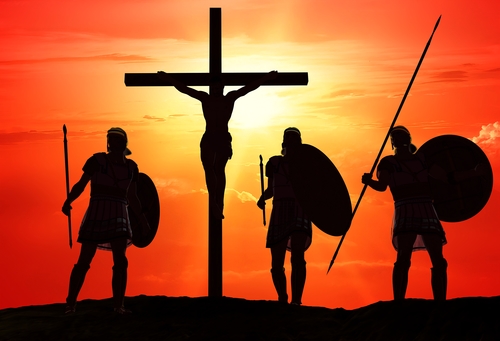
Repentance from Dead Works

For it is impossible, in the case of those who have once been enlightened, who have tasted the heavenly gift, and have shared in the Holy Spirit, … and then have fallen away, to restore them again to repentance

depostphotos Image ID: 5379147 Copyright: Iurii

These are some of the most terrifying words in the New Testament:

For it is impossible, in the case of those who have once been enlightened, who have tasted the heavenly gift, and have shared in the Holy Spirit, and have tasted the goodness of the word of God and the powers of the age to come, and then have fallen away, to restore them again to repentance, since they are crucifying once again the Son of God to their own harm and holding him up to contempt.” (Hebrews 6:4-6)

For anyone but the hardest core Calvinist, these words are enough to make one shudder. No one wants to fall away. But we often do what we know we shouldn’t. The mind is willing, but the flesh is weak. Though we may be born again, the old man lurks incessantly beneath the service and around every corner. The struggle is real.

Most people, however, (me included) tend to read these words out of context. As an isolated statement, we might be strongly tempted to believe these words speak to sin, especially those nagging, habitual, ingrained sins that we have a hard time overcoming. We feel as if, one day, we will sin one too many times and will have fallen away – completely lost and irredeemable!

But the context speaks to something different than the direction our mind is prone to go.

The statement in Hebrews 6 quoted above is prefaced with the following introduction:

“Therefore let us leave the elementary doctrine of Christ and go on to maturity, not laying again a foundation of repentance from dead works and of faith toward God ….” (Hebrews 6:1)

What is the “elementary doctrine of Christ”? What are these “dead works” from which we must repent? This is the key to keep from “falling away”.

Continue reading “Repentance from Dead Works”

Shadow of Things to Come

Photo by Beth Drendel

I’ve been reading through the Bible slowly from Genesis to Revelation. This is something I have not done in many years. I have taken some sidetracks and rabbit hole excursions along the way, but I am still plodding forward.

It’s amazing that circumstances of life arise from time to time of which the particular passage I am reading comes to bear on those circumstances. This is the case in a poignant way in regard to a conversation I had with a very close friend recently.

We were talking about the Catholic Church and a bad experience that close friend to both of us had being raised by strict parents in a strict Catholic school setting. I was also raised Catholic, though my experience differed from his. I didn’t go to parochial school, and I didn’t experience the strictness of the Catholic Church like he did, though I certainly saw evidence of it.

In my friend’s case, the strictness and severity he experienced bordered on abuse. I don’t know the details, but his reactions to things religious suggest he might have some degree of PTSD as a result of his experiences.

I don’t mean to pick on the Catholic Church. I have seen the same “spirit” evident in other denominations as well. A hyper focus on do’s and don’ts and religious rituals practiced in front of the foreboding audience of church authorities are the common denominator. The Westboro Baptist Church is a very extreme example of the legalism and dogmatism I am talking about.

The very day following this conversation, I read these words penned by Paul the Apostle about two millennia ago:

Therefore, let no one pass judgment on you in questions of food and drink, or with regard to a festival our new moon or a Sabbath. These are a shadow of the things to come,  but the substance is in Christ.

Colossians 2:16-17

It seems that some things haven’t changed in 2000 years!

Continue reading “Shadow of Things to Come”

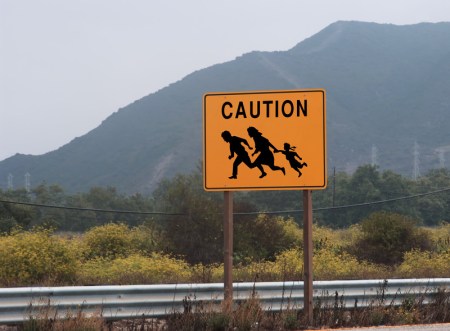
What is Our Christian Response to Immigration?


Immigration is a hot topic today. It was a major issue in the recent presidential election, and it remains front and center in the public psyche. The surprise election of Donald Trump and his talk about building a wall has heightened the discussion.

The public discourse reveals a country emotionally and philosophically divided over the issue of immigration. The public discourse suggests two polarized sides: one side wanting to wall out the world, and the other side wanting to open the flood gates indiscriminately to the world.

Think about it, though: Does one side really want to wall out the world, shutting off the borders to everyone? Does the other side really want to open the borders wide to anyone and everyone without limits?

Those are rhetorical questions of course. Most people are somewhere to the center of those two positions. As Christians, though, we don’t march to the beat of popular politics. We seek to follow Jesus and aim to usher in the kingdom of God – at least that should be our aim.

So what is the Christian response to immigration?

Continue reading “What is Our Christian Response to Immigration?”

Immigration: Stepping Back and Looking Forward

 (c) Can Stock Photo / jgroup
(c) Can Stock Photo / jgroup

Immigration has been front and center in the presidential election. Much of the objection to Donald Trump has focused on his statements about immigration, like the famous wall that he claimed he will make Mexico pay for. Rhetoric makes for a good news buzz and can stir up strong emotions, but now the rhetoric is fading.

A little bit anyway.

Still, the fear of the immigrants and their families and friends in places like Aurora, Illinois,[1] and other places where large immigrant populations exist is palpable. Those fears are fueled by the Trump campaign rhetoric, which the media played up.

Now that the rhetoric of the election is fading (hopefully), the real business of planning the future is begun. Trump’s actual plans are beginning to be learned (or beginning to be determined, if you are of the cynical kind), and it appears to be deviating from the rhetoric. As the dust settles, it makes sense to take a step back to consider the way forward. Continue reading “Immigration: Stepping Back and Looking Forward”