The Group Affiliations the Apostles Had and What It Might Mean for Us

When I look at American expressions of Christianity today, I wonder if we demonstrate the right way to follow Jesus.

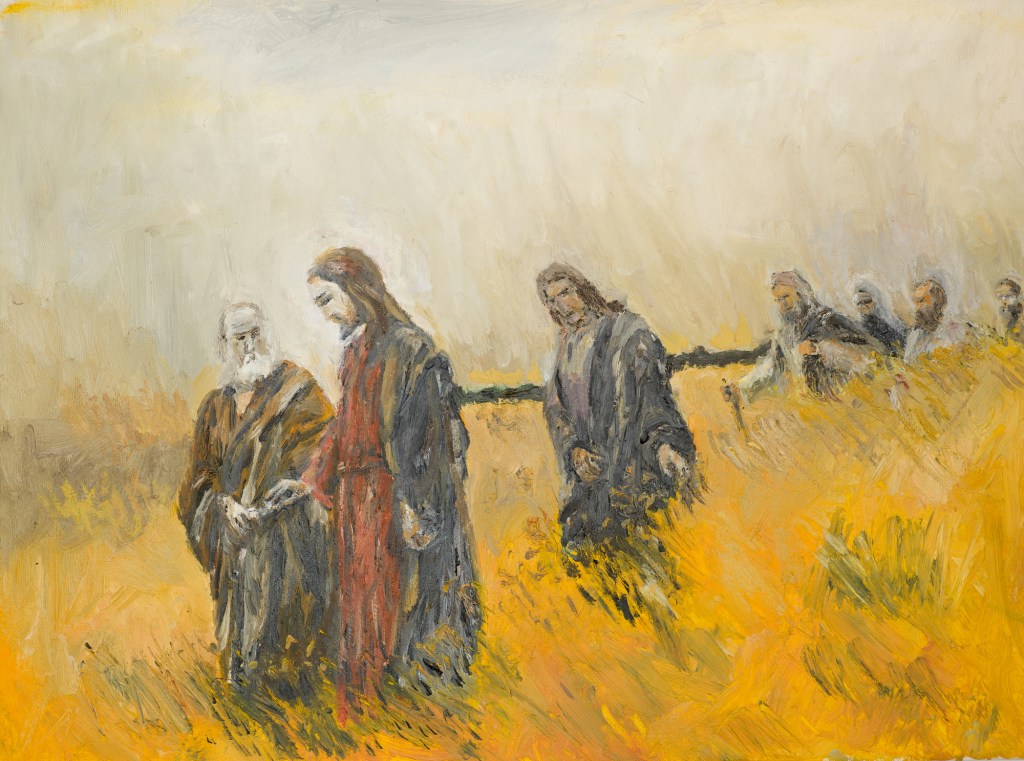
Oil painting illustrating Jesus Christ and his disciples on a meadow

I have spent some time lately considering the various influential groups of people in the time of Jesus and the orientation of those groups toward Jesus. I have wondered why Jesus seemed to pick on the Pharisees more than the other groups, especially since they seemed most aligned with him and had the most in common with him.

As I researched and thought about the various groups of Jewish influencers in the First Century in relation to Jesus, I began to think about the apostles, and their connections to these groups. I am always mining for insight as I read Scripture, and today my mind turns toward the relationship of the twelve apostles to those same groups of First Century, Jewish influencers.

We don’t know much about the background of the twelve disciples, except that most of them were “common” men of generally humble means. One disciple was identified with the Zealots (Simon, the Zealot, also known as Simon the Canaanite). Matthew, the tax collector, might have been Herodian (or may have been viewed as one).

We really don’t know about the group affiliation of the other disciples, at least not from the explicit text. They seem to have been ordinary people with no distinct association with particular groups. They did not seem to be closely associated with any of the five groups Jewish leadership groups in First Century Judea.

Even Simon, who is known as the Zealot, probably left his group behind to follow Jesus. Just as Matthew left behind his livelihood (tax collection) to follow Jesus. Of course, Simon (Peter) and Andrew dropped their fishing nets to follow Jesus, as did the brothers, James and John. It’s no stretch, therefore, to imagine that Simon, the Zealot, would have similarly “dropped” or left behind his affiliation with the Zealots to follow Jesus.

In fact, the theme of leaving behind your group seems to run throughout the teaching and example of Jesus. Jesus said, “[E]veryone who has left houses or brothers or sisters or father or mother or children or lands, for my name’s sake, will receive a hundredfold and will inherit eternal life.” (Matt. 19:29)

He called Peter and Andrew and James and John away from their profession of fishing. He called Matthew, the tax collector, away from his profession of tax collecting. I think it’s fair to assume that Jesus called Simon, the Zealot, away from the Zealots to follow him.

The theme of leaving behind family, livelihood and group identity runs deep in Scripture, all the way back to Abram (as Abraham was originally known) when God called Abram to leave his country, his people, and his father’s household and go to the land God would show him. (Gen. 12:1)

Hebrews 11 commends Abraham for the example of faith demonstrated in responding to God’s call and leaving behind the familiarity of all the things that typically identify people and their place in the world. Abraham and all the people of faith commended in Hebrews 11 demonstrated a kind of faith that made them “aliens and strangers on earth”.

Jesus called the rich young ruler to walk away from his wealth. (Matt. 19:16-30) Jesus told Nicodemus, the Pharisee, that he would have to be born again to see the kingdom of God. (John 3:3) Nicodemus was born into an enviable position in his community and may have winced at the thought of needing to be “born again”.

The kingdom of God is something I have been mulling over for many weeks, and months. It’s a theme I have written about often lately, and it has occupied a prominent place in my meditations lately.

The five main groups of Jewish influencers in the First Century had one thing in common – they were operating on a spectrum of influential relationship to the political structures and religious structures in their world. They were invested and embedded into their positions, and identities, with the people with whom they affiliated – like the partisanship and critical group affiliations we have today.

Along came Jesus, however, and he called people “out of the world”. (John 15:18-19) Jesus called people to leave their lives, and identities, and associations behind to follow him. I believe he is still calling people to the same allegiance today.

We don’t know much about the backgrounds and affiliations of the twelve disciples, perhaps, because they did just that. They left those things behind to follow Jesus. They became known, simply, as disciples of Jesus. They were, simply, Christ followers.

I am interested in these things because of what it means for us. If we would be disciples of Jesus and Christ followers, how do these things translate to our lives in the 21s Century?

Continue reading “The Group Affiliations the Apostles Had and What It Might Mean for Us”

How Does the Tower of Babel Fit into God’s Plan for People to Love Him and Love Our Neighbors?

Our frustration, toil and separation from other people are not contrary to the purposes of God, but part of the plan.

The story of the Tower of Babel is included in Scripture for a reason, right? So, Why is it there? How does the tower of Babel fit into God’s redemptive plans and purposes?

These are questions we should think to ask. In fact, Scripture is designed, according to Hebrew thinking, to invite us to ask questions.

Western thinking might assume that we just take things on faith and don’t ask questions. Or the opposite: take it at face value and dismiss it when we find problems (“contradictions”) in the text. The biblical texts, however, are inherently Hebrew (“eastern”) in their assumptions, and we lose something if we do not understand that.

God wants us to seek Him, and that includes asking questions of Scripture, wrestling with it, and finding answers to our questions. We don’t exhibit a lack of faith when we find “problems” in Scripture and ask questions. Our faith propels us forward to wrestle with the text and seek answers through study, prayer, and the guidance of the Holy Spirit.

We can hold to a high view of Scripture and admit there are “problems” in the text. Those problems can lead us to some real gems in the answers they reveal.

God desires us to seek him and find him, as Paul says to the philosophers in Athens. (Acts17:27) Jesus, of course, promised that those who ask, seek, and knock will be answered, will find, and the door will be open to them. (Matthew 7:7) Faith is evident when we use the problems we see as the springboard to seek answers.

I recently wrote an article on the Tower of Babel story exploring some of the questions it invites us to ask, and trying on answers that are suggested by a more eastern (Hebrew) mindset than most westerners might be adopt.

One question we might ask is: why is the story there to begin with?

We might assume the story is simply an explanation for how people became scattered all over the world in different language groups. If that is all we get out of the story, though, we miss the most important meaning. If we stop there, and assume there is no more to the story, we may be missing the most important part of the story!

A Hebrew (or eastern) mind always asks, “Why?”

I resonate with this basic practice incorporated into the BEMA Podcast because of a Jewish professor I had in college. He explained one day the difference between the western and eastern approaches to Scripture. He illustrated it with the following example.

If the universe consisted of a chair in a room, people with western minds and eastern minds would approach the room differently. The westerner would measure the height, width, depth and mass of the chair. He would weigh it and measure the distance of the chair from the walls and the ceiling. The easterner (the Hebrew) would start by asking, “Why is the chair here?”

In my previous article, I discussed how the story is a chiasm (a type of poetry). A chiasm puts emphasis on the middle verse. In this story, the emphasis falls on the people’s desire to “make a name for ourselves” because “otherwise we will be scattered over the face of the earth”. (Gen. 11:4)

Why were they concerned about being scattered? Why does God care? What is God doing in confusing their languages and scattering them?

For starters, God does not break into the story, yet, when they are making bricks. We might assume, therefore, that God isn’t threatened or concerned about their development of new technology. He doesn’t break into the story until they say they are going to build a tower to make a name for themselves.

We also need to be mindful, always, of context. The context here is that people are moving away from God, away from his plans. (Moving east.) God wanted them to multiply and fill the earth, but they wanted to put down roots in the plains of Shinar (Babylon), lest they be scattered, and build a tower to exalt themselves.

God’s plan was to have them “multiply and fill the earth”. This was the instruction from God to Adam and Eve. The people who built the Tower of Babel didn’t want to do that. They didn’t want to be “scattered”. They resisted, and they put down roots when they should have been filling the earth.

Building a tower to make a name for themselves, in this context, means wanting to pursue their own plans to achieve their own ends. The concern about being scattered suggests they knew they were doing their own thing contrary to God’s plans for them. They might have feared being scattered because it would disrupt their plans to exalt themselves.

Maybe they thought God couldn’t scatter them if they built a fortified tower. Maybe they were trying to make God deal with them on their own terms, in a location they established, by a structure by which they thought they could ascend to God and control where God met with them.

Of course, God did exactly what they feared, and scattered them a against their wishes by confusing their languages.

But why? Was God threatened by them?

Um…., no. God is sovereign. He created the heavens and earth, and He created these people. They were no threat to Him. So why did God scatter them?

I believe the answer lies partly in the fact that they were pursuing their own plans in exultation of themselves. God had other plans, and God frustrated their plans that were not in keeping with His plans.

That might all seem arbitrary unless we keep asking questions and seeking answers. Why were the peoples’ plans something God couldn’t abide? How did the peoples’ plans interfere with God’s plans?

What were God’s plans?

Continue reading “How Does the Tower of Babel Fit into God’s Plan for People to Love Him and Love Our Neighbors?”

Who Has the Burden of Proof on the God Proposition?

Who has the burden of proof may depend on our end goal.

Michael Egnor published a provocative article posted on Evolution News & Science Today: Theists vs. Atheists: Who Has the Burden of Proof? Egnor’s comments follow a debate he had with Matt Dillahunty, who is, perhaps, the most popular atheist voice speaking out against religion today.

Egnor claims Dillahunty “didn’t fare well” and demonstrated “no real understanding of any of the ten classical proofs of God’s existence”. It seems that Dillahunty’s big position in the debate was that theists have the burden of proof, so there is no real need for him to assert a position; he can sit back and take pot shots at theist’s arguments and call it a win.

I didn’t watch the debate, so I am just parroting Egnor’s characterization on my way to making a different point. Dillahunty did recently attempt to undress William Lane Craig’s favorite argument, the Kalam Cosmological Argument, so perhaps he isn’t quite as derelict in his opposition as Egnor makes him out to be. (Though, again, it’s just taking pot shots at positive arguments.)

It is true that Dillahunty relies heavily on the position that he has no burden to prove the negative: that God doesn’t exist. Egnor claims this is because positive atheist arguments are “few and weak” (before putting up a strawman argument in caricature of Dillahunty’s favorite argument based on “Divine Hiddeness”, which I don’t intend to address either).

Egnor may be right, basically, in his assessment of Dillahunty’s position, though not very winsome in stating it. Of course, I wouldn’t characterize Dillahunty as winsome either. Much less so.

What caught my attention about the article wasn’t in the article at all. It was a comment about the article to the effect that anyone who is interested in truth has the burden of proof. That comment, I believe, deserves some attention.

Continue reading “Who Has the Burden of Proof on the God Proposition?”

Are Christians Required to Evangelize? Are They Morally Wrong to Force Their Views on Others?

Evangelism should flow naturally out of relationship and community with God and His people. it should begin and end with community.


These competing questions bookend the following statement I borrowed from a social media group that was a preface to some questions about evangelism:

“As I’ve been doubting my Christian faith one of the issues I’ve been wrestling with (and frankly have always been averse about) is the reality of forced proselytizing.
 
Those of us raised in a Christian (and specifically evangelical) churches are all too familiar with being shamed, guilted, and forced to have awkward conversations with friends and strangers in which we were expected to sell them our brand of Christianity.
 
This sell was to be aggressive. We could not take no for an answer and we were to continually pester and compel the person until they either converted or broke contact with us (for obvious reasons).
 
Given that the message of Jesus seems to be that we are to give up our lives and enjoyment of them for the kingdom, to wear ourselves out in serving the poor, all while carrying a heavy moral burden, it appears all the more immoral to compel this message on people and to be indignant when they don’t take it.
 
This is not even mentioning the threat of hellfire for the salesman and prospect.”

The truth is that many Christians have difficulty with the thought of doing evangelism. Many people in our culture today think that forcing one’s views on others is morally wrong, yet evangelism has long been something expected of Christians, especially in evangelical churches.

Before diving in, I need to make the point that we all have freedom of speech in a free country. Exercising that freedom is no more forcing one’s views on others than expressing the belief that forcing one’s views on others is morally wrong. We have equal rights to speak and equal rights to reject what others say.

Aside from that, I don’t believe that sharing the Gospel is morally wrong. If it is, then it is morally wrong for you to tell me that it is morally wrong to share the Gospel. I don’t share your views on that position, but I would never say you are being immoral or have no right to express your views or even to try to convince me of the truth of them.

With that said, I feel fortunate not to have grown up in a church tradition that is “aggressive” about evangelism and “forces” people to evangelize or risk hellfire and brimstone. Not that anyone is “forced” to do anything. We all have a choice in the matter.

More importantly, though, God doesn’t work that way. In fact, I maintain that such an attitude is exactly contrary to the will of God. No one can be forced into the kingdom of God. People do not enter the kingdom of god kicking and screaming.

Jesus didn’t forced people to be saved. He said:

“The true light, which gives light to everyone, was coming into the world. He was in the world, and the world was made through him, yet the world did not know him. He came to his own, and his own people did not receive him. But to all who did receive him, who believed in his name, he gave the right to become children of God, who were born, not of blood nor of the will of the flesh nor of the will of man, but of God.” (John 1:9-13)


God became man, and He appeared to “His own people” – the ones with whom He established a close relationship characterized by great demonstrations of power in their favor for many years prior to the incarnation – and they didn’t even recognize Him. What did he do?

He didn’t rain down fire and brimstone. He also didn’t stop sharing the good news, but most of the people who were willing to listen to hi were the poor, the downtrodden, and the “sinners” who knew their own deficits.

People become children of God not by not by blood: not by being born into the right family line. People become children of God not by the will of the flesh: not by their own desire or wishing that it were so. People become children not by the will of man: not by decree, or force, or proclamation.

People who “receive him” (receive Jesus, believe on his name) are the ones to whom “he gave the right to become children of God”, and that is not of their doing, or of anyone else’s doing; it is God’s doing!

The key word here is “receive”. That is how we become God’s children: we receive him, which requires, first, that we believe him. The believing comes before the receiving. Believing is accepting what he is saying and trusting him so that we put our faith in him. Then we enter into relationship with him.

To receive him means more than simply believing, however. It means receiving him into our lives (into our “hearts”). It means not only trust, but commitment. It means entering into relationship with Him, but this is not of our own doing. The invitation is His, not ours!

“For it is by grace you have been saved, through faith—and this is not from yourselves, it is the gift of God….” (Eph. 2:8)

We simply have to receive it, accept it, and make “room” for him in our hearts and lives – as our Savior and Lord. We don’t do this on our terms, but on His terms.

Notice to the elite, religious leader, Nicodemus, Jesus said, “You must be born again to enter the kingdom of God”, but to the outcast woman at the well, Jesus said, “I will give you Living Water.” The invitation Jesus gives to everyone is ultimately the same (to receive Jesus), but people have to be willing to exchange what they have to receive him. Those are God’s terms.

The Gospel isn’t a dogma or propaganda to be enforced and forced on people who do not want to receive it. It is a gift that God offers, a “free” gift (Romans 6:3), but people must be willing to exchange what they have for it.

Though we have reason to believe that Nicodemus did ultimately receive Jesus and become a follower, the outcast woman at the well likely found it easier to receive Jesus than Nicodemus did. Nicodemus had most of what the first century world had to offer: power, position, prestige, wealth, reputation, etc. The outcast woman had little of it.

Perhaps, this is why Jesus presented a different way of looking at the offer to Nicodemus – you must be born again, you must be willing to give up what you think you have and start over. To the woman at the well, who had little to hold onto in this life, Jesus said, “I have Living Water to give you.”


Both of them had to give up what they had. There is a cost to the free gift of salvation that God offers, but some of us are unwilling to let go of what we have to receive it. We aren’t willing to make room.

How does this tie into the statements that prefaced the questions about “doing” evangelism?

We have to understand what evangelism is and why we might want to “do” it. We have to understand what it is that we are presenting when we do evangelism. We need to understand, ultimately, what God is offering and how people must receive it.

Continue reading “Are Christians Required to Evangelize? Are They Morally Wrong to Force Their Views on Others?”

Jesus, Justice and Bruised Reeds

God’s justice is characterized by His preference for mercy.

“Behold, my servant whom I have chosen, my beloved with whom my soul is well pleased. I will put my Spirit upon him, and he will proclaim justice to the Gentiles. He will not quarrel or cry aloud, nor will anyone hear his voice in the streets; a bruised reed he will not break, and a smoldering wick he will not quench, until he brings justice to victory; and in his name the Gentiles will hope.” (Matthew 12:18-21 ESV)

These are the words of the prophet Isaiah (Isaiah 42:1-4) that Jesus fulfilled according to the Gospel of Matthew. They are echoed in the baptism of Jesus when the Holy Spirit descended on Jesus in the form of a dove, and a voice from heaven spoke and said: “This is my beloved Son, with whom I am well pleased.” (Matt. 3:17)

Of particular note to me is the statement that Jesus came “to proclaim justice to the Gentiles”, and he will “bring justice to victory; and in his name the Gentiles will hope!” For the past two years, I have read through the Bible from start to finish focusing on the theme of justice (among other things).

The theme of justice is everywhere in scripture when you look for it! Justice is particularly embedded in the messianic prophecies and promises. The coming, the life, the death and the resurrection of Jesus is all about righteousness and justice.

I believe that modern Americans have a warped view of what justice means, biblically. We tend to view justice as retributive and punitive. Justice in a popular sense tends to mean people getting their just desserts, but that isn’t what we see in Scripture.

The prophets warned God’s people about two main things: idolatry and failing to do justice. Obeying God’s commands fit more or less into these two broad categories of worshiping God alone and doing right by people.

These are the two great categories of the ten commandments. Thus, the law is summed up this way: love God and love your neighbor.

When God executed judgment on His people in the OT in keeping with the warnings spoken by the prophets, He always did so in hope that His people would turn from their wicked ways. Judgement as a subset of justice was redemptive. It’s aim was to guide people back to right relationship with God and to each other.

Overarching God’s justice is His preference for mercy, because His ultimate desire is for relationship with us. He desires also that we would have healthy relationships with each other (love your neighbor) in the same way. A right relationship with God and with our other human beings (and the world we live in) is the essence of what it means to be righteous and just.

Continue reading “Jesus, Justice and Bruised Reeds”