
At the Curve of a Waterfall: Matter Flowing Through Us

Harrison Wright Falls at Ricketts Glen State Park by Chris A. Fraley

A person posed this question to N.T Wright: “If my body decays, and goes on to become reconstituted into plants and animals and things, what remains? What is essentially me?” NT Wright responded by noting, first, that Tertullian and Origen discussed this question in the 2nd and 3rd centuries, and CS Lewis picked up the same theme in the 20th century in his book, Miracles.

CS Lewis observed that fingernails, hair, skin and the entire the human body are in a constant condition of flux. “Bodies change their entire molecular kit once about every seven (7) years”, Wright noted.
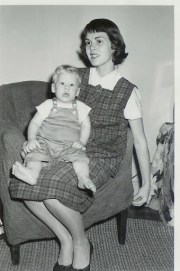
I am not the same person physically that I was when I was born, or graduated from college at age 22, or graduated from law school at age 31 or when my last child was born when I was 39. I am not the same person, physically, at 60, as I was when I was 39.

All of the molecules in my body have switched out many times over those years, yet I am still recognizably me. Maybe a bit larger, with gray hair and visibly aged from my mid-twenties, but I am still me even though none of the same molecules exist in my 60-year body.

NT Wright re-phrased the question in different ways: If a ship goes into a port and one year later, after all parts of it have been replaced, it goes into port again, is it the same ship? If my grandfather has a spade, and replaces the blade and handle several times, is it the still the same spade?
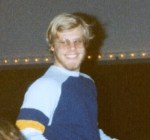
I don’t know about a ship or a spade, but as for me, I know that I am still me even though I don’t have a single molecule left over from my 22-year old self. I have more experiences; I have gained more memories. People can see in my body and mind some resemblance of the “me” they might remember.

Though memories aren’t physical things I can show anyone, I can describe them, and people who share those experiences with me can recognize them. Those nonphysical memories are undeniably “part” of “me” – things I have picked up along the way in addition to the extra weight in my physical body.

CS Lewis says that people are like the curve in a waterfall. They have continuity of form but discontinuity of matter. Matter pours through us. The “us” matter pours through is the real thing – not the matter.

On this day six (6) years ago, Facebook informs me that I posted this quotation from CS Lewis:

“You don’t have a soul. You are a Soul. You have a body.”

I don’t know if CS Lewis is exactly right, but he is getting at the same idea – that we are something more than our physical selves. We aren’t reducible to our physical selves. Our physical selves aren’t even made up of the same molecules that once existed in us. Not one molecule remains from my 22-year old self – yet my self remains.

This mystery is extended in the death and resurrection of Jesus. Through Jesus, God promises to give us new bodies. Our bodies will be changed, Scripture says, but each one of us will remain the same person and be recognizable. Biblical scholars say we will be more fully us then we were before.

In a sense, it’ will be the opposite of the saying about a sick person who is “just a shadow of himself.” Except, the perspective will be reversed. We will see that our bodies were just a shadow of what we will become. Wright says there is a “real you” that is much more like you, vividly more like you, then you are now.

Getting around to attempt an answer to the question posed, NT Wright says, “Nowhere in the New Testament does it describe a soul leaving a body and going to heaven.” What does he mean?

Continue reading “At the Curve of a Waterfall: Matter Flowing Through Us”

Where Are You Going?

Where we are going is more about the journey than the destinations, and the journey is about who we are becoming.

I read recently in the book, Gospel Justice, about the parable of the good Samaritan. The book focused on the priest who failed to cross the road to help an injured man. Bruce Strom offers a few possibilities about where the priest was going and why he was in too big of a hurry to help the injured man.

As I reflect back on what Bruce wrote, I can imagine God asking the question to the priest that hangs in the air: where are you going?

Where are you going?

God might ask that question not because He doesn’t know. God knows our every move and the words we are about to speak even before we say them. God might ask that question because He wants us to stop and think about it.

Where are you going?

Most people would have an answer of course. My 20-year-old might say that she is going to take a semester off of college to work, not knowing what college will look like in the fall with the virus outbreak still ongoing. My 25-year-old might say he is taking a year off before starting grad school. My 27-year-old might say that he is working, saving enough money for a security deposit, and the first and last months of rent for an apartment that he will need if he gets the job as a grad assistant that he has applied for.

My 30-year-old might say he is going into his second year of seminary. My 33-year-old might say he is going to keep mulching and working from home until the stay-at-home order is lifted and he can go back to work. My 34-year-old might say that he is going to patent a UV light that kills the coronavirus.

We might have longer term answers, too. I joke that I am going to work until I am 80 to pay off the college debt I incurred for my kids. I think about the possibility of retirement, as remote as it seems.

The priest in the parable might have been going home or going to church or going to visit a friend. He might have even being going to help someone in need. The priest might have had a good destination in mind, but the parable is clearly meant to contrast the priest to the “Good Samaritan”.

Of course, “good” and “Samaritan” were two words that Jews in first century Judea would not have put together. Samaritans were heretics and second-class citizens in the Jewish world at that time.

And of course, Jesus chose a Samaritan to drive home the point that the Good Samaritan, not the priest, did the “right” thing in that parable. He did the better thing. He stopped to help the injured man on the side of the road.

It didn’t matter where the priest was going, ultimately; he passed up the divine opportunity to help the man right in front of him.

If God was asking the priest, “Where are you going?” I don’t think he would be looking for the immediate answer. If the priest said he was going to the temple to perform his priestly duties, I think God might have asked him again, “Where are you going?”

We all have places to go, things to do, people to see. We all have goals and aspirations. I imagine God asking this question, not about the destinations, goals and aspirations we have planned, but about the journey: what direction are you moving in?

When two of my sons were wrestling, I would sometimes say to them (and myself): “It’s not about the winning and losing; it’s about the journey.”

The ultimate question about the journey of life is this: Who are you becoming?

Continue reading “Where Are You Going?”

God and the Impossibility of Goodness

It’s easier for a camel to go through the eye of a needle than for us to be good enough for God.

The story of the rich young ruler resonates with me today in the seeming impossibility of living without sin. I suspect that I am not alone in the experience of certain sinful inclinations that I just can’t seem to shake. Try as I might, I fall into the same traps of temptation over and over again. I get angry at myself. I ask for forgiveness. I renew my resolve, but I inevitably trip and fall. And sometimes I despair.

God cannot be mocked. Whatever a man sows, he will reap in return. The one who sows to please his flesh, from the flesh will reap destruction; but the one who sows to please the Spirit, from the Spirit will reap eternal life….” (Gal. 6:7-8)

I know this, but it doesn’t seem to help. My sinful flesh often overcomes the spirit within me. While the spirit is often willing, the flesh is weak; and sometimes, let’s be honest, my spirit isn’t as willing as it should be.

I think, “If I could just resist more and try harder and find just the right combination of thoughts and habits and resolve, I could lick this thing.” But, days come and go. Things change: busyness, or worry, or distraction, or boredom, or some dryness in my spiritual life, or difficulty, or disappointment or any number of things (or a combination of them) sets in, and when my guard is down, temptation comes and catches me off guard in a moment of weakness.

I truly believe it is possible to overcome the sin within me. Scripture seems to require it of me. What I reap I will sow. Yet I fail. I fully identify with Paul, who said:

“I do not understand what I do. For what I want to do I do not do, but what I hate I do. And if I do what I do not want to do, I agree that the law is good. As it is, it is no longer I myself who do it, but it is sin living in me. For I know that good itself does not dwell in me, that is, in my sinful nature. For I have the desire to do what is good, but I cannot carry it out. For I do not do the good I want to do, but the evil I do not want to do—this I keep on doing.” (Rom 7:15-19)

Continue reading “God and the Impossibility of Goodness”

Of Dreams and What May Come

Imagine for a moment that you are dreaming.

For some reason, dreams are a current theme in my life. I have never been one who remembers (most of) my dreams, so this theme comes a bit as a stranger to me. Not that what I write today has anything to do with a dream I have had.


This period of sheltering in place from the corona virus threat that has spanned virtually the entire world gives us time to pause and reflect, if we will use the time that way. I think that is a good use of this time, and I have been trying to spend more time, myself, reading, reflecting, praying, writing and re-calibrating. It seems from the increase in the number of people reading this blog that others are doing the same thing.

Today’s content comes not from me, but from a friend. Brian Asimor is a man of many talents. He is an artist who has spent his career doing art and illustrations, including technical patent drawings and portraits of people and animals. He is also a writer and thinker. I will let his writing speak for itself today:

Imagine for a moment that you are dreaming. Imagine in this dream you are witnessing a world like the one you know to be Earth. A planet that revolves around a star like our Sun. A planet populated with countless life forms from microscopic to the largest, vegetation, mammals, fowl and marine creatures.
Delve deeper in your imagination, into the very life experiences of each of these creatures as they interact with each other living out their lifespans and replicating their progeny to project and continue their purpose.
We as mankind see ourselves as the masters of our world. We see our advances in technology and science as amazing unto themselves. We credit ourselves with innovation and invention.
Imagine now as our dream flows on, we see God as a concept rather than the origin of all things. We see those who believe in God as ignorant and unsophisticated. We see trends as the cadence of the future. We see changing weather as our doing and think we can start or stop weather patterns by regulation of groups behavior.

We awaken to reality as we grasp our chest in pain and drop to our knees. This is no longer a dream. We find ourselves calling out to God to help us and save us from what is happening to our body. We are experiencing a heart attack and it is the one we feared all along. At that moment we realize that God is in charge and we are not. We are but one of God’s creatures that he loves and cares for. God has placed us here in this body, in this gender, in this bloodline, in this geographic locale at this moment of Earth time, all for a reason. That reason is to  exchange our talents and faculties with each other in harmony, pursuing wisdom, understanding and happiness as a family, the family of mankind!

Life is the highest school there is. It is a school of time, senses and experiences. It is the opportunity to advance our spirituality and shed the tethers of want. It is God’s Will for us! Thy will be done on Earth as it is in Heaven.
In God I Trust we all will awaken to the importance we are to God and his plan. I pray you awaken this Saturday to Gods favor and blessing for you in your pursuits of the day.

Postscript:

I am reminder of CS Lewis who explored the idea in his book, The Great Divorce, that the lives we live in this world are dreamlike in quality compared to living with God in the life hereafter. In the book he portrays hell is an ethereal, ghostly world in which people are forever fading away from each other and reality. Heaven, by contrast, is so real that the grass doesn’t bend under the feet of the people emerging for the first time from the dreamlike world in which they lived. Heaven is more real then the people are as they emerge.

A Call for Changing Priorities: Taking Hold of God’s Promise


In these present times, the corona virus threat looms large. Every day the number of cases and deaths rise, but we will get through this. We may not be able to see the end of it yet, and it might last longer than any of us hope, but we will get through it.

We might long, now, for life to return to normal, but I really hope it doesn’t.

The corona virus is a wake up call for everyone – for those who are vulnerable, and those who aren’t – because what we do doesn’t just affect ourselves. Our actions affect those around us. We are learning that lesson collectively.

The Bible puts it this way: if we sow the wind, we reap the whirlwind. (Hosea 8:7) We see the way it works out with the virus: one person can infect three, and three people can infect nine, and the spread of the virus spreads exponentially if we don’t take measures to arrest the unseen enemy of our bodies.

The same principles apply to sin. Our selfish, self-centered, self-absorbed, proud and arrogant sinful proclivities affect (infect) others, and the influence spreads.

It spreads to our children. It spreads to our spouses. It spreads to our co-workers, neighbors and people we contact inadvertently every day. What we do and what we say and the attitudes of our hearts, if they are informed, motivated and inhabited by the sinful nature within us, has unintended consequences … for ourselves and for others around us.

What we can’t see can and does hurt us and hurts others.

Continue reading “A Call for Changing Priorities: Taking Hold of God’s Promise”