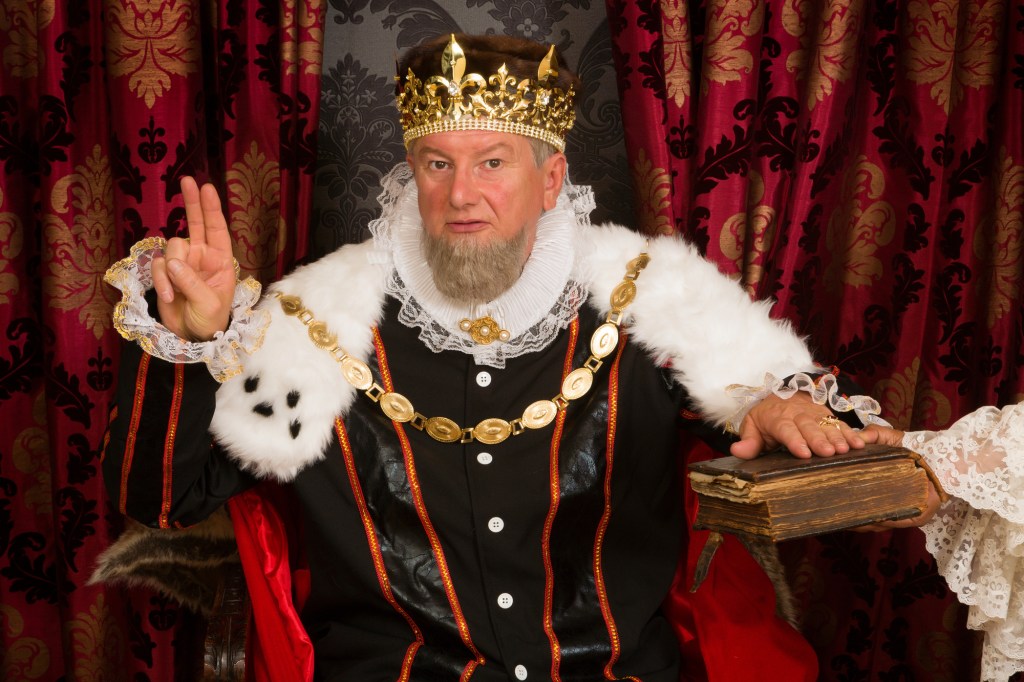
What Does the Word of God Say about How Rulers Should Rule?

God’s approved rulers do what is right and just.


Let’s lay politics aside for a moment, and just consider the Word of God. Politics, of course, is the backdrop to this article. A person cannot be completely apolitical, no matter how hard one tries, but political positions shift, evolve and change, while the Word of God is eternal. Therefore, we should put the Word of God first over our political inclinations.

The Word of God existed before God made the universe, and all of creation was made by the Word. (John 1:1-3) God spoke the entire universe into existence (Genesis 1) and made all things by that are seen from what cannot be seen His command. (Hebrews 11:3)

Of course if you are a Christian, you believe that the Word of God became flesh (John 1:14) in Jesus: God with us; God incarnate; God who became man. He proved himself by what he said, by the miracles he did, and by rising from the dead after he was tortured, crucified, and buried.

The Word of God (at least some of it) is preserved in writing for us as it was spoken to and through people who heard God’s voice and responded in faith by preserving it. Jesus, Himself, quoted extensively from the books of what we call the Old Testament as authority for what he said and did. (Interestingly, he never quoted from apocryphal texts.) Jesus, who we believe was God who became man and who rose from the dead, treated those Old Testament writings with great deference – as the word of God.

Jesus quoted Scripture often from Genesis to the Prophets. When Jesus was tempted by Satan in the wilderness, he quoted scripture, including Deuteronomy 8:3: “Man shall not live on bread alone, but on every word that comes from the mouth of God.” When Jesus began his ministry, his first public statement and the description of his ministry came from the prophet, Isaiah:


The Spirit of the Lord is on me,
    because he has anointed me
    to proclaim good news to the poor.
He has sent me to proclaim freedom for the prisoners
    and recovery of sight for the blind,
to set the oppressed free,
     to proclaim the year of the Lord’s favor
.”


Luke 4:18-19 (which Jesus told the listeners was fulfilled by him that day in their hearing)

After Jesus rose from the dead, he explained how the Scriptures from Genesis through the Prophets were about him. (Luke 24:27) Jesus was both the Word of God through whom God made the universe, and he honored the word of God preserved in the Bible – calling it his daily bread. It defined his purpose; and it informed who he was.

With that set up, my theme today is the Prophets and what they said about how God’s people should act in the world, especially rulers who wield governmental influence and power. Our political views, how we conduct ourselves in politics, and who we champion as our rulers should be informed and driven by God’s Word.

Continue reading “What Does the Word of God Say about How Rulers Should Rule?”
Ode to the Church and to God Who Watches Over the Foreigner

O Church, remember who you are,
Called to love, to heal, not to bar.


Once, in Eden’s light, they walked,
In fear, mistrust, and pride they balked.
Their own way looked better than God’s,
So He cast them out to the odds.

Though God walled them out, yet He stayed near,
He watched them roam this earthly sphere.
He clothed their shame knowing His plan,
To redeem them from the dusty land.

When Abraham heard the voice divine:
“Go to a land that I’ll make thine.”
He wandered there, a stranger still,
Seeking the City of God’s will.

From Abraham’s loins a nation grew,
In Egypt enslaved, four centuries through.
Bound and broken, crushed and torn,
Yet God’s eye watched, where hope was worn.

And when they were freed by God’s hand,
The law that God, would make command:
“Be kind to the stranger, love them as you—
For once you were aliens too.”

The psalmist sang of a just cause
To guard the stranger one must because
God watches over the oppressed and poor,
His mercy flows to the foreigner.

The prophets warned with fire and might:
“Do not oppress, do not fight
The alien, the widow, the orphaned heart—
Deprive them not, lest from God you part.”

Then Jesus was born, in flesh, divine,
Refugee Son, in a troubled time.
To Egypt He fled, a stranger, a child,
God in the dust, both meek and mild.

He preached a kingdom for all men,
Every race and tongue and kin.
That he would save from cursed yeast,
According to how we treat the least.

And John envisioned a great throng,
From every tribe, with one great song.
Before the Lamb, all men unite,
Bathed in mercy, robed in white.

Yet now, the largest Church on earth,
Wielding wealth, claiming new birth,
Builds walls to keep strangers away,
Turning the poor from its doorway.

Refugees wander, oppressed and unseen,
Deprived of justice, crushed between
A gospel of love and hands that deny,
While heaven looks down, and angels cry.

O Church, remember who you are,
Called to love, to welcome, not bar.
For the walled-out Christ still calls to you,
“Whatever you’ve done, you’ve done to Me too.”

Come, O Church, to the narrow way,
Where love shines bright at break of day.
Lay down your walls, take up your cross,
And count the cost, not gain or loss.

Follow the One who bore your shame,
Who calls you now by His great name.
For hope is found in His pierced hands,
Where grace flows wide for all the lands.

The stranger waits, the orphan cries,
Will you reflect the Savior’s eyes?
Do justly, love mercy, walk humbly with God
Love deeply, with the gospel on your feet shod.

For Christ alone is our living hope,
A lifeline strong, a Savior’s rope.
Come back to Him, and walk His way,
Till all are gathered on that final day.

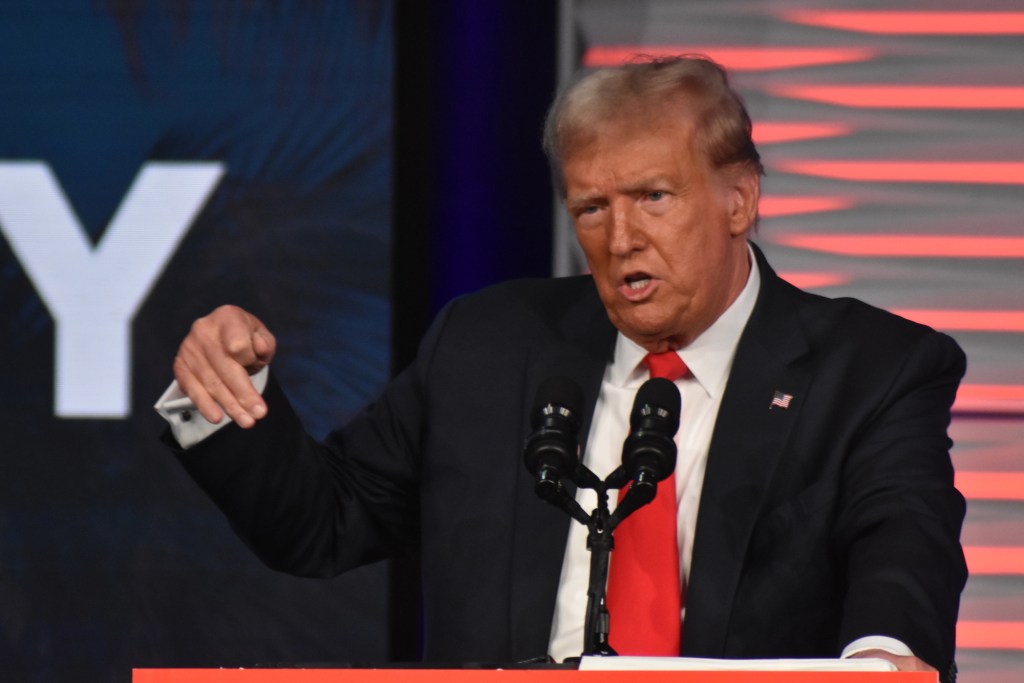
Vengeance is Mine, Sayeth Donald Trump?

“‘It is mine to avenge; I will repay,’ says the Lord.'”


I try not to be too political, and I try pretty hard to stay out of the public political fray. I am convinced that Christians should be very circumspect about politics. We are citizens of the kingdom of God, first and foremost, and we owe our ultimate personal allegiance only to the King of all Kings.

I am also mindful of the tradition of the prophets. They stood as God’s mouthpieces to God’s people and to the priests and kings who lead them. While they didn’t hold back in pronouncing God’s judgments and warnings on surrounding nations, they directed most of their attention to God’s people, the nations of Israel and Judah.

I also have to note that the nations of Israel and Judah are unique in the history of God and man. The United States of America is not a nation of God’s chosen people like the nations of Israel and Judah were.

(The current state of Israel isn’t either! See the responses of Hank Hanegraaff, the Bible Answer Man, to a pointed questions put to him about the status of nation of Israel today in the postscript to this blog article.)

There is much I could say about these things, but I want to get to my topic today. God’s prophetic voice is most prominently focused on His own people, wherever they are situated. Thus, Jesus often confronted the religious leaders of his day – the Pharisees and Sadducees – though he hardly said a word about the Romans who were the governing authorities in Judea.

Similarly, I believe God’s attention is on the church in America, and I am focused on Donald Trump only because many American Christians have claimed him as their champion. Biden, and Clinton, and Obama didn’t claim to be aligned with the church, but Trump does.

Therefore, when I read the following headline in the New York Times recently, For Those Deemed Trump’s Enemies, a Time of Anxiety and Fear, I took notice. The statement that Donald Trump has vowed to exact vengeance caught my attention.

Trump’s public warnings to those who opposed him, searched his home, prosecuted him, etc. are have weight behind them because they are characteristic of the man. People have taken them deadly seriously, including Joe Biden who pardoned a record number of people in his last days of office, including preemptive pardons of his own family members and people on Trump’s hit list.

I could say a lot about these pardons, also, but I won’t do that right now. I will only say that the threats Trump has made are not empty, and conducting himself in that way has repercussions for both parties and the health and future of politics in America. “What goes around comes around,” as the saying goes.

My focus, though, is on what this means for the church and how we live out being salt and light, making disciples to the ends of the world, and living consistent with the kingdom of heaven on earth. Do we not have some responsibility to God, the Father, the Maker of heaven and earth, to speak prophetically about the state of the church and of its complicity in the rise to power of Donald Trump?

Continue reading “Vengeance is Mine, Sayeth Donald Trump?”

Is Your Faith Determined by Where You Live, Your Parents and Your Culture?

People do tend to adopt the faith perspective that is predominant where they live, that their parents had, and in the society in which they were raised, but….


Richard Dawkins famously claims that religion and faith are a product of where people live and the influence of their parents and the culture in which they live. A quick look at data on religious faith might suggest Dawkins is right.

On other hand, Richard Dawkins was raised in the Anglican faith and was confirmed at the age of 13. He didn’t remain a Christian, though. In his later teens, he rejected the God and religion he was raised to believe in and the religion he was confirmed in.

Dawkins, himself, proves the falsehood of his own claims – unless, of course, Dawkins is the extremely rare outlier.

Dawkins’ assertion is generally true if we take a quick look at the data, but even the data reveals it isn’t so simple. People who live in areas in which religious belief is enforced by law and social custom tend to remain (at least) nominally loyal to that religious belief, but there are significant outliers in the data.

Iran, for instance, had 100,000-300,000 Christians in 1979, comprised of ethnic Armenians, Assyrians, and Chaldeans who had lived there for centuries. Organizations like ELAM Ministries and Transform Iran reported only 300-500 Muslim converts to Christianity in 1979.

In 1979, revolution dethroned the Shah formed an Islamic state. Since that time, Islam has been enforced by law and strong social mores. Onerous legal and social penalties are imposed on people who convert from Islam to other religions, including physical punishment, social exile, imprisonment, and even death.

For the past 44 years, Iranians who decided to become Christians have been persecuted with religious zeal and governmental force. (The World’s Fastest Growing Church, July, 20, 2023 (International Christian Concern)) “All missionaries were kicked out, evangelism was outlawed, Bibles in the Persian or Farsi language were banned and several pastors killed.” (A spiritual revolution in Iran?, September 16, 2020) Global Christian Relief))

Some people report that the number of Armenian, Assyrian, and Chaldean Christians has slowly dwindled to around 100,000. (See The World’s Fastest Growing Church) This kind of outcome is to be expected in a country like Iran in which one religion is not only predominant; it is enforced by legal decree and social coercion.

Unexpectedly, though, the number of Muslim converts has risen exponentially since 1979 according to faith-based groups that support them. Until recently, the claims of exponential growth in Muslim conversions to Christianity in Iran were largely anecdotal reports from faith-based organization.

Those claims have recently been affirmed by the secular, Netherlands-based research group, GAMAAN. A 2020 poll of 50,000 Iranians aged 20+ Iranians shows that 1.5 percent of then identify as Christian. (Survey supports claims of nearly 1 million Christians in Iran, Aug, 27, 2020, (Article 18)) With a population of 80M+, that works out to 1,200,000 Islamic converts to Christianity in 2020. (See A spiritual revolution in Iran?)

Continue reading “Is Your Faith Determined by Where You Live, Your Parents and Your Culture?”

Making Sense of the 2024 Election Results: The Exit Polls Tell a Story

The 2024 election was a “Republican landslide”, and the question we should be asking is, “Why?”


I did not decide to vote until I approached the turn off to head to my home from my office. I wasn’t excited about voting this time, and I put off the decision to vote until the last second. A sense of obligation convinced me to make the short detour to my local polling place.

Even so, I punted on my vote for a president. I couldn’t pull the switch for red or blue. I just didn’t have it in me.

I know I am not alone in the way I felt this election season. A Relevant Magazine article published October 8, 2024, reported on survey results indicating that 41 million Christians did not plan to vote in this election. They are my tribe, and I was one of those 41 million.

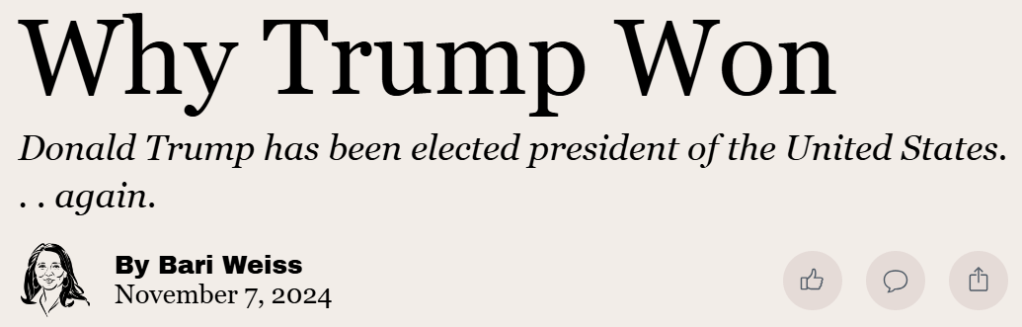
A dialogue with a long time friend (who probably doesn’t see the world as I do) about why the election results turned out as they did inspired me to do some post-mortem review of the election. I chose a trusted source for that analysis: Bari Weiss, a former NY Times reporter who has established her own news outlet, the Free Press.

I spent some time today listening to the latest podcast episode on Honestly, with Bari Weiss, Why Trump Won. Bari Weiss is lesbian and liberal. Her panel of experts included a transgender woman, Brianna Wu, and her conservative representative was Batya Ungar-Sargon. Senior Editor of the Free Press, David Svadnik rounded out the panel.

I like to say, “Truth is truth”, and I appreciate people who are able to put aside their agendas and biases and speak to truth. We all have them (agendas and biases), but there is something highly valuable about the effort to cut through those personal values that motivate us and be honest about the way things really are.

Bari Weiss started the discussion with statistics from CNN exit polls that show Trump won about 13% of black voters in 2024 (up from 8% in 2020), and Trump won 45% of Latino voters (up from 32% in 2020.) She noted that Trump improved on his 2020 votes almost everywhere.

This seems to be at the center of the story of this election. Weiss says, “It’s indicative of a massive countrywide political realignment.” It was a “Republican landslide”, and the question we should be asking is, “Why?”

Continue reading “Making Sense of the 2024 Election Results: The Exit Polls Tell a Story”