Archaeology that Supports the New Testament Record

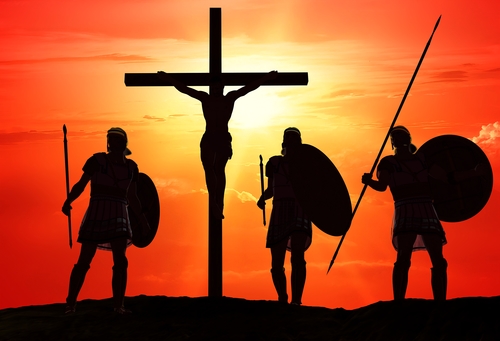
Depositphotos Image ID: 139260410 Copyright: vblinov
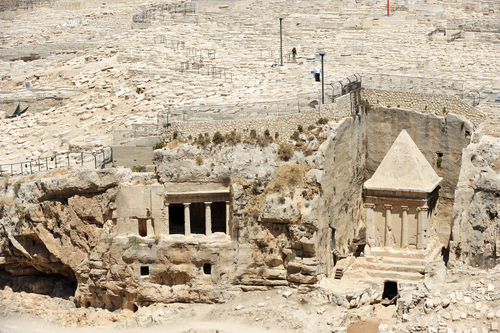
Kidron Valley and the Mount of Olives

This is the second in a two-part blog series inspired by an interview with archaeologist, Dr. Craig Evans. The first article was general in nature, focusing on people in the biblical record who are confirmed by archaeological finds, and noting that modern archaeology continues to affirm the historical reliability of the Bible. In this piece, we focus on the New Testament, which is Dr. Evans’s specialty.

Significantly, when asked whether he is aware of any archaeological finds that contradict the Gospels, Dr. Evans responded, “Where it relates to the Gospels – the Gospels talk certain people, certain places and certain events – and everywhere archaeology has any relevance that touches on it in any way, the archaeology supports what the Gospels say.” Thus, the theme continues: that modern archaeology, far from casting a shadow of doubt on the bible, shines light on it, illuminating the biblical accounts with archaeological discoveries.

Continue reading “Archaeology that Supports the New Testament Record”

No Greater Evil. No Greater Love.

The evil that we suffer is no greater than the evil God endured at the hand of His own creation


Has there ever been a greater evil in the world then this…

That God humbled himself to become one if us, divesting himself of all of his greatness and glory, to give Himself to us. The light came into the world, but the world loved darkness instead.

God became a man and came to us, and we rejected him. God presented himself to us, and we crucified him, publicly humiliated him, cruelly beat and tortured him, mocking him as he died on the cross.

Is there no greater love than this…

That God, the creator of the universe became one of us. He laid aside all of his greatness that sets Him above everything that He created and become part of His creation.

That he would do that for us, experiencing the same sorrows, the same humiliation, the same awful pain, the same rejection, the same fatigue and need for sleep and hunger and thirst as we experience – that God would stoop to become one of us and to die on a cross as a sacrifice for us to redeem us from our own sinful ways – is an unbelievable feat of love.

He did even for the sin of rejecting the very God who created us.

That God would do these things reveals to us that he works in and through a sinful, fallen, and evil world, and He uses the very darkness of the world to display His light and His love for us.

God stands above and beyond time, surveying all that is, all that ever was, and all that ever will be. He knew the time of His coming before the initial burst of the creation of the cosmos that spawned the earth and eventual life it would contain, including us.

He knew the reception He would be given. He knew the time of His dying at the hands of His creation. He knew the time of His rising from the dead, and He knows the end He has planned out for all those who receive Him.

Just as God’s light shone in the darkness of the world in the life, death and resurrection of Jesus, we can take comfort in the hope of salvation God wrought for us and the promises that await us.

Repentance from Dead Works

For it is impossible, in the case of those who have once been enlightened, who have tasted the heavenly gift, and have shared in the Holy Spirit, … and then have fallen away, to restore them again to repentance

depostphotos Image ID: 5379147 Copyright: Iurii

These are some of the most terrifying words in the New Testament:

For it is impossible, in the case of those who have once been enlightened, who have tasted the heavenly gift, and have shared in the Holy Spirit, and have tasted the goodness of the word of God and the powers of the age to come, and then have fallen away, to restore them again to repentance, since they are crucifying once again the Son of God to their own harm and holding him up to contempt.” (Hebrews 6:4-6)

For anyone but the hardest core Calvinist, these words are enough to make one shudder. No one wants to fall away. But we often do what we know we shouldn’t. The mind is willing, but the flesh is weak. Though we may be born again, the old man lurks incessantly beneath the service and around every corner. The struggle is real.

Most people, however, (me included) tend to read these words out of context. As an isolated statement, we might be strongly tempted to believe these words speak to sin, especially those nagging, habitual, ingrained sins that we have a hard time overcoming. We feel as if, one day, we will sin one too many times and will have fallen away – completely lost and irredeemable!

But the context speaks to something different than the direction our mind is prone to go.

The statement in Hebrews 6 quoted above is prefaced with the following introduction:

“Therefore let us leave the elementary doctrine of Christ and go on to maturity, not laying again a foundation of repentance from dead works and of faith toward God ….” (Hebrews 6:1)

What is the “elementary doctrine of Christ”? What are these “dead works” from which we must repent? This is the key to keep from “falling away”.

Continue reading “Repentance from Dead Works”

Born Again: the Paradigm Shift

Being born again is the ultimate light bulb moment, and everything changes and is illuminated by it.

Depositphotos Image ID: 26594615 Copyright: west

I listened recently to a talk given by Tim Keller who has a way of reducing “mysterious” ideas to plain English like few are able to do. In this talk, he tackled the Christian concept of being “born again”. People who walk in some Christian circles may take for granted what it means to be “born again” (or maybe not), but anyone who grew up outside the evangelical influence may have very little idea what it means.

“Born again” are buzz words to be sure. They are used ubiquitously to mean a certain “brand” of Christian, sometimes, or even a certain political persuasion, which is really a bastardization of the meaning of the phrase. The phrase has its roots in a particular passage of Scripture and is meant to convey the idea of a paradigm shift of sorts – an ultimate, life changing paradigm shift.

Being “born again” is often assumed to mean a religious experience accompanied by emotions and religious fervor, but that really isn’t quite what the phrase originally meant, or even what it really means at its essence. Being born again might be accompanied by emotions and religious fervor, but not always.

I think of CS Lewis, who I would consider a “born again Christian”, when I say that “being born again” isn’t always accompanied by high, religious emotions. He described his “experience” this way:

“You must picture me alone in that room at Magdalene, night after night, feeling, whenever my mind lifted even for a second from my work, the steady, unrelenting approach of Him whom I so earnestly desired not to meet. That which I greatly feared had at last come upon me. In the Trinity Term of 1929 I gave in, and admitted that God was God, and knelt and prayed: perhaps, that night, the most dejected and reluctant convert in all England” (Surprised By Joy, Ch. 14, p. 266).

Indeed, CS Lewis is not alone in finding the doorway to Christianity being rather more of a cross than a resurrection. Of course, the cross always precedes the resurrection.

Aside from the idea that being born again is primarily an emotional experience, people often think of it as signing onto a set of morally rigid religious principles. The words from CS Lewis might tend to support that idea, but that would be wrong as well. In fact, it really couldn’t be any further from the truth.

Continue reading “Born Again: the Paradigm Shift”

Palm Sunday: the Prelude to the Crucifixion

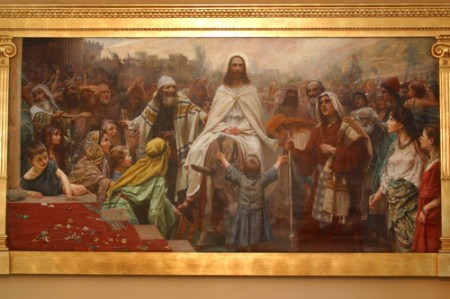
Jesus didn’t live up to the expectations of the crowd who followed him, and, no longer believing he was the Messiah they had hoped for, they turned on him


Today is Palm Sunday. This is the day we celebrate the “triumphal entry” of Jesus into the City of Jerusalem. He rode into the city on a donkey. Many hundreds of thousands were gathered in Jerusalem for the coming Passover. John tells us that people gathered in expectation of seeing Jesus because of the word that he had raised a man (Lazarus) from the dead days before. (John 12:17-18)

As Jesus entered the City, people lined the streets with palm branches. They threw their cloaks on the road in front him, and they hailed him with. This is Luke’s account:

As he went along, people spread their cloaks on the road.
When he came near the place where the road goes down the Mount of Olives, the whole crowd of disciples began joyfully to praise God in loud voices for all the miracles they had seen:
“Blessed is the king who comes in the name of the Lord!”

Luke 19:36-38

And here is John’s account:

The next day the great crowd that had come for the festival heard that Jesus was on his way to Jerusalem. They took palm branches and went out to meet him, shouting, “Hosanna!” “Blessed is he who comes in the name of the LORD!” “Blessed is the king of Israel!”

John 12:12-13

As we celebrate Palm Sunday today, we know the story of Jesus is about to take a very dramatic, tragic turn for the worse. The triumphal entry of Jesus into Jerusalem is not the precursor of celebratory times. Ominous clouds are looming on the horizon.

The incongruity of this joyous moment days before Jesus will be crucified is sobering. He was hailed King of the Jews by an adoring crowd days before a jeering crowd yelled, “Crucify him!” Most sobering of all is the likelihood that many people in those crowds were the same people.

What happened?

Continue reading “Palm Sunday: the Prelude to the Crucifixion”