God of the Living in Heaven and Hell

What does it mean that God is God of the living, not the dead.


Interestingly, Jesus directed most of his criticism against the Pharisees, but there were two groups of religious leaders during his time. The other group was known as the Sadducees. In one of the rare encounters with the Sadducees that we read in the Gospels, they asked Jesus about marriage in heaven. This is because the Pharisees believed in resurrection in bodily form (at the end of the age), but the Sadducees did not. In the biblical passage that inspires this blog post, the Sadducess pressed Jesus on the issue of resurrection.

They confronted Jesus with the hypothetical example of a woman married to the oldest of seven brothers. In Jewish culture and tradition, a brother had an obligation to marry the wife of a deceased brother. In the hypothetical, they asked Jesus, if each brother died in turn, with a surviving brother marrying the widow, who would be her husband after the resurrection? (Matthew 22:23-28)

Jesus, in typical fashion, responded that they should know the answer if they know the Scriptures. (Matthew 22:29) Imagine the upstart Jesus putting the respected leaders in their place like this!

But, Jesus didn’t leave them hanging. He answered that people neither marry nor are given in marriage after death because people are “like the angels in heaven”. (Matthew 22:30) And, then Jesus said,

“And as for the resurrection of the dead, have you not read what was said to you by God:  ‘I am the God of Abraham, and the God of Isaac, and the God of Jacob’? He is not God of the dead, but of the living.’” (Matthew 22:31-32 ESV)

The statement that jumps out at me in this passage is the last one: God is not a God of the dead, but of the living!

Jesus made it clear when answering the Sadducees that there is a physical resurrection. Indeed, he had been talking about his own death and resurrection multiple times by this point in his ministry. Jesus came for the precise purpose of living and dying and rising from the dead.

And what this means for us is of the very most significance. God is a God of the living, not the dead.

What are the implications for us? While there are some obvious implications, I see some less obvious ones as well.

Continue reading “God of the Living in Heaven and Hell”

Honest Liar or Dishonest Priest?


Then Pharisees and scribes came to Jesus from Jerusalem and said, “Why do your disciples break the tradition of the elders? For they do not wash their hands when they eat.” He answered them, “And why do you break the commandment of God for the sake of your tradition?  For God commanded, ‘Honor your father and your mother,’ and, ‘Whoever reviles father or mother must surely die.’  But you say, ‘If anyone tells his father or his mother, “What you would have gained from me is given to God,” he need not honor his father.’  So for the sake of your tradition you have made void the word of God.  You hypocrites! Well did Isaiah prophesy of you, when he said:   “‘This people honors me with their lips, but their heart is far from me; in vain do they worship me, teaching as doctrines the commandments of men.'” Matthew 15:1-9 ESV


And he called the people to him and said to them, “Hear and understand: it is not what goes into the mouth that defiles a person, but what comes out of the mouth; this defiles a person.”…. Do you not see that whatever goes into the mouth passes into the stomach and is expelled?  But what comes out of the mouth proceeds from the heart, and this defiles a person.  For out of the heart come evil thoughts, murder, adultery, sexual immorality, theft, false witness, slander.  These are what defile a person. But to eat with unwashed hands does not defile anyone.” Matthew 15:10-11, 17-20 ESV

Jesus leveled his criticism at people who seemed to honor God in the way they spoke and acted, but they didn’t honor God in their hearts. He quoted the prophets Isaiah and Ezekiel who carried a similar theme in their writings. The prophets were as harsh on the religious and political leaders of their day as Jesus was in his day.

The statement, “the road to hell is paved with good intentions”, seems to miss the mark in light of the importance Jesus places on the heart, does it not? Not that what we do isn’t important. It’s just that what we do starts with who we are, and who are is in our hearts.

Continue reading “Honest Liar or Dishonest Priest?”

Learning How to Die


Dying is a topic most us would rather avoid, but Jesus didn’t shy away from the subject. In fact, he focused on it – maybe because He came to die for us.

I guess I would probably be a bit fixated on the subject if I knew that was the fate that awaited me…. Wait a minute…. that is the fate that awaits me!

Well, maybe it was different for Jesus because it wasn’t just the fate that awaited him; it was among the primary purposes for which he became a man. Though he existed in the form of God, He didn’t hold on to His superior position. He emptied himself, taking the form of a servant and was born a man. “And being found in human form, he humbled himself by becoming obedient to the point of death, even death on a cross.” (Philippians 2:6-8) Simply put – Jesus came to die – for us.

As Jesus neared the time when He would be betrayed into the hands of the tribunal that would seal His death warrant, He said:

“Now my soul is troubled, and what shall I say? ‘Father, save me from this hour’? No, it was for this very reason I came to this hour. Father, glorify your name!”” (John 12:27-28)

For Jesus, death wasn’t inevitable. He chose to die. This does make him different than us: He chose to become one of us and die for us. And because He chose it, could it have been any different for Him?

Is it really different for us?

Maybe not. If you believe what Jesus said.

Continue reading “Learning How to Die”

Letting the Bible Speak for Itself


I have been coming back to a similar theme in recent months on how we read and interpret the Bible. I have noted that fundamentalists and atheists tend to read the Bible in the same rigid way. The only difference is that fundamentalists believe all of it, and the atheists believe none of it. They both assume and insist that the Bible must be read literally, even though everyone knows that many passages can’t be taken literally.

For instance, when Jesus said he is the vine, he obviously didn’t mean he was a plant. We have to use some common sense and understanding to determine when the text is intended to be metaphorical, and when it is meant to be literal. Sometimes, it might even have both literal and metaphorical meanings. We can’t rigidly assume that the Bible must always be taken literally if we are serious about understanding it.

Some people think that either the Bible must be taken literally, or not at all. This is a false dichotomy. We don’t read other literature that way. Frankly, when we approach the Bible in that way, insisting that it be read literally, we are doing the Bible a disservice, and we are failing to take the Bible seriously enough. We are insisting that the Bible speak to us the way we want to be spoken to, rather than trying to understand what the Bible is saying on its own terms, not ours.

Continue reading “Letting the Bible Speak for Itself”

Back to an Early Church View of Genesis

We make a critical mistake when we think that Adam and Eve and Eden were perfect. Only God is perfect.


I have much enjoyed reading Joel Edmund Anderson’s blog, resurrecting orthodoxy. So much that I am reblogging his latest post which is part of a walk through Genesis: Making Sense of Genesis 3 (Part 1): The Big Picture, Nakedness, and Two Trees. Knowing history allows us to avoid the mistakes of those who came before us, but not knowing history makes it likely that we will repeat those mistakes.

So it seems that some have made the mistake in this modern day and age of reading Genesis too literally. Just suggesting that triggers a slight shudder as I can imagine someone taking umbrage with the suggestion that we shouldn’t take the Bible literally.

I maintain that we should take the Bible seriously, which means that we should let the Bible inform us when we should read it literally, when we should read it figuratively, and when it has both literal and figurative meanings. (Should we take the Bible Literally? Or Seriously?)

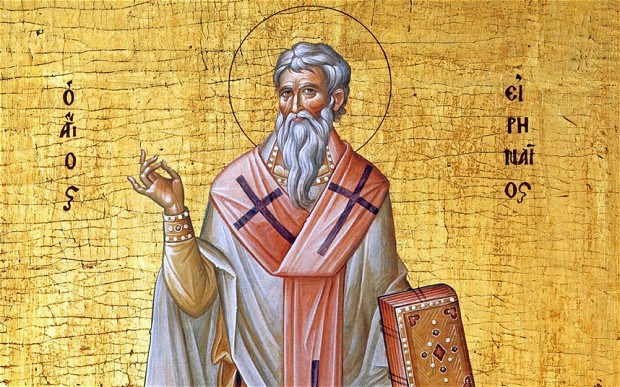
Anderson reminds us that this is how some of the most influential early church fathers viewed Scripture. For authority, he cites all the way back to Irenaeus, the disciple of Polycarp who was a direct disciple of John –  the disciple of Jesus and writer of the Gospel, epistles and Revelations. Irenaeus is just one spiritual generation removed from Jesus.

I realize that people might want simple formulas for Bible interpretation, but there is nothing simple about the universe we live in, reality or (most of all) God.

His ways are higher than our ways. We shouldn’t lean on our own understanding. Jesus left the Holy Spirit to guide us into all truth, and Jesus said we must learn to worship God in spirit and truth.

I am  not talking about New Age spiritualism or secret Gnostic knowledge. The Living God spoke to Abraham and David and took on human form in the body of Jesus, lived obediently to His own purpose as a man to the point of dying on a cross for our sins and rising from the dead in that same body to give us hope. This is the uncreated Word of God who was with God in the beginning, and was God, and through whom all that was created was made – the seen from the unseen.

Anderson says in his latest article:

“Genesis 3 was not claiming that God had created a ‘perfect’ world, because God alone is perfect. In fact, Irenaeus called the teaching that Adam and Eve were originally ‘perfect’ a gnostic heresy. Irenaeus was emphatic: God didn’t create Adam and Eve as ‘perfect’ beings.”

God called the world He made “good” (not perfect). It was good for His intended purpose, and it still is.

He certainly knew humanity would fall and fail. That was inevitable because we are not perfect; we are not God. God knew we would fail because He can see the end from the beginning, and everything in between. When He hit the “start” button on the creation, He saw how His purpose would unfold before the foundations of the earth. And, He saw that it was good.

Through our experience we learn good and evil, and the value of embracing good and rejecting evil. In this way, our experience is intended to lead us to God who alone is perfect. Through our experience, we learn to rely not on ourselves, but on God. Through our experience we learn to embrace God and His purpose. As we yield ourselves to Him, God works in us what we could never do in ourselves – perfecting us in Him.

We make a critical mistake when we think that Adam and Eve and Eden were perfect. Only God is perfect.

I’ve heard people say that there was no pain or death before the fall. Why, then, does God tell Eve that her pain in childbirth will increase (multiply)? (“To the woman He said: “I will sharply increase your pain in childbirth; in pain you will bring forth children. Your desire will be for your husband, and he will rule over you.” (Genesis 3:16)(Berean Study Bible))

We need to be careful not to let the agendas and theological constructs of others inform us rather than the Word, itself. The Word of God is living and active, sharper than a double edged sword, and is able to discern the thoughts and intents of the heart. (Hebrews 4:12-13) We need to let God’s Word inform us through the guidance of His Holy Spirit.

The danger of systematic theologies and secret formulae is that we don’t know how much of the system or the formula is our own invention. We need to be guided by the Word of the Living God, the Bread of Life.

All Scripture is God-breathed and “useful for teaching, rebuking, correcting and training in righteousness, so that the servant of God may be thoroughly equipped for every good work.” (2 Timothy 3:16-17)

The idea that Genesis should be taken absolutely literally and historically is more of a modern construct than a biblical one. (See Is Young-Earth Creationism Another Gospel?) That doesn’t mean Scripture isn’t God-breathed and we shouldn’t take it seriously.

From the beginning the followers of Jesus read Scripture as the word of God. They took it so seriously they were willing to die for it – not for it alone, but for the God it revealed. And though they clung to the Scripture, for in it was revealed the Messiah, Jesus, who they followed, they didn’t read Genesis as literal, historical record.

~~~~~~~~~~~~~~~~~~~~~~

Postscript:

Irenaeus was born in Smyrna (now Turkey) to a Christian family in 130 AD, just a generation after John the apostle died. He stood against heresy, being one of the first theologians to use apostolic succession to protect the integrity of the Gospel. His close connection to Jesus, Himself, through Polycarp who was mentored by John the apostle, was his authority.

“Irenaeus’ point when refuting the Gnostics was that all of the Apostolic churches had preserved the same traditions and teachings in many independent streams. It was the unanimous agreement between these many independent streams of transmission that proved the orthodox Faith, current in those churches, to be true.” Irenaeus is credited with arguing that all four Gospels (Matthew, Mark, Luke & John), and only those four Gospels, were Scriptural. (See Wikipedia)

He preached the rule of faith, one of the earliest church creeds, as a standard for orthodoxy:

…this faith: in one God, the Father Almighty, who made the heaven and the earth and the seas and all the things that are in them; and in one Christ Jesus, the Son of God, who was made flesh for our salvation; and in the Holy Spirit, who made known through the prophets the plan of salvation, and the coming, and the birth from a virgin, and the passion, and the resurrection from the dead, and the bodily ascension into heaven of the beloved Christ Jesus, our Lord, and his future appearing from heaven in the glory of the Father to sum up all things and to raise anew all flesh of the whole human race…

We might credit Irenaeus for solidifying and defending the idea of the Trinity, being one God in three persons. “Irenaeus used creation to distinguish the Father, Son, and Holy Spirit from that which is created, to identify the Three as the one Creator God, and to secure their distinction. In so doing Irenaeus became the first to support his belief in the Three as God with an account of God as three.” (See Iranaeus: the Creation and the Father’s Two Hands)