Can Christians Be Patriotic?

Christians should view themselves fundamentally as citizens of a kingdom that is not of this earth


Concerns about “Christian nationalism” have been raised in recent years from the political left. Some people in Christian circles, and specifically conservative Christian circles, have pushed back on those concerns and criticisms. At the same time, however, concerns about Christian nationalism have been voiced from within Christian circles, even from within conservative Christian circles.

The conversation has arisen, perhaps, because of the way that Donald Trump has courted Christians in his campaign to “Make America Great Again”. Many Christian voters have embraced Trump and his campaign slogan.

I am thinking about this in the context of a question raised about Christians being patriotic to John Dickson on a recent episode of the Undeceptions Podcast. (See Question Answer XIII at abut the 42 minute mark.) The person who raised the subject referenced the Bonhoeffer movie, observing that the issues for the church seemed to come when the church stopped thinking what it means to be a Christian and started thinking about what it means to be a German Christian.  

The question is, “Should Christians be patriotic?”

Putting the question in terms of patriotism, rather than nationalism, presents a slightly different twist on this conversation. “Christian nationalism” has become a pejorative term, but patriotism is seemingly more neutral and non-pejorative. At the same time, many people accused of Christian nationalism would likely say they are only being patriotic.

So, is patriotism ok for a Christian?

I like the fact that this question was put to John Dickson, an Australian who has no dog in the American political fight. Though he currently teaches at Wheaton College in Illinois, he approaches the issue from outside the roiling turmoil of American politics.

The question was also posed by a non-American listener to the podcast who was concerned about the way patriotism “potentially dehumanizes others and makes them seem lesser because they are not of our race”. He expressed concern about the mistreatment of refugees and others of different background to our own.

The “glaringly obvious” theological view proclaimed by Jesus and the New Testament writers, responds Dickson, is that Christians should view themselves fundamentally as citizens of a kingdom that is not of this earth. (Jesus said, “My kingdom is not of this world.” (Jn. 18:36); Paul said, “[O]ur citizenship is in heaven.” (Ph. 3:20); and Peter called Christians “sojourners and exiles” in this world. (1 Pet. 2:11) In my view, that means that none of us have a dog in the earthly political fight – ultimately.

Thus, we should “be shaped by the values of God and not the values of any particular nation”, according to Dickson. He observes that this admonition is everywhere in the teaching of Jesus, beginning with the first public words spoken by Jesus in the Gospel of Matthew, which we call the Sermon on the Mount. He summarizes,

“Everything in the Beatitudes [in the Sermon on the Mount] seems to stand against the nationalistic mindset of dominating others…. Blessed are the poor in spirit, for theirs is the kingdom of heaven. Blessed are those who mourn, blessed are the meek, for they will inherit the earth. Blessed are the merciful; blessed are the peacemakers; blessed are those who are persecuted because of righteousness for theirs is the kingdom of heaven [paraphrasing the Beatitudes]. The contrast with the nationalistic spirit of the day couldn’t be more striking.”

JOhn Dickson in Episode 146 of the Undeceptions podcast

Dickson urges us to consider the Beatitudes in light of the Roman domination of the world at the time and the Jewish expectations at that time. These are some song lyrics written in the 2nd Century BC by a Jewish author:

“See, O Lord, and raise up for them their king, the son of David,
At the time known only to you, O God, that he may reign over Israel your servant.
Gird him with strength, to shatter unrighteous rulers;
To purge Jerusalem of the nations that trample her down in destruction;
To expel, in wisdom and righteousness, sinners from the inheritance;
To smash the sinner’s pride like a potter’s vessel….”

Psalms of Solomon 17:21-23

This Jewish author’s sentiment is full of what we might call nationalistic pride. Contrast that sentiment with the words of Jesus. The meek inheriting the earth seems like a far cry from shattering unrighteous rulers. As John Dickson explains,

“Jesus is demanding that his followers live by the values of the future kingdom over the values of any particular present nation.”

JOhn Dickson in Episode 146 of the Undeceptions podcast

Everywhere Jesus went, he proclaimed the coming of the kingdom of God. (Luke 8:12) The kingdom of God (and being ready for it) is the subject of most of the parables Jesus told. He also announced that the kingdom of God is here now (in our midst), but he sad it is like a mustard seed, the yeast in bread, or a treasure buried in a field.

The kingdom of God now is not (yet) the ruling authority. It is here, but it has not taken over. It is emerging, but it is not yet what it will be. When that time comes, however, everyone will know it; and people need to be ready for it, or they will miss it and be left out.

The message of the kingdom of God – that it has come, but is yet to come fully – is consistent with the instruction of Jesus that the meek will inherit the earth. We do not rule in the kingdom of God presently with might and power; we “rule” by denying ourselves, but taking up our crosses, and by allowing God to rule and work in our hearts to conform us to Himself.

The Jews who expected their Messiah to come at the time of Jesus did not recognize Jesus because they thought he would be their champion, empowering them to shatter the nations that oppressed them and smash the pride of (more) sinful nations. They failed to recognize their own sinfulness and the promise to Abraham, which was to bless all the nations through Abraham’s descendants. (Genesis 12:3, 18:18, 22:18)

They were too full of nationalistic pride to see what God was doing, consistent with the very promise God made to the them – to bless all nations. As we will see, this is a key issue, and it is something we need to contend with, lest we enter into the error of the First Century Jews

Continue reading “Can Christians Be Patriotic?”
In Response to the State of Our Culture, Do We Carry the Cross or the Sword?

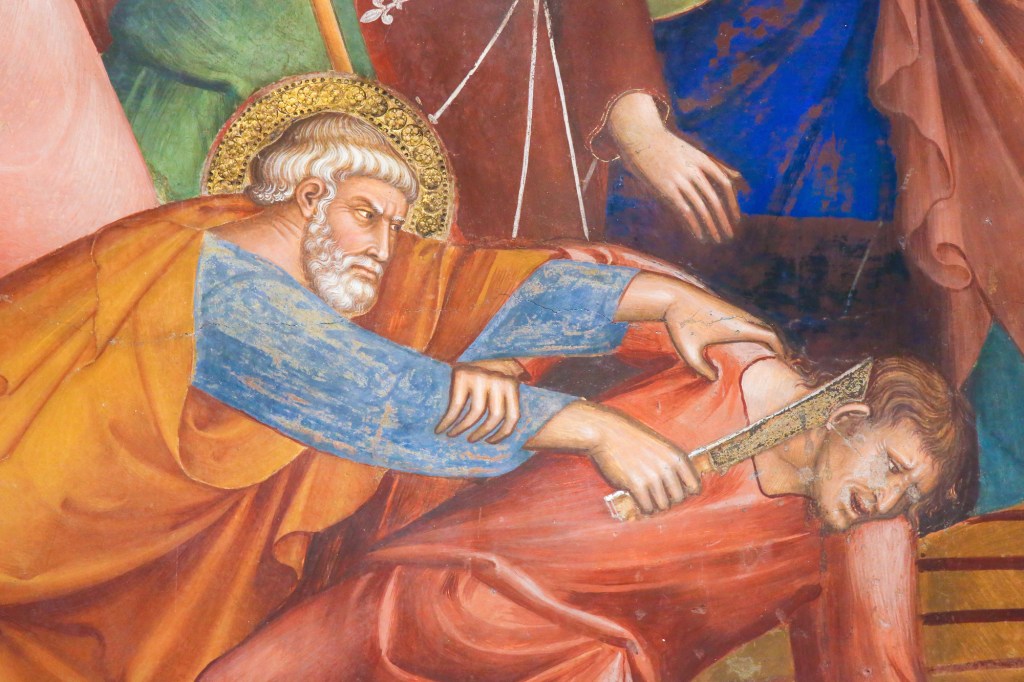
Jesus told us to follow him by picking up our crosses, but many of us today are picking up our swords.


I recently heard Tim Alberta say that some modern evangelicals have picked up a sword, and that sword is Donald Trump. Such a sword is needed for success in a culture war, and a culture war mentality drives the politics of many, if not most, of evangelicals today.

Many evangelicals are concerned, if not fearful, of current cultural trends. People are pulling away from and rejecting traditional Christian values in the US. The change has been rapid (as far as cultural trends go). American society is going the way of Europe and Canada in letting go (and outright rejecting) Christian labels, overtly Christian thinking, and church attendance.

Perhaps, nothing demonstrates the cultural movement away from Christianity in the United States like the book, The Nones: Where They Came From, Who They Are, and Where They Are Going, by Ryan P. Burge. The author says that only five percent (5%) of Americans claimed “no religion” in a 1972 poll. That number rose to over twenty three percent (23%) by 2018. This made “nones” as numerous as Catholics or evangelicals in the US in 2018.

Nones are predominantly young Americans, but this trend does not just affect the nation’s youth, and it has picked up momentum since COVID. Robb Redman reports from various sources on community trends and culture for worshipleader.com, including the following:

  • 70% of Americans were church members in 1999 (Gallup);
  • Less than 50% of Americans were church members in 2023 (Id.);
  • 45 million Americans have stopped going to church in that time;
  • 41% of Americans 39-57 went to church regularly in 2020 (Barna);
  • 28% of Americans 39-57 went to church regularly in 2023 (Id.).

Ryan Burge partnered with Jim Davis and Michael Graham to explore the reasons for this precipitous decline in church membership and attendance and the rise in self-described nones in their recent book, The Great Dechurching. This book has become the topic of much conversation in the short time since it was published. I haven’t read the book yet, so I posed the question, “What are the top five reasons people have stopped going to church, listed from most common to least common”, to two different AI platforms. The results from Bing Co-Pilot are as follows:

  1. Judgmental attitudes (87%)
  2. Distrust of organized religion (74%)
  3. Too focused on Money (70%)
  4. Busy schedules (67%)
  5. Loss of Habit (58%)

The Co-Pilot response summarized studies done by the Pew Research Center, Gallup Polls, the Barna Group, the Public Religion Research Institute and various academic studies to generate this list. I note that the first three reasons people have given for not attending church are issues with the Church I am referring to the Church (capital C) because I don’t know how this breaks down among denominations. The other two main reasons are unrelated to the Church; they reflect personal and societal lifestyle issues.

Chat GPT reported different results, citing some of the same sources (Pew and Barna) and some different sources (General Social Survey and books and articles, generally, including Sociology of Religion by Diana Butler Bass, an academic book). The Chat GPT list is not as straight forward:

  • “A growing disconnection with church teachings or religious beliefs” (about 60%-70%);
  • “Negative experiences, such as feeling judged or encountering hypocrisy” (about 30%-40%);
  • “A perceived irrelevance of church” and disconnectedness of the church to modern issues (about 25%-35%);
  • Busyness, lifestyle, time constraints, and changing priorities (about 20%-30%); and
  • Exploring alternative spirituality and religious practices (about 15%-25%).

Again, the first three (3) (and the most prominent) reasons for not attending church deal with the Church, itself. Worldviews are shifting away from the views held by the Church (which seems to indicate we are losing this “culture war”). The Church is perceived as disconnected from modern life and the modern world and not relevant to it, and the Church is perceived as overly negative and hypocritical.

The one area of overlap is the high percentage of people who list judgmental attitudes, including negative experiences and hypocrisy) as major reasons of not attending church. This is obviously a key issue (ranking 1st and 2nd respectively).

I find this to be highly problematic for the Church because the Paul plainly said the Church should not be (presently) judging the world (according to Paul (See What Business Do We Have Judging the World?)) And, Jesus said we should be known by the love we have for each other.

It seems pretty obvious to me in my own anecdotal experience that the American Church, generally, has some significant issues in this regard. We are not following Paul’s instruction not to judge the world, and we are failing to love each other well.

I recently watched a Gavin Ortlund critique of fundamentalism in the Church today that focuses on these issues. He says it well when he describes a segment of the Church that is focused more on what followers of Christ should against, rather than than what we should be for. When our focus is on the negative, our positive message is likely to be eclipsed and obscured and it lost in the noise.

I realize, of course, that this “indictment” of the Church generally, is a very broad brush. The church I attend does not fit this mold. Most of the Christians I have close relationships with do not fit this mold. We don’t have to look very far or deep on social media, however, to see evidence of judgmental attitudes, hypocrisy, and negativity.

It’s interesting to me that resources Co-Pilot pulled from identify more negatives (distrust of organized religion and too focused on money) in the top three reasons for not going to church, while the Chat GPT sources identified “growing disconnection with church teachings or religious beliefs” and perceived irrelevance of church” and disconnectedness of the church with modern issues. Distrust and money-focused have nothing to do with message, but disconnection with church teachings and a perceived irrelevance with modern issues has everything to do with message (theology).

Exploring alternative spirituality and religious practices (the 5th reason noted by the Chapt GPT response is related to the disconnection responses. I don’t know whether these things are causal or just symptomatic. If people were finding what they were looking for in church, they wouldn’t disconnect and look elsewhere. If their church experience wasn’t negative, they might still be connected.

On the other hand, both sources identify other things that are going on. Busyness, lifestyle, time constraints, and changing priorities are “neutral” pressures that are affecting not just churches, but service organizations, fraternal organizations, and other traditional ways people have gathered together.

We see a spike in this trend of disconnection from Church membership and attendance after COVID (pun intended). COVID seemed to supercharge changes that were already in the works in many areas of life. People were already disconnecting from face-to-face contact with other people with the proliferation of hand-held devices and social media going back at least to 2012. COVID isolated people even further.

Sociologist, Jean Twenge, finds sharp changes in teen behavior and mental health starting in 2012, which she attributes to teen use of smartphones and other hand-held devices. Her findings about the changes in the behavior of teens is a yardstick to measure the pulse of society.


A published interview with Twenge as Time Magazine’s Person of the Week, reports that “Gen Z is in the grips of a historic mental health crisis, with teenagers struggling with record levels of depression, anxiety, and loneliness.” Twenge, who has studied many generations of teens, discovered “big and sudden” changes in Gen Z starting around 2012, when hand-held devices became normalized among teens.

Those changes included, among other things, a doubling in the diagnosis of clinical depression among 12-17 year-olds from 2011 to 2019. At the same time, teens reported significantly less face time with other people corresponding significantly with more screen time. I have heard her say that teen pregnancy is down (which seems to be a good thing) because teens spend more time on their phones in their bedrooms alone than spending time with each other (which is problematic).

So, what does this have to do with Donald Trump and Christians fighting a culture war to try to preserve their power and influence in a society that seems to be pulling away from us? I seem to have wandered far afield, but now I am going to pull it in and get to the point.


It seems our culture needs Jesus more than ever. At the same time, people are do not see the benefits of knowing Jesus. At the very time when people need the grace and love of Christ most, people are being pushed away by judgmental attitudes and negative experiences. As people are struggling with isolation, polarization, and mental health issues, the Church is becoming more irrelevant, disconnected, and inaccessible to them.

Ironically, it seems to me, we are not only losing this culture war, the culture war seems to be the very thing that is pushing people away and isolating them from us. As we are circling our wagons defending ourselves against these “outsiders”, and attacking them from behind our theological walls, we have lost sight of the fact that Jesus sent us out into the world to bring the Gospel to the lost.

We are failing in our most critical mission.

Continue reading “In Response to the State of Our Culture, Do We Carry the Cross or the Sword?”

A New Donald Trump?

“I’m going to be watching to see if this was really a life-changing, life-altering moment….”


This morning I watched two different videos about Donald Trump in the aftermath of the assassination attempt that came within millimeters of ending his life. Such an experience would sober the hardest of self-made men. Trump experienced the proof of the reality of personal mortality and the razor line between alternate fates.

The first video I might have ignored, but for the source. Capturing Christianity is a YouTuber who manages a thoughtful and circumspect apologetic presence online. He interviews good people and engages in civil conversation with people who disagree with him. I am attracted to people like that.

The video purported to be about a prophecy predicting the assassination attempt on Donald Trump. I don’t run after so-called prophecies. I am immediately skeptical when I see anyone claiming to be a prophet or to have some message from God.

With that said, I do not completely dismiss the idea that God could speak to or through anyone. If we believe anything in the Bible, we have to accept that God has spoken to and through people in the past. I also don’t see anything in the Bible that indicates God can no longer do that if He chooses to speak to or through people in the present.

I believe that skepticism is the right posture from which to consider any claimed prophecy, but I believe we also have to acknowledge and respect Paul’s admonition:

“Do not quench the Spirit. Do not despise prophecies, but test everything; hold fast to what is good.”

1 Thessalonians 5:19-22 (ESV)

The title of the video is, Viral Trump Prophet Now Admits THIS. I don’t like clickbait headlines either, though I admit to being persuaded to click on them sometimes. When I do, my Spidey senses are always tingling, expecting to be disappointed by another bait and switch or overblown story that has little to no factual support, is (likely) full of misinformation and disinformation, and (maybe) even outright misleading information. I have seen it too many times.

I respected the source, however, so I clicked.

The 15-minute video walks through a purported prophecy published by one, Brandon Biggs, four days before the assassination attempt. Mr. Biggs seems very sincere and forthright, but many people can be sincerely and forthrightly wrong. I will let you discern for yourself:

The gist of the Capturing Christianity take is that Biggs got some things wrong, though he accurately predicted the assassination attempt.

Of course, anyone could predict an assassination attempt. I have personally heard people speculate that such an attempt might be made, given the current, polarized and tensely emotional political climate.

The video commentary includes clips of what Mr. Biggs claims he saw in a vision and his interpretation of it. Some of what he saw and reported days before the incident are generally accurate to the events that occurred. In particular, he saw a bullet whiz past Trump’s right ear. He saw blood coming from Trump’s right ear, and he saw Trump down on his knees.

As the commentary points out, anyone might predict an assassination attempt, but the details of this vision are remarkably close to what actually happened. The bullet didn’t whiz past the left ear. It didn’t whiz past the top of the head, or chin, or cheeks, or neck or chest. It whizzed past Trump’s right ear.

Biggs added that Trump’s eardrum was ruptured and that he was “radically born again”. This is where the reality differs. Donald Trump’s eardrum was not ruptured. We also have no way of knowing what happened in Donald Trump’s mind or heart.

The central point of the commentary focused on Mr. Biggs’s “admission” that he added to what he saw in the vision. Biggs says that he didn’t see the bullet pierce Trump’s ear, but he saw the blood coming from the ear. He also mentioned seeing sonic waves behind the bullet, as in the movie, Matrix.

(I am reminded in this comment that prophets are people who perceive things in the context of their culture, experience, and understanding. Food for thought as we read the Old Testament prophets – not that Brandon Biggs should be compared to an Old Testament prophet.)

Briggs admits that he assumed the bullet somehow caused Trump’s eardrum to burst. He added that part, because it seemed like be a logical conclusion to him from what he believed he saw. What he saw, and what he assumed are two different things.

I believe Biggs was sincere and forthright, as I said above, and he was humble in explaining these things. He wasn’t defensive. He didn’t seem intent on defending himself. In fact, he was apologetic and called himself “immature” in not recognizing the difference between what he saw and what he assumed.

So much for these basic facts. They aren’t what I want to focus on here.

As I stated just three days ago, the original prophecy about Trump being President (in 2011) and the miraculous escape from death this week (even if we admit God’s hand in the prophecies and the saving of Trump’s life) do not mean that Trump is God’s man and that Christians should uncritically support him in whatever he says and does.

Paul said we need to “test everything” (1 Thess. 5), so I think that is exactly what we should do. Some people may say that I am vacillating, but I am not. I am keeping an open mind in taking a closer look.

Continue reading “A New Donald Trump?”

What Is the Place of Christians in the World?

“By faith [Abraham] made his home in the promised land like a stranger in a foreign country; he lived in tents, as did Isaac and Jacob, who were heirs with him of the same promise.”

Apocaliptical scene to the Rome cityscape matte painting

I go back from time to time to the early “church fathers” for perspective. Most recently, I have focused on what we call The Epistle of Mathetes to Diognetus (the “Letter”). Even when translated from the Greek language in which it was written, the words and thoughts ring foreign to our American ears.

As I read this early Letter, I am impressed that Christians in the 21st Century have much to learn from 2nd Century Christians. They lived into the message of Jesus in ways that we seem to have long since forgotten

We don’t know who the author was. The Greek word, “mathetes“, merely means “student”. The person or ruling family to which the letter was written is also uncertain. We only know it was written in the early to mid 2nd Century.

The Church had grown slowly but steadily into the 2nd Century. Persecution ebbed and flowed around those early Christians, but they were more generally ignored and almost universally despised. In many ways, Christians were a complete oddity. They didn’t fit into the pagan (Greco/Roman) culture or the Jewish culture.

Christianity was centered in Jerusalem until the Roman war against the Jews and the destruction of the Temple in 70 AD. Christians scattered at that point, though Jerusalem remained one of many hubs of Christian life. The 2nd Century was a time of decentralization and spreading out throughout the Roman Empire and beyond – into areas of Africa and Asia, some of which were controlled by the Roman Empire, and some not.

According to the Letter, Christians were not physically, culturally, or linguistically distinguishable from the people in the many places in which they lived. They were distinguishable in other ways:

“But, inhabiting Greek as well as barbarian cities, according as the lot of each of them has determined, and following the customs of the natives in respect to clothing, food, and the rest of their ordinary conduct, they display to us their wonderful and confessedly striking method of life. They dwell in their own countries, but simply as sojourners. As citizens, they share in all things with others, and yet endure all things as if foreigners. Every foreign land is to them as their native country, and every land of their birth as a land of strangers.”

The Epistle of Mathetes to Diognetus
chapter 5

The most distinguishing feature of those Christians, according to the author of the Letter, was their “striking method of life”: they lived as strangers in their own countries. Though they were citizens in those countries, they “endure all things as if foreigners”.

We might be tempted to think that the “uprootedness” of early Christians was merely a product of rejection and persecution by non-Christians, but the Apostle Peter suggests otherwise: Christians are a “royal priesthood” and a “holy nation” who live as “foreigners and exiles” in this world. (1 Peter 2:9,11) This echoes the writer of Hebrews, who described all great people of faith as “foreigners and strangers on earth”. (Hebrews 11:13)

These passages in the New Testament epistles highlight a fundamental trait of Christians in the world at that time. But not just at that time; Jesus spoke to all his followers (including us) when he said, “[Y]ou are not of the world” (John 15:19), and, “My kingdom is not of this world.” (John 18:36)

How strange are these words and concepts to modern Americans! From the earliest days of our youth, we are taught about our freedoms and rights as American citizens. In contrast, 1st and 2nd Century Christians enjoyed some rights as citizens of the various countries in which they lived (maybe not as robust as the rights we enjoy), but they lived as if they had none. And, this was their “distinguishing “striking” feature as a people! It is what made them stand out.

They marry, as do all [others]; they beget children; but they do not destroy their offspring. They have a common table, but not a common bed. They are in the flesh, but they do not live after the flesh. 2 Corinthians 10:3 They pass their days on earth, but they are citizens of heaven.

the Epistle of Mathetes to Diognetus
chapter 5

Second Century Christians lived as if they were really not of this world. And, this “feature “striking method” of living was noticeable. They adapted and fit into their surroundings and culture wherever they lived, except for this one thing: they lived like they were not citizens of the countries in which they lived – even if they were actually citizens.

They were outsiders wherever they lived because they lived like citizens of heaven. They fit in wherever they went, but they stood out by their allegiance to loving God and loving others. How strange and foreign that may seem to us!

Continue reading “What Is the Place of Christians in the World?”

The Group Affiliations the Apostles Had and What It Might Mean for Us

When I look at American expressions of Christianity today, I wonder if we demonstrate the right way to follow Jesus.

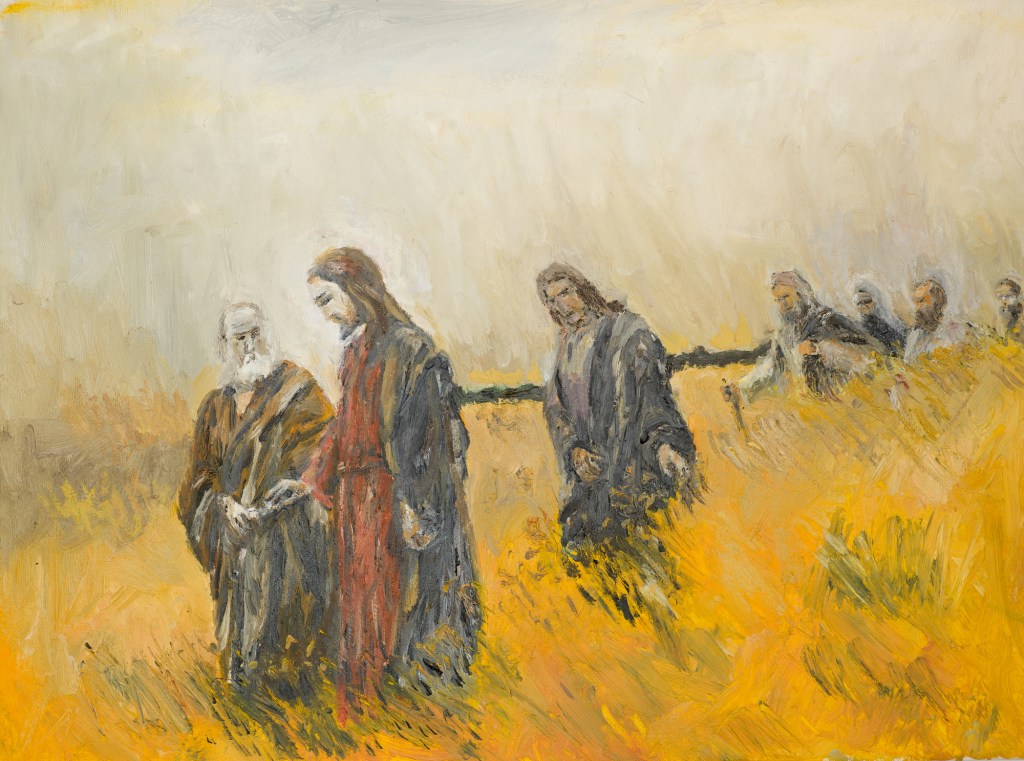
Oil painting illustrating Jesus Christ and his disciples on a meadow

I have spent some time lately considering the various influential groups of people in the time of Jesus and the orientation of those groups toward Jesus. I have wondered why Jesus seemed to pick on the Pharisees more than the other groups, especially since they seemed most aligned with him and had the most in common with him.

As I researched and thought about the various groups of Jewish influencers in the First Century in relation to Jesus, I began to think about the apostles, and their connections to these groups. I am always mining for insight as I read Scripture, and today my mind turns toward the relationship of the twelve apostles to those same groups of First Century, Jewish influencers.

We don’t know much about the background of the twelve disciples, except that most of them were “common” men of generally humble means. One disciple was identified with the Zealots (Simon, the Zealot, also known as Simon the Canaanite). Matthew, the tax collector, might have been Herodian (or may have been viewed as one).

We really don’t know about the group affiliation of the other disciples, at least not from the explicit text. They seem to have been ordinary people with no distinct association with particular groups. They did not seem to be closely associated with any of the five groups Jewish leadership groups in First Century Judea.

Even Simon, who is known as the Zealot, probably left his group behind to follow Jesus. Just as Matthew left behind his livelihood (tax collection) to follow Jesus. Of course, Simon (Peter) and Andrew dropped their fishing nets to follow Jesus, as did the brothers, James and John. It’s no stretch, therefore, to imagine that Simon, the Zealot, would have similarly “dropped” or left behind his affiliation with the Zealots to follow Jesus.

In fact, the theme of leaving behind your group seems to run throughout the teaching and example of Jesus. Jesus said, “[E]veryone who has left houses or brothers or sisters or father or mother or children or lands, for my name’s sake, will receive a hundredfold and will inherit eternal life.” (Matt. 19:29)

He called Peter and Andrew and James and John away from their profession of fishing. He called Matthew, the tax collector, away from his profession of tax collecting. I think it’s fair to assume that Jesus called Simon, the Zealot, away from the Zealots to follow him.

The theme of leaving behind family, livelihood and group identity runs deep in Scripture, all the way back to Abram (as Abraham was originally known) when God called Abram to leave his country, his people, and his father’s household and go to the land God would show him. (Gen. 12:1)

Hebrews 11 commends Abraham for the example of faith demonstrated in responding to God’s call and leaving behind the familiarity of all the things that typically identify people and their place in the world. Abraham and all the people of faith commended in Hebrews 11 demonstrated a kind of faith that made them “aliens and strangers on earth”.

Jesus called the rich young ruler to walk away from his wealth. (Matt. 19:16-30) Jesus told Nicodemus, the Pharisee, that he would have to be born again to see the kingdom of God. (John 3:3) Nicodemus was born into an enviable position in his community and may have winced at the thought of needing to be “born again”.

The kingdom of God is something I have been mulling over for many weeks, and months. It’s a theme I have written about often lately, and it has occupied a prominent place in my meditations lately.

The five main groups of Jewish influencers in the First Century had one thing in common – they were operating on a spectrum of influential relationship to the political structures and religious structures in their world. They were invested and embedded into their positions, and identities, with the people with whom they affiliated – like the partisanship and critical group affiliations we have today.

Along came Jesus, however, and he called people “out of the world”. (John 15:18-19) Jesus called people to leave their lives, and identities, and associations behind to follow him. I believe he is still calling people to the same allegiance today.

We don’t know much about the backgrounds and affiliations of the twelve disciples, perhaps, because they did just that. They left those things behind to follow Jesus. They became known, simply, as disciples of Jesus. They were, simply, Christ followers.

I am interested in these things because of what it means for us. If we would be disciples of Jesus and Christ followers, how do these things translate to our lives in the 21s Century?

Continue reading “The Group Affiliations the Apostles Had and What It Might Mean for Us”