You Might Be A Pharisee If ….

Just when we become proud of our own spiritual advancement we are most in danger of spiritual catastrophe!


[29] “Woe to you, experts in the law and you Pharisees, hypocrites! You build tombs for the prophets and decorate the graves of the righteous. [30] And you say, ‘If we had lived in the days of our ancestors, we would not have participated with them in shedding the blood of the prophets.’

Matthew 23:29-30

Reading this passage in Matthew today reminded of the old bit by the comic, Jeff Foxworthy. If Jeff Foxworthy was a comic in 1st Century Judea, he might have said, “You might be a Pharisee if ____________________ (fill in the blank).”

In a similar vein, we could say, “You might be a Pharisee if you think you would not have opposed Jesus if you lived in Judea in the 1st Century.”

Of course, Jesus wasn’t being funny when he confronted the Pharisees, and this wouldn’t be a comedic schtick.

I don’t think Jesus was saying it was wrong for people to build tombs to the prophets or decorate them with flowers. Jesus was saying it was wrong to say (and think) they would have treated the prophets any differently.

The Pharisees are to us what the prophets were to the Pharisees. We may be tempted to think that we would embraced Jesus if we lived in 1st Century Judea, and would not have opposed him or called for his crucifixion if we we were in the crowd that shouted, “Crucify him!”.

But, that is no different than how the Pharisees thought and what the Pharisees claimed about the prophets that were resisted, derided, and sometimes killed by the “religious” people of their day. Jesus was clearly implying that the religious people of his day (the Pharisees), were no different than the religious people in the days of the prophets.

Can we say, then, that we are different than they?

Only if we adopt the same thinking as the Pharisees! (If I am understanding Jesus accurately.)

The Pharisees thought of themselves more highly than they should have. John came preaching repentance, for the Kingdom of God is near! But, the Pharisees didn’t repent. They didn’t think they needed to repent.

When Jesus – who was God in the flesh – came into the world, the Pharisees didn’t recognize Him or receive Him. (John 1:9-11) They did not prepare themselves for his coming by repenting, as John the Baptist exhorted. They adopted the wrong attitude about what God was doing in their time, and they didn’t hear and respond to what God God’s messenger was saying.

Pharisees say the right things, and they do the right things, but they fool themselves. What the Pharisees said and did was a façade. Their hearts were not aligned with their actions. They claimed to be experts in the Law, but Jesus called them blind guides leading blind followers. (Matt. 15:14)

Pharisees were concerned with appearances and the way people saw them. Pharisees were not as concerned with their heart attitudes. Jesus called them “white-washed tombs” that were empty inside (full of dead people’s bones and uncleanness). (Matt. 23:27-28) We need to be careful that we do become like the Pharisees.

Continue reading “You Might Be A Pharisee If ….”
How Do We Demand Signs and Miss What God is Doing in the World?

The Gospel records a three year period of time in which Jesus seemingly performed miracles, signs and wonders everywhere he went. Perhaps, the accounts in the Gospels give us an impression that doesn’t correspond to the reality because they recount the many miraculous things he did, but they don’t describe all the times in between.

It seems strange, given all the miracles, signs and wonders that Jesus did that the Pharisees and Sadducees came to Jesus one day to test him by asking him to show them a sign from heaven. (Matt. 16:1) Perhaps, they wanted him to do it on command, like a science experiment to prove himself.

Perhaps, they had only heard of the things Jesus did, but they hadn’t actually seen him do anything. Perhaps, they didn’t trust the accounts of the common people Jesus seemed to prefer to hang out with. They were more gullible and less discerning.

Attitudes like that haven’t changed much in 2000 years. The Sadducees and Pharisees were more learned. The Sadducees didn’t believe in supernatural occurrences, miracles or demons. The Pharisees did believe in those things, but they were skeptical. The two groups had very different worldviews, but they were aligned in their skepticism.

When these elite religious leaders asked Jesus for a private performance – “a sign from heaven” – he refused. And, he said this:

“An evil and adulterous generation seeks after a sign[i]; and a sign will not be given it, except the sign of Jonah.” 

(Matthew 16:4)

The fact that these two groups, one that believed in the supernatural and one that didn’t, were aligned in their skepticism suggests that their “problem” with Jesus was that he challenged their dogmas. They doubted the fact that he did miracles, signs and wonders because of the content of what he was saying.

And, Jesus seemed to revel in provoking them on those differences!

The Pharisees (who believed in the supernatural) determined that healing on the Sabbath is work and is, therefore, prohibited by the Law of Moses. They demanded that Jesus not heal on the Sabbath, but Jesus did it anyway. (Matt. 12:1-14)

Ironically, this healing that was done right in the Pharisees’ presence occurred four chapters before they came to Jesus and demanded a sign from heaven. They had seen a sign from heaven already and dismissed it out of hand because it went against their beliefs.

Jesus challenged their preconceived ideas and expectations. He challenged their authority to determine what is work in violation of the Sabbath and what isn’t. They watched Jesus heal a man with a shriveled hand, but they dismissed it because of what he taught that was contrary to what they believed.

God showed the Pharisees a sign (the healing of a man with a shriveled hand), but they were too focused on his violation of their understanding of Scripture and religious dogma to notice it for what it was.

This story illustrates the danger of our religious dogmas and preconceived ideas of what God should do and not do. Even when the evidence is staring us in the face, we can be tempted to ignore it, gloss over it, and explain it away in favor of how we interpret and understand Scripture.

Continue reading “How Do We Demand Signs and Miss What God is Doing in the World?”

The Danger of Religiosity, Political Expediency and the Weight of the Cultural Moment

We can be so caught up in our own lives and the world around us that we fail to recognize the God who gave us life and created the world.

I have been reading through the Gospel narratives leading up to the death and resurrection of Jesus during Lent. My reading included the following passage that jumped out at me:

“Then they led Jesus from the house of Caiaphas to the governor’s headquarters. It was early morning. They themselves did not enter the governor’s headquarters, so that they would not be defiled, but could eat the Passover.” 

John 18:28 ESV

I will get the point, but first we need to build in a little context. This passage describes a passing moment leading up to the crucifixion after Judas betrayed Jesus in the garden. Jesus was taken, first, to the palace of Annas (John 18:13) and then to Caiaphas, the Jewish High Priest. (John 18:14)

After Caiaphas questioned Jesus, Jesus was taken to the Roman governor, Pontius Pilate. The High Priest wanted Jesus put to death for blasphemy, but only the Roman state had authority to impose capital punishment.

Caiaphas was the High Priest who presided over the Sanhedrin, the official religious body recognized by the Romans. Caiaphas was made the High Priest by the Roman procurator Valerius Gratus. Annas, the father-in-law of Caiaphas, had presided over the Sanhedrin before Caiaphas.

They were the official heads of the ruling group of religious leaders in First Century Judea in the time of Jesus, the Sanhedrin. They stood between the Romans, who conquered and controlled the region, and the Jewish people on matters of the Jewish religion.

During this tumultuous time, a group of violent men, the Zealots, who were opposed to Roman rule threatened to upset the political balance and peace. Similarly, the growing, unpredictable following of Jesus posed a threat to the Sanhedrin’s position as trusted middlemen trying to preserve peace and the status quo.

Potential disruption threatened the delicate balance. The Sanhedrin tried to walk the line between the threat of the Roman Empire on the one side and the Zealots and others who might provoke the Romans to tighten their grip on Judea, dismiss the Sanhedrin from their power position, and clamp down on the freedoms of the Jewish people they ruled.

Tensions were not just a threat to the Sanhedrin, who were officially given some overlapping authority the Romans; they were legitimately a threat to the well-being of all the Jews in Judea. Thus, we read in John that Caiaphas advised “advised the Jewish leaders that it would be good if one man died for the people”. (John 18:14)

The suggestion was based on practical expediency. Though Jesus wasn’t a Zealot, he was very popular among the people, likely including the Zealots who hoped Jesus would spell the end of the Roman occupation.

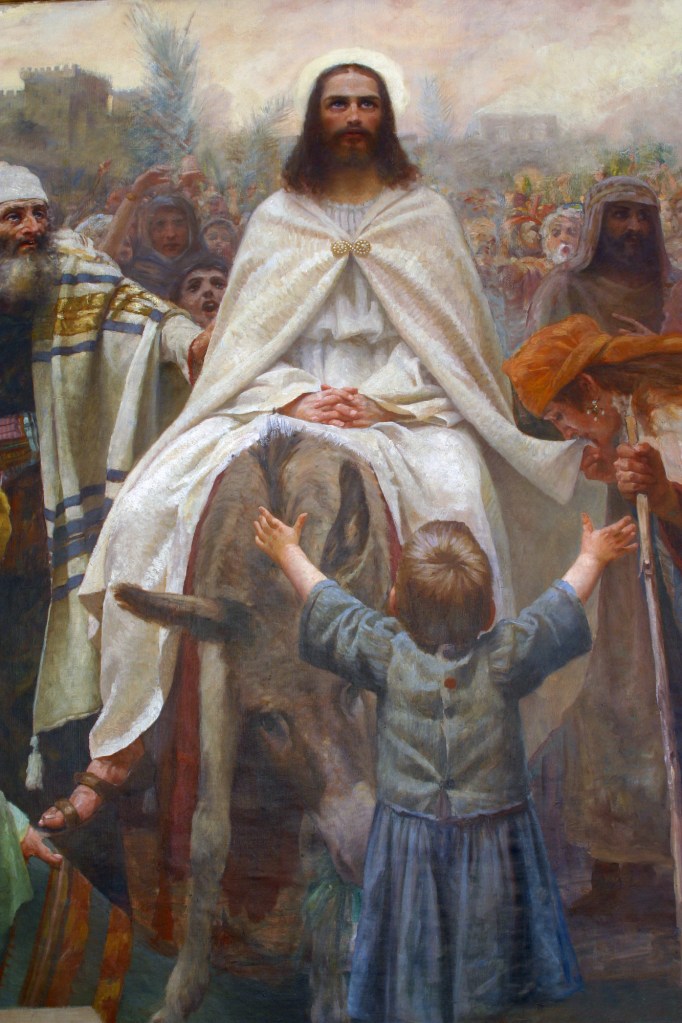
The concerns of the religious leaders were no doubt heightened to a critical level when Jesus came riding into Jerusalem on a donkey in triumphant celebration greeted by a “great crowd” that lined the streets, waiving palm branches and shouting,

“Hosanna!…. Blessed is the king of Israel!”

John 12:12

I am going to get to the danger of religiosity, political expediency and the weight of the cultural moment as the title to this article promises. First, however, I want to develop the backstory a bit further. To do this, we need to jump forward several months in time.

Continue reading “The Danger of Religiosity, Political Expediency and the Weight of the Cultural Moment”

Jesus Among the Religious and Political Groups of His Time

This is a companion piece to the last article I wrote and published: Why Did Jesus Pick on the Pharisees So Much? The former article was inspired by 40 years of observation that Jesus was harshly critical of the Pharisees. His treatment of them virtually jumped off the pages at me when I first read the Gospels in college.

The Pharisees, though, were only one of the influential groups of Jews in First Century Judea. We see some evidence of Jesus rubbing shoulders with the other groups, but not nearly as much as Jesus engaged the Pharisees.

We might be tempted to assume that the Pharisees were particularly wicked and sinful – far more than the other groups Jesus encountered – but that isn’t so. Jesus was most like the Pharisees, and they were most like him in their theological leanings and in the social circles in which they operated.

For that reason, I focused in my last article on the question: why was he so harsh towards them? I could have asked: why didn’t he pick on the other groups more?

In this article, I will explore the other groups and the difference between them and the Pharisees. I will spend a little time pondering how Jesus and the twelve apostles related to these groups in the Gospel accounts and provide my own thoughts as they occur to me.

First Century Judea was broadly possessed by two groups: the Jews, of course, and the Romans. The Jews had long lived in this land that God promised their ancestor, Abraham, but the Romans were newcomers. they were recent conquerors, following the Greeks, in a long line of challengers to the Jewish occupation of the land.

The five Jewish groups represent a spectrum of relational attitudes towards the Romans and each other in their religious and not-so-religious observances, lifestyles and attitudes. I will tackle them in order of their relationship to the Romans and their religious orientation.

Continue reading “Jesus Among the Religious and Political Groups of His Time”

Why Did Jesus Pick on the Pharisees so Much?

Perhaps, we malign the Pharisees more than we should.


Have you ever noticed that Jesus engaged more with certain groups of people than with others? In the 1st century Judea, there were at least five distinct Jewish groups: the Herodians, the Sadducees, the Pharisees, the Zealots, and the Essenes. The record we have in the Gospels shows that Jesus engaged one of these groups far more than the others.

My interest in this question goes back to the very first time I read the Gospels in a college world religion class. The way Jesus focused on the Pharisees virtually leapt off the pages at me! He was brutal to them! And, that is putting it politely.

Jesus called the Pharisees hypocrites (Matt. 23:13, 15, 23, 25, 27, 29), blind guides (Matt. 23:16, 19, 24, 26), blind fools (Matt. 23:17), “white-washed tombs” that “appear outwardly righteous”, “but inwardly … full of hypocrisy and wickedness” (Matt. 23:27), and a “brood of vipers”! (Matt. 23:33)

I am not saying that Jesus didn’t engage the other groups. It’s just that he engaged one group far more than the others. The Pharisees are mentioned ninety eight (98) times in the New Testament, mainly in the Gospels.

The Pharisees were not friendly with Rome. They hoped in the restoration of the throne of David. Unlike the Zealots, who violently opposed Roman rule, the Pharisees more or less ignored Rome. They devoted themselves to God and following the Law.

Unlike the Essenes, who retreated to the desert and removed themselves from Judean community and life, the Pharisees remained in the community. Like Jesus, they remained engaged.

The religious views of the Pharisees were in opposition to the Sadducees on resurrection, the reality of supernatural and demonic activity and the authority of the Prophets. While the Sadducees were officially recognized as religious leaders by Rome, the Pharisees were religious leaders for the common people.

Though they were popularly influential, the Pharisees wielded no political influence or position. Though some Pharisees were wealthy, they were elite primarily in their religious study and devotion.

In many ways, the Pharisees were most like Jesus, and Jesus was most aligned with them in their social orientation and religious views. “They were the holy men who kept the law; they pursued purity with a passion and wanted nothing more than to live lives that pleased God. They were sincere, albeit sincerely misguided.”

So, that brings me to the question: Why did Jesus pick on the Pharisees so much? In the remainder of this article, I will give you my current answer, though I reserve the right to change it (again).

Continue reading “Why Did Jesus Pick on the Pharisees so Much?”