The Sin of Sodom & Gomorrah Summarized: A Warning to the United States of America (and a Reason for Hope)

It may be worse then you think and more relevant than you assume


Since I noticed how Ezekiel summarized the sin of Sodom & Gomorrah earlier this year, I wanted to take a closer look. Ezekiel’s summary was surprising to me, and I wondered, “What did I miss in reading the story?”

I thought it was about sexual sin, and specifically homosexual sin, but Ezekiel doesn’t even mention sexual sin in his summary. This is what Ezekiel says, speaking to Israel:

“You not only followed [the ways of Sodom] and copied their detestable practices, but in all your ways you soon became more depraved than they. As surely as I live, declares the Sovereign Lord, your sister Sodom and her daughters never did what you and your daughters have done.

‘Now this was the sin of your sister Sodom: She and her daughters were arrogant, overfed and unconcerned; they did not help the poor and needy. They were haughty and did detestable things before me.'”

(Ezekiel 16:47-50) Obviously, the story of Sodom & Gomorrah isn’t what I thought it was.

Like most people, I was taught a simple version: God destroyed Sodom and Gomorrah because of homosexuality. End of story.

But when I actually took the time read the text carefully, I realized the Bible tells a far more unsettling story, and a story that is far more relevant to our world today than I imagined. The Bible contrasts hospitality and hostility to strangers (angels) to highlight the root of Sodom & Gomorrah’s sin.

I did a careful exegesis of the Sodom & Gomorrah story previously that demonstrates what the primary the sin of Sodom & Gomorrah was, but today I am just going to summarize it. The summary needs to include the context in which the story of Sodom & Gomorrah is embedded in the Bible.

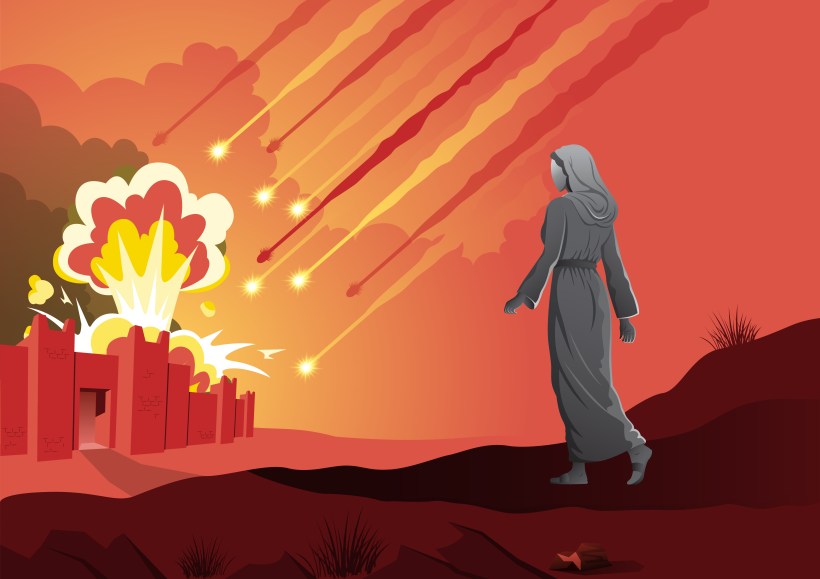
Before Genesis 19 where we find the story of Sodom & Gomorrah is the story in Genesis 18 of Abraham’s and Sarah’s magnanimous hospitality to three strangers who turn out to be “the Lord” and two angels on their way to Sodom. The one called “the Lord” remained behind talking to Abraham, while the two angels continued on to Sodom where Lot sees them sitting in the gateway of the City. Lot calls to them, invites them in, and shows them the same magnanimous hospitality Abraham showed. (Gen. 19:1-3)

The parallel stories of Abraham’s and Lot’s hospitality that mirror each other in the same pattern set the stage for God’s judgment on Sodom. That’s when things go sideways. The men of the town surround Lot’s house and demand that Lot send them out to be violated sexually.

Abraham welcomes strangers with generosity and honor. Lot does the same, but the men of Sodom do the opposite. They rage against the strangers. They threaten Lot because he is a “foreigner”, and they warn Lot they will treat him worse than what they plan to do to the strangers in Lot’s house if he doesn’t comply.

The town’s men resented Lot being there and resented him inviting other foreigners into his house. They formed an angry mob to humiliate and violate Lot’s guests as a warning: you are not welcome here!

As Ezekiel says, the reason for this conduct is because they were arrogant, overfed and unconcerned about others. They did not help the poor and the needy. Worse, they didn’t just turn the foreigners away; they didn’t just drive them out of town; they tried to punish, violate, humiliate, and shame them.

The Lord told Abraham that He was responding to the great outcry against Sodom & Gomorrah due to the grievousness of their sin. (Gen. 18:20) Such an outcry is the response of people when great injustice is done to them. The scene echoes the story of Cain and Abel when Abel’s blood was said to cry out from the ground in Genesis 4. The same word is used for Israel’s outcry under Egyptian oppression in Exodus 2.

God responds to injustice. God responds specifically to the outcries of people who bear the oppression of that injustice, and God judges those who are unrepentantly responsible for that injustice.

The story of Sodom & Gomorrah is a story of God’s judgment on sin, but it isn’t sexual sin that brings God’s judgment. The sin that prompted God to respond was the sin that caused people to cry out under the weight of injustice.

Jesus later confirms that the sin of Sodom & Gomorrah is inhospitality when he warns towns who do not welcome his followers, saying, “it will be more bearable for Sodom and Gomorrah on the day of judgment than for that town.” Jesus says this in Mathew 10 when he sent his 12 disciples to proclaim the kingdom of God, and Jesus says it again in Luke 10, when he sent out 72 of his followers to heal the sick and proclaim the kingdom.

The context of these statements was the hospitality (or lack of it) shown to his followers. There is no mention of sexual sin—only refusal to welcome, refusal to listen, refusal to be hospitable.

Ezekiel is very specific about the sin of Sodom & Gomorrah:

“This was the sin of your sister Sodom: pride, excess of food, prosperous ease—but she did not help the poor and needy.”

Pride. Comfort. Indifference. Not just lack of empathy, but downright cruelty to the poor and needy – the vulnerable. That is the Bible’s own summary of the sin of Sodom & Gomorrah.

The angels/foreigners in the story of Sodom & Gomorrah are just one category of vulnerable people. Elsewhere, Scripture often mentions widows, orphans, and foreigners together to describe the vulnerable people in the ancient near east who God desired His people to protect and watch over – because God’s heart is to protect and watch over the vulnerable and needy.

Yes, there is sexual sin in the story, but the root of that sin is hostility toward others. In the context of the story as it sits in the greater context of the previous story about Abraham’s radical hospitality, the sexual act is a weapon of the people of Sodom. They use it out of arrogance, out of desire to guard their own wealth and comfort from foreigners, to humiliate, shame, and drive out the foreigners who dared to encroach on on what they had. It is the final expression of a society that idolized comfort, wealth, and lifestyle. Because they didn’t love God, they didn’t love people.

Sodom wasn’t destroyed because it was too permissive. Sodom was destroyed because its people were too proud, too full, too comfortable, and too cruel in their efforts to protect what they had from outsiders.

God heard the cries of those crushed by that system—and He acted.

That’s what makes this story disturbingly relevant today. The sin of Sodom isn’t ancient or obscure. It shows up whenever a society values its own prosperity above allegiance to God and clings to its own comfort, despises the stranger, and silences the cries of the vulnerable to protect what it has.

And that should give Christians (and non-Christians alike) pause in 2025 in the United States of America. God is no respecter of persons. People reap what they sow. God did not spare the people of Israel from His judgment when they repeatedly gave in to idolatry (putting their own interests above God’s interest) and oppressed their neighbors. He will not spare a country or a even a group of believers who do that.

The good news is that God is always, always faithful. He is aways just to forgive those who ask to be forgiven and repent of their ways. I pray that we can be such people.


The Dilemma of God Demanding Justice from Beings Incapable of Meeting God’s Standard

There is one critique of the Christian notion of sin and the justice of God that is troubling on its face. That key critique for anyone who claims that God demands justice for sin is that God is seemingly unjust to require justice of beings who can’t measure up.

Many modern people bristle at the Christian idea of sin, and they bristle even more at the idea that God would punish sinners. Frankly, I think many modern people simply don’t understand what sin is and who God is.

But, that aside, there is one critique of the Christian notion of sin and the justice of God that is troubling on its face. That key critique for anyone who claims that God demands justice for sin is that God is seemingly unjust to require justice of beings who can’t measure up.

Alongside the notion that the God of the Bible and demands judgment for not measuring up to God’s just standard is the notion that all people are sinners who don’t measure up. In fact, the New Testament is fairly read to say that people are incapable of living up to God’s standard.

The doctrine of original sin says that we are all corrupted because the sin of Adam and Eve has been passed down generation after generation. Even if we don’t believe in the doctrine of original sin, however, the Bible is clear from the Old Testament to the New Testament that human beings don’t measure up to God’s standard:


They have all turned aside; together they have become corrupt;
    there is none who does good,
    not even one.

Psalm 14:3


They have all fallen away;
    together they have become corrupt;
there is none who does good,
    not even one.

Isaiah 53:5


as it is written:

“None is righteous, no, not one;
   .
 All have turned aside; together they have become worthless;
    no one does good,
    not even one.”

Romans 1:10-12


Jesus said, “No one is good except God alone.” (Mark 10:18 (NIV)) Yet, he says, “Be perfect … as your heavenly Father is perfect?” (Matthew 5:48)

This is the dilemma: How can we be perfect?! “To err is human” the bard once said, and so it seems we are imperfect by our very nature.

Many people reject the idea that God can be just and demand justice from people incapable of measuring up to the standards God’s justice demands. They say it would be unjust for God to demand justice from beings who have no ability to act other than they do, and so fail to meet God’s standards.

God seems to be acting unfairly to demand that we meet His standards when we are 1) created beings, 2) born into sin, and 3) incapable of living up to the perfection God requires.

Other questions tumble after these thoughts: Why didn’t God create us perfect? If we are born sinful, how can God blame us for being sinful? If we are incapable of being perfect, how can God punish us for our imperfection?

Continue reading “The Dilemma of God Demanding Justice from Beings Incapable of Meeting God’s Standard”

What Does the Church Have to Do with Judging Outsiders? Politics, the Gospel and Whose Side Is God On?

Paul said, “What business is it of mine to judge those outside the church?”

Paul said, “What business is it of mine to judge those outside the church?” (1 Cor. 5:12) This is where my mind went when I watched An (Un)Civil War: The Evangelical Divide posted online recently by CBS News. In the next moment, I was asking question Joshua asked the commander of the army of the Lord: “Are you for us or for our enemies?” (Joshua 5:13)

If you know the Lord’s answer to Joshua’s question, think about it for a moment. The subject here is the modern form of evangelicalism that is highlighted in the CBS piece linked above: hyper patriotic, nationalistic and political. I will come back to the Lord’s response to Joshua before I conclude. (You can read the passage now if you are too curious to wait.)

I hardly watch the news anymore, and CBS is certainly not my “go to” news source. I don’t have one. The portions of the CBS piece that are ringing in my head are the clips of the evangelical leaders preaching and explaining themselves in their own words.

I do understand that these clips are selected and don’t represent all that these leaders stand for or all that they might say. What they reveal, though, is enough to move me to write.

The clips show various preachers unapologetically “speaking the truth” from the pulpit, which the commentator calls “sermonizing a brand of social conservatism defined by conspiracy and apocalyptic rhetoric”. The words of the commentator are not what catch my attention, but they should be noted for the way they are perceived.

The piece focuses on what is described as a “power struggle” in evangelical circles. That is how the world sees the difference in opinions by evangelicals: a power struggle inside Christianity “at war within itself”.

One firebrand pastor (Greg Locke) touts the amount of support for his position, seeming to affirm the perception that it’s all about power and influence. In the world of politics, the number of evangelical constituents (over 1 in 4 Americans) is a matter of power and influence to political pundits. Locke’s comment and the concern expressed in the media piece align on that basis.

(I question whether 1 in 4 Americans are really evangelicals in the way I and most people of genuine faith define evangelicals. The statistic is a political one, not a religious one, but that is a topic for another day.)

One pastor is heard saying, “But we shouldn’t talk politics in religion. Says who? Satan?! That’s the only way they control us!”, he says. “To get us to be silent.”  

Indeed, power, influence, and control are at the center of this phenomenon. At the same time, Locke claims that the Bible is the issue, “Here is what the Bible says. Boom! We’re going to go with it!”

Locke views himself as fighting for the Bible, fighting for ‘God and country”, trying to wrestle the United States out of the grip of the left and Satan. But, is that really what is going on? What about the Bible?

Are they actually preaching what the Bible says?

There is so much to be said here, but I want to focus on just three things: 1) what the Bible says; 2) what the message of the Gospel is; and 3) whose side God is on in this struggle.

Continue reading “What Does the Church Have to Do with Judging Outsiders? Politics, the Gospel and Whose Side Is God On?”

The Plans God Has for Us – Part III

Even in the midst of the very Judgment of God, God desires to bless us! He is every appealing to us to listen to Him and respond to Him. 


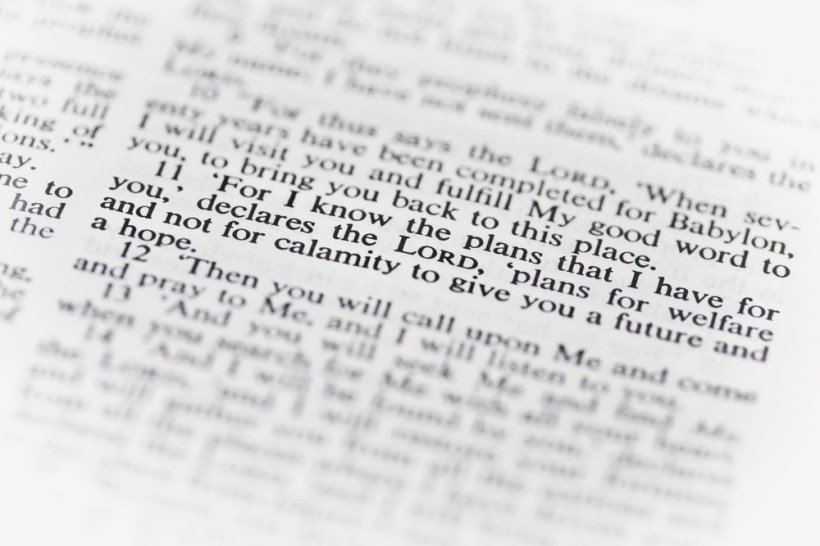
In the previous two blog posts on The Plans God Has for Us, we considered the fact that the often-quoted verse about the plans God us for us – plans to prosper us and to give us hope and a future (Jeremiah 29:11)[1] – should be viewed in historical context. (Part I) That historical context was the 900-year history of disbelief and disobedience of God’s people ending in 40 years of warning of impending judgment that culminated in the judgment coming to pass with the Babylonian conquest of Jerusalem and exile. (Part II) In this post, I will try to draw some conclusions in the application of this verse and relevance to our modern lives.

This letter was the message of God through the prophet, Jeremiah, to God’s people that He gave them at the very beginning of their exile. In this letter, God tells them that they will remain in exile for 70 years![2] In fact, this shocking statement – you will be here 70 years – is the statement that immediately precedes the famous verse we all know:

“’For I know the plans I have for you,’ declares the Lord, ‘plans to prosper you and not to harm you, plans to give you hope and a future.’”

In a sense, God is telling them, “I’ve got good news and bad news. The bad news is that I have imposed my judgment on you, and it will last 70 years. But the good news is that I have plans for you, good plans to prosper you and to give you hope and a future.

Thank about it: 70 years….

In an age in which the average life expectancy was about 35 years, that’s two generations! For the vast majority of the exiled people, this meant their lives would end in captivity. What kind of hope and future is that?!

The United States has been a country for less than 250 years, and our oldest ancestors in this country (unless you are Native American) go back only 400 years. The people of Judah had roots in their land going back almost 1000 years!

These were dire times, and this people had just lost everything. But even in the midst of this horrific circumstance, we need to look carefully at what God is saying. Just before announcing that this judgment thing is going to last 70 years, God gives them instructions:

“This is what the Lord Almighty, the God of Israel, says to all those I carried into exile from Jerusalem to Babylon: ‘Build houses and settle down; plant gardens and eat what they produce. Marry and have sons and daughters; find wives for your sons and give your daughters in marriage, so that they too may have sons and daughters. Increase in number there; do not decrease. Also, seek the peace and prosperity of the city to which I have carried you into exile. Pray to the Lord for it, because if it prospers, you too will prosper.’”[3]

Imagine the 40 years of warning and the weight of that impending doom on those who actually took it seriously. As with most things we fear, the fear is worse than the reality.

During this time of judgment in exile in Babylon, God says to them, basically, “Don’t despair! Go about your lives. Embrace the circumstances into which I have brought you. Live life. Make plans. Bless those around you, seek to better the community in which you find yourself, and I will bless you.”

Even in the midst of the very Judgment of God, God desires to bless us! He is ever appealing to us to listen to Him and respond to Him.

Continue reading “The Plans God Has for Us – Part III”

How Can God Judge Good People: Postscript

 (c) Can Stock Photo

(c) Can Stock Photo

I have attempted to explore the issue of God’s judgment in three previous articles, not from the viewpoint of a theologian, but from my own limited perspective. Much of what I write is simply exploring the boundaries of issues. I may or may not have it right, but I am striving for understanding and greater clarity.

The title of the series is loaded. “Good” can be a relative term. When it comes to ultimate things, there is only one standard of goodness, and that standard is God. We do not measure up; therefore the question, itself, is flawed. We need to understand the problem so that we can begin to understand the solution.

The typical objections and issues people have with the notion of judgment and hell comes from not understanding the nature of God and nature of people.

God is good and God is love and God can be trusted. Challenges to God’s judgment misapprehend who He is. Everything flows from that.

Continue reading “How Can God Judge Good People: Postscript”