Jesus, Is Still Shaking the Church Like He Shook the First Century Religious Leaders

Righteousness and justice are the foundations of God’s throne. They are the building blocks of His character.

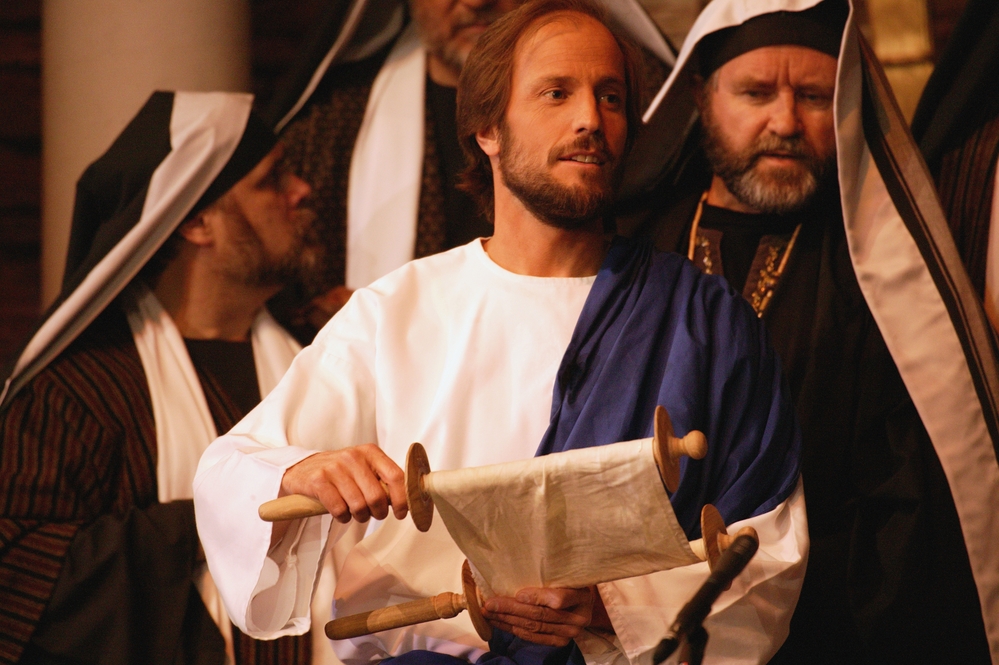
I wrote about A Mic Drop Moment in First Century Galilee back in March of 2020, referring to the passage in Luke 4 in which Jesus read from the Isaiah Scroll in the synagogue in Galilee where he announced his public ministry. I have been focused on that passage since the spring of 2019, when I was drawn to it for a talk on doing justice.

I am still continually drawn to that passage. I intended to write more about justice when I wrote that piece in March of 2020, but it wasn’t until July that I actually got around to it. (See Evangelicalism and Injustice Part I, Evangelicalism and Injustice Part II and The Need for the Church to Address and Injustice, for example.)

The world changed dramatically between March 2020 and July 2020. COVID shut down commerce and isolated people. The George Floyd killing happened in June, and we were embroiled in nationwide unease and unrest. The need for justice in a spiritually dry and parched world was quite evident, then, as the scabs of centuries of racial injustice were torn open and bleeding.

The focus of my writing has been on my fellow evangelicals. They way I have phrased this introduction may strike discord among my church family (or so I imagine as I write this).[i] I am convinced, however, these things are centrally important to God and how the body of Christ lives out the Gospel in the world.

Righteousness and justice are the foundation of God’s throne. Mercy and truth go before Him. (Ps. 89:14)

If we want to get closer to God, to know Him better and to be like Him in this fallen world, we need to focus on these: righteousness and justice. They are the twin pillars of God’s character.


This morning, Jeff Frazier’s sermon at Chapelstreet Church in Batavia, IL was on the same passage in Luke 4 that I have been reading periodically since 2019.[ii] I focus on a particular emphasis today that prompts this article, but let me set the scene first.

The entirety of the passage is found at Luke 4:16-30.  I encourage you to read it now or read my mic drop description of it (as if Jesus read from the Isaiah scroll in a neighborhood church today).

The key points for this article are that Jesus went to his home synagogue and read from the Isaiah scroll to his “own people” who knew him well. When Jesus said the messianic message of that passage was being fulfilled in their hearing, the people asked him, “Aren’t you Joseph’s son?”

Still, they spoke well of him and marveled at his “gracious words”. (Luke 4:22) Then Jesus made them uncomfortable by foretelling that they would taunt him and reject Him, adding, “[N]o prophet is acceptable in his hometown.” (Luke 4:23-24)

I imagine the synagogue went quiet quickly. They probably looked at each, thinking or saying things, like,

  • What is he saying?
  • Did I just hear him right?
  • Weren’t we just saying how he has grown up into a fine young man?
  • Did  he just accuse us of rejecting him?
  • We haven’t done anything!
  • We weren’t even thinking those things!”

But Jesus didn’t stop there. He turned the heat up a notch! This is where things really got dicey in his hometown synagogue. This is the point I am seeing in this passage today – something for us to think about in the American Church today.

Jesus referenced two passages of Scripture and two stories of revered Hebrew prophets. His citation to Scripture may not have raised eyebrows. It was the application of them that riled up his synagogue audience.

Continue reading “Jesus, Is Still Shaking the Church Like He Shook the First Century Religious Leaders”
Thoughts on the Sanctity of Human Life, Injustice and Unity in the Church in the United States

God’s desire is to save us, to have relationship with us, to renew our minds and to conform us to His image.

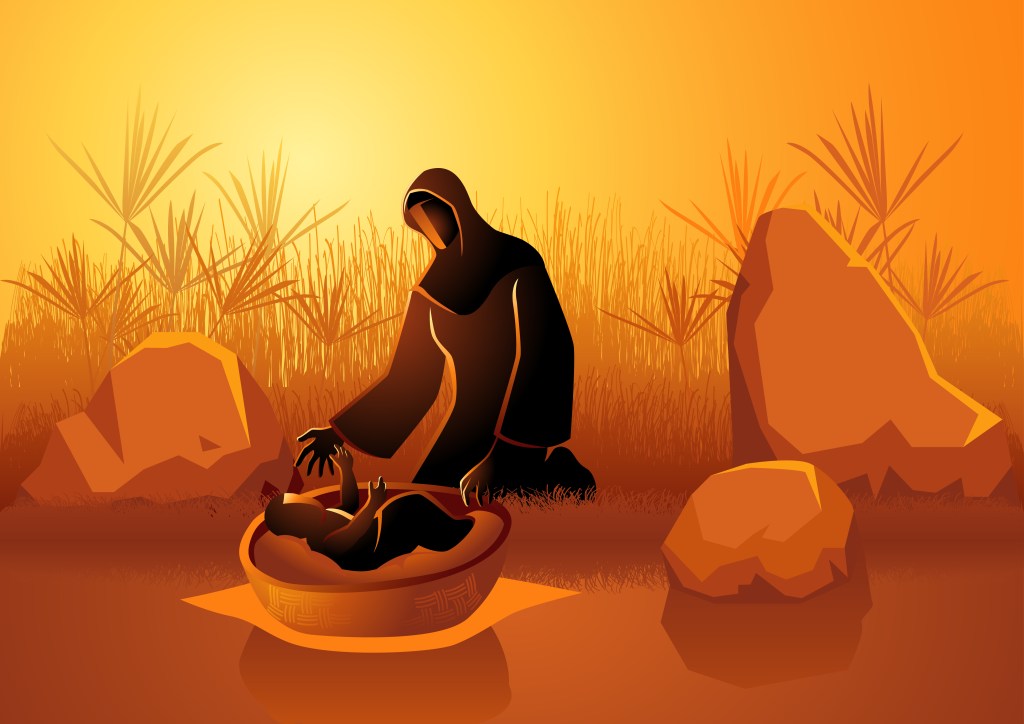
Reading in Exodus today, I observe that two passages in the first two chapters have poignant application to the Body of Christ in the United States today. I see two predominant lines of injustice in the United States to which the Church collectively has given its attention that are identified in these first two chapters of Exodus.

At the same time, the Church is divided on justice issues. I don’t say this to condemn or to be judgmental. It’s simply a fact that I think we need to recognize soberly, honestly and humbly.

We might find many examples, but the one that comes to mind – the one that is, perhaps, most poignant in this given time – is the division between black and white and the division between supporters and and non-supporters of Donald Trump.

I know: I said one example, and it seems I given two here. These are two examples, but they coalesce into one. The proof for that is in the statistics that show that approximately 80% of white evangelicals support Trump, and approximately 80% of black “evangelicals”[i] do not support Trump.

Now, I recognize that these statistics are sweeping generalizations, but generalizations do tell a story. There is some reflection of truth in them. I also don’t mention Trump to be divisive here. The example simply is provided for illustration.

Churchgoing African Americans can be as theologically conservative on things like what it means to be born again as white evangelicals, but their individual and collective experiences give them a different perspective on life. Their view of the world and injustice is different than their white, evangelical counterparts, for the most part, and influences them to have different political affiliations.

My reading in Exodus (which I will get to) is timely because today is Sanctity of Life Sunday. I didn’t even realize it when I did my daily reading after I woke up this morning.

I didn’t realize it until I tuned into the Manchester (NH) Vineyard Community Church service this morning. I have never tuned into their services, until today, though I know people affiliated with them. When I set out to participate in a more local church service, I believe God drew my attention away to this one.

It was a great message, and I gained some perspective from it that, perhaps, God wanted me to have in writing this. With that introduction, let me explain the passages in Exodus that prompt my writing. Those texts include Exodus 1 (about the killing of babies) and Exodus 2 (about slavery).   

I will take these things one at a time and draw some conclusions consistent with the burden God has placed on my heart over the years. In another article, perhaps, I will explain how my perspectives have changed and, hopefully, shed some light on how the church can come together in the full council of God to advance His justice and righteousness.

Before I get into my immediate thoughts, though, I need to say that I speak with no condemnation in my heart

Just as Jesus said to the woman caught in adultery that he did not condemn her, I am reminded that God sent his son into the world not to condemn the world; God sent His son into the world so that the world might be saved through him. (John 3:17)

I do not say these things to condemn anyone because Jesus has redeemed us!


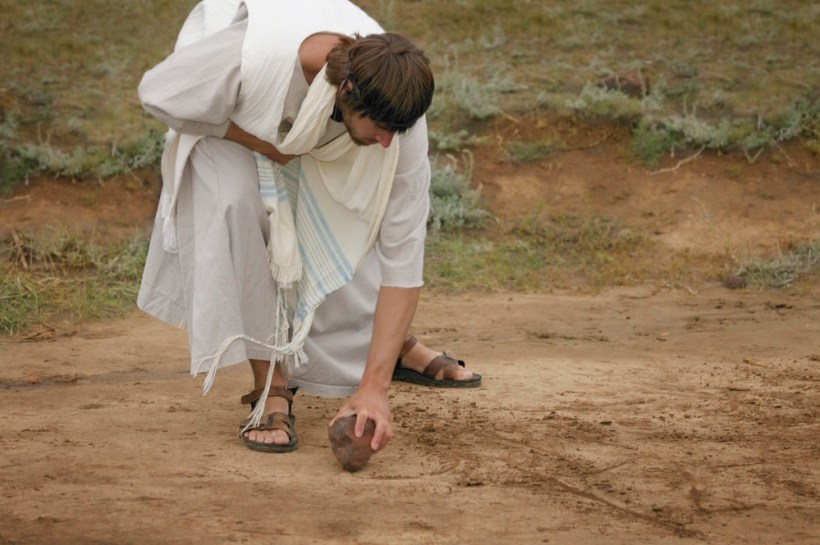
In the story of the woman caught in adultery, the Pharisees and Sadducees brought her to Jesus to challenge him because the Law required her to be stoned. They wanted to see what Jesus would do, but Jesus seemed to ignore them and began writing in the sand.

Some people believe that Jesus may have written the Ten Commandments out in the sand. When he looked up from from writing, Jesus “invited” them, saying, “He who is without sin may cast the first stone.” Then, he continued writing in the sand.

Some people believe he was writing down the sins those men had committed. They would say the men walked away silently because they realized that no one is without sin.


The wages of sin for every person is death.

Whatever he wrote, we know how the dialogue went next. “Jesus stood up and said to [the woman], ‘[W]here are they? Has no one condemned you?,” John 8:9) When she replied, “No one”, Jesus said, “Neither do I condemn you.” (John 8:10)

Jesus didn’t condemn the men either, because he told us he came not to condemn, but to save. I imagine that, Jesus would have received, forgiven and invited the men to follow him, if they had stayed and repented.

God desires to save us, to have relationship with us, to renew our minds and to conform us to His image. Our sin is the reason God became flesh and died for us. He came not to condemn, but to demonstrate His great love for us and to save us from the sin that enslaves us.

One last thing before I get into what I believe God has put on my heart to share: salvation and sanctification is a process. It starts where we are. When we are born again, God begins to work in us to will and to act according to His purposes and to conform us to His image, but we start that process in different places.

One point made in the sermon today, is that “a person doesn’t have to be pro-life to be saved”. People are saved by grace; it’s a gift that we haven’t earned. There will be no exam in heaven we must answer satisfactorily for salvation. It’s already been accomplished for us by Christ’s death and resurrection.

At the same time, if we are born again, God has begun a work within us. He has begun to renew our minds, and change our hearts, and we have begun to learn to think God’s thoughts after Him and become like Him.

With that said, I will address the two texts I read today in Exodus 1 and 2 that speak to me about the Church, collectively, in the United States. In writing this article, my hope is to provide some biblical basis on which we might begin to bridge the divide along racial and political lines and come together as the body of Christ. I hope to provide some perspective and understanding that will bring us together in Christ.

Continue reading “Thoughts on the Sanctity of Human Life, Injustice and Unity in the Church in the United States”

The Danger that Good, Upstanding, Religious People Face Today

Who are the Pharisees of today and their religious followers?

From the sermon I heard today, I have come away with a couple of things that I am meditating on. One is personal – my need to get over myself. The need to crush the pride in me that wants to appear respectable. The desire to be liked and honored by people.

I believe God is speaking these things to me, and I need to listen and respond. I can’t be afraid to speak the truth because of fear that some people will think me a fool. I need to be willing to appear foolish for the sake of the Gospel. I confess these things today (and ask you to pray for me if you feel so compelled).

The other thing is something God has been laying on my heart over many years now. A more prophetic message for the church, the body of Christ. It goes all the way back to my earliest reading of Scripture when I noticed that the focus of the harshest words Jesus spoke was directed at the Pharisees – the religious leaders (and presumably the people who followed them).

The year 2020 will be remembered as a year of hardship and difficulty, but the ways in which people reacted to those hardships may be longer lasting than those difficulties themselves. I am thinking specifically of the religious people in the United States when I say this.

The sermon today was about the story of Zacchaeus, the wealthy tax collector who was short in stature. A more despised person one might not be able to imagine.

Tax collectors were sellouts to the Roman occupiers for personal gain. They not only collected the taxes imposed by Roman rulers; they used their position and authority to collect more than was required to line their own pockets.

Tax collectors took advantage of the Roman occupation to gain wealth for themselves at the expense of their own people. They turned their backs on fellow Hebrews and were, therefore, despised by them (and likely by the Romans as well for the same reason).

We might have a modicum of compassion and understanding for a prostitute washing the feet of Jesus with her tears, or the adulterous, Samaritan woman at the well, or the woman caught in the very act of adultery who was brought to Jesus to be stoned. Zacchaeus, though, was a man people could love to hate.

He was an outcast of a different kind. He was an outcast by choice. He wasn’t a victim of his own weakness. He exploited the weakness of his own people to benefit himself. He was alone because he chose exploitation as a way of life over family, friendship, compassion, faith and doing what was right.  

It’s no wonder that, when Jesus called Zacchaeus down from the tree and invited himself to his house for a meal and fellowship, the crowd was indignant.

Of all the people Jesus could have chosen, why in the world did Jesus choose this guy? Didn’t he know who he was and what he did for a living?

Nothing would likely have stirred the indignation of moralistic, self-righteous, religious people then this!

Many of the reputable, religious people were not fans of Jesus to begin with. They had already judged who Jesus was. He came from Nazareth, a small town of little influence and lesser reputation. Does anything good come out of Nazareth.[1] (John 1:46)

Many more “common” people were saying Jesus was a prophet, and even the Messiah. Jesus seemed to encourage them. He didn’t say he wasn’t, but the Messiah was supposed to come from the line of David, the seed of Jesse, from Bethlehem, the City of David, the place where David was born.[2]

The religious people knew their Scripture.

They knew their Scripture, but they jumped to conclusions about Jesus that were incorrect. Though Jesus was from Nazareth, he was also born in Bethlehem like David was, and his parents were from the line of David.

The Pharisees applied their undeniable scriptural knowledge, but they judged by appearances, rather than giving more careful consideration to the matter. Once they came to a conclusion about Jesus, they were unwilling to consider alternative possibilities.

The crowd present when Jesus invited himself into the home of Zacchaeus included Pharisees and moralistic, self-righteous, religious followers of the Pharisees (the blind leading the blind, as Jesus called them), who criticized Jesus for associating with tax collectors (and other sinners). Some of these people were very likely in the crowd that would demand that Pontius Pilate “crucify him”!

Does anyone doubt that Jesus would be just as critical of the moralistic, self-righteous, religious people today if he lived among us?

Have people changed in the last 20 centuries? The writer of Ecclesiastes suggests the answer when he said, “There is nothing new under the sun”, centuries before Jesus.

Who are the Pharisees of today and their religious followers?

We struggle with the same issues and the same tendency for sinfulness. Jesus came to his very own! The Hebrews, of all the people on earth who should have recognized him and received him, but they didn’t recognize him. They rejected him.

They knew the Scriptures. They could recite Scripture by heart. They studied to show themselves approved. They knew right doctrine. They were proud of their religious heritage. They were pious, moral, upstanding, devoted, reputable people who had not sold out their birthright for personal profit.

But they were dead wrong about Jesus.

These are words of warning to us today. Perhaps, we should not to be so quick with our judgments or so slow to consider other alternatives.

The warning is all the more poignant for the religious among us. The interaction of Jesus with the Pharisees and the moralistic, self-righteous, religious people in the first century crowds is no less a warning for moral, upstanding, reputably religious people today than it was for them.

Continue reading “The Danger that Good, Upstanding, Religious People Face Today”

Listening While White: Respecting the Image of God in People of Color

Jesus, himself, broke down the dividing wall that separates people.

I feel like I need to begin this with a request to “hear me out” (at the risk of appearing apologetic). I am a white, evangelical Christian. The title recognizes who I am. I realize as I wade out into these waters that they are treacherous today. Many are the rocks on which ships with good intentions have been dashed.

Should I even have to say that people of color bear the image of God? I shouldn’t have to say it, but I feel I need to say it nevertheless. Why?

That impulse, alone, signals to me that something is not quite right.

I just read that slavery is “the original sin of the United States”. It colors our past (pun very much intended). It continues to leave its imprint on the present. I have to admit to finding some truth in that statement.

Obviously, race is the subject of this article. But not just race. I am writing about Christianity, generally, and the church universal and global.

If any group ought to be able to speak with wisdom into the race issues that we continue to face, it should be the Church, right? Yet, we see as much segregation in the church as a whole as we do in society.

Spoiler alert. God has been orchestrating the entire course of human history from the beginning to this end:

“A great multitude that no one could count, from every nation, tribe, people and language, standing before the throne and before the Lamb….”

Revelations7:9

This is God’s endgame. Are we onboard with the plan?

This is the unity for which Jesus prayed for his followers. (John 17:20-23) Jesus, himself, broke down the dividing wall that separates people. (Eph. 2:14) God began working though His Holy Spirit toward His endgame soon after Jesus died and rose again, working through Paul and the disciples to break down the wall between Jew and Gentile. (See Reflection on the Unity for which Jesus Prayed: Peter & Cornelius)

We won’t participate in achieving the unity for which Jesus prayed without recognizing the big picture – the kingdom of God – and the foundation on which we all stand – Jesus. Given the purposeful prayer of Jesus for unity among his followers, disunity that exists in the Church means we have failed in some way to focus on the things that should unify us. We have allowed differences that shouldn’t matter to divide us.

If the endgame includes people “from every nation, tribe, people and language”, then we should not allow those kinds of differences, at least, to divide us. Racial matters should be a non-issue. We should be one in Christ, right?

Continue reading “Listening While White: Respecting the Image of God in People of Color”

On Working to Establish a Biblical Orientation on Issues of Race

Christianity transcends all the natural barriers to human relationships.

Although the dust has settled (somewhat) on racial tensions since the maelstrom that was kicked up in the wake of the George Floyd killing in Minnesota, no one should think that the issue has been settled or will go away without some resolution. The country, including the church community, is divided on the facts, and issues, and measures that should be employed to resolve the racial tension. Even people of good will are uncertain on how to move forward.

A predominant worldview has emerged in academia that is filtering down into local communities that frames the issue and potential resolution in terms of oppression. This worldview divides the world into the oppressed and their oppressors. The people who hold to that narrative are aggressively pushing for change.

They push the people they are define as the oppressors in the racial tension. The people defined as the oppressors are white and predominantly “Christian” in name (at least). As with the laws of nature, so with the laws of natural human tendencies: when someone pushes, people being pushed naturally push back.

So it is today that the predominantly white, Evangelical Church in the United States is feeling the pressure of the desire and demand for change to address the racial disparities and tensions in our world, and we are tempted to reflexively push back against that pressure.

But how should we respond?

I have written on the differences between Critical Race Theory and biblical justice. We should recognize that the worldview based on the CRT framework is not biblical, though many of our brethren of color and more progressive white Christians have embraced it.

I submit, though, that CRT has come to prominence in the African American churches and among progressive white churches because the Church, generally, has left a vacuum, and “nature abhors a vacuum”. We have failed to recognize and address in a biblical way the deep and lasting pain of racism that continues to exist in a society that only recognized equal rights for African Americans in my lifetime.

The failure of the Church to address racial issues left room for a completely secular and unbiblical approach to sweep in. So, other than acknowledge our failure, what do we do now?

Continue reading “On Working to Establish a Biblical Orientation on Issues of Race”