Are Reason & Faith in God Contradictory Terms?

Looking for a Sunset

I began taking notes on a series of hard questions posed to Tim Keller by some heavy hitting interviewers that is posted to the Veritas Forum. I thought I would take my notes and create a series of quick answers to these hard questions, but I got sidetracked by the first question: Aren’t faith and reason contradictory terms?

The question took me back to college when I first began to wrestle with this question.

Implied in that question is an assumption that the only rational conclusion of reason is disbelief in God. Reason is defined by Merriam Webster as “the power of the mind to think and understand in a logical way.” Faith is defined as the “strong belief or trust in someone or something.”

Note that faith is not defined in relation to evidence or reason, and this common definition of faith is not antithetical to evidence of reason either.

Reason (logic) depends on a premise, and premises are often tautological. Many premises are susceptible of proof, but many are not. The premise that the natural world is the totality of all reality is a premise many believe to be true, but it is not susceptible of proof (at least not scientific proof, unless one believes that science, which is limited to the study of the natural world is capable of proving that nothing other than the natural world exists though it is limited to the study of the natural world).

Continue reading “Are Reason & Faith in God Contradictory Terms?” →

Born is the King

born-is-the-kingThe people walking in darkness
have seen a great light;
on those living in the land of deep darkness
a light has dawned.
You have enlarged the nation
and increased their joy;
they rejoice before you
as people rejoice at the harvest,
….
For to us a child is born,
to us a son is given,
and the government will be on his shoulders.
And he will be called
Wonderful Counselor, Mighty God,
Everlasting Father, Prince of Peace.
Of the greatness of his government and peace
there will be no end.
He will reign on David’s throne
and over his kingdom,
establishing and upholding it
with justice and righteousness
from that time on and forever.

spoken by the prophet Isaiah around 700 BC

Christmas Thoughts

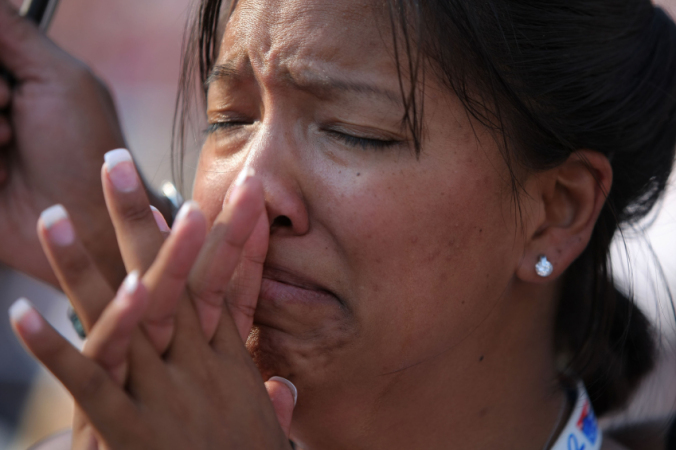
The incongruity of the festive, popular trappings and the dark, lonely struggles makes this time of year especially difficult for many people.


This time of year is a joyful, festive time of year filled with family time, days off from work, presents given and received and celebration. At least, that is how this time of year is billed to be; and I often it is, for most of us, for the most part, a joyful time of year. But, life does not live up to the billing or expectations.

I checked Facebook this morning when I awoke. A high school classmate reports that his wife, mother of his daughters, went to “be with the angels” last night. A friend I met in college said goodbye to his mother yesterday, and she is no longer with us today. An acquaintance I know through wrestling described a colleague, only a few months past 50, who passed yesterday. Another high school friend asked for prayers for his daughter, going on two weeks in the hospital. Another friend from high school started chemo again this week.

These are only a few examples of the people I know who are struggling with loss, sickness and other difficulties right now. I am painfully aware that this joyful time of year is anything but happy for people dealing with financial difficulties, health problems and other struggles.

The incongruity of the festive, popular trappings and the dark, lonely struggles makes this time of year especially difficult for many people.

In quiet reflection, we know that the reason for celebration is not in the popular trappings. We celebrate the birth of Christ and the hope He brings.

Implicit in the story of God shedding his omnipresence and exchanging an eternal, omnipotent position for the humble circumstance of a dependent, newborn baby is that God is not unaware or unable to identify with us in our humanity and our struggles. He is not unaccustomed to our suffering.

Jesus Christ became Emmanuel, God with us, as foretold many centuries before. He lived as we live and suffered as we suffer. Jesus felt the weight of depression and the sorrow of loss. He intimately knows our struggles.

As we consider and celebrate the birth of Christ this time of year, we should focus our attention on the context and the purpose for which He was born – to bear in Himself the sin of mankind, to carry that burden to the cross, to die and to bury the sin he carried; and to rise, conquering both sin and death.

The hope that Jesus gives us is not the promise of no suffering, but the promise of redemption and new life on the other side of the suffering.

We have a God who is not distant. He, even is now, poised at the door to each of our hearts. He is still Emmanuel – God with us. He is also now God in us – if we are willing to receive Him. I pray that you would open the door to Him today and receive the hope He has to give.

Though life is often marked by loss, sorrow and suffering, we have hope. I wish and pray for God to fill each person this Christmas Season with that hope and, with it, peace and comfort and, yes, even joy.

In the midst of the difficulties and struggles, we can have joy. Our hope is not in the things of this world. Our hope is anchored in something deeper and more substantial.

In that vein, have a Merry Christmas everyone!


Connecting to Our Theological Hardwiring

Children come by the inward conviction of God naturally; adults have a harder time with it.

Julia4 at Hershey

Jesus instructed His disciples to let the children come to Him, and he instructed His disciples to become like children to enter the Kingdom of God.

“Faith comes naturally and normally for children. Certain assumptions about the world and its creator seem to arise intuitively at an early age. For example, children tend to believe in spiritual beings without any trouble, and they distinguish between fairy tales and God in sophisticated ways. They believe the world was made for a purpose and by something greater than human beings. Essentially we have the beginnings of theology in some way hardwired.” (A statement from an article in Christianity Today, The Great Congruence of Science and Faith.)

Faith and science hardly seem to be a place of congruence in popular opinion and even less congruent with that popular opinion is a statement about theology hardwired in children. Or is it? Charles Darwin once commented that he could not trust his “inward conviction… that the Universe is not the result of chance”. (The Darwin Project, UK) Darwin recognized the “hard wiring”, but he rejected it on the basis of evolutionary principles. (See also Random Thoughts on Evolution)

Children come by this inward conviction naturally; adults have a harder time with it. Modern thinkers might say that other things are hardwired into people, such as sexual tendencies and gender identity. The Bible recognizes that we are born into sin, which is why we need to be born again. There is something in the way a child approaches the world, however, that is productive toward faith.

I am reminded of the words of Jesus, “Let the little children come to me, and do not hinder them, for the kingdom of God belongs to such as these.’” (Luke 18:16) The context in which He spoke those words is as important as the words themselves. People were bringing small children to Jesus for him to pray for them, but the disciples attempted to keep them away from the important things Jesus was doing. Instead of continuing with whatever he was doing, Jesus stopped and welcomed the children. Then he said something even more important:

“‘Truly I tell you, anyone who will not receive the kingdom of God like a little child will never enter it.’” (Luke 18:17)

God does not want us to lose that “theological hard wiring”. We have in us a tendency toward sin as well as a tendency toward faith. Paul would say that truth is written on our hearts so we are without excuse, regardless of the intellectual gyrations we use to quash that hard-wired tendency to believe in God.

As we get older, we become more self-sufficient and more self-important. We become more dependent on ourselves, and we have a hard time allowing anyone or anything to dictate to us. We blaze our own trails. We chart our own courses. We separate from our parents, and we separate from God. We lose the wonder of childhood. We become jaded, hardened and tend toward the sinful tendencies if we are not careful.

Disillusioned Politician


Is it any wonder that we need to be born again to see the kingdom of heaven? We need a different approach than what we would naturally take as we get older. We need to become like a child to approach God, stripped of the self-reliance that we strive to attain as adults.

Faith opens the eyes of the believer up to the wonder of God in the world. The congruence of faith and science and reason and the reality in which we live is natural and normal, but we live in a fallen world that is tending away from God, tending toward destruction and decay. Faith takes us in a different direction.

At the end of the day, what is more reliable about our ability to reason over that inward conviction? Both reside in finite human frailty. One will take us to the gate of heaven; the other will take us no further than the grave. One is not more prone to error than the other. Or is it?

Without faith we will not see the kingdom of heaven. If we will not receive what God has provided for us like a child, we cannot grasp it at all. The congruence of faith and truth is found in God who can only be worshiped in spirit and truth. Spirit requires that we let go of our own conceptions that are limited by our finite experience and knowledge and ability to reason and open up to what God would reveal to us.

To approach the world like children, as God instructs us, is to remain open to correction and change of direction as God would guide us. In fact, in the same context in which Jesus said we must be born again, Jesus added:

“‘You should not be surprised at my saying, ‘You must be born again.’ The wind blows wherever it pleases. You hear its sound, but you cannot tell where it comes from or where it is going. So it is with everyone born of the Spirit.’” (John 3:7-8)

If we are to be born again, born of God, was must be open to the influence of God, to the direction of God. We must be sensitive to the wind, the breath of God, His Holy Spirit. Like a child, we may not always be happy or understand the direction that we are going, but a child would not think to go in any direction apart from God in whom and on whom we are utterly dependent. We need to plug into the hard-wiring God built into us that is connected to Him and walk away from any sinful tendencies we might have.

Reprinted from NavigatingByFaith