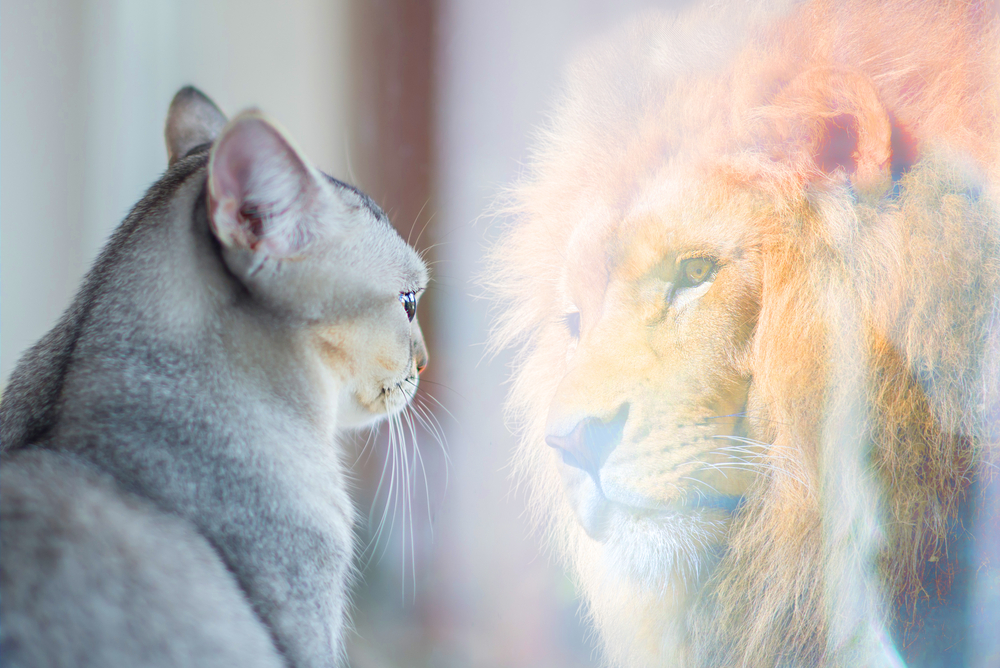
Can a Tiger Change Its Stripes? A Tale of Scorpions and Frogs

A scorpion stings. That’s what they do. That is their nature.

Joel Furches recently posted the following on social media:

“The Aesop’s Fable I have come to most appreciate over the years is ‘The Frog and the Scorpion’. If you’re not familiar, it’s about a scorpion who asks a frog to swim him across the water. The frog doesn’t want to, because he’s afraid of getting stung. The scorpion points out that if he stings the frog, they will both drown. So the frog swims him, the scorpion stings the frog, and they both drown. Why? Because it is the nature of scorpions to sting.

“The moral: things act out of their nature, even at the expense of their self-interest. Or as my dad used to say, ‘a person will never do something that person wouldn’t do.’ Which, I suppose, could be rephrased, ‘A person’s always going to do what that person does.’ (My dad would say ‘peoples are peoples’)” 

A more modern version of this idea is the tiger that can’t change its stripes or the leopard that can’t change its spots. The fable or adage stands for the proposition that people don’t change their essential nature or character.

We shouldn’t expect people to be anything other than who they really are. Despite what the scorpions tells you, the scorpion IS going to sting you. That’s what they do. That’s who they are.

Fables are meant to teach life lessons. They are meant to pass on wisdom to help us avoid having to learn it the hard way – from experience. (Though it seems most of us need firsthand experience to learn wisdom, and even then we don’t always get it.)

Still, these fables are helpful in allowing us to crystallize those hard learned lessons into memorable, graphic illustrations that we can hold onto and pass on – if only people would listen. Right?

But what is the lesson? Don’t trust people? Fool me once, shame on you, but fool me twice shame on me!

Fables teach us something about human nature, but fables don’t give us specific guidance tailored to our own dilemmas. We still need wisdom to apply the lessons we learn (however we learn them) in our particular circumstances. “A word to the wise” requires wisdom for its application in our own lives.

Aesop may have been a very wise man (if there really was an Aesop), and Aesop’s fables carry with them the ring of truth, but truth is often more complicated than we like to think it is. Just when you think you understand the laws of physics, quantum mechanics comes along and turns everything inside out.

The fable of the Frog and Scorpion is something we identify with, but Scripture provides a different angle. Scripture provides guidance to deal with the scorpions in our lives.

Continue reading “Can a Tiger Change Its Stripes? A Tale of Scorpions and Frogs”

Jesus, Justice and Bruised Reeds

God’s justice is characterized by His preference for mercy.

“Behold, my servant whom I have chosen, my beloved with whom my soul is well pleased. I will put my Spirit upon him, and he will proclaim justice to the Gentiles. He will not quarrel or cry aloud, nor will anyone hear his voice in the streets; a bruised reed he will not break, and a smoldering wick he will not quench, until he brings justice to victory; and in his name the Gentiles will hope.” (Matthew 12:18-21 ESV)

These are the words of the prophet Isaiah (Isaiah 42:1-4) that Jesus fulfilled according to the Gospel of Matthew. They are echoed in the baptism of Jesus when the Holy Spirit descended on Jesus in the form of a dove, and a voice from heaven spoke and said: “This is my beloved Son, with whom I am well pleased.” (Matt. 3:17)

Of particular note to me is the statement that Jesus came “to proclaim justice to the Gentiles”, and he will “bring justice to victory; and in his name the Gentiles will hope!” For the past two years, I have read through the Bible from start to finish focusing on the theme of justice (among other things).

The theme of justice is everywhere in scripture when you look for it! Justice is particularly embedded in the messianic prophecies and promises. The coming, the life, the death and the resurrection of Jesus is all about righteousness and justice.

I believe that modern Americans have a warped view of what justice means, biblically. We tend to view justice as retributive and punitive. Justice in a popular sense tends to mean people getting their just desserts, but that isn’t what we see in Scripture.

The prophets warned God’s people about two main things: idolatry and failing to do justice. Obeying God’s commands fit more or less into these two broad categories of worshiping God alone and doing right by people.

These are the two great categories of the ten commandments. Thus, the law is summed up this way: love God and love your neighbor.

When God executed judgment on His people in the OT in keeping with the warnings spoken by the prophets, He always did so in hope that His people would turn from their wicked ways. Judgement as a subset of justice was redemptive. It’s aim was to guide people back to right relationship with God and to each other.

Overarching God’s justice is His preference for mercy, because His ultimate desire is for relationship with us. He desires also that we would have healthy relationships with each other (love your neighbor) in the same way. A right relationship with God and with our other human beings (and the world we live in) is the essence of what it means to be righteous and just.

Continue reading “Jesus, Justice and Bruised Reeds”

From the Image of God to the Likeness of God: from the Old Self to the New Self

In Genesis 1:27, we learn that God created human beings in His image:

God created mankind in his own image,
    in the image of God he created them;
    male and female he created them.

In his letter to the Ephesians, Paul urged them (and us),

to put on the new self, which in the likeness of God has been created in righteousness and holiness of the truth.

Ephesians 4:24

Thousands of years have passed between those two statements. God has been working out His purposes in the heavens and the earth from before the beginning. Creating man in His image and establishing man in His likeness has been central to that purpose.

Reading the words of Paul in Ephesians, which clearly echo the description of God’s creation of human beings, got me thinking about the difference between the image of God that was built into human beings from the start and the “new self” that Paul urges us to put on that is created in the likeness of God.

What is the image of God in which we were created?

What is the likeness of God that we must put on? (A new self created in righteousness and holiness)

Why must we put on a new self created in the “likeness of God” when human beings have already been created in the “image of God”? What is the difference between the two?

I try not to lean on the assumptions that come first to mind when approaching Scripture. I often go back and work through a text looking for things I haven’t seen before. As I write this, I don’t know exactly what I will find. I was intrigued by the echoes of Genesis in Paul’s words to the Ephesians and prompted to dig into them freshly.

Continue reading “From the Image of God to the Likeness of God: from the Old Self to the New Self”

The Life and Death Reality of the Gospel

From hatred to love, from death to life

I murdered him for Allah but God raised him up to forgive me…. SHOCKING STORY OF REDEMPTION!! One for Israel: Israeli Arabs and Jews. United in the Gospel

The Gospel is a matter of life and death. The phrase seems cliché, even to a “religious” person. We believe it to be true, but the present reality of it may seem to be an abstraction. A non-religious person might understand the statement metaphorically and allegorically, but would subscribe little or no “weight” to it. Neither sense, however, captures the utter significance of the Gospel of Jesus Christ as it played out in the lives of people I want to introduce.

In the first story of a Muslim man who hated Christians and Jews, and in the second story of a Jewish woman who hated Muslims, the utter significance of the Gospel is brought home in a way that abstract ideas and allegorical concepts simply cannot accomplish. The Gospel is Living Water in a wasteland of hatred and death.

The first story of a Sudanese Muslim who hated everyone who was not Muslim will make your skin crawl as he describes a brutal, unprovoked attack by him and others against a Christian classmate that left the man broken, bleeding, and dying. He was unashamed and proud of what he had “done for Allah”.

An encounter with two Coptic Christians whose prayer healed his cousin as his cousin lay on his own deathbed opened his eyes to a new reality. When those Christians told him, “The real miracle is that God wants to change your heart,” the paradigms by which he had always viewed the world shifted forever.

The decision he made to embrace Yeshua cost him his family and life as he knew it. He became dead to them. They even performed a ceremonial funeral for him. The life that he formally knew was over, but the new Life he received was riches in comparison.

You will want to watch and listen to him tell his story in his own words, not just to describe this journey, but to listen to him tell the rest of the story about the man he left for dead. The power of the Gospel is so much more than a matter of mere metaphorical importance.

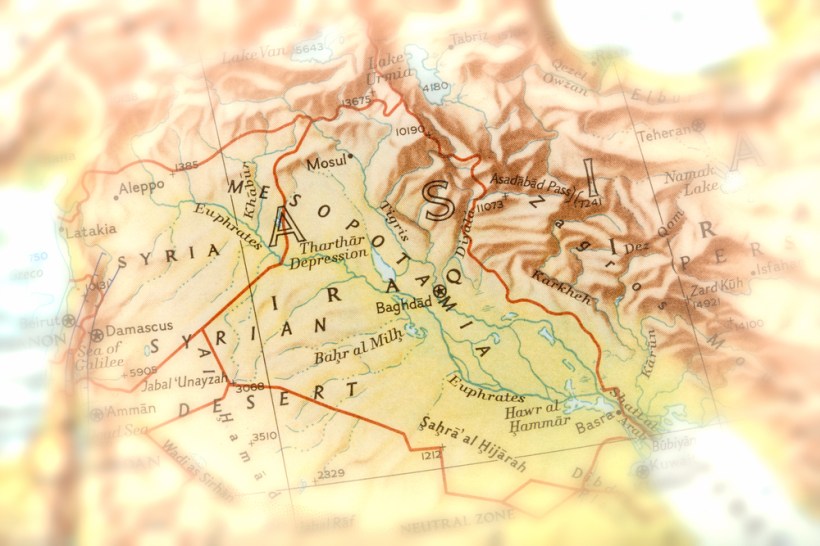
The second story comes from a Jewish woman who lived in a world in which Arabs “were the enemy”. She grew up in the midst of the complex political struggle in the Middle where all around her was war and death.

From her earliest memories, her world was unsafe. She was terrified of Arab people who lived in villages surrounding the settlement in which she grew up. The Arabic language was a reminder to her, when she heard it, of shooting, rocks flying and people dying. She learned to hate Arabs.

The Rabbis painted a picture of the God of the Bible as “a very cold and distant God, almost robot-like, a type of God that wouldn’t think twice before he would strike you down with a lightning bolt if you dared to tear a little piece of toilet paper on Saturday, which is forbidden in Judaism”. What she saw of God in the Bible, though, when she read it for herself, seemed different to her.

She grew up in a world of hatred and fear. When she was introduced to the God of love and hope, her world changed completely. She no longer hates or fears Arab people. She learned that the Lord of life is the God of Arabs and Jews alike.

These stories of people who grew up in environments that fostered hate against each others’ “tribes” show how the Gospel changes people so dramatically that those who once hated now love. Paul’s words are true of Jesus:

“But now in Christ Jesus you who once were far off have been brought near by the blood of Christ.  For he himself is our peace, who has made us both one and has broken down in his flesh the dividing wall of hostility….” (Eph. 2:13-14)

The Story of Abraham and God’s Redemption of all Mankind – Part 3

God works through the hot mess of our choices to accomplish His purposes.

I am covering some ground in the story of God’s redemption of mankind through Abraham and his progeny. This is a story of God redeeming people because of their faith (trust in God), not for their morality. It’s also a story of God accomplishing His purposes through people despite their messiness.

Abraham and Sarah were childless for 25 years after God gave Abraham promises that He would give Abraham a land for his descendants who would be numerous and that God would bless all the nations through them. On the basis of those promises, Abraham left his ancestral home and journeyed to “a land God would show him”. 

Through those 25 years, Abraham and Sarah continued to live their lives. The moved many times over those years, in and out of the land of Canaan, which is the land God promised to them.

Abraham wavered at times. At one point, when God visited Abraham, Abraham questioned God, saying, “[Y]ou have given me no offspring….”, and telling God (as if He didn’t know), “[T]he heir of my house is Eliezer of Damascus.” (Gen. 15:2-3)

God God didn’t waiver, though. He renewed the promise, saying, “This man shall not be your heir; your very own son [out of your loins] shall be your heir.” (Gen. 15:4)

Years went by. Abraham and Sarah had been in Canaan for 10 years already (Gen. 16:3), and Abraham was 86 years old. (Gen. 16:16), Sarah got impatient and offered her Egyptian servant, Hagar to Abraham, they conceived, and Hagar gave birth to Ishmael. (Gen. 16:1-4)

We find out that this wasn’t God’s plan either, but He let 13 more years go by before letting Abraham know. Abraham was 99 years old when God visited again!

God said again, “I will make you very fruitful; I will make nations of you, and kings will come from you” (Gen. 17:6); and, “The whole land of Canaan, where you now reside as a foreigner, I will give as an everlasting possession to you and your descendants after you.” (Gen.17:8)

How would Abraham have taken that?

God had made this same promise since Abraham stood in Haran imagining the land God was promising him and the descendants he would have, but that was 25 years ago! Abraham was now 99, and Sara was 90. The likelihood that the two of them would have a child together was slim to none.

Thirteen years prior, Abraham had a son. His name was Ishmael. Surely, Abraham thought by that point that Ishmael was the fulfillment of God’s promise, but it wasn’t so.

After almost 25 years, God finally gave Abraham some missing details:

“As for Sarai your wife, you are no longer to call her Sarai; her name will be Sarah. I will bless her and will surely give you a son by her. I will bless her so that she will be the mother of nations; kings of peoples will come from her.” (Gen. 17:15-16)

Abraham’s response isn’t surprising:

“If only Ishmael might live under your blessing!” (Gen. 17:18)

Abraham had not only come to accept that Ishmael was the fulfillment of God’s promise; Abraham had embraced it. Abraham undoubtedly loved Ishmael, despite his abrasiveness. Thus, his response to God’s new direction was, “What about Ishmael?!”

Why did God wait 25 years from the time He first promised to fill the land with Abraham’s descendants to give Abraham all the details? Why did God let Abraham sleep with Sarah’s servant and have another son first? Why did God wait 13 more years before letting Abraham in on the additional details?

I’m not sure I know the answers. It was obviously God’s plan, though, to fulfill the promise to Abraham through Sarah, his half-sister, the daughter of Abraham’s father, Terah. God also wasn’t done with using the line of Terah in this story.

Continue reading “The Story of Abraham and God’s Redemption of all Mankind – Part 3”