For the Shame of the Gospel

We have gotten away from the pure and simple message of the cross, that Jesus came to die for sinners and give them salvation.


We live in interesting times. We have taken for granted for a long time in the United States that we are a Christian nation. Christians are fighting through political means and social media to convince this country of those origins and to hold on to them. This is a fight that began in my memory back in the 80’s, and maybe even before that.

In my opinion, we have moved past those Christian origins. Perhaps, the minute we had to start fighting to preserve that legacy we had already lost the fight. I am not sure we will ever go back, short of a revival orchestrated by the Holy Spirit.

Current attitudes in popular culture and among the intellectual elite in the US view the Christian heritage negatively, to the extent that people admit we have a Christian heritage. People view Christians as privileged, wielding power and oppressors. This is the cultural Marxist dialectic that has been playing out since at least the 70’s and maybe before that. We are losing the cultural war.

The positive connotation that went with the word, Christian, in our past has been replaced with a negative. This has largely happened in my lifetime.

Christians have not always deserved the positive connotation that unquestioningly followed the reference, Christian, in the past. Neither do Christians deserve the negative assumption that is evident today. While people may have previously distinguished the errors and failures as departures from the actual message of Christianity, that “nuance” (not that it is very nuanced) is largely lost today. Moderns increasingly equate Christians with those errors and failures. The exceptions have swallowed the rule.

We (Christians) need to be mindful in this realization that we can be guilty of the same failure to recognize the distinctions and nuances in “others” as well. Most Muslims, for instance, are not terrorists. Most feminists, gays, transgender people and others who do not see the world as we do are just trying to find meaning and purpose, healing from their pain and happiness in life. They aren’t the enemy. They are people Jesus died for.

But, I digress.

Christians are the most oppressed religious group in the world today, but you wouldn’t know it in the United States. It isn’t the kind of news that gets published (often) or that anyone wants to hear. It doesn’t fit the current narrative on Christianity that has developed in the west.

It may be that people don’t want to hear it because Christians have had it pretty easy. Christians in the US are viewed as the reigning social oligarchy. The consensus that has building for some time is that Christianity needs to be toppled from it privileged position.

Indeed, Christianity has enjoyed a long and enduring influence in the west, and especially in the US, unlike most other areas of the world, but Christians are now on the defensive as the “others” renounce allegiance and demand recompense. It seems to defy common understanding in the United States to consider Christians an oppressed group.

That privilege doesn’t exist in most other parts of the world where, ironically, Christianity is now growing fastest. While the Church in the US is losing ground rapidly to “the nones”, Christianity is growing fastest and gaining ground most in countries in which the environment is harshest and most hostile to the message of Jesus.

Maybe this is a reflection of the difference between the Gospel of Jesus and the institution of the Church – the difference between the simple message of the Gospel and the burdensome structure of religion. Just as “others” no longer understand the difference between the Gospel message and the errors and failures of the Church, equating and conflating the two, the Church in the US has largely lost its way, no longer shining like a bright light on the hill Jesus intended.

The vestiges of Christian power and influence are evident everywhere, but it is a blighted and obsolescent infrastructure that is crumbling and washing away. The cultural momentum that is gaining steam threatens to displace it altogether from its place of position in the social commonwealth. The current oligarchs in that marketplace of ideas threaten to oust the Christian voice and banish it from the public square.

As I survey the voices I hear, what I see that is being opposed is the voice of Christian power and influence. It isn’t so much the Gospel, but all the infrastructure that has been built up around it, that people are opposing. People don’t (very often) object to the simple message of the Gospel, They don’t even know or appreciate what it is! The message of the Gospel is effectively hidden behind the more public scaffolding of the Church.

Continue reading “For the Shame of the Gospel”

Three Things Christians Need to Know about the Border Wall Emergency

The wider the door swings open to presidential exercises of power that fly in the face of the constitutional protection of the separation of powers, the harder it will be to undo the change in the fabric of our democratic form of government.


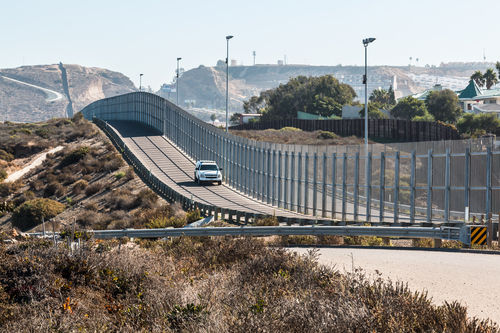
Christians, evangelical and otherwise, are on both sides of the wall debate. I have my own firm convictions based on hours of studying the Scriptures for help. But this blog isn’t about the propriety of building a wall on the southern border; it’s about the declaration of an emergency to get it done. We need to be wise. We should not be rash. “He who hurries his footsteps errs” (Proverbs 19:2); and “Do not go out hastily to argue your case; Otherwise, what will you do in the end, When your neighbor humiliates you?” (Proverbs 25:8) Following are three things that Christians should consider about the declaration of an emergency to build a border wall. Continue reading “Three Things Christians Need to Know about the Border Wall Emergency”

Responding to the Journalism Crisis

business man, aggressive businessman with typewriter and hammer


via Responding to the Journalism Crisis

We need to find a way to talk to each other, and not just at each other. We need to listen to each other, and not be so quick to respond with a put down or a label or an accusation.

Does the present state of journalism reflect our current attitudes toward “others”? Or does it drive our attitudes towards “others”?

Maybe its both.

We wouldn’t “buy” what they are dishing out if we didn’t want it. The biased, clickbait journalism that we consume is, sadly, just a reflection of who we have become. Maybe it’s who we always were?

At the same time, the hyped up “news” outlets of the left and right variety to a good job of stirring up the division among us and agitating us to fight with other. We toss meme hand grenades into the social media foxholes of our “enemies”, while we rally the troops hiding in the trenches, and they are fueled by a nonstop barrage of media assault.

What are coming too? Where does this end? Is there any hope?

Maybe, but we need to become better news consumers and demand more integrity from our news sources. We need to become more astute in our vetting of fact and eschew the clickbait headlines that dangle in front of our faces like garish posters advertising the wolf boy at a carnival.

We need to stop ourselves from posting knee-jerk responses on social media, labeling those we disagree with and parroting our talking points without really listening or engaging in independent thought. We need to stop the us-against-them mentality when it comes to politics and worldviews and see ourselves as neighbors who have different perspectives.

Yes, worldviews matter, but relationships matter more. No one is winning the social media debates. We are losing our connectedness in a sea of disjointed, clamorous rancor.

Followers of Christ should seek to set a better example. We should be salt and light. We should have a different flavor. We should not defined by the political positions that we hold, but by the love and character of Christ.

Authority from Above in Politics

Do we trust in the authority from above?


As I was listening through the last four chapters of the Gospel of John this morning, these words impressed me:

He entered his headquarters again and said to Jesus, “Where are you from?” But Jesus gave him no answer. So Pilate said to him, “You will not speak to me? Do you not know that I have authority to release you and authority to crucify you?” Jesus answered him, “You would have no authority over me at all unless it had been given you from above. Therefore he who delivered me over to you has the greater sin.” John 19:9-11 ESV

This was part of the interchange between Pontius Pilate, the Roman prefect of the province of Judea, and Jesus. Pilate exercised the authority given him over the province of Judea in the Roman empire given him by the Roman authorities, but Jesus said, “You would have no authority over me at all unless it had been given you from above.”

I am reminded of God’s sovereignty. Jesus came to die. That was his plan. Pilate was just part of the plan. We tend to think of Pilate in negative terms as we look back at the story, but he was just part of God’s plan, like Judas.

These things remind, also, of President Trump. Though I voted for him, I have been hyper critical of him. Though Christians supported him in large numbers, Trump has not displayed the kind of fruit we should expect from a God lover; he might even be a wolf in sheep’s clothing. Though Christians have also been divided over Trump the zealot, he prevailed and is our president.

Of course, Barack Obama was also our president. So was Bill Clinton. If we really believe the words that Jesus spoke to Pontius Pilate, these men would not have authority as presidents of the United States unless it was given from above.

Continue reading “Authority from Above in Politics”

The Southern Baptist Leadership is Touting Citizenship in the Kingdom of God


I feel like I have been a broken record lately. I am always coming back to the same themes, but I think they are important for such a time as this. I am finding that I am not alone. Just this weekend, David Platt, head of the Southern Baptist Convention’s International Mission Board, said:

“We have not gathered today, even on July 4th week, to celebrate our U.S. citizenship. That’s not what the church does because that’s not who the church is. The church doesn’t unite around an earthly citizenship. The church unites around a heavenly citizenship.
“We have more in common with a Syrian Christian sitting next to us than an American atheist. Far more in common forever. Which is why when we gather as a church, we put aside national, even political differences.”

I strongly believe he is right. Following is an article with more details:

The head of the Southern Baptist Convention’s International Mission Board, David Platt, recently stated that churches in the United States are supposed to focus on Jesus Christ and not nationalism. Preaching at the Virginia-based McLean Bible Church on the Sunday before Independence Day, Platt focused his sermon on the issues of “God and government” and […]

via David Platt Says Churches Shouldn’t Promote National Pride; Jesus Is King, Not Obama or Trump — BCNN1 WP