I am involved in a faith-based, legal aid organization that provides legal services and holistic help to people who live on the margins of our society. We call it “Gospel justice”, which is the title of a book written by Bruce Strom, the founder of the organization, Administer Justice. (See Gospel Justice)
I am aware of the skepticism with which Christians, and conservatives, generally, view “social justice”. While many Christians of the more liberal stripe (and liberals generally) embrace social justice, more conservative and orthodox Christians have learned to disassociate from social justice.
Labels, however, aren’t ultimately very helpful. We also have to be careful on this subject that we don’t mix politics and the faith to the determent of the Gospel. This is true on both sides of the political aisle. Our politics shouldn’t define our faith (though they should be informed by our faith).
Following Jesus takes us down a narrow road that doesn’t often follow the wide paths the world has beaten. Those wide paths angle left and right, but we want to follow Jesus down the narrow path he has made for us. These and other thoughts have inhabited my thinking for months as I have thought about writing on the topic of social justice. I guess it’s time I do that.
The Dead Sea Scrolls on display at the caves of Qumran that located on the edge of the Dead Sea in Israel.
“These are the things you are to do: Speak the truth to one another, render true and perfect justice in your gates. And do not contrive evil against one another, and do not love perjury, because all those are things that I hate – declares the Lord.” Zechariah 8:16-17
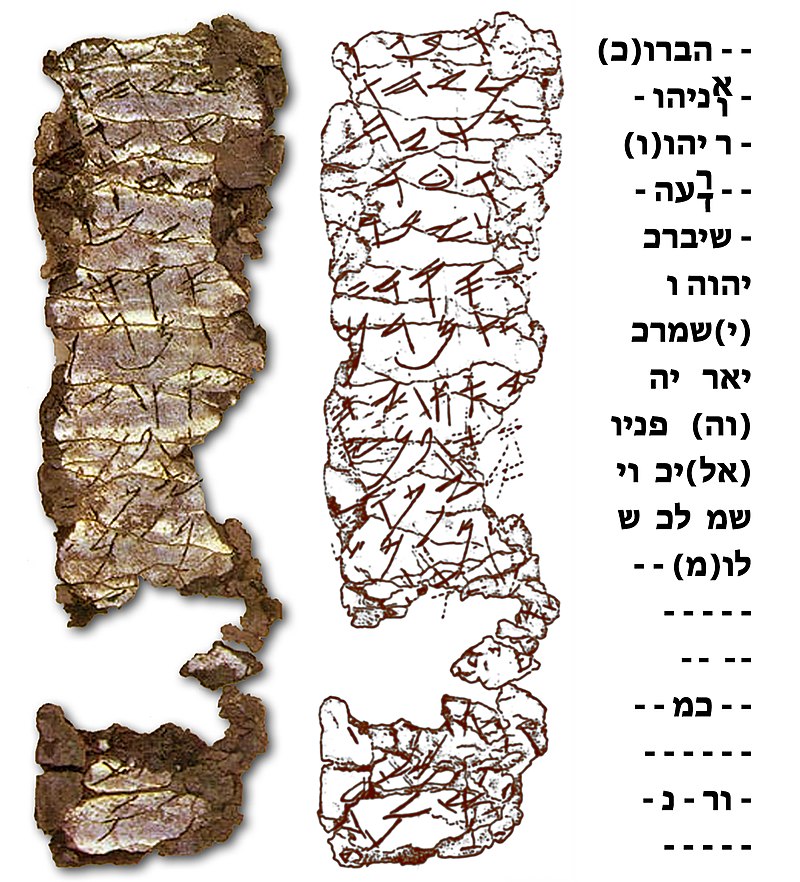
A major archaeological discovery was made recently in some remote caves in the Judean Desert. Among the discoveries were, coins from the time of the Bar Kochba Revolt, the skeleton of a child dating back some 6,000 years, and a 10,000-year-old exceptionally well-preserved basket. (From 2,000-year-old biblical texts found in Israel, 1st since Dead Sea Scrolls by Rossella Tercatin for the Jerusalem Post, March 16, 2021.)
These items were found in “the Cave of Horror” in the Nahal Hever area of the Judean Desert. The Nahal Hever is an intermittent stream in in the West Bank, flowing from Yatta to the Dead Sea. At the head of the stream are two caves, the “Cave of Letters“, and, further up, the “Cave of Horror“.
Though the caves are hard to access, looters have raided them over the years. Archaeological efforts many years ago netted portions of the Book of Numbers, Psalms and Deuteronomy. Until recently, people might have assumed all artifacts to be found in those caves had already been removed.
The Greek scroll of the minor prophets found at Nahal Hever may even be the most significant find to date. Some date these fragments in the 50 years before Christ, and others date them in the 50 years after Christ. We don’t really know, but scholars seem to agree that the fragments come from “an early revision of the Septuagint in alignment with the Hebrew text”.
Modern archaeological finds continue to affirm Scripture and the continuity of Scripture through the ages. Poignantly for today in these times, the discovery of the scroll of the minor prophets found in the Nahal Hever speaks to an age old theme.
The passage in Zechariah 8 quoted above was found among the fragments. From old, from ages and ages past, we find that God desires truth and justice from His people.
“Speak the truth to one another, render true and perfect justice in your gates.”
I am reminded that God’s desire for justice and truth from His people is the same today as it was then. I think about these things after listening to the Disrupters podcast in which host, Esau McCalley, spoke to the political strategist, Justin Giboney. As they were talking about faith and politics, I realize that justice and truth continue to be priorities for God, and only the circumstantial details have changed.
I have been writing about and trying to convey a certain perspective on racial tensions in the United States and the response of the American Church to those tensions, but I fear I haven’t done the subject justice. An article I read today on the Resurrecting Orthodoxy blog[i] clarifies some of my thoughts and prompts this article. The author’s subject is the book by Esau McCaulley, Reading While Black: An African American Biblical Interpretation as an Exercise in Hope. (I have the book and intend to read it myself.)
To be clear, when I speak of the “American Church”, I am really thinking of my own tribe – the evangelical church in the United States. My tribe are the people who the political pundits label “white evangelicals”. I don’t like the label, but these are “my people”.
That doesn’t mean that “we” don’t have African Americans, Mexicans and Latin Americans, and other ethnicities in our churches. We do. We are predominantly white, though, in the evangelical circles in which I have grown up as a Christian since my college days.
Regardless of the pews where people sit on Sundays and who sits next to them, political pollsters separate “white evangelicals” from their black counterparts. This distinction has bothered me because it suggests a false dichotomy.
Theologically, we agree on primary beliefs. The article on Reading While Black describes those beliefs as follows:
“(1) The importance of a ‘born again’ experience, (2) The demonstration of the Gospel in missionary and social reform efforts, (3) The upholding the authority of Scripture, and (4) The stress on the sacrificial death of Jesus as what makes redemption possible.”
On this point, Joel Edmund Anderson, the author of the article says:
“… I couldn’t help thinking as I read the book that the book’s title is actually misleading, for I didn’t see McCaulley’s black ecclesial interpretation of the Bible to really be a black interpretation at all. It was a faithful Christian interpretation.” (Emphasis in the original)
This observation underscores the main point of my article today: white Christians and black Christians agree many things at the heart of faith. We agree on the necessity of being born again, the missionary nature of the Gospel, the authority of Scripture, and the redemption from sin through the sacrificial death of Jesus on the cross.
We don’t agree, though, on politics, and we vote very differently. Polls clearly show that white evangelicals voted about 80% in favor of Donald Trump, while black “evangelicals” voted just the opposite – about 80% against Donald Trump.
It’s tempting to try to explain that difference away on the basis of conservative and progressive/liberal ideologies and miss the clear common ground in our biblical beliefs. It’s also tempting to blame this difference on race alone. Race surely is a key distinctive. But why?
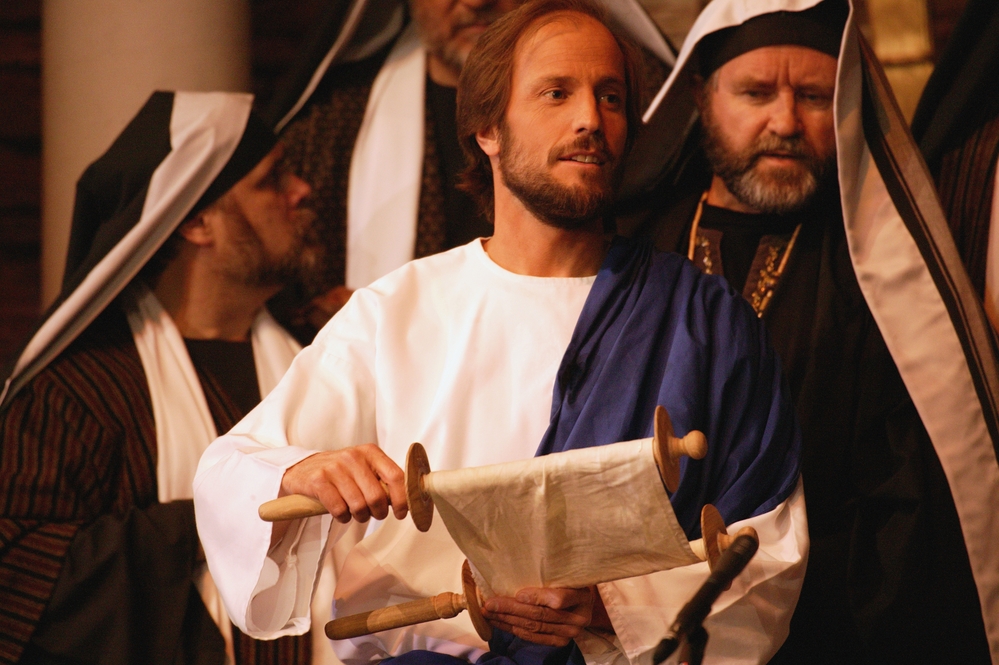
I wrote about A Mic Drop Moment in First Century Galilee back in March of 2020, referring to the passage in Luke 4 in which Jesus read from the Isaiah Scroll in the synagogue in Galilee where he announced his public ministry. I have been focused on that passage since the spring of 2019, when I was drawn to it for a talk on doing justice.
The world changed dramatically between March 2020 and July 2020. COVID shut down commerce and isolated people. The George Floyd killing happened in June, and we were embroiled in nationwide unease and unrest. The need for justice in a spiritually dry and parched world was quite evident, then, as the scabs of centuries of racial injustice were torn open and bleeding.
The focus of my writing has been on my fellow evangelicals. They way I have phrased this introduction may strike discord among my church family (or so I imagine as I write this).[i] I am convinced, however, these things are centrally important to God and how the body of Christ lives out the Gospel in the world.
Righteousness and justice are the foundation of God’s throne. Mercy and truth go before Him. (Ps. 89:14)
If we want to get closer to God, to know Him better and to be like Him in this fallen world, we need to focus on these: righteousness and justice. They are the twin pillars of God’s character.
This morning, Jeff Frazier’s sermon at Chapelstreet Church in Batavia, IL was on the same passage in Luke 4 that I have been reading periodically since 2019.[ii] I focus on a particular emphasis today that prompts this article, but let me set the scene first.
The entirety of the passage is found at Luke 4:16-30. I encourage you to read it now or read my mic drop description of it (as if Jesus read from the Isaiah scroll in a neighborhood church today).
The key points for this article are that Jesus went to his home synagogue and read from the Isaiah scroll to his “own people” who knew him well. When Jesus said the messianic message of that passage was being fulfilled in their hearing, the people asked him, “Aren’t you Joseph’s son?”
Still, they spoke well of him and marveled at his “gracious words”. (Luke 4:22) Then Jesus made them uncomfortable by foretelling that they would taunt him and reject Him, adding, “[N]o prophet is acceptable in his hometown.” (Luke 4:23-24)
I imagine the synagogue went quiet quickly. They probably looked at each, thinking or saying things, like,
What is he saying?
Did I just hear him right?
Weren’t we just saying how he has grown up into a fine young man?
Did he just accuse us of rejecting him?
We haven’t done anything!
We weren’t even thinking those things!”
But Jesus didn’t stop there. He turned the heat up a notch! This is where things really got dicey in his hometown synagogue. This is the point I am seeing in this passage today – something for us to think about in the American Church today.
Jesus referenced two passages of Scripture and two stories of revered Hebrew prophets. His citation to Scripture may not have raised eyebrows. It was the application of them that riled up his synagogue audience.
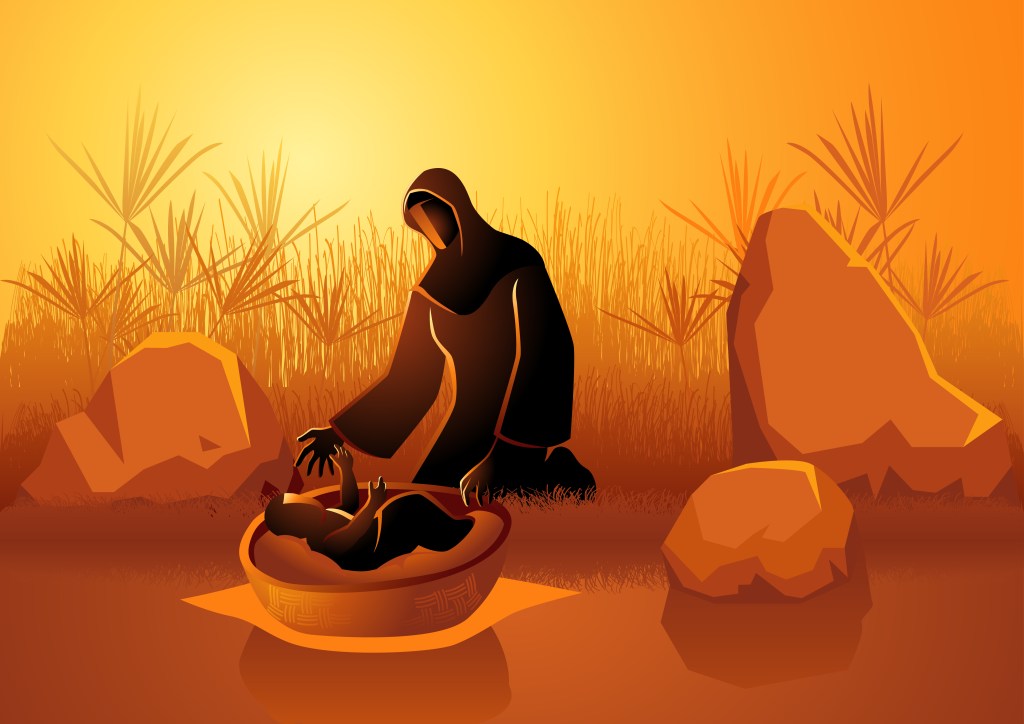
Reading in Exodus today, I observe that two passages in the first two chapters have poignant application to the Body of Christ in the United States today. I see two predominant lines of injustice in the United States to which the Church collectively has given its attention that are identified in these first two chapters of Exodus.
At the same time, the Church is divided on justice issues. I don’t say this to condemn or to be judgmental. It’s simply a fact that I think we need to recognize soberly, honestly and humbly.
We might find many examples, but the one that comes to mind – the one that is, perhaps, most poignant in this given time – is the division between black and white and the division between supporters and and non-supporters of Donald Trump.
I know: I said one example, and it seems I given two here. These are two examples, but they coalesce into one. The proof for that is in the statistics that show that approximately 80% of white evangelicals support Trump, and approximately 80% of black “evangelicals”[i] do not support Trump.
Now, I recognize that these statistics are sweeping generalizations, but generalizations do tell a story. There is some reflection of truth in them. I also don’t mention Trump to be divisive here. The example simply is provided for illustration.
Churchgoing African Americans can be as theologically conservative on things like what it means to be born again as white evangelicals, but their individual and collective experiences give them a different perspective on life. Their view of the world and injustice is different than their white, evangelical counterparts, for the most part, and influences them to have different political affiliations.
My reading in Exodus (which I will get to) is timely because today is Sanctity of Life Sunday. I didn’t even realize it when I did my daily reading after I woke up this morning.
I didn’t realize it until I tuned into the Manchester (NH) Vineyard Community Church service this morning. I have never tuned into their services, until today, though I know people affiliated with them. When I set out to participate in a more local church service, I believe God drew my attention away to this one.
It was a great message, and I gained some perspective from it that, perhaps, God wanted me to have in writing this. With that introduction, let me explain the passages in Exodus that prompt my writing. Those texts include Exodus 1 (about the killing of babies) and Exodus 2 (about slavery).
I will take these things one at a time and draw some conclusions consistent with the burden God has placed on my heart over the years. In another article, perhaps, I will explain how my perspectives have changed and, hopefully, shed some light on how the church can come together in the full council of God to advance His justice and righteousness.
Before I get into my immediate thoughts, though, I need to say that I speak with no condemnation in my heart
Just as Jesus said to the woman caught in adultery that he did not condemn her, I am reminded that God sent his son into the world not to condemn the world; God sent His son into the world so that the world might be saved through him. (John 3:17)
I do not say these things to condemn anyone because Jesus has redeemed us!
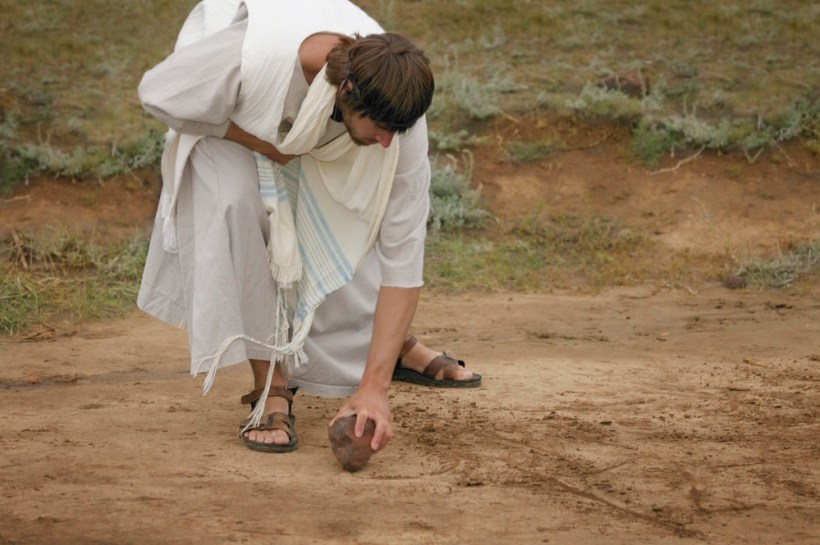
In the story of the woman caught in adultery, the Pharisees and Sadducees brought her to Jesus to challenge him because the Law required her to be stoned. They wanted to see what Jesus would do, but Jesus seemed to ignore them and began writing in the sand.
Some people believe that Jesus may have written the Ten Commandments out in the sand. When he looked up from from writing, Jesus “invited” them, saying, “He who is without sin may cast the first stone.” Then, he continued writing in the sand.
Some people believe he was writing down the sins those men had committed. They would say the men walked away silently because they realized that no one is without sin.
The wages of sin for every person is death.
Whatever he wrote, we know how the dialogue went next. “Jesus stood up and said to [the woman], ‘[W]here are they? Has no one condemned you?,” John 8:9) When she replied, “No one”, Jesus said, “Neither do I condemn you.” (John 8:10)
Jesus didn’t condemn the men either, because he told us he came not to condemn, but to save. I imagine that, Jesus would have received, forgiven and invited the men to follow him, if they had stayed and repented.
God desires to save us, to have relationship with us, to renew our minds and to conform us to His image. Our sin is the reason God became flesh and died for us. He came not to condemn, but to demonstrate His great love for us and to save us from the sin that enslaves us.
One last thing before I get into what I believe God has put on my heart to share: salvation and sanctification is a process. It starts where we are. When we are born again, God begins to work in us to will and to act according to His purposes and to conform us to His image, but we start that process in different places.
One point made in the sermon today, is that “a person doesn’t have to be pro-life to be saved”. People are saved by grace; it’s a gift that we haven’t earned. There will be no exam in heaven we must answer satisfactorily for salvation. It’s already been accomplished for us by Christ’s death and resurrection.
At the same time, if we are born again, God has begun a work within us. He has begun to renew our minds, and change our hearts, and we have begun to learn to think God’s thoughts after Him and become like Him.
With that said, I will address the two texts I read today in Exodus 1 and 2 that speak to me about the Church, collectively, in the United States. In writing this article, my hope is to provide some biblical basis on which we might begin to bridge the divide along racial and political lines and come together as the body of Christ. I hope to provide some perspective and understanding that will bring us together in Christ.







 Navigating by Faith