An Exploration of God’s Hiddenness in the Bible

The Bible on the hiddenness of God


Divine hiddenness is an argument suggesting that God does not exist. According to J.L. Schellenberg, if a perfectly loving God exists, He would desire a genuine relationship with every person He creates. A loving relationship requires, at minimum, awareness that God exists, so a perfectly loving God would make Himself known. Some sincere and willing people who want to know God are unable to find sufficient evidence that He exists to believe in Him. Therefore, either God does not exist or He is not perfectly loving.

I don’t buy it. I think the argument is flawed, but other people have provided robust responses to this argument, so I am not going to attempt to provide a counter argument here. I am also unconvinced that arguments are the best way to achieve understanding.

On that ground, I am intrigued by the hiddenness of God, and I am intrigued that the Bible is forthright about the hiddenness of God. The Prophet Isaiah says it plainly: “Truly, you are a God who hides himself, O God of Israel, the Savior.” (Is. 45:15)

The entire Book of Job is about God’s hiddenness. Job assumed that God existed and had blessed him until he lost everything. When Job sought God in the desperation of his circumstances, he lamented, “Behold, I go forward, but he is not there, and backward, but I do not perceive him… I cannot behold him.” (Job 23:8-9)

David, who is held up in the Bible as a man after God’s own heart, lamented the hiddenness of God at various times in his life: “Why, O LORD, do you stand far away? Why do you hide yourself in times of trouble?” (Psalm 10:1); “How long, O LORD? Will you forget me forever? How long will you hide your face from me?” (Ps. 13:1); and “My God, my God, why have you forsaken me?… I cry by day, but you do not answer.” (Ps. 22:1-2)

Those last words were famously echoed by Jesus on the cross. Imagine, Jesus, who demonstrated and expressed the deepest and most intimate relationship with the Father, experiencing the utter absence of God at the moment of his greatest need.

I saw early in a world religion class in college when I wasn’t a believer that the Bible purports to be about the unfolding story of God’s encounter and revelation of who God is to mankind. Elsewhere, I have written about how God found in Abram a man who was able to grasp that the God of the universe is not like the gods of the provincial tribes and nations with which Abram was familiar. (For example, Abraham, Isaac and Paradigm Shift; and The Story of Abraham and Isaac Revisited: Introduction)

The revelation of God unfolded slowly as God needed to dispel notions of divine arbitrariness, capriciousness, brutality, and uncaring of the gods that Abram and ancient humanity understood. The gods of human imagination are no gods at all, and God is noting like ancient Near Easterners imagined.

While it is true that God is completely OTHER, the true God who made the heavens and the earth desires the benefit of and reciprocal relationship with the pinnacle of His creation. How does a God who is so completely OTHER than His creation communication Himself?

Consider a God who could make our universe with its vastness and detailed complexity down to the minutia of the precise intricacy of living cells and the unseeable building blocks of the physical world, like neutrinos, that are so small they can pass through your body and the core of the earth without hitting another particle. How does such a God who created such a world reveal Himself to finite creatures who live on a tiny planet in a tiny solar system among more stars, planets, and whole solar systems than such a creature can even imagine – how does such a God reveal himself to delicate, ephemeral creatures with limited perspective?

Continue reading “An Exploration of God’s Hiddenness in the Bible”

From His Holy Dwelling, God Sets the Lonely in Families

In between Eden and the New Jerusalem are we, the people of God, with the indwelling Holy Spirit.


In my morning time with God and His Word, the following verses caught my attention:

“A father to the fatherless, a defender of widows is God in his holy dwelling. God sets the lonely in families. He leads out the prisoners with singing, but the rebellious live in a sun-scorched land.”

Psalm 68:5-6

Other verses speak of God being a father to the fatherless and a defender of widows (and a lover of “the foreigner residing among you” (Deut. 10:18) and an upholder of the cause of the appressed (Psalm 146:7), but this hit in a different way today. God is a father to the fatherless and a defender of widows “in his holy dwelling.”

The Hebrew word translated “holy dwelling” is the word used to mean God’s tabernacle or temple. As John Walton and other Old Testament scholars say, the tabernacle and the temple are designs meant to remind us of the Garden of Eden, full of Edenic imagery. They were used to demonstrate God’s desire to dwell among His people, first in the tabernacle that was carried through the desert and stationed in the Tent of Meeting and later in the Temple in Jerusalem.

God allowed the Temple to be destroyed after Jesus came, died, and rose again, leaving the Holy Spirit to dwell with us and in us. The progression of the tabernacle, the Temple, and the Holy Spirit living in and among God’s people are all pointers to God’s ultimate plan and design:

“Then I saw ‘a new heaven and a new earth,’ for the first heaven and the first earth had passed away, and there was no longer any sea. I saw the Holy City, the new Jerusalem, coming down out of heaven from God, prepared as a bride beautifully dressed for her husband.  And I heard a loud voice from the throne saying, ‘Look! God’s dwelling place is now among the people, and he will dwell with them. They will be his people, and God himself will be with them and be their God. ‘He will wipe every tear from their eyes. There will be no more death’ or mourning or crying or pain, for the old order of things has passed away.””

Revelation 21:1-4

God is a father to the fatherless and a defender of widows in his holy dwelling. Since Adam and Eve were banished from the Garden, human beings have not dwelt with God in His holy dwelling. God has dwelt among His people in limited ways in the Tabernacle, and in the Temple, and (presently) in people who have received the indwelling of the Holy Spirit, but we have not lived with God in His holy dwelling.

Though God’s people have the comfort and guidance of the Holy Spirit in this world, this world is still on the other side of Eden, and this world as we know it will pass away. We await the new heavens, the new earth, and the new Jerusalem where God will dwell with His people.

In the meantime, though God is a father to the fatherless and a defender of widows in His holy dwelling. What does that mean? We are separated from God’s holy dwelling in this life. We are in between Eden and the New Jerusalem.

I believe it means that commissions those who have God in us (the Holy Spirit) to the “defend the weak and fatherless” and to “uphold the cause of the poor and the oppressed.” (Psalm 82:3) He commissions us to “care about justice for the poor” (Prov. 29:7), and He commissions us to love the foreigners living among us. (Deut. 10:19)

God is a father to the fatherless and a defender of widows in His holy dwelling. That is who God is in his inner sanctum. That is who God is at the core of his being. God “sets the lonely in families,” and “God leads out the prisoners with singing.” This is God’s very heart at the core of his being. This is who God is, and this is who we should be as His children.

Continue reading “From His Holy Dwelling, God Sets the Lonely in Families”

Training in Godliness

Training in godliness may be a bit different than what you suppose.


Life is a journey, and each day is a leg in that journey. Proverbs says that a man makes his plans, but God directs his steps. Basically, God is ultimately in control, but we have something to say in the process. Where we end up depends on whether and how we align ourselves with God and HIs purposes.

The weekly reading for the small group I am in (and the subject of the sermon this coming Sunday) is 1 Timothy 4:7-10. That passage inspires my writing today as part of the leg of my journey that I call today. My focus will be the following two verses:

Have nothing to do with godless myths and old wives’ tales; rather, train yourself to be godly. For physical training is of some value, but godliness has value for all things, holding promise for both the present life and the life to come.

1 timothy 4:7-8 (niv)

I was fortunate today that I didn’t just set out to check off this reading for Wednesday night. I came at this reading with a more intentional and devoted mindset, which I suppose is appropriate for the topic. I can’t say that I always have the mindfulness to do that, but today I did.

I might otherwise have assumed I knew what “godless myths” are and what “godly” training is. I might have glossed over those phrases without really understanding what Paul is saying, but I realized as read them that I didn’t really know what he meant by “godless myths” and training to be “godly.”

Acknowledging this, I took one step back to read these verses in context. I read verse 6, which says:

If you point these things out to the brothers and sisters, you will be a good minister of Christ Jesus, nourished on the truths of the faith and of the good teaching that you have followed.

1 Timothy 4:6 (emphasis added)

Of course, then I had to step further back to see what Paul meant when he said, “If you point these things….” What things? The previously verses contain those “things”:

The Spirit clearly says that in later times some will abandon the faith and follow deceiving spirits and things taught by demons. Such teachings come through hypocritical liars, whose consciences have been seared as with a hot iron. They forbid people to marry and order them to abstain from certain foods, which God created to be received with thanksgiving by those who believe and who know the truth. For everything God created is good, and nothing is to be rejected if it is received with thanksgiving, because it is consecrated by the word of God and prayer.

1 Timothy 4:1-5

I am still not sure what “deceiving spirits” these people followed or what “teachings” Paul references here, but the fact that Paul calls these teachers “hypocritical liars” who taught ascetic religious practices (forbidding marriage and ordering abstinence from certain foods) is a clue. Affirming that God created everything good and receiving those good things with thanksgiving and prayer is another clue.


it seems that another clue lies in the use of the word, hypocritical,” which I learned recently was not meant in exactly the same way modern people think of it. We think of hypocrisy as saying one thing and doing another. The Greek word, ὑπόκρισις (hupokrisis), that we translate as hypocrisy literally means “to act under a feigned part.”


In other words, a hypocrite is an actor. A hypocrite according to the Greek meaning is someone playing a part, a person pretending to be someone or to know something than who or what they are.

As I considered these things, I realized that the Greek words translated into English as “godless myths” and training to “godly” might also give me a better understanding of what Paul is saying. When I dove into the Greek, the meaning became clearer, and it isn’t necessarily what I might have thought.

I might have answered, if someone pressed me, that godliness is how a person behaves. I might have said that godliness means doing right, living according to God’s rules, and conforming to biblical morality, but that isn’t what Paul is saying here. To be sure, godliness does bear the fruits of the Holy Spirit, but we should not confuse the fruit for the root.

Continue reading “Training in Godliness”

Does God Flip Flop? Abraham, Isaac, and Us

What changed from the Old Testament to the New Testament?


I am listening to The Basic Folk podcast episode 316 with Joy Oladokun (an artist I like by the way) Perhaps, that is a strange way to open a blog post on the age old heresy of Marcionism – the belief that the god revealed in the Old Testament is different from God revealed in the New Testament. Hang with me though!

Joy Oladokun (who is a musical artist you should check out) grew up in the church and cut her musical chops on worship music and listening to Phil Collins with her father. She uses biblical themes in her music, which also has a distinctly spiritual character to it.

Though she may have some heretical ideas about God and the Bible, I believe we can appreciate and like music even when the artist doesn’t believe exactly as we do and, in this case, even when she has heretical ideas about God and the Bible. We are all on a journey in our relationship to God, and I appreciate that about people and the music people make on their own journeys.

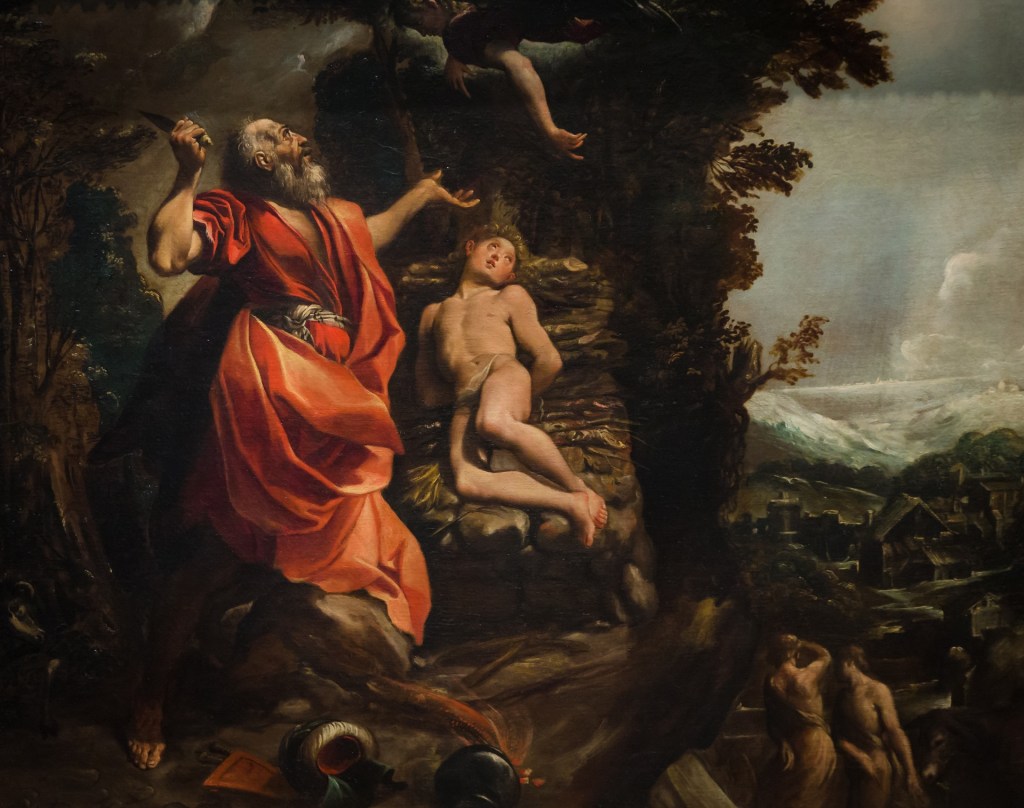
Anyway, around the 15 minute mark in the podcast Joy Oladokun expresses her understanding that God, in the Old Testament flip flops. Then, she provides this short theological synopsis, “It’s like, ‘Sacrifice your son…. Never mind, here’s a goat.” I am chuckling even now, but her thoughts and the example she gives deserves a response.

Many people her age (and all ages, really) have an issue with the story of Abraham sacrificing Isaac. It also opens up a biblical theme that I glimpsed as a young nonbeliever reading the Bible for the first time many years ago that continues to develop as I age.

Perhaps, I am fortunate that I didn’t pay much attention to theology in my formative years, because I didn’t formulate many theological ideas that colored and warped my view of God. When I read the Bible for the first time in college, I came to it with no preconceived ideas and no assumptions (that I recall).

I was raised Catholic, but I didn’t even realize that the readings in the mass were from the Bible (until after I became a Christian). I could not recall anything from the catechism classes I took. I was pretty much too zoned out (and, later, stoned out) to latch onto many theological constructs.

I didn’t know anything about evangelical ideas, like biblical inerrancy, predestination, and eschatological schemes. I came at the Bible like I approached all literature, poetry, and philosophy. I let it speak to me and convey its message to me.

Early on (as I read Genesis), I learned that Abraham heard the voice of God, and he responded in faith (with trust). I learned that the Ancient Near Eastern people from whom Abraham descended and believed in many gods who were more or less arbitrary and capricious. One of those beliefs that was ubiquitous in Abraham’s day was the belief that gods require child sacrifice to be appeased.

I could see that the God who Abraham “heard” was not like those other gods that he and the people around him believed in. I could see that Abraham lived his life on a journey (quite literally) of discovery about this God whose “voice” he heard.

Abraham’s understanding was evolving as he sensed this God and responded in faith to Him. He was learning that God was not like the gods with which he was familiar. This God made promises, and He kept them. This God desired a relationship with Abraham, and He was trustworthy.

I have to admit that the story about Isaac was a bit of a mystery to me then, but I didn’t rush to any conclusions. I understood that child sacrifice was practiced throughout the ancient Levant, but something was different about this story that carried some significance, though I wasn’t quite sure of all that it meant at the time.

There was a lot I didn’t understand. I was on a journey myself, and I realized there was mystery in the stories that belied quick or simple explanations. I, like Abraham perhaps, was willing to explore where a connection to this God might take me (after a brief flirtation with Eastern religion).

I have been on this journey now for over 45 years. I responded to the God of Abraham when I was 19 (the summer after I first read the Bible). I was far from knowing all the answers (though I did go through a period in which I thought I knew much more than I did).

I guess the thought that we know more than we really do is a human trait, and it is one we are well advised to resist. We are finite beings, regardless of the knowledge we collect, and we will never be more than finite beings in these earthly bodies that we will take to our graves.

I can’t tell you how many years I have taken to get to a place of some comfortable understanding on the Abraham and Isaac story. It is more than I might like to admit, but I have always been willing to give God the benefit of the doubt, which is what Abraham did. It is what he was commended for: faith, which is simply trusting in the goodness of God.


The Bible we have says that God told Abraham to go sacrifice his son, Isaac. We cannot escape that is what the Bible says. But, is that what God actually said?


Or is that just what Abraham “heard”? Or is it just what Abraham understood? Or is it just what he felt compelled to do?

I don’t know, and I think it is ok to say, “We don’t really know.” I also think it is ok to ask the question and to assume we may not necessarily have the right answer.

In any event, Abraham clearly believed that God told him to sacrifice his son. That requirement, of course, is antithetical to the promise God had given Abraham – that Abraham’s descendants would fill the earth and become as numerous as the stars in the sky. Yet, Abraham dutifully (if not reluctantly) complied with what he believed he must do.

This is a kind of faith that we don’t understand today, especially in the post Enlightenment age of reason and science driven more recently by post-modern skepticism. We are told in Sunday school (as I have learned) that this story is about Abraham’s faith and willingness to do what he was told, though it didn’t make sense

I think that is partially true, but I have come to see that the story is not only (or maybe even primarily) about faith. The story isn’t primarily about Abraham, either. He is just the vessel through which the story unfolds. The story is about God, and who God is, and the character of God.

Whether God told Abraham to sacrifice his son, or Abraham jumped to that conclusion, doesn’t matter so much. Child sacrifice was demanded by the gods, according to Ancient Near Eastern religious thought that was formative in Abraham’s outlook on the world. He responded according to the custom, practice, and wisdom of his age.

I have written about this a number of times before. (See the Abraham and the Paradigm Shift, Abraham and the Love of God, Abraham and Isaac Revisited: Introduction, Abraham and Isaac Revisited: Here I Am, Abraham, Abraham and Faith and the Hope Deferred, and Abraham and the Blood Path) I am not going to cover all that ground again, but I return to the same theme again because it has roots in my initial revelation of God and my own journey of faith. As I hope to flesh out, it also provides some insight into the God who seems to flip flop.

Continue reading “Does God Flip Flop? Abraham, Isaac, and Us”

God Meets Us Where We Are: But Will You Know Him When You Meet Him?

If your eyes are unhealthy, your whole body is full of darkness


About 5 years ago, I wrote God Meets Us Where We Are. I was impressed then (and I still am) that God who created the Universe stoops to come to us. I was also impressed that finding God is not so much about our seeking, but about our opening up to God Who is ever present to us, but never overbearing.

God seems hidden to many people. If we do not really want to see Him as He is and to embrace Him for Who He is, we may never know He is “there” at all.

When we act contrary to God’s character, our sin hides God from us. (Isaiah 59:1-2) The Prophet, Micah, says God “hides his face” from people, even when they cry to Him, because of the evil, the bad, the harm we do. (Micah 3:4)

The “evil” Micah is talking about in this chapter is injustice – the way we treat other people. The “leaders of Jacob” to whom he was talking were taking advantage of their own people for their own benefit. When people do that, they will cry out to God, but God will not respond.

CS Lewis called God the Great Interferer in his autobiographical book, Surprised by Joy. He didn’t want God to exist. He didn’t want to be interfered with. “He wanted to be left alone, and unconsciously knew that if he denied the existence of some Ultimate Authority, then he himself would be that very authority in his own life. Thus, he could live his life according to his own desires.” (Christ the Great Interferer)

When we live to satisfy our own desires, often at the expense of others, we act out of character with God, and we are blinded by the thrust of our own actions from seeing God. He allows our conduct to separate us and hide us from Him because God does not reward our bad behavior.

“The eye is the lamp of the body. If your eyes are healthy, your whole body will be full of light. But if your eyes are unhealthy, your whole body will be full of darkness. If then the light within you is darkness, how great is that darkness!”

Matthew 6:22-23

God desires us to know Him as He is and to desire to be like Him. When we acknowledge our wrong ways (sin) and turn (repent) from them, God is quick to meet us “there”. When we confess our sins, He is just and faithful to forgive us! ( 1 John 1:9)

That is what He is waiting for, but we must come to Him honestly. He isn’t handing out “get out of jail cards” for free. He wants us to desire Him and to desire to be like Him; He isn’t interested in appeasing your conscience for the moment so you can feel better about what you have done and what you will do in the future.

God has given us each other as the testing ground. As Micah indicates, how we treat others determines whether God is hidden to us. Jesus said as much in the Parable of the Sheep and the Goats. “‘Truly I tell you, whatever you did for one of the least of these brothers and sisters of mine, you did for me,'” (Matt. 25:40) and “‘Truly I tell you, whatever you did not do for one of the least of these, you did not do for me.’” (Matt. 25:45)

It seems to me that God designed the world as He did because God desires relationship with people who desire Him, and He provides us a testing ground for that relationship in other people. God will not force Himself on anyone who does not want to know Him – at least for the time being.

There will come a day when our lives end in the natural course or by circumstance that God does not control. Having set His universe in motion, He rarely interferes. Too much interference would frustrate His purposes.

There will also come a day when the time for human seeking is over, when this Project Earth has come to its appointed end, when the time for ultimate redemption and the perfection of God’s purposes is at hand. At that time – when all people see “the Son of Man coming in a cloud with power and great glory” (Luke 21:27) – it will be too late for any seeking

As the Apostle Paul said, “I tell you, now is the time of God’s favor, now is the day of salvation.” (2 Corinthians 6:2) The writer of Hebrews repeats three times for us: “Today, if you hear his voice, do not harden your hearts.” (Hebrews 3:7-8; 3:15; and 4:7)

God is with us now, and the time of His favor – to seek Him and find Him – is now. There are no guarantees for anyone. In fact, the only guaranty is that our time will end: either at our own natural or untimely death or when day of the Lord comes and the time for choosing is over. Do not harden you heart. Now is the day of your salvation.