
via We Are Easy Targets of the Information War
We are our own worst enemies. The Russians just gave us a push in the direction we are going. It’s time we changed direction.
via We Are Easy Targets of the Information War
We are our own worst enemies. The Russians just gave us a push in the direction we are going. It’s time we changed direction.


If faith without works is dead, then our thoughts, prayers and condolences are meaningless at some point if we aren’t willing to take some action to address the societal problem of school shootings and mass shootings in general. What is the Christian response to these tragedies? Is the 2nd Amendment greater than the 6th commandment (though shall not murder), the greatest commandment (to love God with all our hearts, souls and minds) and the second greatest commandment (to love others as ourselves)? How do we balance the 2nd Amendment with God’s commandments? Are guns really the issue? Below is an article with some thoughts to consider as we mourn the victims of another school shooting.
via The 2nd Amendment, Freedom & Responsibility

Doubt is the common experience of saints and sinners alike.
Can we be certain of God’s existence? The short answer is, no. If the question is whether we can have something like mathematical certainty or proof, we have to answer that question in the negative. There is no evidence, no proof, or argument that can provide certainty that God exists for finite beings such as ourselves.
Such evidence, proof, or argument would have to be built on premises that are 100% certain, and that kind of certainty is impossible for beings that are not all-knowing. The best we can do is to arrive at evidence, proofs, and arguments that suggest a probability that God exists. The same is true, or course, for the proposition that God does not exist. Even then, the proof for a negative is always subject to change if positive evidence turns up.
To this extent, doubt is the common experience of saints and sinners alike.
To put this another way: Can we be sure that God doesn’t exist? The only certainty is that we can’t be certain.
Many believers have doubts, and many doubters have their own doubts about their doubt.
Continue reading “Can We Be Certain of God’s Existence? The Role of the Holy Spirit”
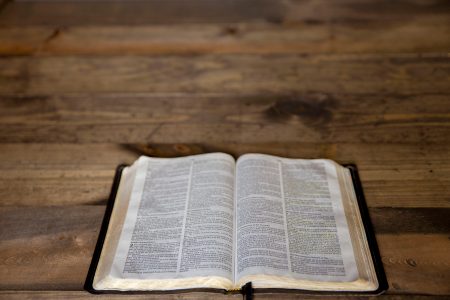
While non-Christians may provide many explanations as to why they discard the Bible, the actual reason they don’t believe is that God hasn’t spiritually awakened them. Scripture is very clear on this. “Jesus said, ‘I praise You, Father, Lord of heaven and earth, that You have hidden these things from the wise and intelligent and […]
via Why do non-believers reject the Bible? — The Isaiah 53:5 Project
I am reblogging this piece to comment on my own experience, which is something I know many believers relate to. It’s the before and after story of those who know what it means to be born again. Before that time, the Bible seemed to be dead, and after it came alive!
Being born again is experiential and relational. It’s relational in that the experience is intimately connected to God and the Bible, His revelation to us handed down from people who had similar, relational experiences with God. Our relationship and connection with God can be measured, and one of the measuring devices is the Bible.
The writer of Hebrews says that the word of God is living and active. This is the experience of the one who has been born again. The Bible comes alive. When this happens for the first time, it is an experience like feeling the wind whip up. We can’t see it, but we know it.
Paul says that God’s Spirit testifies with our spirit. This is the intimate, relational experience we have with God, though we often confuse it with feelings. Feelings come and go. The spiritual connection is there regardless of the feelings; sometimes it’s there in spite of the feelings!
But, even those who have been born again, can fall away, chasing after feelings and things that distract our attention from the One who loved us with the sacrifice of shedding his glory to become one of us, proving that love to the point of death for us. The Spirit is a still, soft voice, easily shouted down, crowded out and left behind. But He is persistent. Thankfully!
The surest way to connect, or to reconnect, is open the Bible and do it often. Jesus said that man doesn’t live by bread alone, but every word the proceeds from the “mouth” of God. The Bible is our lifeline.
Sometimes our experience wanes. Like a marriage, we lose the spark, but we press on in the commitment to which we have given ourselves. The feelings come and go. The spark will come and go, but out commitment is the constant. And as we devote ourselves to God in prayer, the preaching of the Gospel, reading of the Bible, fellowship and repentance for our shortcomings, we regain that connection that we sometimes “lose” in the crowded, preoccupied and loud recesses of our hearts.

Faith and hope of the kind Abraham had that was counted to him as righteousness isn’t real unless it changes us and our outlook on the world and becomes the driving force of our lives.

Abraham believed God, and God “reckoned” that faith to Abraham as righteousness.[1] When God told Abraham to look at the stars and said to Abraham that he would bear offspring and have descendants like the stars in the sky, Abraham believed God. What does that really mean?
We get a bit of a clue by looking at the Hebrew word translated “believe”: āman. It means to confirm (support), as when putting confidence in something that is supported (trustworthy).[2] The Hebrew suggests that Abraham confirmed, affirmed, supported, or had confidence in what God was telling him.
But there is more to it than that. The word, āman, as used in this passage, is in the hiphil form. The hiphil form suggests an act of intentional interaction with a subject.
This suggests Abraham didn’t just stare at the stars, daydreaming. He consciously and intentionally engaged with God and what God was saying to him. He affirmatively confirmed, supported and put his confidence in what God was saying to him in some interactive way.
Faith/belief is a key concept and critical characteristic of the follower of Christ. Abraham is held up as the prime example of faith. Abraham is the father of faith.[3]
Paul says that Abraham was “fully convinced that God was able to do what he had promised.”[4] This active faith, trust and confidence in God that Abraham demonstrated is what God “counted to him as righteousness”.[5] Faith is interactive trust.
This same faith, Paul says, will also be counted to those of us as righteousness who “believe in him who raised from the dead Jesus our Lord, who was delivered up for our trespasses and raised for our justification.”[6]
In one sense, Abraham didn’t do anything to earn God’s favor but believe God, and God attributed righteousness to him in return. Such a simple thing! On the other hand, Abraham’s faith was not just intellectual ascent; he lived his life in the light of that faith.
And that is what we must do to be counted as righteous in God’s sight today – to believe in the one God sent to us, Jesus Christ, who suffered, died and was buried for us, and who has risen from the dead establishing the promise of God to us that we will be risen to in newness of life. If we truly believe this is true, it will become the pivotal point, the centerpiece and the hope of our lives.
This seems so very simple that we are tempted to think we need to do more. We are tempted to think we must do more to be counted as righteous. It isn’t quite so simple as we suspect, but we have to keep our eyes on what is important.
Continue reading “Righteousness By Faith”
Take a few minutes to slow down and think about what's going on in your world...
Letters on my journey of rediscovering hope
"The LONG VIEW ON THE HIGH ROAD" -- Intriguing perspectives on life
Using the wisdom of the past to enhance your future event
Doggedly pursuing the truth, with joy and faithfulness

