Decompressing from Politics, Storming the Capitol Building, and the Church in America

Does anyone think the “QAnon shaman” is really representative of Christians?

Crowd of Trump supporters marching on the US Capitol on 6 January 2021. Creative Commons License

I think many Americans have been trying to decompress from the events that took place on January 6th. The long, tense build up to the electoral college vote count, the persistent claims of fraud and a stolen election, the rally and then the sudden alarm of people storming the Capitol Building are being replayed now in the impeachment hearing.

Legal retribution is grinding forward. The Biden/Harris duo were confirmed, took over the White House and issued a flurry of executive orders, but we can’t put the genie back in the bottle. The ripple effect of the events that preceded the inauguration seethe and heave under the surface.

A majority of Americans condemn the outburst of misplaced patriotism that spilled into the Capitol Building and onto the congressional chamber floor. Most were horrified by it. It looks even worse in retrospect.

I recently heard someone emphasize that Trump lost by 7M votes. That seems like a hefty number, but consider that almost 75M people voted for him. Almost half the country voted for Donald Trump.

How do we move forward? How does the church move forward? (Divided as it, not much unlike the unchurched)

Our human penchant for sweeping generalization in times like these misses the nuance and complexity that fill out the truth. I think about these things as I listen to an interview of Sarah Posner on the podcast, Sacred & Profane, titled Render Unto Q.

Posner wrote the book, Unholy, WHY WHITE EVANGELICALS WORSHIP AT THE ALTAR OF DONALD TRUMP. She speaks in the interview about the New Right, Moral Majority and New Apostolic Reformation as precursors from the 1970’s and 80’s to what she calls “worship at the altar of Donald Trump” today.

I was involved in the New Apostolic Reformation during that time period, though we didn’t have a label for it. I remember the influence of politically minded religious leaders and religiously minded political leaders during those times.

I am now an outsider to the New Apostolic movement, but I was once an insider. I have friends who are still actively involved in current iterations. As I listen to the interview, many of the things Posner says ring true, but I can bring a little nuance into the dialogue from my own experience.

Sarah Posner has studied these things closely, and is somewhat a subject matter expert on the involvement of evangelicals in politics. She has a far more nuanced understanding than most people, so her comments bear some consideration. I will summarize some of Posner’s observations and add my own, especially where I can add some clarity from my own experience.

Part of the problem with critiques of what happened on January 6th is trying to understand the strange mixture of forces that came together in the storming of the Capitol. They have long been stewing together in a weird kettle of different fish.

As with any stew, the individual ingredients take on a singular flavor, given time, and this stew has been marinating for quite a while. To the extent the church is close enough to this stew to take on its flavor is concerning.

Continue reading “Decompressing from Politics, Storming the Capitol Building, and the Church in America”

Jesus, Is Still Shaking the Church Like He Shook the First Century Religious Leaders

Righteousness and justice are the foundations of God’s throne. They are the building blocks of His character.

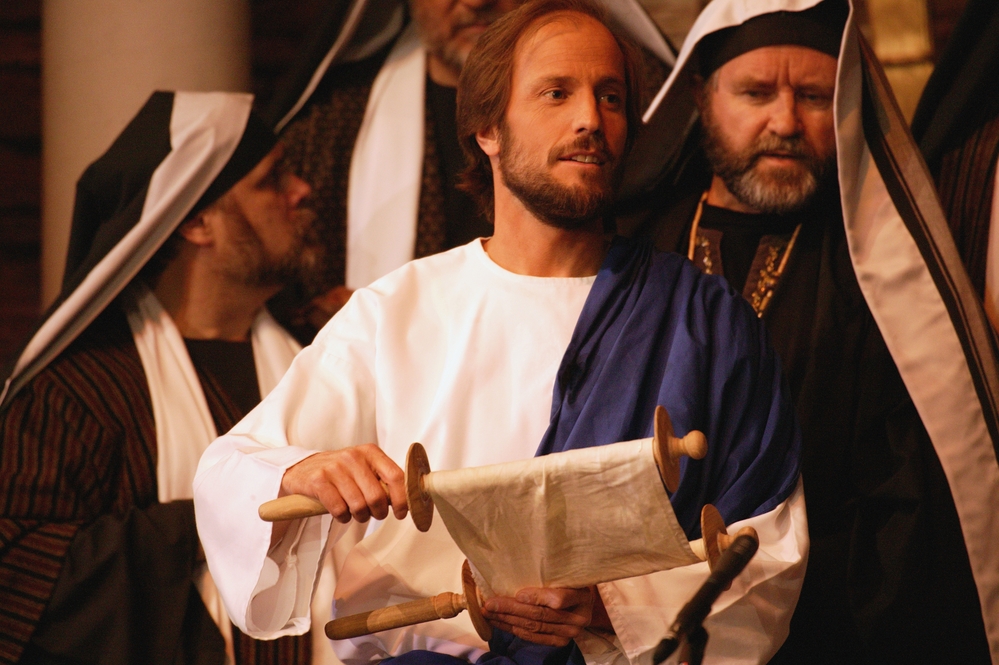
I wrote about A Mic Drop Moment in First Century Galilee back in March of 2020, referring to the passage in Luke 4 in which Jesus read from the Isaiah Scroll in the synagogue in Galilee where he announced his public ministry. I have been focused on that passage since the spring of 2019, when I was drawn to it for a talk on doing justice.

I am still continually drawn to that passage. I intended to write more about justice when I wrote that piece in March of 2020, but it wasn’t until July that I actually got around to it. (See Evangelicalism and Injustice Part I, Evangelicalism and Injustice Part II and The Need for the Church to Address and Injustice, for example.)

The world changed dramatically between March 2020 and July 2020. COVID shut down commerce and isolated people. The George Floyd killing happened in June, and we were embroiled in nationwide unease and unrest. The need for justice in a spiritually dry and parched world was quite evident, then, as the scabs of centuries of racial injustice were torn open and bleeding.

The focus of my writing has been on my fellow evangelicals. They way I have phrased this introduction may strike discord among my church family (or so I imagine as I write this).[i] I am convinced, however, these things are centrally important to God and how the body of Christ lives out the Gospel in the world.

Righteousness and justice are the foundation of God’s throne. Mercy and truth go before Him. (Ps. 89:14)

If we want to get closer to God, to know Him better and to be like Him in this fallen world, we need to focus on these: righteousness and justice. They are the twin pillars of God’s character.


This morning, Jeff Frazier’s sermon at Chapelstreet Church in Batavia, IL was on the same passage in Luke 4 that I have been reading periodically since 2019.[ii] I focus on a particular emphasis today that prompts this article, but let me set the scene first.

The entirety of the passage is found at Luke 4:16-30.  I encourage you to read it now or read my mic drop description of it (as if Jesus read from the Isaiah scroll in a neighborhood church today).

The key points for this article are that Jesus went to his home synagogue and read from the Isaiah scroll to his “own people” who knew him well. When Jesus said the messianic message of that passage was being fulfilled in their hearing, the people asked him, “Aren’t you Joseph’s son?”

Still, they spoke well of him and marveled at his “gracious words”. (Luke 4:22) Then Jesus made them uncomfortable by foretelling that they would taunt him and reject Him, adding, “[N]o prophet is acceptable in his hometown.” (Luke 4:23-24)

I imagine the synagogue went quiet quickly. They probably looked at each, thinking or saying things, like,

  • What is he saying?
  • Did I just hear him right?
  • Weren’t we just saying how he has grown up into a fine young man?
  • Did  he just accuse us of rejecting him?
  • We haven’t done anything!
  • We weren’t even thinking those things!”

But Jesus didn’t stop there. He turned the heat up a notch! This is where things really got dicey in his hometown synagogue. This is the point I am seeing in this passage today – something for us to think about in the American Church today.

Jesus referenced two passages of Scripture and two stories of revered Hebrew prophets. His citation to Scripture may not have raised eyebrows. It was the application of them that riled up his synagogue audience.

Continue reading “Jesus, Is Still Shaking the Church Like He Shook the First Century Religious Leaders”

Thoughts on the Sanctity of Human Life, Injustice and Unity in the Church in the United States

God’s desire is to save us, to have relationship with us, to renew our minds and to conform us to His image.

Reading in Exodus today, I observe that two passages in the first two chapters have poignant application to the Body of Christ in the United States today. I see two predominant lines of injustice in the United States to which the Church collectively has given its attention that are identified in these first two chapters of Exodus.

At the same time, the Church is divided on justice issues. I don’t say this to condemn or to be judgmental. It’s simply a fact that I think we need to recognize soberly, honestly and humbly.

We might find many examples, but the one that comes to mind – the one that is, perhaps, most poignant in this given time – is the division between black and white and the division between supporters and and non-supporters of Donald Trump.

I know: I said one example, and it seems I given two here. These are two examples, but they coalesce into one. The proof for that is in the statistics that show that approximately 80% of white evangelicals support Trump, and approximately 80% of black “evangelicals”[i] do not support Trump.

Now, I recognize that these statistics are sweeping generalizations, but generalizations do tell a story. There is some reflection of truth in them. I also don’t mention Trump to be divisive here. The example simply is provided for illustration.

Churchgoing African Americans can be as theologically conservative on things like what it means to be born again as white evangelicals, but their individual and collective experiences give them a different perspective on life. Their view of the world and injustice is different than their white, evangelical counterparts, for the most part, and influences them to have different political affiliations.

My reading in Exodus (which I will get to) is timely because today is Sanctity of Life Sunday. I didn’t even realize it when I did my daily reading after I woke up this morning.

I didn’t realize it until I tuned into the Manchester (NH) Vineyard Community Church service this morning. I have never tuned into their services, until today, though I know people affiliated with them. When I set out to participate in a more local church service, I believe God drew my attention away to this one.

It was a great message, and I gained some perspective from it that, perhaps, God wanted me to have in writing this. With that introduction, let me explain the passages in Exodus that prompt my writing. Those texts include Exodus 1 (about the killing of babies) and Exodus 2 (about slavery).   

I will take these things one at a time and draw some conclusions consistent with the burden God has placed on my heart over the years. In another article, perhaps, I will explain how my perspectives have changed and, hopefully, shed some light on how the church can come together in the full council of God to advance His justice and righteousness.

Before I get into my immediate thoughts, though, I need to say that I speak with no condemnation in my heart

Just as Jesus said to the woman caught in adultery that he did not condemn her, I am reminded that God sent his son into the world not to condemn the world; God sent His son into the world so that the world might be saved through him. (John 3:17)

I do not say these things to condemn anyone because Jesus has redeemed us!


In the story of the woman caught in adultery, the Pharisees and Sadducees brought her to Jesus to challenge him because the Law required her to be stoned. They wanted to see what Jesus would do, but Jesus seemed to ignore them and began writing in the sand.

Some people believe that Jesus may have written the Ten Commandments out in the sand. When he looked up from from writing, Jesus “invited” them, saying, “He who is without sin may cast the first stone.” Then, he continued writing in the sand.

Some people believe he was writing down the sins those men had committed. They would say the men walked away silently because they realized that no one is without sin.


The wages of sin for every person is death.

Whatever he wrote, we know how the dialogue went next. “Jesus stood up and said to [the woman], ‘[W]here are they? Has no one condemned you?,” John 8:9) When she replied, “No one”, Jesus said, “Neither do I condemn you.” (John 8:10)

Jesus didn’t condemn the men either, because he told us he came not to condemn, but to save. I imagine that, Jesus would have received, forgiven and invited the men to follow him, if they had stayed and repented.

God desires to save us, to have relationship with us, to renew our minds and to conform us to His image. Our sin is the reason God became flesh and died for us. He came not to condemn, but to demonstrate His great love for us and to save us from the sin that enslaves us.

One last thing before I get into what I believe God has put on my heart to share: salvation and sanctification is a process. It starts where we are. When we are born again, God begins to work in us to will and to act according to His purposes and to conform us to His image, but we start that process in different places.

One point made in the sermon today, is that “a person doesn’t have to be pro-life to be saved”. People are saved by grace; it’s a gift that we haven’t earned. There will be no exam in heaven we must answer satisfactorily for salvation. It’s already been accomplished for us by Christ’s death and resurrection.

At the same time, if we are born again, God has begun a work within us. He has begun to renew our minds, and change our hearts, and we have begun to learn to think God’s thoughts after Him and become like Him.

With that said, I will address the two texts I read today in Exodus 1 and 2 that speak to me about the Church, collectively, in the United States. In writing this article, my hope is to provide some biblical basis on which we might begin to bridge the divide along racial and political lines and come together as the body of Christ. I hope to provide some perspective and understanding that will bring us together in Christ.

Continue reading “Thoughts on the Sanctity of Human Life, Injustice and Unity in the Church in the United States”

Martyrs, Satan, Nuclear Bombs and Holding on for a New Normal

We need a new normal and new perspectives.

As I think about the events of this week (and of the past four plus years) and read through social media comments, I am thinking about things that have been percolating in my mind and heart for some time. I will try to lay them out in this blog article by borrowing some quotations from my social media feed with some hope I can tie them together and make some sense of it.

I write this thinking about neighbors and people I have spent time with, shared a drink or meal with, laughed with, worked with and done some aspect of life with who don’t think or vote exactly as I do. Some of them voted for Trump; some would never vote for Trump.

I may find it hard to synthesize all of these points as I let my social media feed direct my steps, but here goes.

Continue reading “Martyrs, Satan, Nuclear Bombs and Holding on for a New Normal”

A Plea for Healing and Tending to the Garden in the Middle

The political and social atmosphere in America is playing into the hands of the radical fringe.

The events unfolding, the things going on in the world right now, are troubling from many angles. Racial injustice, polarization, the centrifugal force of political fringes, rhetoric over substance, political violence, conspiracy theories, fake news, the increasing control of popular speech by private monopolies of information, the abandonment of all semblance of non-bias by most media, the ability to choose our own tailored news, the hatred people are developing for others who don’t think like them, the unwillingness to show respect, listen and engage in real dialogue – these are things that are deeply troubling in “the land of the free and the home of the brave”.

The political, cultural, sociological, and philosophical winds are swirling chaotically and mixing at all levels into a tornadic gale that is bordering on dangerous. These forces are not coming from outside us but from within. Even if our present chaos is influenced by outside sources, they are merely putting pressure on elements already within us. “We have met the enemy, and the enemy is us.”

For four years, people have been blaming Donald Trump for every evil under the sun. (Pardon the hyperbole.) People have been lumping all Trump supporters into one group and condemning them (or so the rhetoric often goes). People have had good reason to be critical. (No hyperbole or rhetoric there.) But let’s take a step back (it may need to be a giant step) and attempt a look at the bigger picture.

Trump gained support over more than a dozen career Republican politicians in 2016 and was elected president over a person, in Hillary Clinton, who, perhaps more than anyone else, represented the entrenched political machine in America. Bernie Sanders mounted a credible offense with broad support against that machine but could not prevail.

I believe people gravitated to Trump and Sanders for the same reasons: they are tired of politics as usual. They feel that our political system has broken down. It has become big business designed to perpetuate power and control, rather than serve the people. Congress would rather do nothing and let presidents wield executive orders on issues that need their attention and a compromise solution (like immigration, for instance) because they don’t want to jeopardize offending their bases.

They are seemingly more motivated by a desire to remain in office, maintain control and serve themselves than the people who elect them. There is no give and take (in the good and appropriate sense) anymore. At least, not on anything that hits the hot buttons of political platforms.

We only have two choices. Those two choices are becoming increasingly unpalatable for people on both sides of the aisle, but practical wisdom suggests that voting third party candidates means taking a knee as the real game plays on without you.

Polarization is a serious issue that can’t be ignored. It is exasperated by social media that is designed for quick, shallow and knee-jerk reactions that cater to our worst instincts. Almost 100% of political campaigning involves demonizing opponents and “the other party”. We have become a nation that accepts rhetoric over substance.

The extreme polarization has given rise to the voices of the radical fringes who threaten to pull us apart. In a “normal” world, those voices would seem like largely inconsequential and impotent shrills in the distance. Today, they sound like megaphones on the Capitol lawn, infiltrating into the very House of the People.

The Democratic party has always been more diverse (in my lifetime) and has always had its diverse, radical fringes. The conservative fringes have largely operated outside the fold until recently.

I dare say the conservative fringes are more dangerous, ultimately, than the liberal ones, perhaps because they are more unified by common principles. They also bear arms like political badges.

The fringes are pulling good people from the center because the center has largely been abandoned today. It’s a no-man’s land where no grass grows, and nothing happens. People in the center are labeled “other” by the people on either side and ignored by both.

We need a “radical” change. By radical, I don’t mean extreme or fanatical. I mean a different approach to politics and dialogue with each other. We need common sense and a commitment to a bigger picture than political partisanship. We need someone who can bridge the gaps that divide us. We need a voice that brings people together on the common ground that unites us, rather than forcing all conversations to the battle lines.

Continue reading “A Plea for Healing and Tending to the Garden in the Middle”