A Plea for Healing and Tending to the Garden in the Middle

The political and social atmosphere in America is playing into the hands of the radical fringe.

The events unfolding, the things going on in the world right now, are troubling from many angles. Racial injustice, polarization, the centrifugal force of political fringes, rhetoric over substance, political violence, conspiracy theories, fake news, the increasing control of popular speech by private monopolies of information, the abandonment of all semblance of non-bias by most media, the ability to choose our own tailored news, the hatred people are developing for others who don’t think like them, the unwillingness to show respect, listen and engage in real dialogue – these are things that are deeply troubling in “the land of the free and the home of the brave”.

The political, cultural, sociological, and philosophical winds are swirling chaotically and mixing at all levels into a tornadic gale that is bordering on dangerous. These forces are not coming from outside us but from within. Even if our present chaos is influenced by outside sources, they are merely putting pressure on elements already within us. “We have met the enemy, and the enemy is us.”

For four years, people have been blaming Donald Trump for every evil under the sun. (Pardon the hyperbole.) People have been lumping all Trump supporters into one group and condemning them (or so the rhetoric often goes). People have had good reason to be critical. (No hyperbole or rhetoric there.) But let’s take a step back (it may need to be a giant step) and attempt a look at the bigger picture.

Trump gained support over more than a dozen career Republican politicians in 2016 and was elected president over a person, in Hillary Clinton, who, perhaps more than anyone else, represented the entrenched political machine in America. Bernie Sanders mounted a credible offense with broad support against that machine but could not prevail.

I believe people gravitated to Trump and Sanders for the same reasons: they are tired of politics as usual. They feel that our political system has broken down. It has become big business designed to perpetuate power and control, rather than serve the people. Congress would rather do nothing and let presidents wield executive orders on issues that need their attention and a compromise solution (like immigration, for instance) because they don’t want to jeopardize offending their bases.

They are seemingly more motivated by a desire to remain in office, maintain control and serve themselves than the people who elect them. There is no give and take (in the good and appropriate sense) anymore. At least, not on anything that hits the hot buttons of political platforms.

We only have two choices. Those two choices are becoming increasingly unpalatable for people on both sides of the aisle, but practical wisdom suggests that voting third party candidates means taking a knee as the real game plays on without you.

Polarization is a serious issue that can’t be ignored. It is exasperated by social media that is designed for quick, shallow and knee-jerk reactions that cater to our worst instincts. Almost 100% of political campaigning involves demonizing opponents and “the other party”. We have become a nation that accepts rhetoric over substance.

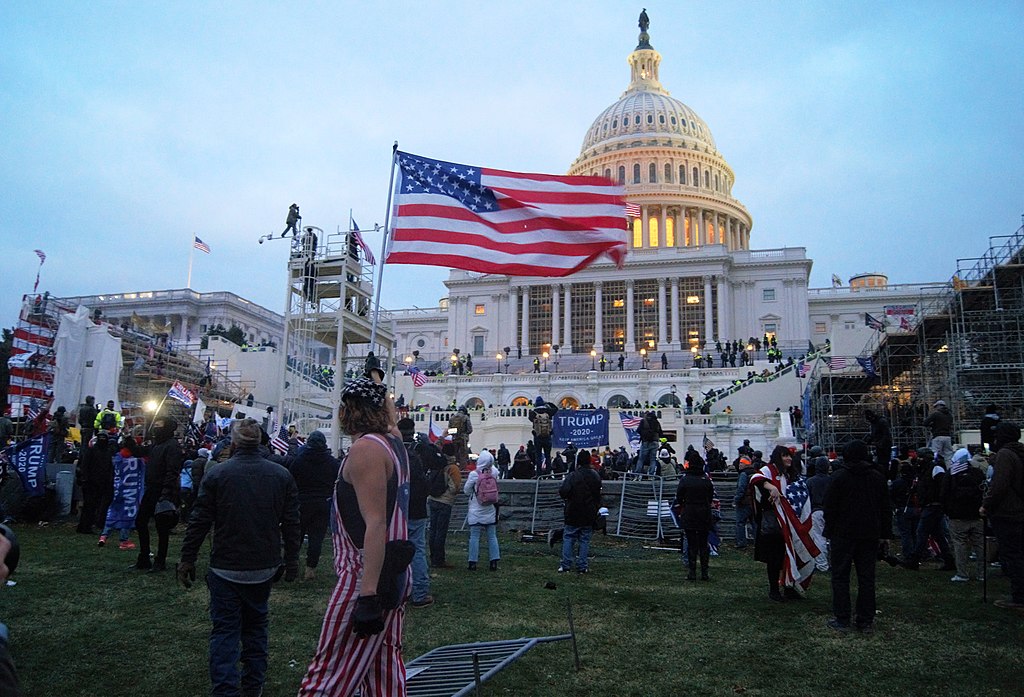
The extreme polarization has given rise to the voices of the radical fringes who threaten to pull us apart. In a “normal” world, those voices would seem like largely inconsequential and impotent shrills in the distance. Today, they sound like megaphones on the Capitol lawn, infiltrating into the very House of the People.

The Democratic party has always been more diverse (in my lifetime) and has always had its diverse, radical fringes. The conservative fringes have largely operated outside the fold until recently.

I dare say the conservative fringes are more dangerous, ultimately, than the liberal ones, perhaps because they are more unified by common principles. They also bear arms like political badges.

The fringes are pulling good people from the center because the center has largely been abandoned today. It’s a no-man’s land where no grass grows, and nothing happens. People in the center are labeled “other” by the people on either side and ignored by both.

We need a “radical” change. By radical, I don’t mean extreme or fanatical. I mean a different approach to politics and dialogue with each other. We need common sense and a commitment to a bigger picture than political partisanship. We need someone who can bridge the gaps that divide us. We need a voice that brings people together on the common ground that unites us, rather than forcing all conversations to the battle lines.

Continue reading “A Plea for Healing and Tending to the Garden in the Middle”

How Should Christians Act in Times Like These?

If we aren’t responding to current events in ways that display love and the fruits of the Spirit, we are “doing it wrong”

Tyler Merbler from USA, CC BY 2.0 https://creativecommons.org/licenses/by/2.0, via Wikimedia Commons

The events that are unfolding in the United States are troubling from many angles. Many Christians pinned their immediate and long term hopes on Donald Trump. With Biden as President, the fight against the killing of the unborn has been dealt a significant blow.

But there are many other problems. The racial divide, polarization, political fringe groups, extreme rhetoric, threats of violence, conspiracy theories, fake news, increasing control of popular speech by private monopolies of information, an abandonment of all semblance of non-bias by media, our ability to choose our own tailored news, hatred for people who don’t think like us, an unwillingness to show respect, listen and engage in real dialogue – these are things that are deeply troubling in “the land of the free and the home of the brave”.

To my brothers and sisters in Christ, Jesus said we would have tribulation in this world. He didn’t tell us to take up arms and fight it. He said we should follow him, spread the Gospel and make disciples.

His kingdom is not of this world. Jesus didn’t come to empower the Zealots, but to turn them into self-sacrificing servants of God and His kingdom – spreading the Gospel and making disciples.

Islam spreads by the sword. The Gospel spreads by people who wash others’ feet, turn the other cheek and love God, neighbors and even enemies. The Christian wields not a political flag, but a cross that he carries on his own back.

If we are going to fight for the mission of Jesus, our fight should be “to proclaim good news to the poor… to proclaim liberty to the captives and recovering of sight to the blind, to set at liberty those who are oppressed, to proclaim the year of the Lord’s favor”. (Luke 4:18-19) This was how Jesus described his own purpose on the day when he stood up in the temple and announced his ministry.

Should we not follow him?

Continue reading “How Should Christians Act in Times Like These?”

How Should the Church Act Regarding Authority?

If we have to ignore Scripture and the character God desires to work in us, we are moving in the wrong direction!

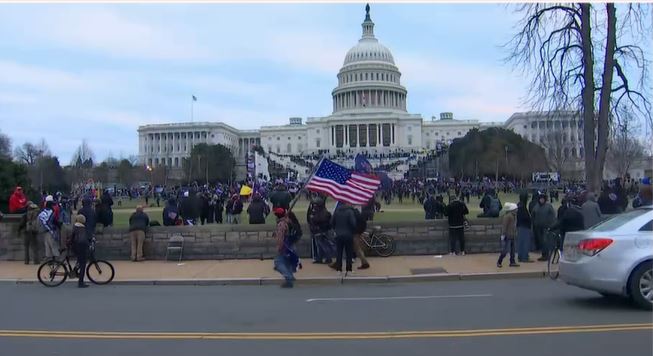
I come back to this with a heavy sigh. I started it yesterday as the news unfolded of people breaching the Capitol building as the Trump rally changed gears. I know there were people there peacefully gathering, but a good many of them crossed the line.

As I watched the events unfold, I struggled to find some solid ground to stand on as I see people who call themselves Christians continue to support Trump regardless of what he says and does. At best, he sent mixed messages that were ambiguous enough to encourage what happened. At worst he incited insurrection, and stood by watching it happen, saying nothing until it was too late. Even then, it was a poor excuse for what he should have said.

The thing that troubles me most as I think about these things is the way Christians who support Trump and this “resistance” at at all costs ignore Scripture that is inconvenient. Paul defined the way followers of Jesus Christ should act regarding authority:

“Let every person be subject to the governing authorities. For there is no authority except from God, and those that exist have been instituted by God. Therefore whoever resists the authorities resists what God has appointed, and those who resist will incur judgment.”

Romans 13:1-2

Peter, the rock on whom Jesus said he would build his church, said the same thing:

“Be subject for the Lord’s sake to every human institution, whether it be to the emperor as supreme, or to governors as sent by him….”

1 Peter 2:13-14

If anyone thinks insurrection is justified because Democrats are “bad” today, consider that Peter and Paul said these things at a time when their world was ruled by Nero.

Nero was a bad leader, even by pagan, Roman standards. He considered himself God. He persecuted Christians and had them publicly killed, setting them on fire at night to light the City. Peter and Paul were both martyred under the rule of Nero.

Democrats are not nearly as bad as Nero. Peter’s and Paul’s words were spoken at a time much worse than the political squabbling today. We can’t justify resisting authority because Democrats are bad – not when we consider the context in which Peter and Paul told believers to respect governing authorities!

At the same time, I am aware that people may justify their resistance on other grounds. Peter, himself, resisted the governing authority in the Book of Acts. Peter and John were arrested for preaching. (Acts 4:2-3) They were commanded not to preach about Jesus, but Peter and John refused to comply, saying,

“Which is right in God’s eyes: to listen to you, or to him? You be the judges! As for us, we cannot help speaking about what we have seen and heard.” 

Acts 4:19

They were arrested again for refusing to remain quiet. (Acts 5:20) Again, they were commanded not to speak. Again, they responded, “We must obey God rather than human beings!” (Acts 5:19) This time they were flogged and let go.

So which is it? Submit to authorities? Or boldly rebel?

It seems like a conundrum. Do we get to take our Pick?

Maybe those are not the right questions to ask. Maybe we need to be more careful to weigh the words of Peter and Paul together with their actions and divide the Word of God more accurately.

Continue reading “How Should the Church Act Regarding Authority?”

When the Smoke of Battle Clears, Where is God?

God is bigger than the battles in history and the lives of all the men who fought them, but He is with each one of us.

My great, great grandfather, Enoch Jones, and his brother, Silas Jones, fought in the Civil War for the north. They were members of the 40th Illinois Infantry, Company F. They mustered in August 10, 1961, at Springfield.

In March 1862, the 40th Illinois, 46th Ohio and Morton’s Battery was organized into a Brigade commanded by Colonel Hicks under General Sherman, and they boarded transport ships that carried them up the Tennessee River. They re-combined with the 6th Iowa under Colonel McDowall and entered the Battle of Shiloh. It would be their first armed conflict.

The north took a beating at Shiloh. The 40th Illinois was commended for standing ground under heavy enemy fire even after their cartridge boxes were empty. A total of 196 men of the 40th Illinois were killed or injured in the one battle, including Colonel Hicks.

Silas suffered mortal injuries. He mustered out of this life two weeks later. Enoch mustered out of the 40th Illinois Infantry on May 15, 1865, two days after Jefferson Davis was captured and one month after President Lincoln was assassinated. The north was victorious, but at great cost.

Enoch saw action at the Battle of Shiloh, Siege of Vicksburg, Battle of Missionary Ridge, Battle of Kennesaw Mountain and Siege of Atlanta, and other places before he returned to a humble life in central Illinois. Enoch didn’t participate in the famous “March to the Sea”, because he took a bullet in Atlanta. The bullet drove a button into his chest, but that button saved his life. It earned him the Purple Heart my parents have to this day.

I was fortunate at a Civil War memorabilia show years ago to find a tattered and yellowed dairy written by another volunteer in the 40th Illinois Infantry. He was in a different company, but his periodic reports of the movements and activities of the Brigade gave me a ground level view of the experiences of my ancestors as Union Civil War infantrymen.

When the diary opens, the author anticipates with patriotic and religious confidence the mission they are about to partake. The 40th Illinois was a completely voluntary unit. The diary expresses a kind of righteous hope and abandon to the cause of fighting for God and for country.

I could not help but think of the horrendous carnage of human and equine life they would encounter. Sinew, flesh and bone left exposed to the gaping air as the smoke slowly drifted off future battle scenes. The groans of shattered men lying in their own blood would be the only sound remaining as infantrymen regrouped to count their ranks. Trees splintered by the shrapnel of canons and muskets would stand starkly against the acrid stench of gunpowder lingering still that gaping air.

Did they know what they were in for?

I recalled seeing Civil War physicians’ bags. They carried saws, and picks, and hammers and other objects of painful reminders of the brutality of war without modern anesthetic or antiseptic. Saws saved what was left of the living by cutting off limbs susceptible of gangrene. Many, like Silas Jones, survived the battle with injuries only to die later of infection.

Knowing these things, I was intrigued to read the thoughts and expressions of resilient faithfulness to the duty fight for God and country continue on the pages of that diary after the Battle of Shiloh, and all the way past the Battle of Kennesaw Mountain. Then the diary ended – abruptly. No resolution. No postscript. No clue as to why it simply ended.

I can only imagine the writer mustered out early – maybe in Atlanta. I assume he wasn’t as lucky as my great, great grandfather. But I am not writing merely to tell a story of my ancestor. There is a bigger picture.

Continue reading “When the Smoke of Battle Clears, Where is God?”

Listening While White: Respecting the Image of God in People of Color

Jesus, himself, broke down the dividing wall that separates people.

I feel like I need to begin this with a request to “hear me out” (at the risk of appearing apologetic). I am a white, evangelical Christian. The title recognizes who I am. I realize as I wade out into these waters that they are treacherous today. Many are the rocks on which ships with good intentions have been dashed.

Should I even have to say that people of color bear the image of God? I shouldn’t have to say it, but I feel I need to say it nevertheless. Why?

That impulse, alone, signals to me that something is not quite right.

I just read that slavery is “the original sin of the United States”. It colors our past (pun very much intended). It continues to leave its imprint on the present. I have to admit to finding some truth in that statement.

Obviously, race is the subject of this article. But not just race. I am writing about Christianity, generally, and the church universal and global.

If any group ought to be able to speak with wisdom into the race issues that we continue to face, it should be the Church, right? Yet, we see as much segregation in the church as a whole as we do in society.

Spoiler alert. God has been orchestrating the entire course of human history from the beginning to this end:

“A great multitude that no one could count, from every nation, tribe, people and language, standing before the throne and before the Lamb….”

Revelations7:9

This is God’s endgame. Are we onboard with the plan?

This is the unity for which Jesus prayed for his followers. (John 17:20-23) Jesus, himself, broke down the dividing wall that separates people. (Eph. 2:14) God began working though His Holy Spirit toward His endgame soon after Jesus died and rose again, working through Paul and the disciples to break down the wall between Jew and Gentile. (See Reflection on the Unity for which Jesus Prayed: Peter & Cornelius)

We won’t participate in achieving the unity for which Jesus prayed without recognizing the big picture – the kingdom of God – and the foundation on which we all stand – Jesus. Given the purposeful prayer of Jesus for unity among his followers, disunity that exists in the Church means we have failed in some way to focus on the things that should unify us. We have allowed differences that shouldn’t matter to divide us.

If the endgame includes people “from every nation, tribe, people and language”, then we should not allow those kinds of differences, at least, to divide us. Racial matters should be a non-issue. We should be one in Christ, right?

Continue reading “Listening While White: Respecting the Image of God in People of Color”