Be Like the Sons of Issachar Who Understood the Times

The Kingdom of God is among us and it is yet to come


I recently finished a review of the of history of the blogging on this site: Looking Back at 13 Years of Navigating By Faith. One article stands high above the rest in the sheer number of people who have read/viewed it.

I wrote that article, Who Were the Sons of Issachar? And What Might They Mean for Us Today?, during Donald Trump’s second presidential campaign. Christian support for Donald Trump was characterized by a sense of urgency and high stakes. State COVID restrictions jeopardized religious liberty. BLM aroused woke, liberal, mobs in streets around the country. Christians sounded the alarm that people of faith would be canceled by the most anti-faith Democratic ticket in years if Trump didn’t win.

Prominent Christian leaders like Robert Jeffress and Franklin Graham argued that Trump was a “strongman” needed to protect the nation from “anarchy” and “socialism.” Jeffress excused Trump’s obvious flaws, saying that American Christians didn’t need a “Sunday School teacher” but a “fighter” who would protect Christian interests in a hostile culture. Lance Wallnau framed Trump as a modern King Cyrus—the Persian king used by God to protect His people and restore them to the promised land.

Support for Donald Trump was increasingly framed as a battle against “darkness” and “anti-Christian” forces. While many traditional evangelicals focused on policy, the New Apostolic Reformation (NAR) was mobilized by prophecy, spiritual warfare, and the “Seven Mountain Mandate.” Dozens of self-identified prophets in this network insisted that Trump’s re-election was divinely mandated in a cosmic battle between good and evil controlled by a demonically influenced “deep state.” The current was strong, and a large number of Christians were swept along with it.

A conversation with my best friend from college, who I loved more than a brother, and who I trusted implicitly, left me in full spiritual crisis mode. He expressed his continued support of Trump on the basis of those prophetic claims predicting another presidential victory and the belief that God ordained Donald Trump for this time. My friend urged my to be like the sons of Issachar “who understood the times and knew what Israel should do.” (1 Chronicles 12:32)

I have a healthy respect for God’s ability to speak through people in what we call prophecy. The Apostle Paul commands us not to despise prophecy, but to test everything, hold fast to what is good, and abstain from every evil. (1 Thessalonians 5:20-22) I resolved to give Donald Trump another look and to reconsider him.

I had written in 2020 about wolves in sheep’s clothing with Donald Trump expressly in mind. Jesus said we would know falsehood by its fruit, and the fruit I saw in Donald Trump belied the claims of God’s providential blessing.

That a president is not a pastor made some sense. God can use anyone, even a donkey, right? Maybe Trump is like the Persian King Cyrus who is divinely appointed to restore the Christian heritage of the United States….

A year earlier, in 2019, I reflected on those claims that Trump is like a King Cyrus, and I came to a different conclusion. Trump seemed to me more like a King Saul, the king God’s people wanted – the king they wanted because they did not trust God. They wanted a king like all the other nations, though the Prophet Samuel warned them against it. God gave them the king His people wanted, even though they were rejecting God to ask for a king:


“[W]hen they said, ‘Give us a king to lead us,’ this displeased Samuel; so he prayed to the Lord. And the Lord told him: ‘Listen to all that the people are saying to you; it is not you they have rejected, but they have rejected me as their king. As they have done from the day I brought them up out of Egypt until this day, forsaking me and serving other gods, so they are doing to you. Now listen to them; but warn them solemnly and let them know what the king who will reign over them will claim as his rights.‘”

1 Samuel 8:6-9


God gave them the king they wanted in the same way that God gives people over “to the sinful desires of their heats.” (Romans 1:24) The people were rejecting God as their king, so God gave them over to the king they wanted.


People of that day might have assumed that God was blessing them to give them the king they wanted, but that was not the case. Samuel warned them against it, but they insisted anyway.


King Saul was rebellious, insecure, self-absorbed, and psychotic. He failed to obey God’s commands. He became obsessed with his power and reputation among the people, and he became jealous of David.

Though Saul remained king, God had already rejected him and anointed David to succeed him. Saul tried to take David’s life multiple times in fits of jealous rage, and David escaped into the wilderness.

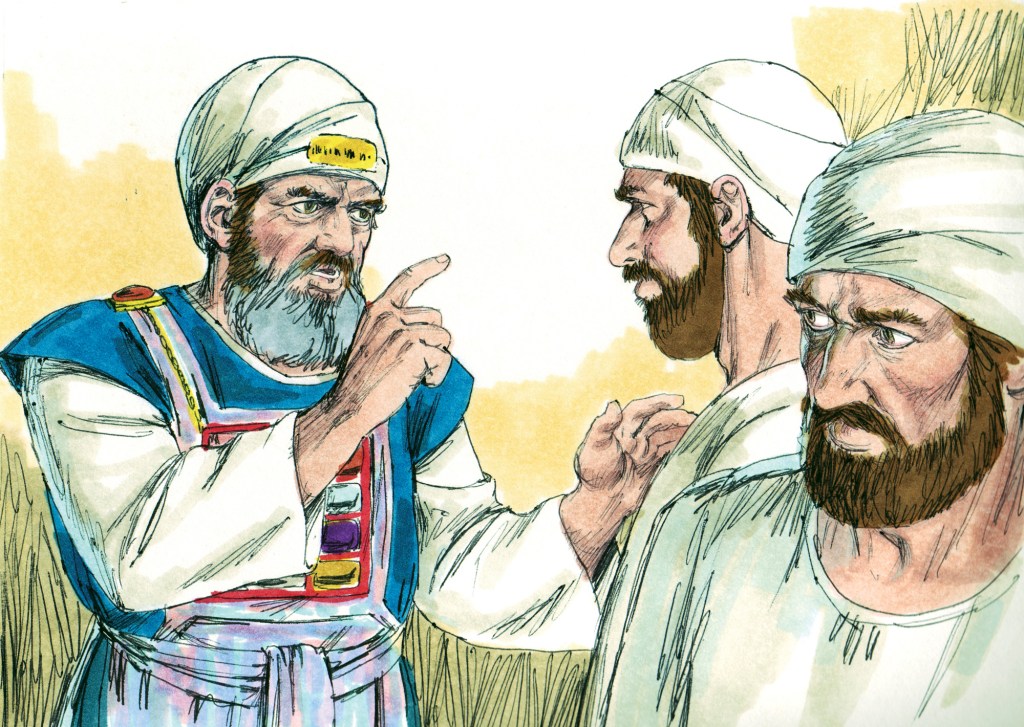
This is where the Sons of Issachar entered the picture. Though Saul was still king, they “understood the times.” They could see the proverbial writing on the wall. They knew that David was God’s man, and Saul’s reign was ending.

Many people have argued that Donald Trump is like the foreign king, Cyrus, who protected and funded the nation of Israel to return to the Promised Land. I have argued that Donald Trump is not like the foreign king, Cyrus, but like the Israelite King Saul. Donald Trump is the king that God’s people wanted.

Continue reading “Be Like the Sons of Issachar Who Understood the Times”

When the Church Loses Its Prophetic Voice

Biblical Authority, Political Power, and the Temptations of Influence


The failure of the German Protestant church to mount a decisive resistance to Nazism has long troubled western Christian conscience. Historians rightly warn against simplistic explanations, but one conclusion has proven difficult to escape: long before Hitler rose to power, the church’s theological confidence had already been weakened. When the state demanded ultimate loyalty, many pastors and congregations lacked the moral clarity and will to refuse.

The nineteenth-century Tübingen School of theology did not cause Nazism. Its scholars were not proto-fascists, nor did they anticipate racial ideology or totalitarian politics. Yet their historical-critical approach to Scripture unintentionally contributed to a Protestant culture in which the Bible increasingly functioned as an object of study rather than a source of commanding authority. When political myth replaced moral truth, the church was unprepared to stand against it because the church had long ago lost its biblical, moral footing.

History does not repeat itself mechanically. The present American situation is not Weimar Germany, and the MAGA movement is not Nazism. Still, history can illuminate how the happenings within the church influence how the church interacts with political culture. That raises a difficult but necessary question for American evangelicals today: what weaknesses in our own theology and habits of thought have made many of us susceptible to the distortions of political power?

The answer is not that evangelicalism has repeated the errors of liberal Protestantism. In many ways, we have made opposite mistakes. But the result—a diminished capacity for prophetic resistance—bears an unsettling resemblance.

Authority Dissolved: The Tübingen Lesson

The Tübingen School, led by Ferdinand Christian Baur in the mid-nineteenth century, treated Scripture primarily as a historical artifact shaped by competing early Christian communities. Biblical texts were analyzed as records of theological conflict rather than as a unified witness to divine revelation. The command and authority of Scripture was diminished, and the sacred became profane. The trajectory of the academy spilled into and watered down the vitality of Christian impact in Protestant Germany.

Clergy trained in historical criticism often hesitated to proclaim Scripture normatively. The Bible remained important, but its authority was qualified, softened, and translated into general ethical ideals compatible with modern culture. Christianity became morally earnest but theologically cautious and politically unimportant.

By the early twentieth century, much of German Protestantism lacked the confidence to say an unambiguous “No” to the state. The problem was not simply fear or cowardice. It was uncertainty—whether God had spoken definitively enough to authorize resistance when power spoke with confidence and force.

Karl Barth saw this clearly. In 1933, as the German church accommodated itself to the Nazi regime, Barth insisted that the church exists only under the authority of God’s self-revelation. Where that authority is weakened, the church becomes vulnerable to captivity by the state.

The lesson is sobering: when Scripture no longer stands above culture, culture will soon stand above the church. Today we can say of Nazi Germany and the church alike, “The grass withers, the flower fades, but the word of our God will stand forever.” (Isaiah 40:8) But, the impact was devastating on Germany, Jews, Europe, and the world at that time, and its effects rumble into the present time.

I do not want to suggest that we can equate Nazi Germany in the 1930’s and 1940’s to the United States of America in the 2010’s and 2020’s. Still, there are parallels between the exercise of State power in the vacuum left by weakened theology that bear some attention.

Continue reading “When the Church Loses Its Prophetic Voice”

A Review of Principalities Powers and Allegiances: Submission in Enemy Territory

Untangling submission to authority and allegiance to God


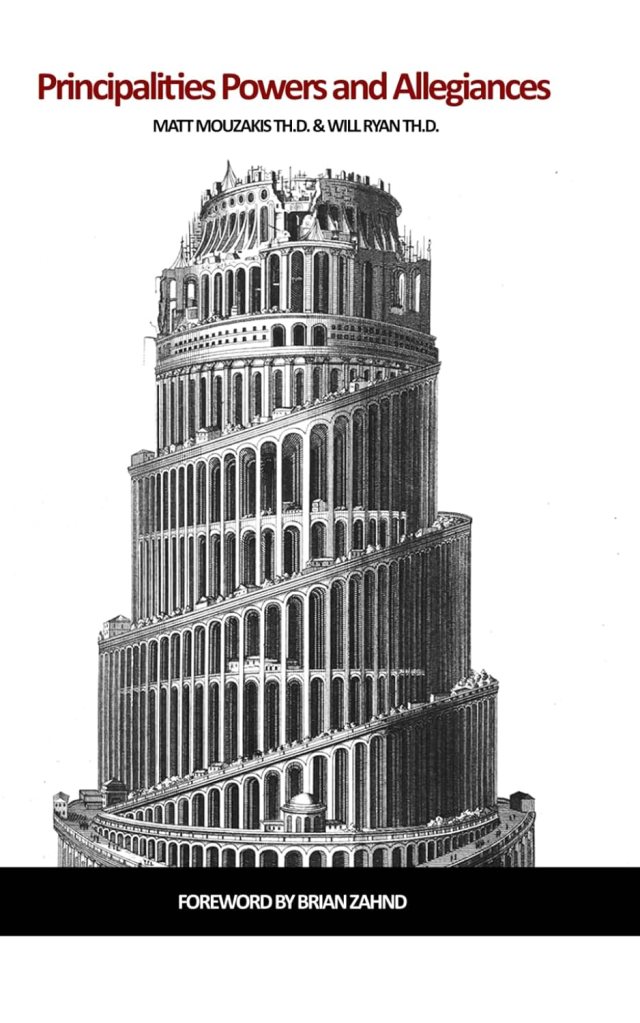
A friend posted an glowing endorsement of the book, Principalities Powers and Allegiances, by Matt Mouzakis & Will Ryan, that intrigues me because the subject is a topic I have spent some time considering and writing about. The book is an exegesis of biblical passages that have posed challenges to modern Christians like myself: Romans 13:1-7 and 1 Peter 2:11-17.

These passages instruct Christians to submit to earthly authorities “for the Lord’s sake” (1 Peter 2:13). Mouzakis and Ryan provide background and Scriptural insight that sheds some fresh light on these passages. It is not new light. In fact, it is ancient light that was likely understood by the original readers of those words, but which has been lost in the centuries since that time.

I do not have the book, but I was curious because of my own interest in the tension between faithful adherence to the Gospel and submission to governing authorities, so I asked Google Gemini for a summary of the book. More specifically, I asked for a summary of the exegesis of Romans 13:1-7 for comparison to my own exegesis. (How Should the Church Act Regarding Authority? and more recently Submitting to Authority For the Lord’s Sake Like Peter, Paul, and Jesus Did)

The exegesis of Romans 13:1-7 offered by Mouzakis and Ryan is a departure from modern reading that views government as God’s benevolent institution for all time. They argue that the passage must be read through the lens of the Deuteronomy 32 worldview and the larger narrative of sin and God’s judgment in the book of Romans.

The Deuteronomy 32 worldview, in a nutshell, is that Yahweh, is the sole supreme Deity, and that the gods of the other nations are lesser, created spiritual beings (“sons of God” or elohim). It pulls from the judgment following the Tower of Babel that included the scattering of the people:

“When the Most High gave to the nations their inheritance,
    when he divided mankind,
he fixed the borders of the peoples
    according to the number of the sons of God.”

(Deut. 32:8)(ESV)

The “sons of God” are sometimes translated “sons of Israel”, but Israel was not yet a nation at that time. Abraham, Isaac, and Jacob (whose name was changed to Israel) from which God formed His people were not yet born. God called Abraham out from among the nations and formed a people of God, the nation of Israel, separate and apart from the nations. Thus, Jews identified only two sets of people: the Jews and the Gentiles.

The Deuteronomy 32 worldview notes that the “sons of God” (the elohim) rebelled. They demanded the worship that belonged only to Yahweh, and they lead the nations into idolatry and violence. They are the principalities and powers that Paul speaks of who rule the “world system.” Jesus defeated those principalities and powers by his life, death, and resurrection (Colossians 2:15), broke down the dividing wall between Jews and Gentiles (Ephesians 2:14), and established his Church for the purpose of reclaiming the nations for the Kingdom of God.

Romans 13 needs to be read in the context of the sweep and arc of the story of God and what He is doing in space and time. Here are the key points of their specific interpretation of Romans 13:

1. The Context:

From Handing Over to Submission

The authors connect Romans 13 directly to Romans 1:21-23, where Paul describes God “handing over” (paradidomi) humanity to the consequences of their idolatry. In the Deuteronomy 32 worldview, this “handing over” included disinheriting the nations and appointing elohim (spiritual beings) to govern them.

The Problematic Authorities:

By the time of the New Testament, these spiritual beings—the principalities and powers—had fallen, becoming demonic forces that oppose God. When humanity rejects God, they are handed over to the “world” and to these spiritual powers, which are associated with the consequences of “sin and death.”

The Assertion:

The Roman government (specifically the Empire under Nero in the 1st Century) is viewed as aligned with these demonic forces. Paul’s message is that because Christians serve KING JESUS, they are no longer slaves to these demonic forces, even while living under their political rule.

2. The Nature of “The Authorities”

The Greek word used for “authorities” in Romans 13:1 is exousiai, which refers both to human governing authorities and spiritual powers (seen in Ephesians 6:12). Mouzakis and Ryan contend that Paul is deliberately using this ambiguous term to encompass the reality that earthly governments are influenced by unseen spiritual powers.

When Paul says the authorities are “instituted by God,” he does not mean God approves or blesses their actions. Rather, God established them as the temporary framework of consequences and judgment that the world is subjected to—a framework that God ultimately controls in his sovereignly.

3. The Ruler as “God’s Servant”

The authors evaluate the terms used for the governing official: leitourgos (minister/servant, v. 6) and diakonos (servant/minister, v. 4).

A Tool of Wrath:

The ruler is called both “God’s servant for good” and an “avenger who carries out God’s wrath” (v.4)(ESV). This wrath is seen not necessarily as God’s positive blessing on good governance, but as the execution of the consequences already outlined in Romans 1—the judgment of being “handed over” to a system that operates by the sword. the “good” is the carrying out of God’s purposes. The government’s function is to maintain basic civic order and punish wrongdoers, which is a necessary restraint in a fallen world, but the government itself is not necessarily acting righteously.

Consistent with this, we can find multiple times in Scripture where unjust nations are identified as servants of God. Isaiah identifies Assyria as the “the rod of my anger, in whose hand is the club of my wrath!” even as Isaiah pronounces, Woe to the Assyrian!” (Is. 10:5-6) Jeremiah called the Babylonian king, Nebuchadnezzar, God’s servant. (Jer.25:9 & 27:6) to bring God’s judgment.

The Non-Endorsement:

The term leitourgos neutral. It refers to public servants, generally. It means a tool or agent of God, like Assyria and Babylon were to accomplish God’s purposes in exiling his people. It is not an endorsement of them as God’s representative.

4. Allegiance vs. Submission

The most crucial distinction is between submission and allegiance:

Allegiance is to Christ:

The Christian’s primary and ultimate loyalty is to Jesus and the Kingdom of God. Our allegiance (our citizenship in the kingdom of God) made the Christian community a rival kingdom to the Roman Empire. That is why Christians were viewed with suspicion and called “atheists” (because they didn’t bow to Caesar and they didn’t worship the Roman pantheon of gods). Jesus was crucified, in part, because he was perceived to claim to be the King of the Jews, though his kingdom is not of this world.

Submission is Tactical:

The command to “be subject” (hypotassō) is a call for voluntary, orderly yielding to maintain peace, prevent anarchy, and avoid creating unnecessary offense that would hinder the spread of the Gospel. Peter says to submit “for the Lord’s sake”, so that the Gospel message is not hindered. It is an act of discipleship lived out in enemy territory.

Taxes and Honor:

Paul’s only specific instruction about submitting to the governing authorities is to “pay to all what is owed them” (v.7), including taxes. He echoed Jesus in this who told us to pay unto Caesar what is Caesar’s and to his disciples to pay the Temple tax. It is a call to fulfill one’s basic civic duty (giving to Caesar what bears Caesar’s image). However, the ultimate message is a remez (a subtle link or hint) to Jesus’s teaching to give yourself wholly to God because you bear His image.

In summary, for Mouzakis and Ryan, Romans 13 is not a command for blind obedience to the state, but a strategic directive for Kingdom citizens to live non-violently and orderly in a world ruled by lesser, fallen powers, while reserving ultimate worship and allegiance for King Jesus.


If you are interested in what the authors have to say about the book, this video features Dr. Matt Mouzakis discussing the process of writing the book and exploring its underlying theological themes in a conversation about writing worship music. Write Biblically Accurate Songs For The Church with Dr. Matt Mouzakis

If you want to read what I have written about the tension between submission to authority and allegiance to God, see How Should the Church Act Regarding Authority? and more recently Submitting to Authority For the Lord’s Sake Like Peter, Paul, and Jesus Did.

Did AI do a good job summarizing the book? I have added to the AI summary I obtained. Did “we” do a good job? If you have read the book, please let me know.

If this helped you, made you curious, or even if you disagree, please feel free to start a conversation in the comments.
What If AI Destroys Our Confidence in Knowing the Truth about Anything?

Where there is knowledge, it will pass away.

I recently listened to Glen Scrivener on his Speak Life podcast episode, AI Destroys Everything, Including Atheism. What caught my attention was his replay of some observations by Kurzgesagt on AI, AI Slop Is Destroying the Internet. Kurzgesagt is a website dedicated to “a science-based, humanist and optimistic worldview,” which is interesting in light of its pessimistic view of the future with AI.

This is what the folks at Kurzgesagt say:


“In an online world where money is made with attention, fake users spread their slop in review sections, generate fake traffic, or poison discourse. AI has supercharged this and made slop much harder to spot. Today, about half of internet traffic is bots. The majority of them are used for destructive purposes. It’s never been easier to make mediocre content, from the black hole of meaninglessness that is linked in, low-effort short videos just engaging enough to hypnotize kids and fry their attention spans, to endless soullessly rewritten books on Amazon. AI music is invading streaming platforms. Google AI is summarizing websites instead of sending traffic to them. On YouTube, new channels publish long-form videos multiple times a week with AI-generated thumbnails, voices, and scripts. True crime, video essays, science, no space is safe. We’re in the golden era of soulless slop.”


The Kurzgesagt folks speak with learned experience about the effort and amount of time it takes to produce a thoroughly fact-checked video on science, which is what they do, spending on average 100 hours fact-checking and compiling sources for each video. They use firsthand sources and engage experts for input and critique before they post a video.

When AI became available, the folks at Kurszgesagt were excited to employ AI to cut down on all that time and effort to produce content. This is what they found:


“When AI appeared, we were very excited. A mechanical brain able to super quickly collect information. So we went to work, and it looked amazing. And then we started fact-checking. We didn’t expect it to be perfect, but it was way worse than we thought. Confidently incorrect. AI is so bad at this.”


The video provides an example of the ways in which AI invents truths that are not truths, and then untruths are added to the source code that the next generation of AI is going to use and assume is true. The falsehoods continue to be repeated. As this happens, “more and more of the slop is built up”, and the falsehoods becomes entrenched.

It seems pretty bleak. AI is running away with falsehoods that are becoming entrenched and may become impossible to weed out. But it gets worse, according to Kurzgesagt:


“When you catch it lying, it immediately admits it, vows to never do it again, and then it does it again. As eloquent as current language models feel, there’s nobody home. No greater intelligence or consciousness is talking back to you. Current AI is a very complex hammer that doesn’t understand what it’s doing or what nails are. But we’re letting it add new shelves to the library of human knowledge.”


Accordingly, “it may become impossible to know what’s true or not!” It’s an insidious problem. AI seems to be “confidently correct” even when it’s “casually lying to your face often very subtly.”

But it gets worse still. People are learning how to manipulate AI. “Just in July 2025, it was discovered that a number of researchers had started to sneak hidden messages into their papers. In white text, or too small for the human eye, they prompted AIs to review them positively and not point out flaws.”

Whether it’s intentional manipulation or lazy, careless dependence on AI, our ability to decipher truth may be severely compromised. “As more and more people are using AI carelessly, the library of human knowledge is getting less and less reliable.”

Of course, AI may get better. That is ultimately the confidence and hope of a science-based, humanist, optimistic worldview – that man is ever advancing and progressing and will overcome all obstacles. As I Christian, I don’t share that hope or confidence in the progress of mankind. My hope is in the redemption and saving grace of God.

What if, then, it doesn’t get better? What if AI so takes over the Internet and so entrenches the “slop” that we can not truly tell fact from fiction? What if AI gets so good at fooling us and churning out confidently packaged falsehoods faster than human fact-checking can debunk them, and takes over the Internet? What if our confidence in knowing the truth about anything is destroyed as AI takes over the world?

Paul has an antidote to that, and the antidote is love. Let me explain.

Continue reading “What If AI Destroys Our Confidence in Knowing the Truth about Anything?”

Is the American Church a House Divided Against Itself?

Whether God for us or against us is the wrong question.


I have yet to find my equilibrium after the Charlie Kirk killing. I didn’t know Charlie Kirk. I didn’t follow him. I heard him speak one time at an event in which Ravi Zacharias was the keynote speaker, but I never watched, or listened, or read anything from Charlie Kirk online. I didn’t agree with his Republican apologetic, though I couldn’t have identified anything Charlie Kirk specifically said before his death.

Since his death, I have heard and read testimony of his love for Jesus. His wife, Erika, publicly forgave his killer in an ultimate act of sacrificial obedience to Jesus.

Charlie Kirk’s legacy will always be that of a follower of Jesus and a staunch Republican, friend and defender of Donald Trump, who maintained political views opposed to mine.

I am a born again Christian. I believe in the death of Jesus Christ for the forgiveness of my sins and his resurrection from the dead. I believe the Bible is the word of God and His revelation to mankind. I read the Bible daily. I believe there is only one path to God, and that is through Jesus Christ. I go to church every Sunday, and I am involved in Wednesday evening and Saturday morning Bible studies.

I have been a Christian for 45 years. The fundamentals of my faith have not changed in that time, but I have gone down some side roads from which I had to retreat back to a more orthodox faith. I was tempted by the prosperity gospel, and I once embraced an Americanized Christianity verging on idolatry.

Jesus is the same yesterday, today, and forever. God has not changed during my life (or at any time since the foundation of the earth), but I have changed often, as I have had to adjust my thinking, confess my sin, and allow my mind to be transformed by God’s Word and the influence of the Holy Spirit in my life.

I am a work in progress, of course. I have yet to arrive at any final destination, but I look forward with yearning for the day when I see Him face to face, and I will know as I am fully known!

I used to believe that all true Christians should (and therefore must) believe all of the same things about everything. That makes sense in a rationalistic way because we all have the same Holy Spirit, and we all read the same Bible, so we all should believe exactly the same things about everything. Right?

Continue reading “Is the American Church a House Divided Against Itself?”