I don’t often comment on the free will/predestination conundrum. If I had to “pick a side”, I would err on the side of free will. It’s a conundrum because the Bible includes verses and passages that seem to support free will and verses and passages that seem to support the idea of predestination.
Some people say this is an example of contradictions in the Bible. Some people land on one side or the other, seemingly ignoring or explaining away the verses that suggest otherwise.
I say it’s a paradox. A paradox is “a seemingly absurd or self-contradictory statement or proposition that when investigated or explained may prove to be well founded or true.” A paradox may appear to be a contradiction, but it turns out to be true, and noncontradictory.
How are man’s free will and God’s preordainment true? I don’t honestly know. That we human beings think that we must figure everything out, or it cannot be true, is frankly an arrogant thought, finite creatures that we are. At the same time, we are not completely unreasonable to seek some explanation or understanding.
If you expect, now , that I will give one, I have to apologize in advance. I do have some thoughts about it and will explore them in one of those verses that affirms the free will of men:
“As he approached and saw the city, he wept for it, saying, ‘If you knew this day what would bring peace — but now it is hidden from your eyes. For the days will come on you when your enemies will build a barricade around you, surround you, and hem you in on every side. They will crush you and your children among you to the ground, and they will not leave one stone on another in your midst, because you did not recognize the time when God visited you.’”
Interior of Winchester Cathedral in Hampshire – United Kingdom. Photo taken on 6th of May 2019
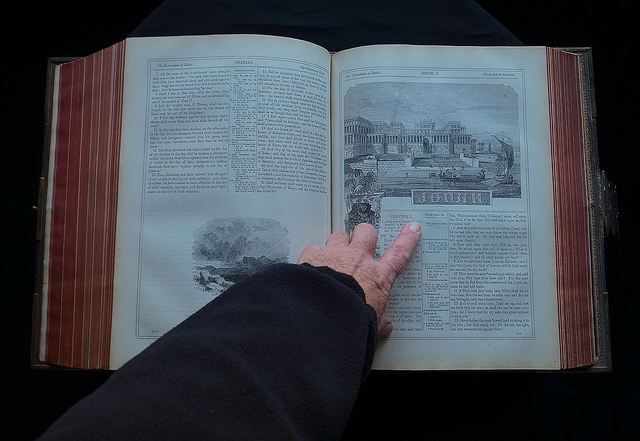
In my daily Bible reading today, I read through Luke 17. While I have been reading through the Gospels, the kingdom of God has been the theme that has caught my eye. I have meditated and written on the kingdom of God a few times recently in my latest trip through the Gospels in chronological order.
Today, I read the following:
“When he was asked by the Pharisees when the kingdom of God would come, he answered them, ‘The kingdom of God is not coming with something observable; no one will say, ‘See here!’ or ‘There!’ For you see, the kingdom of God is in your midst.’”
Luke 17:20-22 CSB
The Pharisees asked Jesus about the Kingdom of God. This was their orientation. They looked back on David the king and all the kings of Israel and on a future Messiah who would reestablish the throne of the Davidic Kingdom. They were predisposed to think this way for tens of generations.
The response Jesus gave them wasn’t what they expected or what they hoped for. If Jesus was the Messiah, as some people were claiming, he would certainly reestablish the ancient kingdom in short order. Or so they thought.
What did he mean that the kingdom wasn’t coming with something observable?! What good would a kingdom be that could not be seen? What kind of a kingdom would that be?
At the same time, if they could get past their assumptions driven by their long-awaited expectations and listen to what Jesus was saying, they would focus on the statement: “For you see, the kingdom of God is in your midst!” Present tense!
In many of the parables Jesus spoke about the kingdom, he paints a picture of the kingdom as something like leaven that makes bread rise or a small seed like a mustard seed that grows up into a large bush that can hold many birds.
These parables suggest that the kingdom of God does not come with pomp and circumstance in impressive form. It is more like salt and light, things that we take completely for granted, which we either can’t live without or which enhance or flavor and preserve and sustain us in ways that we might not even appreciate.
“The kingdom of God,” Jesus said, “is in our midst”, but we are apt to miss it if we do not appreciate what he means. Kingdoms have a king, of course, and Jesus is that king, but he is not a king now in the common sense of the word. He has not (yet) established an earthly kingdom, but a “heavenly one”.
Just as God created all that is seen from what is unseen, Jesus has established the kingdom, for now, through what is unseen. He invites us into His kingdom. It’s a gift offered to us. (Eph. 2:8)
The kingdom is nothing we can earn. (Eph. 2:9) We can’t be born into it; we don’t receive it as a privileged offer; we aren’t selected to receive the offer. (John 1:12) The kingdom is offered freely to all who respond by faith and enter into it.
The kingdom of God is experienced through relationship with God, the Father, through the mediation of Jesus, the Son, and the in-dwelling of the Holy Spirit. We live out the kingdom of God in community with other believers and our interactions in the world. If we are true ambassadors of God’s kingdom, people will be attracted to our salt and light – or repelled by it as they who rejected Jesus were repelled.
The kingdom of God is demonstrated on earth now through lives of people who have given themselves over to its king, through the lives of people who follow Jesus, who have taken up their crosses, who have given up their lives, and who have devoted themselves to becoming like their Lord and savior. Where two or more gather to pray in Christ’s name, he is there.
This is the good news of the gospel that Jesus proclaimed to the poor, the freedom he proclaimed to the prisoners, the recovery of sight to the blind and the freedom to the oppressed. The kingdom of God is here and now openly available to all who would submit to Jesus Christ as Lord and King. But, Jesus also spoke of the future.
As Jesus often did with his closest disciples, he shared with them more intimate details that were not shared with the crowds at large:
“Then he told the disciples, ‘The days are coming when you will long to see one of the days of the Son of Man, but you won’t see it. They will say to you, ‘See there!’ or ‘See here!’ Don’t follow or run after them. For as the lightning flashes from horizon to horizon and lights up the sky, so the Son of Man will be in his day. But first it is necessary that he suffer many things and be rejected by this generation.”
Luke 17:22-25
As believers, we can take solace and guidance from these words. The disciples were not prepared for what was to come – the ugly public condemnation, humiliation, and dominance of Roman authority over the Messiah, the king of God’s kingdom. They were not prepared for his suffering and death at the insistence of many of God’s own people.
The darkness of the world threatened to snuff out the light of God’s kingdom in them, and the darkness of today’s world does the same in us. Jesus warned them, and the warning stands for us, that the world would treat them (and us) the same way it treated him.
Jesus knew his followers would mourn for him and long for his return. This is a challenge for all true believers in Jesus Christ. We long for him to be with us, to return to earth. To right the wrongs and wipe away the tears.
We are tempted, therefore, to focus our attention on trying to determine when he will return. We are tempted to speculate and fixate on it. Indeed, people have written books and developed theologies about it. We even have a word for it: eschatology.
Many people over the years have claimed to figure it out and predict when he will return, but Jesus warned against us doing that. Jesus said no one will know the day or hour. Christ will return when he returns. His return will be unmistakable, but first came the business of suffering and dying.
Of course, Jesus suffered and died 2000 years ago now. We are tempted to think that times are different, but I believe Jesus was talking both about the present time and the future. His words to the disciples when he was anticipated his own imminent suffering and death provide us guidance still today.
The title to this piece seems like a silly question, right? But Jesus said,
“Consider how the wildflowers grow: They don’t labor or spin thread. Yet I tell you, not even Solomon in all his splendor was adorned like one of these. If that’s how God clothes the grass, which is in the field today and is thrown into the furnace tomorrow, how much more will he do for you — you of little faith?”
Luke 12:27-28 CSB
So, we need to ask again, “Does God throw wildflowers into a furnace?” I think it’s pretty safe to say that He doesn’t, right? Jesus is speaking allegorically here.
Jesus is saying in flowery terms that flowers are here today and gone tomorrow. They are beautiful, but only for a short time. No one reads this passage to mean that has a furnace where He throws all the wildflowers in the world. A wildflower furnace.
In the context of this little parable, Jesus is saying that wildflowers are magnificent in their splendor, though they last only a short time. The fact that God makes such temporary things as wildflowers beautiful in splendor is meant to give us hope and faith that He has much more splendor in store for us, the creatures He made in His own image!
These words give us great hope when life seems to be taking us down. No one interprets what Jesus says here as a lesson in the way God disposes of wildflowers. It’s a lesson about putting our faith in God.
I find myself contemplating often the words Jesus used to describe his purpose. Jesus gave us description immediately before he launched into his public ministry. This is the way it went down, and this is what he said:
“And he came to Nazareth, where he had been brought up. And as was his custom, he went to the synagogue on the Sabbath day, and he stood up to read.And the scroll of the prophet Isaiah was given to him. He unrolled the scroll and found the place where it was written,
“’The Spirit of the Lord is upon me, because he has anointed me to proclaim good news to the poor. He has sent me to proclaim liberty to the captives and recovering of sight to the blind, to set at liberty those who are oppressed, to proclaim the year of the Lord’s favor.’
‘And he rolled up the scroll and gave it back to the attendant and sat down. And the eyes of all in the synagogue were fixed on him.And he began to say to them, ‘Today this Scripture has been fulfilled in your hearing.’”
Luke 4:16-21
The famous announcement of his purpose came after John the Baptist piqued the interest of the local people, proclaiming, “Prepare the way for the Lord”. It came after John the Baptist challenged people to repent and be baptized.
The announcement took place after Jesus spent 40 days out in the wilderness being tempted by the devil. Jesus had not yet begun his “public ministry”, when he stood up to read in his home town synagogue from the words of Isaiah, the Prophet – words spoken about Jesus over 500 years before that day.
This was the announcement of what Jesus came to do. The Spirit was on him to proclaim good news to the poor, to proclaim liberty to the captives and recovery of sight to the blind, to set at liberty those who are oppressed, and to proclaim the year of our Lord’s favor.
It wasn’t just a prophecy to be fulfilled. It was the very purpose for which God emptied Himself and became a man incarnate. God came to reveal Himself in the material world, to reveal His very heart and His love for mankind.
This was the message that He was trying to convey over the many centuries through the one people who inclined an ear toward Him. But, they didn’t completely get it. They wandered and strayed in their devotion to God, and they mistook His law for nothing but a code of conduct that might earn them the favor of God.
They didn’t understand the relationship He desired to form with them. They didn’t understand His love for them or the singularity of His own devotion to them and the purposes He established for them before the foundation of the heavens and the earth.
They didn’t even recognize Him when He came to them, albeit emptied of all that would not fit into human form (Phil. 2:5-7) They didn’t recognize Him stripped of all His power, holiness and glory.
He did not come with pomp and circumstance. He came humbly in the form of a man just like them. His coming was barely a whisper. is arrival went all but unnoticed. Born in a humble setting to poor, common parents, he grew up in an area of Judea that was off the beaten path and not a little “backwards”.
His first 30 years of life were so unremarkable we know next to nothing about them. The first public stir that is recorded is the day he stood up and read from the Isaiah scroll, sat down, and announced, “Today this Scripture has been fulfilled in your hearing.”
People were so unready for anything extraordinary from Jesus that they marveled and asked each other, “Isn’t this Joseph’s son?” (Luke 4:22) Then, he seemed to provoke them (Luke 4:23-28), and they burned with anger at his audacity. (Luke 4:28)
It was an inauspicious start to his “public ministry”. He bombed in his hometown synagogue.
What he said of himself, however, is preserved for eternity. It is the key to understanding the heart and character of God revealed through Jesus, “the exact representation of His nature”. (Heb. 1:3) What Jesus said that day and what Jesus did is the best demonstration of God’s heart and character that we, as finite beings, might understand.
The Gospel records a three year period of time in which Jesus seemingly performed miracles, signs and wonders everywhere he went. Perhaps, the accounts in the Gospels give us an impression that doesn’t correspond to the reality because they recount the many miraculous things he did, but they don’t describe all the times in between.
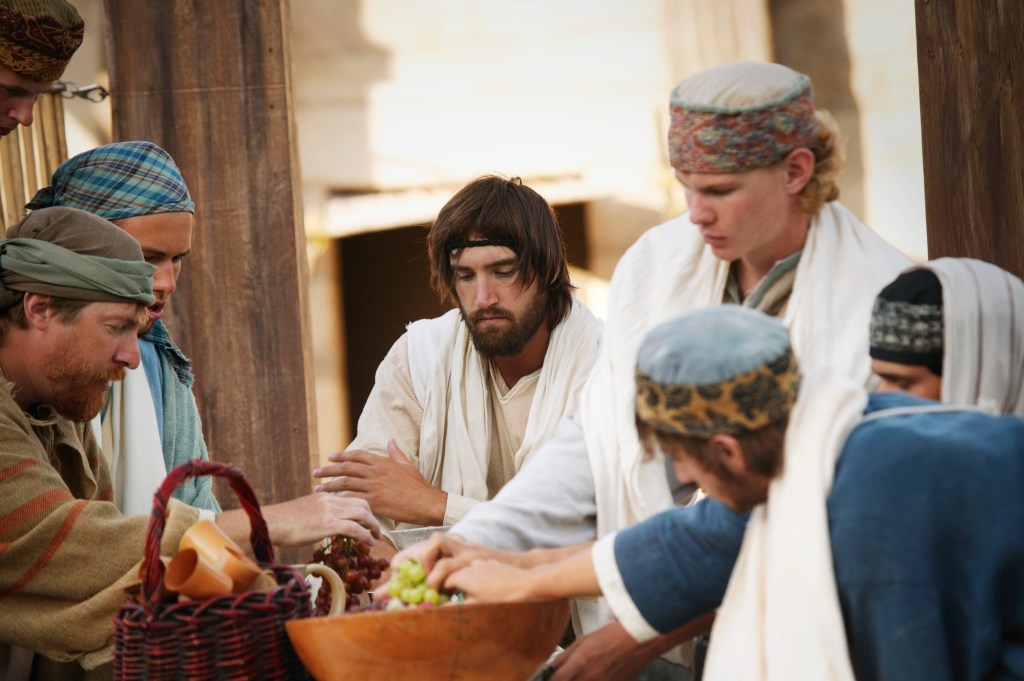
It seems strange, given all the miracles, signs and wonders that Jesus did that the Pharisees and Sadducees came to Jesus one day to test him by asking him to show them a sign from heaven. (Matt. 16:1) Perhaps, they wanted him to do it on command, like a science experiment to prove himself.
Perhaps, they had only heard of the things Jesus did, but they hadn’t actually seen him do anything. Perhaps, they didn’t trust the accounts of the common people Jesus seemed to prefer to hang out with. They were more gullible and less discerning.
Attitudes like that haven’t changed much in 2000 years. The Sadducees and Pharisees were more learned. The Sadducees didn’t believe in supernatural occurrences, miracles or demons. The Pharisees did believe in those things, but they were skeptical. The two groups had very different worldviews, but they were aligned in their skepticism.
When these elite religious leaders asked Jesus for a private performance – “a sign from heaven” – he refused. And, he said this:
“An evil and adulterous generation seeks after a sign[i]; and a sign will not be given it, except the sign of Jonah.”
(Matthew 16:4)
The fact that these two groups, one that believed in the supernatural and one that didn’t, were aligned in their skepticism suggests that their “problem” with Jesus was that he challenged their dogmas. They doubted the fact that he did miracles, signs and wonders because of the content of what he was saying.
And, Jesus seemed to revel in provoking them on those differences!
The Pharisees (who believed in the supernatural) determined that healing on the Sabbath is work and is, therefore, prohibited by the Law of Moses. They demanded that Jesus not heal on the Sabbath, but Jesus did it anyway. (Matt. 12:1-14)
Ironically, this healing that was done right in the Pharisees’ presence occurred four chapters before they came to Jesus and demanded a sign from heaven. They had seen a sign from heaven already and dismissed it out of hand because it went against their beliefs.
Jesus challenged their preconceived ideas and expectations. He challenged their authority to determine what is work in violation of the Sabbath and what isn’t. They watched Jesus heal a man with a shriveled hand, but they dismissed it because of what he taught that was contrary to what they believed.
God showed the Pharisees a sign (the healing of a man with a shriveled hand), but they were too focused on his violation of their understanding of Scripture and religious dogma to notice it for what it was.
This story illustrates the danger of our religious dogmas and preconceived ideas of what God should do and not do. Even when the evidence is staring us in the face, we can be tempted to ignore it, gloss over it, and explain it away in favor of how we interpret and understand Scripture.











 Navigating by Faith