The Way of Righteousness and the Holy Command: an Introduction

We escape the corruption of the world by the way of righteousness and the sacred command. But, what if we lose the way and don’t know the sacred commandment?


Have you ever read a passage in the Bible that weighed heavily on you? A verse that caught you up short?  A verse that gave you great concern? A verse that made you question your own salvation?

I assume we all (who take the Bible seriously) have experienced that. I believe the Holy Spirit interacts with us as we read the Bible (which the writer of Hebrews says is “living and active”). Sometimes we are encouraged, and sometimes the light of scripture shines into the recesses of our hearts and exposes things that bother us. (And so they should!)

Indeed, I believe that this is one of the great benefits of reading Scripture on a regular basis. God talks to us through His revealed Word. He interacts with us in ways that get to the core of our being … if we let Him … to teach us, to convict us, to correct us, and to instruct us in righteousness. (2 Timothy 3:16)

I recently read the following verses in my daily Bible reading:

If they have escaped the corruption of the world by knowing our Lord and Savior Jesus Christ and are again entangled in it and are overcome, they are worse off at the end than they were at the beginning. It would have been better for them not to have known the way of righteousness, than to have known it and then to turn their backs on the sacred command that was passed on to them.

2 Peter 2:20-21

Peter goes on to quote two “proverbs” about: 1) a dog that returns to its vomit (quoting Proverbs 26:11); and 2) a sow that is washed that returns to wallowing in the mud.

These examples seem to be clear illustrations of people who, having been cleansed from sin, return to their sin. If you have ever returned to the sin you have walked away from, you know the angst that reading this verse can bring.

Peter says it is better that we never know Jesus than to have known him and walked away! People are worse off not to have known the “way of righteousness” than to have known it and turned their backs on the “sacred command” (or holy commandment).

I am convicted when I read these things. I sometimes despair of the sin I tend to repeat. I have often felt like a slave to certain sin, and I been anxious for my own salvation when I read a verse like this.

I think we should feel the full weight of verses like this. God is clearly interested in the fruit of our lives. A bad tree cannot produce good fruit. If we are tapping into the wrong tree, nothing we do can produce good fruit. The problem isn’t in the fruit; the problem is the source.

Continue reading “The Way of Righteousness and the Holy Command: an Introduction”

The Way of Righteousness and the Holy Command: The Way

We escape the corruption of the world by the way of righteousness and the sacred command. But, what if we lose the way and don’t know the sacred commandment?


I started this short series focusing on the second epistle of Peter where Peter warns his readers about false prophets with “eyes full of adultery”, greed, and depravity who are slaves to their own sin. These people seduce the unstable and entice others by appealing to the lustful desires of the flesh. Peter says,

It would have been better for them not to have known the way of righteousness, than to have known it and then to turn their backs on the sacred command that was passed on to them.

These are fearful words of warning. Anyone who might feel enslaved to sin has likely felt angst when reading this words.

In the previous article, I note that the actions Peter describes are the fruit of people who have “known the way of righteousness” and the “sacred [holy] command” and have turned their backs and walked away. The fruits are the symptoms, not the cause.

The important thing for us, therefore, is to know the way of righteousness and the holy commandment, and not to turn our backs on them! In this follow up to that introductory article, I will focus on the way of righteousness.

Continue reading “The Way of Righteousness and the Holy Command: The Way”

The Way of Righteousness and the Holy Command: the Holy Command

We escape the corruption of the world by the way of righteousness and the sacred command. But, what if we lose the way and don’t know the sacred commandment?


I started this short series with a passage from 2 Peter 2:20-21:

If they have escaped the corruption of the world by knowing our Lord and Savior Jesus Christ and are again entangled in it and are overcome, they are worse off at the end than they were at the beginning. It would have been better for them not to have known the way of righteousness, than to have known it and then to turn their backs on the sacred command that was passed on to them.

They “they” who escaped the corruption of the world only to be entangled in it again are the false prophets Peter accuses at the beginning of the chapter of introducing “destructive heresies” and “denying the sovereign Lord who bought them.” (2 Pet. 2:1) Peter says these false prophets are like dogs returning to their vomit. (v. 22) Seducing the unstable (v. 14) and appealing to the lustful desires of the flesh, they entice “people who are just escaping from those who live in error.” (v. 18)

In the introductory article, I note that the words of judgment Peter unleashes on these false prophets might lead to a concern that we could one of those unstable ones who are enticed and entrapped. Those who struggle with sins that so easily entangle us might easily feel condemned in this tirade.

The solemn warning that such ones are better off not knowing Jesus. than knowing the way of righteousness and turning their back on the sacred command is enough to send a shiver down the spine. The actions Peter describes, however, are the fruits of turning away from the sacred command. These fruits are not the problems in themselves, but the symptoms of disconnecting from the way of righteousness and the sacred command.

In the second article, I explored the way of righteousness. The way of righteousness is the way of Jesus, who is the Way! Knowing Jesus and knowing the way of righteousness is the same thing.

The way of righteousness means embracing and walking in light of his sacrifice on the cross by which we are justified and we are considered righteous before God the Father. It means trusting in Jesus and the grace of God the Father. It means ceasing from our striving to earn the way and the pride that goes with our achievement.

The way of righteousness means following Jesus and maintaining relationship with Jesus, who is our Living Water, our Bread of Life, and the Vine in which we have become the branches (extensions of him). Knowing the way of righteousness and turning from the sacred command is to disconnect and to go our own way.

But what is the sacred command? This was my big question as I read through this passage recently, and this question is ultimately what motives me to write this short series.

I admit, that I wasn’t sure as I read through this passage. I should have known, because Jesus was pretty clear about it. But, I didn’t. I had lost sight of it. It’s so easy to lose sight of what’s important in the turmoil in the world that often spills over into my own heart.

Continue reading “The Way of Righteousness and the Holy Command: the Holy Command”

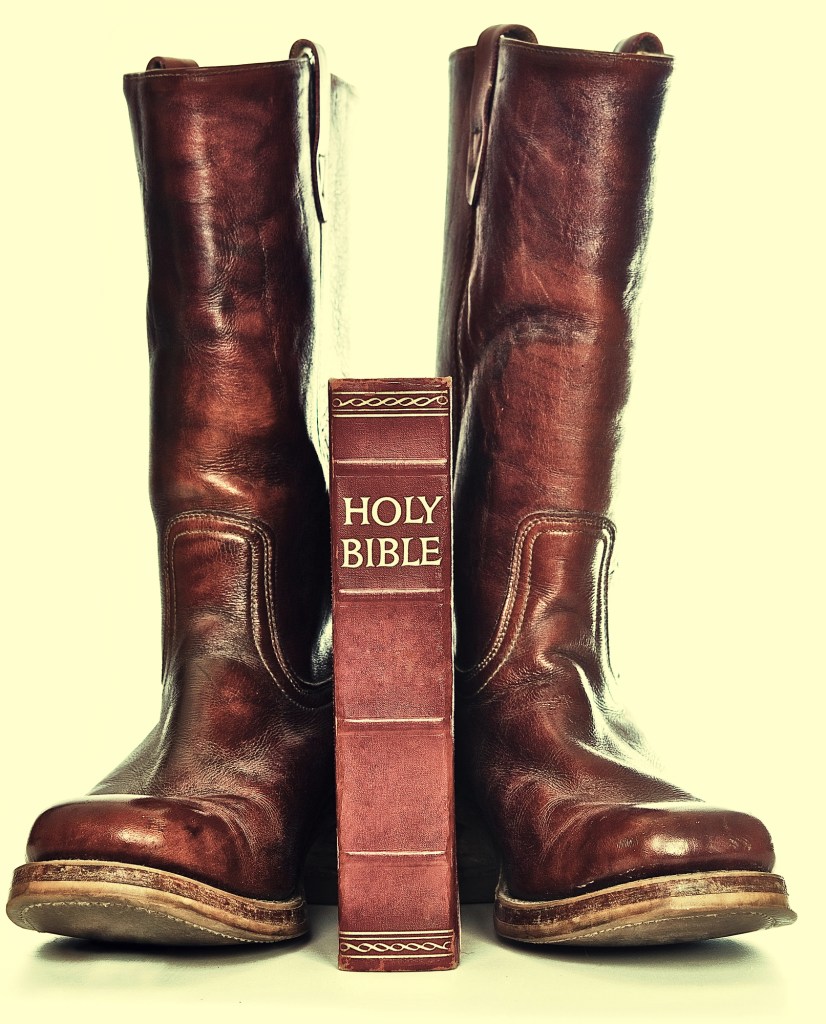
Gospel Shoes

The art of music has a way of moving us and conveying messages that might not be as well received more directly and bluntly spoken

Blindfaller by Watchhouse

What business is it of mine to judge those outside the church? ….
God will judge those outside….

1 corinthians 5:12,13

Paul wrote these words to the Corinthians while urging them to deal with sexual immorality in the church that was so bad it would not have been tolerated by pagans. (1 Corinthians 5:1)

I am reminded of these words that Paul wrote as I listen to Gospel Shoes by the folk/Americana group, Watchhouse (formerly Mandolin Orange) from Chapel Hill, NC. This isn’t a “Christian” song written by people who profess to be Christian, but it speaks with poignancy, clarity, and tenderness. This version is particularly well done:

 Some set their heads to swimming, nothing to lose
Drift about their good times, slivers in their boots
Some walk the straight and narrow, only passing through
Trading this world over for a pair of gospel shoes

The opening stanza of the song contrasts the “pagans” of the world with the “Christians” (more or less). Andrew Marlin (the writer of the song) may put it another way. He might say that he is contrasting “normal”, average, typical people with “religious”, church-going people.

To be fair, the caricatures of religious people do not accurately describe most of the people in my church (or in any church I have gone to, for the most part). BUT, those caricatures do have some elements of truth to them about some people, or some segment of people, who are religious in our society.

Those who “set their heads to swimming, nothing to lose”, are living this life for all it can give them because they believe this life is all there is. They “drift about their good times” because they have no particular aim, meaning, or purpose. They are looking for whatever fun and pleasure they can get, though they accumulate “slivers in their boots”.

Those who “walk the straight and narrow, only passing through”, are the religious people, of course. They are people who profess to believe in a better life after death, “trading this world over for a pair of gospel shoes”.


The term, “gospel shoes”, finds some resonance in Isaiah:

“How beautiful on the mountains are the feet of those who bring good news, who proclaim peace, who bring good tidings, who proclaim salvation, who say to Zion, ‘Your God reigns!’”

Isaiah 52:7

The word, “gospel”, of course means “good news”. The feet are beautiful of those who say “God reigns!” because it is news of peace, good tidings, and salvation. Or so it should be. Paul says, our feet should be “fitted with the readiness that comes from the gospel of peace.”

Ironic, isn’t it? That Paul in talking about the “armor of God” includes “shoes” made of the “gospel of peace”. (Ephesians 6:15) It’s no wonder that we send mixed messages out into the world. But, that isn’t the “fault” of scripture; it’s our misunderstanding of it and of the upside down nature of the kingdom of God that Jesus preached.

The armor of God does not protect us against people (flesh and blood) but against dark spiritual forces. (Eph. 6:12) We are not intended to use the armor of God as a weapon against people.

Of course, some people often don’t want to hear about God. They don’t want to do be accountable, so the news of God is not “good” to them. The people who set their heads to swimming, who think they have nothing to lose and drift about the good times, however, are bound to gather slivers in their boots.

Drifting through life doing “whatever feels good” inevitably results in hardship and heartache. These are people, however, for whom God emptied Himself to become human in Jesus and for whom Jesus gave up his life, dying on a cross. He didn’t come to condemn them; he came to save them. (John 3:16-17)

Those slivers in their boots are problems that will fester and get worse. People often do not wake up to the folly of our youth until we have accumulated more hardship, difficulty, and pain than we can handle. And sometimes, those slivers cause problems that linger for a lifetime.

God who loves “those people” so much that He gave His son for them. He loves them no less than any religious person in the world, no matter how devout. Thus, God desires to reach them with His Gospel, the good news that there is a way for them to avoid the pain of their own doing and judgment that inevitably follows this life and enter into relationship with the God who created them and loves them.

As I recall Paul’s words to the Corinthians, I am struck that we often seem to have gotten things backwards. Instead of loving the world and seeking to reach them with the good news, we condemn the world and preach judgment.

Continue reading “Gospel Shoes”

Is Merely Believing In Jesus Enough?

Jesus said that many people will say to him on the day of judgment, “Lord, Lord”, but he will tell them that he never knew them.


I follow a daily Bible reading plan every year. In most years I read through the Bible from beginning to end, but this year I am focusing on the New Testament only. Today, I came across this rather innocuous verse that prompts my thoughts:

Now when he was in Jerusalem at the Passover Feast, many believed in his name when they saw the signs that he was doing. But Jesus on his part did not entrust himself to them, because he knew all people. 

John 2:23-24 ESV‬

Though I was raised Catholic, a combination of evangelical people who shared the Gospel with me led me to a real, authentic belief in God and surrender to Jesus “as my Lord and Savior” (as the saying goes). I can’t say that I didn’t believe in God before that time (intellectually), but God didn’t mean anything to me before then. I had no relationship to God, and the existence of God carried no relevance in my life.

As a young Christian, I put great weight on simply believing in Jesus, which was what was emphasized to me. It seemed to me that believing in Jesus was all a person needed to do to be saved, and everyone who believed in Jesus was OK. I think that is still fundamentally true, but it is not the whole truth.

I was grateful, of course. Belief in Jesus changed my life! I recognized the changes deep within me, which I believe is indicative of being born again. My eyes were opened, and now I could see!

Many years later, however, it doesn’t seem quite so simple. Examples of people who go to church, and claim to be Christian, but who don’t act anything like Jesus, are legion. This hypocrisy among the people who call themselves Christian is a common reason why people say they don’t go to church any more. Many people don’t live what they believe.

Of course, we are all hypocrites to some extent. None of us live up to God’s standard. (Nor do we even live up to our own, lower standards, if we are being completely honest.)

There are differences in degrees. Some people are more like Jesus than others. The Bible acknowledges that we must all grow in our knowledge of God, and the Bible recognizes that sanctification is a process.

In my own life, I experienced some relatively instantaneous changes in me, especially in my attitudes, in what I was drawn to, and in my understanding (like a light bulb turning on). I also continued to struggle with habits of thought and action, some of which dog me still to this day.

We want simple formulas. Romans 10:9 says, “[I]f you confess with your mouth that Jesus is Lord and believe in your heart that God raised him from the dead, you will be saved.” ( ESV) This literally says that believing in our hearts and confessing with our mouths that Jesus is Lord is all that is necessary for salvation.

I believe in that “formula” with all my heart. BUT – at the same time – it is is not quite so simple. Jesus said, “Many will say to me, “Lord! Lord!”

We might have a tendency to view the “Romans Road” as a kind of magic formula that makes a person a Christian, but it doesn’t exactly work like that. Anyone can mouth those words with no change in their inner reality. It’s not enough to confess with your mouth, a person must believe in his/her heart.

Anyone can confess that “Jesus is Lord”. The confession must come from a real and authentic belief in the heart that results in a change to be assured it has real substance.

This change is not something we can manufacture. It occurs organically from the inside out. The change may not even be immediately noticeable. This is because the change results from God working inside us, not by our efforts to conform, but by His regenerative work in us. It may take a while to bear fruit on the outside.

People look at the outward appearance (confession), but God judges the heart. (1 Samuel 16:7) People may claim to be Christian, especially in the United States where being Christian can provide social, political, or other capital, but that doesn’t mean everyone who claims to be a Christian is an authentic believer and follower of Jesus.

Jesus said that many people will say to him on the day of judgment, “Lord, Lord”, but he will tell them that he never knew them. (Matt. 7:22) Jesus said that some of these people will even prophesy, cast out demons, and perform miracles in his name, but, they are not true believers. (Matt. 7:23) (If you want to hear the personal stories of people who recognize that they were once “false converts”, I am providing a link to their stories here.)

Continue reading “Is Merely Believing In Jesus Enough?”