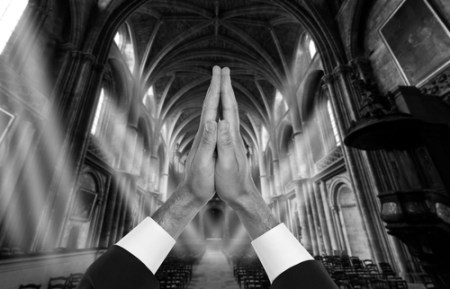
The David Cries Out for the Judas in Me

The heart is deceitful above all things, and desperately sick; who can understand it?

Depositshotos Image ID: 52751173 Copyright: zatletic

Judas Iscariot is a tragic figure in the Gospels. He was responsible for betraying our Lord Jesus. John wrote this of Judas many years after the events unfolded in the garden of Gethsemane: “he was a thief; as keeper of the money bag, he used to help himself to what was put into it.”[1]

Because Judas betrayed Jesus and John says he was a thief, I think we tend to write Judas off, but Judas spent years in the company of Jesus. Judas knew Him intimately and was part of the very inner circle of followers of Jesus.

Jesus certainly knew Judas as well. He knew well that Judas would be the one who would betray Him. Jesus “called it” at the Last Supper.[2]

Why did Jesus allow Judas so close to him all that time, knowing what Judas would do?[3] John’s comment about Judas many years later, describing Judas as a “thief” who helped himself to the funds that Judas oversaw for the group of disciples, suggests that John knew the character of Judas as well.  What are the implications of that?

The betrayal of Jesus, of course, was part of God’s plan.[4] It had it happen. Jesus came to offer himself as a sacrifice for the sins of men, but Jesus added, “But woe to that man who betrays him!”[5]

Judas stands as a dire warning for us. What sort of man betrays Jesus?

Continue reading “The David Cries Out for the Judas in Me”

Locked Out of Garden

God didn’t leave us trapped in a maze with a hidden door. God became the door.

depositphotos Image ID: 11321001 Copyright: draghicich

Prompted by the new book by Clay Jones, Why Does God Allow Evil?, I have highlighted a couple of potential keys to addressing the “problem of evil” emphasized in his book in the article,  The Problem of Evil and Mystery of Will.

The Christian response to the age old problem lies in the story of Adam and Eve. Created in God’s own image, they were given a choice but were forbidden from exercising it. Anyone with a modicum of understanding about human nature knows that forbidden fruit is a temptation that is hard to ignore. It should come as no surprise to us (or God) that Adam and Eve gave into the temptation and ate of the fruit.

God surely must have known that they would exercise that forbidden choice! Yet, he banished them from the idyllic “garden” He created for them and cursed the world, subjecting it to difficulty, pain, suffering and death. We are looking for a clue to the question that screams from our guts, “Why?!”

This indeed is the harsh reality in which we live. There can be no denying it. Recognition of this harsh reality is not uniquely Christian. It is a universal truth. The explanation of it is what differs. The atheist might simply say that we all die and “then worms will eat our bodies”. That’s just the way it is. The Hindu might say we suffer because of karma, and we all die, and die again, and again, and again, and again. The Buddhist might say we suffer only because we haven’t reached enlightenment because pain and suffering are just a figment of the unenlightened imagination. All worldviews must contend with the fact that we live in a less than idyllic world.

The Christian says we suffer pain and death because Adam sinned. “And we’ve been attending funerals ever since,” Clay Jones says; and “Only one thing is going to prevent you from watching absolutely every person you know die from murder, accident, or disease, and that will be your own death from murder, accident, or disease.” What a harsh sentence!

If the Bible is an accurate reflection of God and of reality, why in the world would God have cursed the ground and subjected His creation to futility?

The Apostle Paul tells us in his letter to the Romans that God subjected the world to futility “in hope that the creation itself will be set free from its bondage to corruption….” (Romans 8:20) This suggests that the choice that led man to corruption and the cursing of the world to futility was part of the plan all along. In this second half of “the story” we try to make some sense of it.

Continue reading “Locked Out of Garden”

The Problem of Evil and Mystery of Will

Why did God allow us a choice that would lead to our own corruption?

depositphotos Image ID: 135430388 Copyright: KrisCole

I am reading a book by Clay Jones called Why Does God Allow Evil? I highly recommend it. The “problem of evil” is one of the more challenging questions that we face in life, and difficulties struggling with that question have led many people to abandon or refuse to embrace faith in God.

Why does God allow pain and suffering? If God is good, how can He allow people to suffer? Why doesn’t God stop evil? If God exists, why does He allow evil to exist? These are just some of the variations of the problem of evil.

The problem of evil is a challenge for every worldview. Responses include that there is no God, and that’s just the way it is (a naturalistic world view); evil is just an illusion of unenlightened souls (a Buddhist or eastern view); evil is result of bad karma (Hindu); or evil is the result of rebellsion against God – sin (Christian). We all struggle with the conviction that things simply aren’t the way they ought to be. That Utopian disconnect urges us to ask, “Why not?”

I think, personally, that the Christian worldview makes the most sense of this question. It begins with the story of God and Adam and Eve. Whether the story is allegorical or historical, the answer involves God’s purpose in creating man, man’s finite, corruptible character (compared to God’s infinite, pure character) and a plan to develop this corruptible creature (man) who is created in God’s own image into a pure, loving relationship with God that is defined by God’s pure character, and not the corruptible nature of man.

Continue reading “The Problem of Evil and Mystery of Will”

Faith Requires a Personal Encounter

We have a hard time believing on the basis of someone else’s experience.

Depositphotos Image ID: 22520023 Copyright: Iurii

This is a prologue to a previously published piece, Room for Doubters & Skeptics. In that original piece, I explored the fact that Jesus invited, embraced and nurtured doubters and skeptics, even in his inner circle of followers. We see this in the accounts of Nathanael (also known as Bartholomew) and Thomas (who we call “Doubting Thomas).

We meet Nathanael early on when Philip introduces him to Jesus. Nathanael was skeptical. Thomas we get to know in more detail in the middle of his time with Jesus and at the end. Even at the end of his time with Jesus, Thomas still doubted.

The stories of these two men leave us with a few important takeaways. First, honest doubt was no issue for Jesus, and should be no issue for us. This was the point of the initial piece that to which I linked above. In this piece we will see the importance of asking the critical questions and being genuinely interested in the answers. There are answers, but, more importantly, the answers lie in more than bare facts and reason; genuine faith requires a personal encounter.

Whether God exists is the most important question we can ask. Whether God exists, or not, is (or should be) the foundation for everything we do and everything we think about the world. On this point, we are either hot or cold. Lukewarm is the same as being cold because it means we haven’t’ cared or been thoughtful enough to be interested in the question.

There is no such thing as a follower of God who doesn’t seek him. There is a difference between intellectual ascent and faith (commitment) to God. Someone famously said that even Satan believes in God. Nathanael and Thomas provide us an example of the importance of persistence in getting answers to the questions that arise from our doubt and skepticism.

Continue reading “Faith Requires a Personal Encounter”

Room for Doubters & Skeptics

Depositphotos Image ID: 47465065 Copyright: AsierRomeroCarballo

Jesus formed an inner circle of people who were called apostles, and that group included doubters. Yes, Jesus invited doubters and included them in His inner circle. Two of those people were Thomas and Bartholomew (also known as Nathanael).

There is nothing wrong with doubt. Honest doubt is always better than false faith. We should never trade our integrity for something that isn’t genuine. It’s better to have no hope than a false hope.

I recently wrote about a statement made about Stephen Hawking: “A great scientist, even like Stephen Hawking, if he had to admit a creator, it would be unavoidable, he would have to seek him because he is a great scientist.” I don’t know if that statement is really true. I’m not sure if Stephen Hawking would really seek God if he thought God existed, but a person should seek God if God exists. There could be no greater or more important finding than that!

Ultimate truth for finite beings like us, however, is always accompanied by doubt. We don’t know what we don’t know. We don’t know everything, and we never will. Yet, we seek for something solid, something we can trust and something in which we can put our faith. We all do that, even atheists, even if all we trust is science (and the human intellectual capacity to understand it).

For these reasons, the stories of Nathanael and Thomas are so significant.

Continue reading “Room for Doubters & Skeptics”