
Is God an Ancient Elitist?

God and His message are hidden to so many people, but it isn’t a mystery. It is “hidden” in clear sight!


Some people seem to think God is an elitist. Some people believe that God can only be understood by people who crack God’s code and discover access to His secrets. Another, label for this kind of thinking about God is the occult, though we sometimes put a more acceptable sheen on this kind of thinking.

This kind of thinking even creeps into churches and personal views on God. Christians sometimes give into temptations to divine the future or hidden truth in numerology, astrology, tarot cards, palm reading, tea leaves, etc.

Other people find in the “hiddenness” of God reason to doubt His existence. They argue that God shouldn’t play hide and seek with the world, that God should be obvious to all, and the fact that He isn’t obvious to all people means that God doesn’t exist.

I don’t find truth in either proposition. At the very least, neither proposition describes the God of the Bible. I have addressed the hiddenness of God several times in my writing, I don’t recall addressing the occult, much. Today this view on spiritual reality that I am describing here as the elitist view of God comes by way of inspiration from Dr. Michael Guillen.

My inspiration for this post comes specifically from a podcast episode titled, Numerology, Gematria & Kabbalah, in which Dr, Guillen spent most of his time talking about the cult of Pythagoras, numerology, gematria and Kabbalah in a thoughtful, objective way. Did you know that Pythagoras worshipped numbers? Especially the number 10?

You probably have heard of claims that the Bible is full of hidden wisdom and truth that can be uncovered with the right application of a numerical code. You will learn some interesting things if you go to the link and listen to whole podcast episode.

Michael Guillen has a personal history with numbers. At UCLA, he earned a B.S. in physics and mathematics. He went on to Cornell University, where he earned an M.S. in experimental physics and obtained a Ph.D. in physics, mathematics and astronomy. Guillen’s own “affection” for numbers gives him unique perspective on mathematics and the love of numbers.

If anyone with religious inclinations might be tempted to worship numbers, Dr. Guillen would be a likely candidate. He even wrote a book titled Five Equations that Changed the World: The Power and Poetry of Mathematics.

One might doubt that a legitimate scientist would be so ignorant as to be religious at all, but history is full of scientists and great thinkers with particular religious leanings. Pythagoras, who headed up a cult that worshiped numbers, is an example. Not all religious leanings are the same, though.

As a young seeker and avid learner in college, I encountered religious thought for the first time in a World Religion class. Though my professor described all religions as roads to the top of the same mountain, I saw a difference in one religion and one religious text.

If you listen to Dr. Guillen tell his own story, which he does at various times in his podcast episodes, he saw the same thing. One religion and one religious leader stands out, and one aspect of that difference can be understood with the observation that Guillen makes: God is not an elitist.
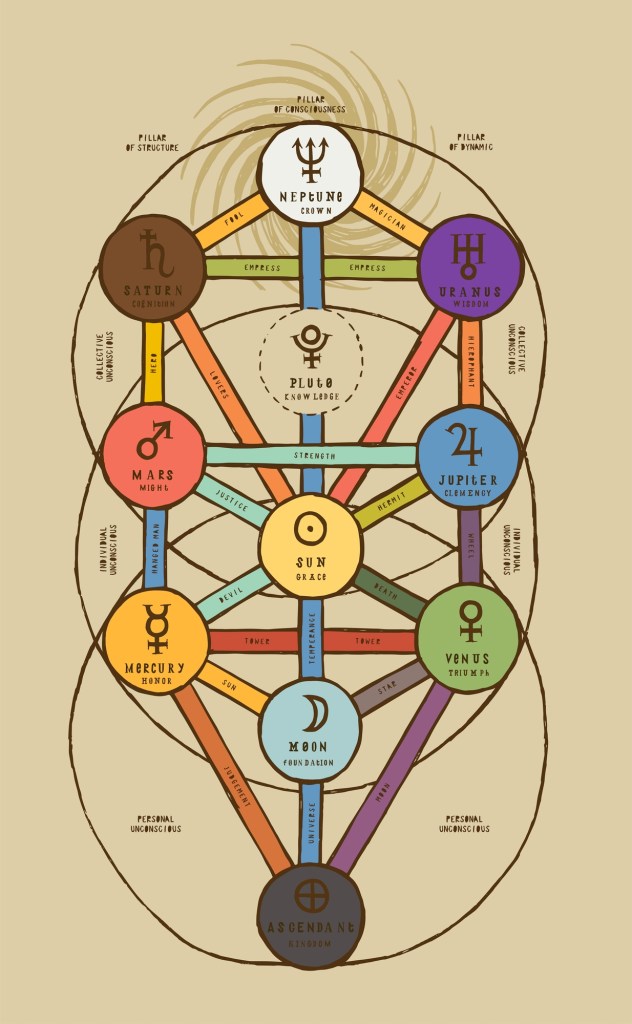
We are tempted as human beings to think that truth is something that only the smartest and most clever people are able to figure out. Perhaps, this is why we are fascinated with books like The Da Vinci Code. The less religious among us might say that only those people with privilege, means, and a good education are able to know and understand truth; the rest of us are doomed to ignorance.


My thoughts today are on the former group of people. Guillen challenges the claims of people who believe that the Hebrew Scriptures contain a hidden, numerical code that can be deciphered with the right “key”. Guillen asserts that the truth of the God revealed in the Bible and Jesus, who claimed to be God in the flesh, are not hidden behind a code in the text that needs to be deciphered, and I agree with him.

Continue reading “Is God an Ancient Elitist?” →

Lift Up Your Eyes for Perspective and Purpose

Though God’s ways are not our ways, and his thoughts are not our thoughts, God invites us into his perspective and purpose.

We live “under the sun”, as the writer of Ecclesiastes describes our existence, filled with existential angst.  We live year by year, month by month, week by week, day by day, and moment by moment. The inertia of our lives is focused on the here and now, with our dying always looming in the near distance like a great mountain range rising up to the clouds we cannot conquer.

Our perspective is limited. It is finite. We stand at any given time on a small planet in a small solar system in one of billions of galaxies that exist in a universe so expansive we struggle to comprehend it. We stand “under the sun”, and our perspective, therefore, is limited.

“As the heavens are higher than the earth,
    so are my ways higher than your ways
    and my thoughts than your thoughts.”

(Isaiah 55:9)

That verse from Isaiah is a way of saying that God has a different perspective than we do. God has His own purposes, and He invites us to consider the difference between His perspective and purpose and ours. He desires for us to seek to understand His perspective and to align with His purpose.

When Jesus says my yoke is easy and my burden is light, I believe he was encouraging us, at least in part, to attempt to understand and adopt his perspective and his purpose. Our momentary lives include existential angst, dread, suffering and pain, but God has a purpose and a plan for us that is greater than what we see and experience under the sun, and that purpose is liberating!

I see three concrete examples in scripture of the difference between God’s perspective and purpose and ours. (I am sure there are many more.) As God invites us to consider that His thoughts are not our thoughts, and His ways are not our ways, I think it is appropriate to consider and meditate on these three examples.

Continue reading “Lift Up Your Eyes for Perspective and Purpose” →

What Does It Mean that the Word of God Was Inspired by God and Received and Passed on By Men?

The Bible, itself, doesn’t claim to be one hundred percent, word for word, accurate (or even inerrant). The closest we get to a statement like that is that it is “God-breathed” (inspired), and that the people who were “inspired” by God received that inspiration and passed it on.


The written word of God was so important to the Jewish culture that scribes were a distinguished, respected and critical role in Jewish society. The importance of the painstaking process and precision with which they copied Torah, the Prophets and Writings was embedded into the foundation of Jewish culture going back to Moses.

Moses produced the Ten Commandments etched in stone. Those stone tablets were carefully placed into the Ark of the Covenant, carried with the nation of Israel as they traveled through the desert, and kept with ritual attention to detail in the most sacred place in the Tent of Meeting in the middle of their camp wherever they came to rest.

Scribes who carefully and painstakingly copied Scripture were still honored at the top of Hebrew culture in the First Century when Paul, also known as Saul of Tarsus, was alive. Paul was trained as a Pharisee of Pharisees under Gamliel, the most respected Pharisee of his day.

For that reason, I find it interesting, to say the least, the way Paul described the process by which the word of God was given by God to the people. He would have been intimately acquainted with the disciplined, careful and thorough way a scribe would copy Scripture. Yet Paul says,

“All Scripture is God-breathed and is useful for teaching, rebuking, correcting and training in righteousness, so that the servant of God may be thoroughly equipped for every good work.”

2 Timothy 3:16-17

God-breathed, or inspired, is the way Paul described how people received God’s word and passed it on. If Paul wanted to convey the idea of verbatim dictation from God, as Muhammed claimed with the Quran, he would have likely described the process like a scribe painstakingly copying the text, but he didn’t.

Paul was intimate with the way scribes copied the scriptural text, but he didn’t describe the way people received God’s Word and passed it on that way. Paul, himself, received God’s Word and passed it on. That message he received from God and passed on has become scripture! Yet, he didn’t describe the process like a scribe copying verbatim.

I wrestled with what inspiration means in recent articles here and here. Given the way people like Paul described the way Scripture was conveyed and received, it is likely he didn’t mean verbatim dictation from God. If he meant verbatim dictation, he would have described the process more like a scribe copying scriptural text.

Instructive are the other ways Scripture is characterized in the New Testament. Peter, for instance, wrote the following in his second epistle:

“But know this first of all, that no prophecy of Scripture becomes a matter of someone’s own interpretation, for no prophecy was ever made by an act of human will, but men moved by the Holy Spirit spoke from God.”

2 Peter 1:21 (NASB)

Peter says that the prophecy was not initiated by human agency. People didn’t choose to prophesy; they were moved by divine agency. They didn’t interpret what they were moved to communicate; they simply communicated what they received.

The Greek word translated “moved” in this text is φέρω (pheró), meaning “to bear, carry, bring forth”. It has the same connotation as the idea of a conduit or conduction.

If Peter meant to say that the Word of God was “dictated” and copied down verbatim, like the scribes copied Scriptures, he would have likely used a word related to “scribe”, but he described a different kind of process. I think we have to assume that Paul’s inspiration is similar to Peter’s conduction.

Neither one used the well-known analogy of a scribe merely copying what was written, though Peter clarifies that the message prophets received and passed on was not interpreted by them. They passed it on with integrity and, presumably, accurately. Still, that is not the same thing as verbatim dictation.

Paul describes his own encounter with the risen Christ in this way. He says:

“For I would have you know, brothers and sisters, that the gospel which was preached by me is not of human invention. For I neither received it from man, nor was I taught it, but I received it through a revelation of Jesus Christ.” 

Galatians 1:11 (NIV)

Paul uses the same language in his first letter to the Corinthians when he says:

“For I handed down to you as of first importance what I also received….”

1 Corinthians 15:3 (NASB)

But what does it mean that the writers of Scripture were inspired, moved by God, did not initiate, or interpret or invent it. What does it mean that they passed on what they received?

If they didn’t take “dictation” from God, what does it mean that God inspired men and moved men with a message, and they passed on what they received?

Continue reading “What Does It Mean that the Word of God Was Inspired by God and Received and Passed on By Men?” →

The Dilemma of God Demanding Justice from Beings Incapable of Meeting God’s Standard

There is one critique of the Christian notion of sin and the justice of God that is troubling on its face. That key critique for anyone who claims that God demands justice for sin is that God is seemingly unjust to require justice of beings who can’t measure up.

Many modern people bristle at the Christian idea of sin, and they bristle even more at the idea that God would punish sinners. Frankly, I think many modern people simply don’t understand what sin is and who God is.

But, that aside, there is one critique of the Christian notion of sin and the justice of God that is troubling on its face. That key critique for anyone who claims that God demands justice for sin is that God is seemingly unjust to require justice of beings who can’t measure up.

Alongside the notion that the God of the Bible and demands judgment for not measuring up to God’s just standard is the notion that all people are sinners who don’t measure up. In fact, the New Testament is fairly read to say that people are incapable of living up to God’s standard.

The doctrine of original sin says that we are all corrupted because the sin of Adam and Eve has been passed down generation after generation. Even if we don’t believe in the doctrine of original sin, however, the Bible is clear from the Old Testament to the New Testament that human beings don’t measure up to God’s standard:


They have all turned aside; together they have become corrupt;
    there is none who does good,
    not even one.

Psalm 14:3


They have all fallen away;
    together they have become corrupt;
there is none who does good,
    not even one.

Isaiah 53:5


as it is written:

“None is righteous, no, not one;
   ….
 All have turned aside; together they have become worthless;
    no one does good,
    not even one.”

Romans 1:10-12


Jesus said, “No one is good except God alone.” (Mark 10:18 (NIV)) Yet, he says, “Be perfect … as your heavenly Father is perfect?” (Matthew 5:48)

This is the dilemma: How can we be perfect?! “To err is human” the bard once said, and so it seems we are imperfect by our very nature.

Many people reject the idea that God can be just and demand justice from people incapable of measuring up to the standards God’s justice demands. They say it would be unjust for God to demand justice from beings who have no ability to act other than they do, and so fail to meet God’s standards.

God seems to be acting unfairly to demand that we meet His standards when we are 1) created beings, 2) born into sin, and 3) incapable of living up to the perfection God requires.

Other questions tumble after these thoughts: Why didn’t God create us perfect? If we are born sinful, how can God blame us for being sinful? If we are incapable of being perfect, how can God punish us for our imperfection?

Continue reading “The Dilemma of God Demanding Justice from Beings Incapable of Meeting God’s Standard” →

Taking the Hand of God, Literally; How We Read the Bible


Heaven is my throne, and the earth my footstool. What sort of house will you build for me? says the Lord, or what will be my resting place? Did not my hand make all these things?

Acts 7:49‭-‬50 CSB

I have thought and written about the fundamentalists and the atheists of the world who, ironically, approach the Bible in the same way. Both groups of people read the Bible in a wooden, inflexible, literal kind of way. (See Sam Harris Podcast with Bart Ehrman – Part 2 – Wooden Fundamentalism)

This passage above gets me thinking about these things again. The passage quoted above is from Steven’s address to the Jewish leaders who had him stoned after calling them stiff-necked like their ancestors in the desert (among other things).

Steven recited the Jewish history to them, including the Ark of the Covenant that was created to hold the Ten Commandments and the Tent of Meeting that was carried through the desert and set up where they stopped as a place for God’s “presence” to “dwell” among them. The Tabernacle with the Ark of the Covenant became the inner sanctum of the Tent of Meeting. These structures the people carried with them became the place they would meet with God.

David desired to build God a home, a permanent place for the Ark of the Covenant and Tabernacle, and Solomon accomplished David’s dream. David knew, however, that God does not live in a temple made by human hands. Solomon, David’s son who built the Temple, acknowledged the same thing when he dedicated the Temple:

“But will God really dwell on earth? The heavens, even the highest heaven, cannot contain you. How much less this temple I have built!

1 Kings 8:27

They understood that the Tabernacle, the Tent of Meeting, and the Temple were symbolic. These physical structures and the activity organized around them and in them were meant to point to a metaphysical reality of much greater substance.

It’s ironic that David, a man after God’s own heart, knew these things, but the people of God generally often did not. David was a man after God’s own heart, but the Israelites on the whole were often stiff-necked, as Stephen said.

I find it ironic that people who try to interpret and apply the Bible in the most literal way fall on opposite ends of the spectrum. Fundamentalists and atheists both tend to interpret the Bible literally. They are the two sides of the same interpretive coin. The only difference is that one side believes every part of it, and the other side believes none of it.

At the end of the passage quoted above, the Lord poses the rhetorical question, “Did not my hand make all of these things?”

Does anyone literally believe that God’s hand made the universe? I suppose we should ask, also, “Does God have only one hand?”

I would venture to guess that everyone understands this phrase to be allegorical. Yet, there are so many things in the Bible that people try to take and apply literally that are, perhaps, not as obviously allegorical.

I’ve heard the counter statement that we cannot pick and choose the things we believe out of the Bible. We must believe every word of it, or reject all of it. This is the fundamentalist/literalist approach – all or nothing. Never mind that a verse like the one quoted above is clearly not intended to be taken literally!

Not to pick on “fundamentalists” (whatever that term might mean), but those people we tend to label with that term tend to push a very literal interpretation of Scripture. They, in a sense, double-down on the “facts” stated in the Bible and attempt to believe “everything”. Many atheists dig in on the same literal way of interpreting the Bible, but they believe none of it. They both approach the Bible the same way, but one believes 100% and the other believes 0%.

Continue reading “Taking the Hand of God, Literally; How We Read the Bible” →