Is Young-Earth Creationism Another Gospel?

But even if we or an angel from heaven should preach to you a gospel contrary to the one we preached to you, let him be accursed.

Depositphotos Image ID: 36608313 Copyright: lexskopje

The Ham/Nye debates were my introduction to Ken Ham (and to Bill Nye for that matter). I wanted Ken Ham to be my champion of a biblical view of science, but I just came away unsettled. (See Debriefing the Nye v. Ham Debate)

As I’ve admitted before, I am decidedly not a science guy. I tend to put these things on my back burner and let them simmer, and that is what I did with the debates. Quite some later I came across Hugh Ross and Reasons to Believe.  He made sense of the science and the biblical creation account in Genesis. He still does to me, though I tend to take all of these things with a grain of salt because I still don’t know what I don’t know.

I have consciously avoided criticizing Ken Ham because so many Christians love him. And again, I don’t know what I don’t know about the science. But, I am changing on that score too. It isn’t the science that I am chiefly focused on at this point, but something far more fundamental to the Christian faith – the Gospel.

Reading through An Extended Analysis of Ken Ham’s Book “Six Days” (Part 1: Blame the Satanic Christian Academics) by Joel Edmund Anderson on his blog, resurrecting orthodoxy, I came to a realization – Ken Ham is anchoring his faith on something other than the Gospel. In Paul’s words, he is preaching a different gospel.

Continue reading “Is Young-Earth Creationism Another Gospel?”

Reflections on the Influence of Stephen Hawking

Lets all go to Mars, sculpture by Stephen Hawking (Depositphotos Photography ID: 169212920 Copyright: irisphoto11 Editorial use only)

Stephen Hawking recently passed away after living a remarkably full life in spite of being stricken by Lou Gehrig’s Disease at an early age. He was one of the most influential people of his time, not because of his condition, but because of his mind. He was brilliant and pioneered new understandings of the universe through applied mathematics in the field of cosmology.

Hawking is a voice that people listened to, not only in science, but in the application of science to such things as philosophy and the origin of the universe. Hawking may have toyed once with the idea of God, but he became an atheist. He chose, as have many a modern scientist has chosen since the 19th century, to view the world without reference to God.

In this article, I explore some comments made by Hawking’s colleague, John Lennox, who begins a recent interview by extolling the brilliance of Stephen Hawking and his scientific achievements. The subject is the existence of God. I will also introduce two very young geniuses who have different takes on the subject of God at the end.

The subtext of the article is this: when Hawking went beyond the science that he knew so well, and entered into the arena of philosophy, he stumbled. Hawking, the great scientist and intellect, wasn’t a philosopher, though he sought to wield his influence in that area. We can, and should, remember Hawking as one of the greatest scientists of our time, but scientific acumen doesn’t necessarily extend to other areas of study, especially when he spent no significant time in them.

John Lennox quoting Martin Rees, a cosmologist, astrophysicist and 40-year colleague of Stephen Hawking, points out in the segment of an interview that follows that Hawking was not well read in the areas of philosophy and theology:


This unfamiliarity with sophisticated philosophy and theology led Hawking to make some very unsophisticated statements. For instance, his pronouncement that “philosophy is dead” is at best ironic. The statement, itself, is philosophical. If the statement is true, it undermines the very assertion being made.

However, since Hawking was a such a giant in his own scientific fields with which he was intimately familiar, we tend to let statements, like the one above, go by unchallenged. The danger in that is to allow some questionable philosophy into our view of the world. Without diminishing Stephen Hawkins’ contributions to science, we need to view his philosophical comments for what they are worth.

Continue reading “Reflections on the Influence of Stephen Hawking”

Can We Be Certain of God’s Existence? The Role of the Holy Spirit

Doubt is the common experience of saints and sinners alike.


Can we be certain of God’s existence? The short answer is, no. If the question is whether we can have something like mathematical certainty or proof, we have to answer that question in the negative. There is no evidence, no proof, or argument that can provide certainty that God exists for finite beings such as ourselves.

Such evidence, proof, or argument would have to be built on premises that are 100% certain, and that kind of certainty is impossible for beings that are not all-knowing. The best we can do is to arrive at evidence, proofs, and arguments that suggest a probability that God exists. The same is true, or course, for the proposition that God does not exist. Even then, the proof for a negative is always subject to change if positive evidence turns up.

To this extent, doubt is the common experience of saints and sinners alike.

To put this another way: Can we be sure that God doesn’t exist? The only certainty is that we can’t be certain.

Many believers have doubts, and many doubters have their own doubts about their doubt.

Continue reading “Can We Be Certain of God’s Existence? The Role of the Holy Spirit”

Distinctions Make All the Difference

Key distinctions between religions come into greatest focus as we celebrate Christmas, which is the recognition and acknowledgement of the birth of the Christ child.

Photo courtesy of Tyler Drendel

Ravi Zacharias has spoken to orthodox theological scholars of Islam and orthodox theological scholars of Christianity around the world. He speaks from experience when he says that those orthodox scholars who know the sacred texts do not say that the God of the Quran and the God of the Bible are the same deity. Pluralism is a positive and important cultural value, and we can value pluralism without sacrificing distinctions or truth.

We don’t embrace the beliefs of “Flat-earthers” in the name of pluralism. They are free to believe what they want to believe, but we shouldn’t let the flat earth position affect how we do science or how we view the world because of pluralism. An appreciation and respect for different cultures and ways of viewing and living in the world should not dictate an embrace of positions that are inherently contradictory with each other or compel us to abandon reason or truth.

In the clamor and noise of the connected world in which we live, we are tempted to minimize or ignore differences. We often only see a rudimentary and distorted view of things, and we are apt, therefore, to come to incomplete and inaccurate conclusions without a nuanced understanding of those things. We might be tempted to think that all major world religions are fundamentally geared in the same direction, being merely different approaches to the same end. We might be tempted to think that Christianity is a very politically orientated and conservative, western worldview that is arbitrarily exclusive and, therefore, elitist.

Ravi Zacharias grew up Hindu in a world in which Buddhism, Islam, and other religions were more prevalent than Christianity. His background lends some credibility to his observation that no religion offers redemption like Christianity does. Other world religions offer a way of attainment that must be earned. Christianity is unique in this respect in its view of God and our relation to God, and Christianity is uniquely accessible to all people in all places to the same extent.

Continue reading “Distinctions Make All the Difference”

Inspiration or Artifice? Faith and Reason

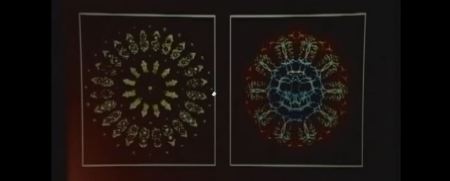
From a presentation by Francis Collins at the Veritas Forum at the California Institute of Technology

Take a close look at the two images. What do they represent? We might say that one image represents science and the other represents religion (or faith). But which is which?

The images are similar, but one of them is manmade, and the other is something we find in nature. Do you know which is which? Is the manmade image the scientific one or the spiritual one?

I will answer these questions; at least I will answer them as they were described in a presentation given by Francis Collins, the manager of the Human Genome Project, at a Veritas Forum at Caltech University in 2009. In the process, we will explore the chief question examined by this eminent scientist: whether science and faith are compatible.

Continue reading “Inspiration or Artifice? Faith and Reason”