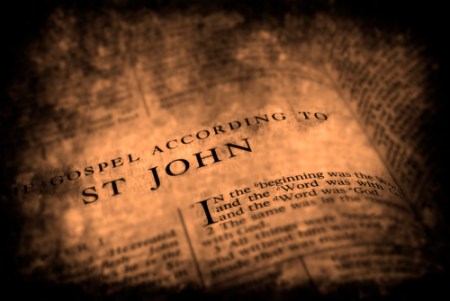
Can We Trust the Bible?


One of the most common skeptical positions in regard to the Bible is that we can’t trust it because it has changed over time. We don’t even have the original text anymore. We don’t have any of the manuscripts, and most of the manuscripts we do have are copies of copies that were produced centuries, sometimes many centuries, later.

The “telephone game” that children play has been used as an illustration of how easily things that are communicated get twisted and changed so that we can’t even tell what the original meaning was by the time the communication comes back to us after being repeated over and over from one person to the next. This illustration is applied to the Bible as proof that it can’t be trusted because it has been translated and copied over and over and over again. How do we even know what the original text said?!

These are serious contentions. An honest person cannot just brush these contentions aside, but it isn’t the end of the story.

Yes, faith is a foundation of Christian belief, but Christian faith is not a blind faith as some suppose. Christian faith means putting our trust in God, and not in ourselves, but Christian faith also does not insist or even ask us to throw out our minds in the process.

In fact, we are specifically instructed to love God not only with our hearts and strength, but with our minds!

As I have stated previously, doubt and skepticism are not sin according to the Bible. Thomas doubted, and he became known for his skepticism but he was a follower of Jesus. He was an original follower of Jesus, and he traveled with Jesus from the beginning of his public life to his death. He wasn’t just known for his doubt, however; he was also known for his faith!

Paul urged the Thessalonians to “test everything”, and hold on to what is good. The Bible urges us to have “honest skepticism”, which should not be confused with skepticism for the sake of skepticism. A person who is skeptical of everything, even the certainty of truth, should not even bother looking into anything because the exercise is pointless.

The quest for truth is pointless for the pure skeptic who is unwilling to commit to any truths. He already knows where he will end up! The contention that there is no objective truth is a self-defeating statement. The statement, itself, is offered as an objective truth, therefore it isn’t even true of itself!

But we digress. Whether the Bible can be trusted is the question, so let’s dive in.

Continue reading “Can We Trust the Bible?”

There Is No Proof of God?

Where does our sense of self, love, purpose and inclination to worship come from?

Photo from RV Fine Photography

A popular skeptical notion about spiritual things is that there is no proof of God. But is that a reasonable statement?

What does the skeptic mean by proof? Does he mean strict proof, mathematical proof or proof beyond a doubt? If that is what the skeptic means, then the skeptic will always remain a skeptic, because that kind of proof is unattainable.

There is nothing inherently bad or wrong in being skeptical. Skepticism or doubt is not a sin as some might suppose. “Doubting Thomas” was a disciple of Jesus after all! Honest skepticism is not a problem. In fact, honest skepticism is healthy; it drives us to test truth claims and weed out falsity.

The demand for strict proof that God exists, however, is not honest skepticism. While we might attain to some proof beyond a “reasonable” doubt, strict proof, mathematical proof, or proof beyond any doubt is impossible. I will try to explore why that is in this blog article.

Continue reading “There Is No Proof of God?”

Is God a Hard Taskmaster?

Do we believe and trust God’s promise that He wants to bless us?

Depositphotos Image ID: 10941070 Copyright: magann

In the parable of the talents[1], Jesus says a master gave his servants different amounts of funding before he left on a long trip. The master gave one servant 10 talents and another servant 5 talents. Both of them invested their talents and made more talents. The master gave a third servant only one talent, and that servant buried his one talent in the ground.

When the master came back and asked for an accounting, the servant who buried his only talent in the ground told the master that he knew his master was a “hard taskmaster”, reaping where he did not sow and gathering where he scattered no seed. So, the servant said he was afraid and hid the talent in the ground.

The master got angry at the servant’s response, calling him wicked and slothful. Then the master took the one talent away from the servant, leaving him with nothing.

Stop and think about this parable for a bit. The servant who only received one talent was afraid the master was a hard taskmaster, and it seems he was! Is this supposed to be a parable of what God is like?

Is that what God is really like?

At other places in the Bible we see statements of God honoring the industrious and treating the slothful as wicked. It seems God desires us to be industrious, but is God really the hard taskmaster in the parable?

This parable is an allegory. A parable is meant to convey some truth to us, often about our relationship with God, so gaining understanding of what Jesus is saying here is important.

The parable of the talents seems to affirm that God gives people natural abilities in different measures. Such a thought is antithetical to post-modern sensibilities. In our post modern world, we aren’t just content with equal opportunities; we want strict equality across the board.

Though we often gloss over the reality that people are not all created equal in talent in polite and politically correct ways, we know that people have different talents of different types and different measures.  Some people are born with musical talent like Beethoven, and some people are born without limbs. But the difference in talents isn’t the focus of the parable.

Continue reading “Is God a Hard Taskmaster?”

When God Sends Us Difficulties

Does God send us difficulties? If so, why?

Depositphotos Image ID: 86547374 Copyright: Johan-jk


“If I shut up the heavens so that there is no rain, or if I command the locust to devour the land, or if I send pestilence among my people….”[1]

We like to view God as a Great Benevolent Giver in the sky. We want Him to pour out good gifts to us and make our lives easy for us. We are disappointed, disillusioned and discouraged when we don’t experience the generosity we imagine and want from God.

God is benevolent for sure, but He is much more than that. He doesn’t just want to give us good things; He wants to give us Himself. In fact, He doesn’t just want to give us Himself, He wants to pour Himself into and through us to bless others consistent with His larger plans and purposes for the world He created.

But, this ultimate desire and purpose of God to bless us takes on a different form than we would like at times. God’s activity in our lives doesn’t always feel like a blessing.

In this verse from 2 Chronicles 7, we learn that God, Himself, may cause difficult things to happen to us. Even if He simply allows them to happen, God is ultimately responsible for them. Right?

But why? And what can we do about it?

We need to read the second half of the verse and consider the context in which it was written for a more complete picture.

Continue reading “When God Sends Us Difficulties”

Is the Bible Sexist and Racist? Part 5 – Racism

God shows no partiality, but in every nation anyone who fears him and does what is right is acceptable to him.

Depositphotos Image ID: 102795786 Copyright: monkeybusiness

This is the last in a series of five blog articles on the question: whether the Bible is sexist and racist? The subject was introduced in Part 1. We tackled sexism by looking at the overarching theme of the Bible on men and women in Part 2 and by looking at how Jesus treated women in Part 4. We tackled racism in Part 3 by looking at the overarching theme of the Bible on diversity. Finally, we view racism and diversity through the life of Jesus and His followers in this part 5.

Jesus doesn’t tackle the issue of racism or diversity directly, but He lived in a complicated time. He was Jewish, living in a tight-knit Jewish community, which was governed and ruled by foreigners, the Romans. The Jews had a history of living alongside foreigners and were at various times throughout that history governed by them against their will.

Many of the foreigners were very closely related, like the Samaritans, who were of Jewish descent, and the Canaanites before them. The northern kingdom (Israel) and southern kingdom (Judah) split and became foreigners to each other.

The Jews in Jesus’s day believed there were only two types of people: Jews and everyone else (Gentiles). They seemed to have forgotten that the very first words God spoke to Abraham, when He chose to bless Abraham and his progeny, was that God would make a blessing to all the nations. (Genesis 12:1-3) God didn’t choose them simply to bless them, but to bless all nations through them.

Jesus was that blessing. Jesus is traced back to Abraham. He is from the line of Abraham, Isaac and Jacob. He is the root of Jesse’s seed, father of David. Jesus is the Promised One.

Jesus also claimed to be God in the flesh, so, how Jesus viewed others is the key to understanding what the Bible says about racism and diversity.

Continue reading “Is the Bible Sexist and Racist? Part 5 – Racism”