To Obey Is Better Than Sacrifice

What is the obedience God desires from us?


I became a follower of Jesus in 1979, though I was a wild, untamed stallion when I was first confronted with the Lordship of Christ and verbally submitted to him. I wandered down my own paths in the year that followed, leading me to a breaking point and more complete surrender. (A cycle I have unfortunately repeated more than once.)

Over the following two years, I was about as surrendered to God as I have been my whole life. I was all in – or as all in as I was capable of being at that time, perhaps. During that time, I became a big fan of Keith Green. I even saw him in concert in Des Moines Iowa in 1981 or 1982. He died in a place crash within a year or two after that, and his impact and memory has faded.

When I saw him in concert, though, his radical Christian commitment had been a huge impact on me, and that impact carried with me beyond his death. Thus, my daily reading today recalls to my mind these lyrics by Keith Green:


To obey is better than sacrifice
I want more than Sundays and Wednesday nights
If you can't come to me every day
Then don't bother coming at all

Keith Green was a musical child prodigy who was radically saved by Jesus. He used his great musical talent and platform to become a prophet of sorts to young Christians at the time who wanted an authentic faith.


I was very drawn to a monastic, cloistered life at that age that Keith Green represented, like a modern Essene. The truth is that I had long been drawn to that kind of thing going back to the book, My Side of the Mountain, that I read in grade school (about a boy who leaves his parents to hollow out a summer home in the trunk of dead tree in the Catskills).

That book seeded in me a longing for something authentic and pure. The idea took root in me that I could not find “it” in the bustle of the world. I needed to escape to solitude, self-reflection, and devotion to a simple life.

In a poignant moment in my senior year in college, I faced up to that longing and desire that ran deep in me, and I made a conscious decision to follow Jesus into the messy clamor of human society. Jesus often escaped to the mountains and the wilderness to be alone with God, but he always returned to the highways, and byways, and the public squares where people live.

Still, the Keith Green spirit of uncompromised obedience to Christ and Christ alone left an imprint on me. His prophetic insistence on radical commitment carried me forward in those early years of my journey with Christ.

Now, I find myself some 40+ years down a road that has taken many twists and turns. That road has taken me through long and winding wilderness areas that were darker than I care to dwell on. It has taken me to the other side of those dark times into the light of a new day, more weary and (hopefully) wiser for the experience. I am still following Jesus as best as I can, but I have a slightly different view of Keith Green’s words today. I hope I can give this the nuance it deserves.

Continue reading “To Obey Is Better Than Sacrifice”

What Does the Word of God Say about How Rulers Should Rule?

God’s approved rulers do what is right and just.


Let’s lay politics aside for a moment, and just consider the Word of God. Politics, of course, is the backdrop to this article. A person cannot be completely apolitical, no matter how hard one tries, but political positions shift, evolve and change, while the Word of God is eternal. Therefore, we should put the Word of God first over our political inclinations.

The Word of God existed before God made the universe, and all of creation was made by the Word. (John 1:1-3) God spoke the entire universe into existence (Genesis 1) and made all things by that are seen from what cannot be seen His command. (Hebrews 11:3)

Of course if you are a Christian, you believe that the Word of God became flesh (John 1:14) in Jesus: God with us; God incarnate; God who became man. He proved himself by what he said, by the miracles he did, and by rising from the dead after he was tortured, crucified, and buried.

The Word of God (at least some of it) is preserved in writing for us as it was spoken to and through people who heard God’s voice and responded in faith by preserving it. Jesus, Himself, quoted extensively from the books of what we call the Old Testament as authority for what he said and did. (Interestingly, he never quoted from apocryphal texts.) Jesus, who we believe was God who became man and who rose from the dead, treated those Old Testament writings with great deference – as the word of God.

Jesus quoted Scripture often from Genesis to the Prophets. When Jesus was tempted by Satan in the wilderness, he quoted scripture, including Deuteronomy 8:3: “Man shall not live on bread alone, but on every word that comes from the mouth of God.” When Jesus began his ministry, his first public statement and the description of his ministry came from the prophet, Isaiah:


The Spirit of the Lord is on me,
    because he has anointed me
    to proclaim good news to the poor.
He has sent me to proclaim freedom for the prisoners
    and recovery of sight for the blind,
to set the oppressed free,
     to proclaim the year of the Lord’s favor
.”


Luke 4:18-19 (which Jesus told the listeners was fulfilled by him that day in their hearing)

After Jesus rose from the dead, he explained how the Scriptures from Genesis through the Prophets were about him. (Luke 24:27) Jesus was both the Word of God through whom God made the universe, and he honored the word of God preserved in the Bible – calling it his daily bread. It defined his purpose; and it informed who he was.

With that set up, my theme today is the Prophets and what they said about how God’s people should act in the world, especially rulers who wield governmental influence and power. Our political views, how we conduct ourselves in politics, and who we champion as our rulers should be informed and driven by God’s Word.

Continue reading “What Does the Word of God Say about How Rulers Should Rule?”

Ode to the Church and to God Who Watches Over the Foreigner

O Church, remember who you are,
Called to love, to heal, not to bar.


Once, in Eden’s light, they walked,
In fear, mistrust, and pride they balked.
Their own way looked better than God’s,
So He cast them out to the odds.

Though God walled them out, yet He stayed near,
He watched them roam this earthly sphere.
He clothed their shame knowing His plan,
To redeem them from the dusty land.

When Abraham heard the voice divine:
“Go to a land that I’ll make thine.”
He wandered there, a stranger still,
Seeking the City of God’s will.

From Abraham’s loins a nation grew,
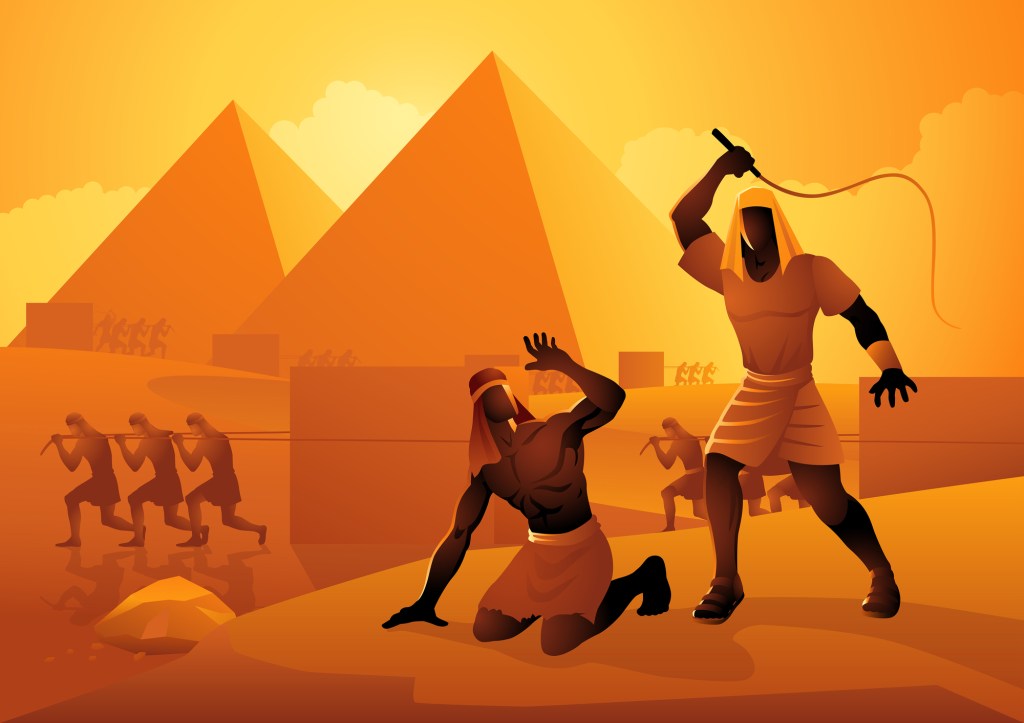
In Egypt enslaved, four centuries through.
Bound and broken, crushed and torn,
Yet God’s eye watched, where hope was worn.

And when they were freed by God’s hand,
The law that God, would make command:
“Be kind to the stranger, love them as you—
For once you were aliens too.”

The psalmist sang of a just cause
To guard the stranger one must because
God watches over the oppressed and poor,
His mercy flows to the foreigner.

The prophets warned with fire and might:
“Do not oppress, do not fight
The alien, the widow, the orphaned heart—
Deprive them not, lest from God you part.”

Then Jesus was born, in flesh, divine,
Refugee Son, in a troubled time.
To Egypt He fled, a stranger, a child,
God in the dust, both meek and mild.

He preached a kingdom for all men,
Every race and tongue and kin.
That he would save from cursed yeast,
According to how we treat the least.

And John envisioned a great throng,
From every tribe, with one great song.
Before the Lamb, all men unite,
Bathed in mercy, robed in white.

Yet now, the largest Church on earth,
Wielding wealth, claiming new birth,
Builds walls to keep strangers away,
Turning the poor from its doorway.

Refugees wander, oppressed and unseen,
Deprived of justice, crushed between
A gospel of love and hands that deny,
While heaven looks down, and angels cry.

O Church, remember who you are,
Called to love, to welcome, not bar.
For the walled-out Christ still calls to you,
“Whatever you’ve done, you’ve done to Me too.”

Come, O Church, to the narrow way,
Where love shines bright at break of day.
Lay down your walls, take up your cross,
And count the cost, not gain or loss.

Follow the One who bore your shame,
Who calls you now by His great name.
For hope is found in His pierced hands,
Where grace flows wide for all the lands.

The stranger waits, the orphan cries,
Will you reflect the Savior’s eyes?
Do justly, love mercy, walk humbly with God
Love deeply, with the gospel on your feet shod.

For Christ alone is our living hope,
A lifeline strong, a Savior’s rope.
Come back to Him, and walk His way,
Till all are gathered on that final day.

Vengeance is Mine, Sayeth Donald Trump?

“‘It is mine to avenge; I will repay,’ says the Lord.'”


I try not to be too political, and I try pretty hard to stay out of the public political fray. I am convinced that Christians should be very circumspect about politics. We are citizens of the kingdom of God, first and foremost, and we owe our ultimate personal allegiance only to the King of all Kings.

I am also mindful of the tradition of the prophets. They stood as God’s mouthpieces to God’s people and to the priests and kings who lead them. While they didn’t hold back in pronouncing God’s judgments and warnings on surrounding nations, they directed most of their attention to God’s people, the nations of Israel and Judah.

I also have to note that the nations of Israel and Judah are unique in the history of God and man. The United States of America is not a nation of God’s chosen people like the nations of Israel and Judah were.

(The current state of Israel isn’t either! See the responses of Hank Hanegraaff, the Bible Answer Man, to a pointed questions put to him about the status of nation of Israel today in the postscript to this blog article.)

There is much I could say about these things, but I want to get to my topic today. God’s prophetic voice is most prominently focused on His own people, wherever they are situated. Thus, Jesus often confronted the religious leaders of his day – the Pharisees and Sadducees – though he hardly said a word about the Romans who were the governing authorities in Judea.

Similarly, I believe God’s attention is on the church in America, and I am focused on Donald Trump only because many American Christians have claimed him as their champion. Biden, and Clinton, and Obama didn’t claim to be aligned with the church, but Trump does.

Therefore, when I read the following headline in the New York Times recently, For Those Deemed Trump’s Enemies, a Time of Anxiety and Fear, I took notice. The statement that Donald Trump has vowed to exact vengeance caught my attention.

Trump’s public warnings to those who opposed him, searched his home, prosecuted him, etc. are have weight behind them because they are characteristic of the man. People have taken them deadly seriously, including Joe Biden who pardoned a record number of people in his last days of office, including preemptive pardons of his own family members and people on Trump’s hit list.

I could say a lot about these pardons, also, but I won’t do that right now. I will only say that the threats Trump has made are not empty, and conducting himself in that way has repercussions for both parties and the health and future of politics in America. “What goes around comes around,” as the saying goes.

My focus, though, is on what this means for the church and how we live out being salt and light, making disciples to the ends of the world, and living consistent with the kingdom of heaven on earth. Do we not have some responsibility to God, the Father, the Maker of heaven and earth, to speak prophetically about the state of the church and of its complicity in the rise to power of Donald Trump?

Continue reading “Vengeance is Mine, Sayeth Donald Trump?”

Can Christians Be Patriotic?

Christians should view themselves fundamentally as citizens of a kingdom that is not of this earth


Concerns about “Christian nationalism” have been raised in recent years from the political left. Some people in Christian circles, and specifically conservative Christian circles, have pushed back on those concerns and criticisms. At the same time, however, concerns about Christian nationalism have been voiced from within Christian circles, even from within conservative Christian circles.

The conversation has arisen, perhaps, because of the way that Donald Trump has courted Christians in his campaign to “Make America Great Again”. Many Christian voters have embraced Trump and his campaign slogan.

I am thinking about this in the context of a question raised about Christians being patriotic to John Dickson on a recent episode of the Undeceptions Podcast. (See Question Answer XIII at abut the 42 minute mark.) The person who raised the subject referenced the Bonhoeffer movie, observing that the issues for the church seemed to come when the church stopped thinking what it means to be a Christian and started thinking about what it means to be a German Christian.  

The question is, “Should Christians be patriotic?”

Putting the question in terms of patriotism, rather than nationalism, presents a slightly different twist on this conversation. “Christian nationalism” has become a pejorative term, but patriotism is seemingly more neutral and non-pejorative. At the same time, many people accused of Christian nationalism would likely say they are only being patriotic.

So, is patriotism ok for a Christian?

I like the fact that this question was put to John Dickson, an Australian who has no dog in the American political fight. Though he currently teaches at Wheaton College in Illinois, he approaches the issue from outside the roiling turmoil of American politics.

The question was also posed by a non-American listener to the podcast who was concerned about the way patriotism “potentially dehumanizes others and makes them seem lesser because they are not of our race”. He expressed concern about the mistreatment of refugees and others of different background to our own.

The “glaringly obvious” theological view proclaimed by Jesus and the New Testament writers, responds Dickson, is that Christians should view themselves fundamentally as citizens of a kingdom that is not of this earth. (Jesus said, “My kingdom is not of this world.” (Jn. 18:36); Paul said, “[O]ur citizenship is in heaven.” (Ph. 3:20); and Peter called Christians “sojourners and exiles” in this world. (1 Pet. 2:11) In my view, that means that none of us have a dog in the earthly political fight – ultimately.

Thus, we should “be shaped by the values of God and not the values of any particular nation”, according to Dickson. He observes that this admonition is everywhere in the teaching of Jesus, beginning with the first public words spoken by Jesus in the Gospel of Matthew, which we call the Sermon on the Mount. He summarizes,

“Everything in the Beatitudes [in the Sermon on the Mount] seems to stand against the nationalistic mindset of dominating others…. Blessed are the poor in spirit, for theirs is the kingdom of heaven. Blessed are those who mourn, blessed are the meek, for they will inherit the earth. Blessed are the merciful; blessed are the peacemakers; blessed are those who are persecuted because of righteousness for theirs is the kingdom of heaven [paraphrasing the Beatitudes]. The contrast with the nationalistic spirit of the day couldn’t be more striking.”

JOhn Dickson in Episode 146 of the Undeceptions podcast

Dickson urges us to consider the Beatitudes in light of the Roman domination of the world at the time and the Jewish expectations at that time. These are some song lyrics written in the 2nd Century BC by a Jewish author:

“See, O Lord, and raise up for them their king, the son of David,
At the time known only to you, O God, that he may reign over Israel your servant.
Gird him with strength, to shatter unrighteous rulers;
To purge Jerusalem of the nations that trample her down in destruction;
To expel, in wisdom and righteousness, sinners from the inheritance;
To smash the sinner’s pride like a potter’s vessel….”

Psalms of Solomon 17:21-23

This Jewish author’s sentiment is full of what we might call nationalistic pride. Contrast that sentiment with the words of Jesus. The meek inheriting the earth seems like a far cry from shattering unrighteous rulers. As John Dickson explains,

“Jesus is demanding that his followers live by the values of the future kingdom over the values of any particular present nation.”

JOhn Dickson in Episode 146 of the Undeceptions podcast

Everywhere Jesus went, he proclaimed the coming of the kingdom of God. (Luke 8:12) The kingdom of God (and being ready for it) is the subject of most of the parables Jesus told. He also announced that the kingdom of God is here now (in our midst), but he sad it is like a mustard seed, the yeast in bread, or a treasure buried in a field.

The kingdom of God now is not (yet) the ruling authority. It is here, but it has not taken over. It is emerging, but it is not yet what it will be. When that time comes, however, everyone will know it; and people need to be ready for it, or they will miss it and be left out.

The message of the kingdom of God – that it has come, but is yet to come fully – is consistent with the instruction of Jesus that the meek will inherit the earth. We do not rule in the kingdom of God presently with might and power; we “rule” by denying ourselves, but taking up our crosses, and by allowing God to rule and work in our hearts to conform us to Himself.

The Jews who expected their Messiah to come at the time of Jesus did not recognize Jesus because they thought he would be their champion, empowering them to shatter the nations that oppressed them and smash the pride of (more) sinful nations. They failed to recognize their own sinfulness and the promise to Abraham, which was to bless all the nations through Abraham’s descendants. (Genesis 12:3, 18:18, 22:18)

They were too full of nationalistic pride to see what God was doing, consistent with the very promise God made to the them – to bless all nations. As we will see, this is a key issue, and it is something we need to contend with, lest we enter into the error of the First Century Jews

Continue reading “Can Christians Be Patriotic?”