The Errors of Our Ways: Science, Religion, and Racism

That Christians should have known better seems self-evident to us today. But, what of science?


Most people know well the checkered history of Christianity on racism, especially in the United States. Much less is said (and therefore known) on the checkered history of science on racism in the west. One reason for that difference in our collective memories is the Enlightenment narrative: that science rescued the world from Christianity. More on that below.

I am not writing today to criticize Christianity less or science more for the moral failing of the history of racism in America. I am writing to bring some clarity where a popular narrative muddies the waters.

I think most people can agree that American (and British) Christianity has a racist past, but we have short (and biased) memories on this score. History is replete with dominant people groups subjecting other people groups to slavery, genocide, and other atrocities. It wasn’t just Americans, or western civilization, or Christians that perpetuated the evil of slavery.

That we even call those things atrocities today is a credit to Christianity. The story of Jesus voluntarily dying at the hands of the dominant power of his day, urging his followers to live lives of self-sacrifice, and looking after the benefit of others as he did changed everything.

It took three centuries, but the cross eventually became the symbol of this religious movement characterized by self-sacrificial love.

Prior to the death of Jesus, the cross was the ultimate symbol of the exultant might of the dominant state over its subjects. Those in power determined the values of the society they ruled, and those values were imposed with Draconian force on those who lived under that power.  “Might makes right” was just the way the world was for most of history.
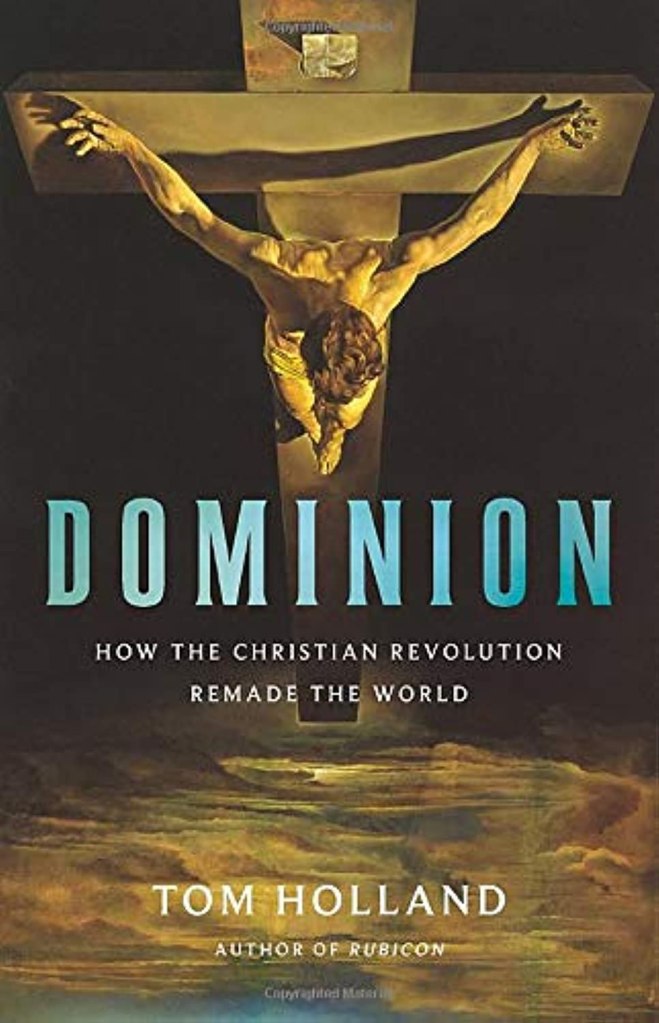
Tom Holland, in his seminal book, Dominion: How the Christian Revolution Remade the World, found the nexus for a radical change in the west in the crucifixion of Jesus. That event and the movement it inspired changed forever how the west (and now the rest of the world) views power and morality.


Tom Holland was an atheist When he did the research for this book. His area of expertise is Greco-Roman history. He was steeped in the brutish nature of the Roman world that championed power and elite, male dominance over all that was weak.

When he set out to trace his secular humanist values in western civilization, he knew there was some discontinuity between the Greco-Roman values he knew so well and his own, modern notions of basic human rights, so he was curious to locate the origin of that seismic shift.

His book, Dominion, traces our modern values from the roots where he found them in the history of western civilization. He found they go back to Jesus of Nazareth and the people who gave their lives to follow him.

The death of Jesus on the cross radically subverted the assumptions that ruled the world to that point. The Greco-Roman world that valued and honored power above all things gave way over time to the man who is claimed to be the Savior of the world who let himself be led like a lamb to his own slaughter. His life and message of self-sacrificial love became the bedrock for modern civil rights, human dignity, and the assumption that the powerful should shelter and care for the weak.

The criticism of Christians for racism and its worst manifestation – slavery – is deserved. Mostly because Christians “should’ve known better”. Of all people, Christians should have known better!

The water gets murky, though, in our modern memory because it has been influenced by a narrative that obscures the truth. The narrative that exposes the failing of Christianity often does so by directing attention away from the nonreligious world of reason and science, as if there is “nothing to see here.”

This view that rose to prominence during the Enlightenment is prevalent still today. It puts the full weight of condemnation for our failings on religion (and Christianity in particular). This is a false narrative, and, it obscures the truth and warps our perceptions that still persist.

There is nothing inherently wrong with science and reason. It is people who are flawed, and the flaws of people are not confined to science, or religion, or to any particular ideology or worldview. No ideology or worldview is immune.

Continue reading “The Errors of Our Ways: Science, Religion, and Racism”

The Surprising Elevation of Women in the Bible

The Bible was written by men during times in which men dominated thought and culture


I am reminded again in my daily reading of Scripture of the prominence of women in the life and ministry of Jesus. Every time I read through the Gospels, I see it. As I read through the Old Testament with eyes sensitized by the Gospels, I see the theme there also. This theme is somewhat, hidden, however.

We have only committed to the idea that women should be equals of men in very modern times, and that idea is still not universal around the world. A cultural revolution was required in the western world to change ancient paradigms. The change has been slow, difficult, and filled with tension.

Christianity was influential in bringing about that change, but many Christians have also resisted it. This is true even while the roots of that cultural revolution are embedded in Judeo-Christian Scripture.

Tom Holland, in his epic book, Dominion, traced modern, secular humanist values back to a surprising root. He had no idea where the values he took for granted came from: gender equality, racial equality, individual freedoms, civil rights, etc. When he searched for them, he for found them in Genesis, in the Gospel accounts of Jesus, and in the letters of Paul, the apostle.

Rebecca McLaughlin writes about the prominence of women in the Gospel accounts of Jesus in her 2021 article, Jesus Changed Everything for Women. She quotes Holland to remind us of the cultural context in which those accounts were written:

In Greco–Roman thinking, men were superior to women and sex was a way to prove it. “As captured cities were to the swords of the legions, so the bodies of those used sexually were to the Roman man,” Holland wrote. “To be penetrated, male or female, was to be branded as inferior.”

In Rome, “men no more hesitated to use slaves and prostitutes to relieve themselves of their sexual needs than they did to use the side of a road as a toilet.” The idea that every woman had the right to choose what happened to her body was laughable.

Jesus chantged Everything

Jesus didn’t introduce the these radical notions, however. They go all the way back to Genesis, where we read that God made men and women, together, in His image. (More on that below)

Modern westerners have learned to reject and even to despise the paternalism of most of the history of mankind (pun intended), so it’s easy to miss the way the Bible elevates women. After all, the Bible was written by many men many centuries ago, before anyone in the west (or anywhere else) got the notion that women should be treated as equals.

Let that sink in a moment: the Bible was written by men.

As much as modern westerners like to recoil from the idea of men treating women as second class citizens, the 1st Century Roman world thought nothing of it. Aristotle taught that women are “defective men”. He believed that “women were fit only to be the subjects of male rule“, and “they are born to be ruled by men”. Aristotle and most men for millennia thought that the inferiority of women was obvious, stemming from their nature as the “weaker gender”.

Nowhere, perhaps, were women more objectified and diminished in value than the Roman world. (See ‘Christianity gave women a dignity that no previous sexual dispensation had offered’: Tom Holland, by Shoaib Daniyal, Feb. 23, 2020.)

Given that context, the “clues” we find “hidden” in the Bible of a different narrative about women is remarkable. Though the Bible was written, literally, by men, Christians like myself maintain that it was inspired by God, and a divinely inspired narrative shines through it. This is true despite the obvious cultural influences we see on the face of it.

The Bible was written by men during times in which men dominated thought and culture. it is no wonder that the Bible is often criticized for being backward and paternalistic, but that view can only be sustained on a cursory, shallow reading of the Bible. A closer reading belies a very different narrative!

Continue reading “The Surprising Elevation of Women in the Bible”

Pulling at the Threads of the Christian Paradigm that Uniquely Influenced the Western World

Down at the bedrock of modern, western values remains a Christian foundation.

Galleries under the central arena of the Colosseum in Rome, Italy

I read Tom Holland’s new book, Dominion, about a year ago, and I have written about it a few times. Many Christians would not think to read a history about Western Civilization by a self-described secular humanist (once atheist, perhaps now agnostic) historian.

Most non-Christians are likely to be uncomfortable with the chronicle Holland describes of the radically influential role that Christianity played in the development of Western Civilization, providing the foundation, in fact, for secular humanist ideals. When Holland dug down to the bedrock of modern, western values, he was surprised himself to find them anchored on a Christian foundation.

Holland did not set out to write a Christian apologetic, and he seems to remain somewhat uncertain how to process what he “discovered”. What he found, though, changed his mind about Christianity. He gives a brief explanation in the following clip:

Though Holland has had a turnabout on his view of Christianity, he finds himself caught in an odd position wrought by the unexpected discovery that his lifelong, secular humanist values flow from the radical catalyst of Christian influence and remain embedded ubiquitously in its very fabric. The awkwardness of his current position is evident in his interviews and discussions about the book.

Christians and secular thinkers, alike, wrestle with his book. Holland doesn’t hide any warts, and he doesn’t pull any punches. Neither does he obfuscate the thoroughly paradigmatic shift in Western thinking that Christianity worked into a society that once proudly and unashamedly championed strength and privilege over the poor, the weak, and the lowly.

Holland exposes the metanarrative developed during the Enlightenment and thereafter that belies the foundation on which the Enlightenment structure was built. Far from advancing the progression of human values, the Enlightenment threatened to undo the distinctly Christian concern for the poor, weak, and lowly while attempting to wrest western civilization from the hold of the Divine. Humanism saved the Christian ethic, albeit divorced from Christ.

Consider the full title of Darwin’s great tome which staked out the ground of a scientific (and social) revolution free from God’s interference:

“The Origin of Species by means of Natural Selection or the Preservation of Favoured Races in the Struggle for Life”

The title of Darwin’s book championing the evolutionary paradigm, harkens back to the Greco-Roman value system that despised the poor, the weak and the lowly. That value system did not just turn a callous eye at wanton and discriminate cruelty, it cheered on the strong while they snuffed out the weak. It was national sport!

The very reason the full title never “stuck” (I now believe) is due to a fundamental, pervasive, and thoroughly entrenched counter-value of the intrinsic worth of human life that is uniquely Christian in its source.

The intrinsic value of all human life, from the greatest to the least, from the wisest and strongest to the weakest and most imbecilic, from the fittest to the most infirm, is traceable to the Christian belief that all human beings are made in the image of God. That the survival of the fittest did not take hold as a western social or ethical value is attributable to the deeply ingrained Christian ethic that survived yet, despite the efforts to eradicate its God from modern equations.

Modern humanists may attempt to recast Darwin into a humanistic mold, but the idea of “social Darwinism” bears his name through no model of random, unguided selection. According to John G. West, Charles Darwin, himself, set in motion the inertia for eugenics, among other things, that were associated with social Darwinism:

Darwin himself in The Descent of Man provided the rationale for what became the eugenics movement, and how the vast majority of evolutionary biologists early in the twentieth century were right to see negative eugenics as a logical application of Darwin’s theory.

While the defense of Darwin against the charge of social Darwinism has largely succeeded in popular and polite company, the very title of the Origin of Species (by means of Natural Selection or the Preservation of Favoured Races in the Struggle for Life) belies the success of that effort. The fact that the full title is merely a parenthetical today is evidence only of a concerted rescue campaign.

Christian values survived despite the Enlightenment coupe, not because of it. Humanism today assumes the evolutionary paradigm for its science alongside the uniquely Christian paradigm of intrinsic human value. That the two assumptions do not fit well together seems to be lost on modern minds.

Continue reading “Pulling at the Threads of the Christian Paradigm that Uniquely Influenced the Western World”

Social Justice and Gospel Justice, Part II

The fact that the world “does justice” motivated by different ideals is no reason for the body of Christ to fail to do justice motivated by the grace and love of Christ.

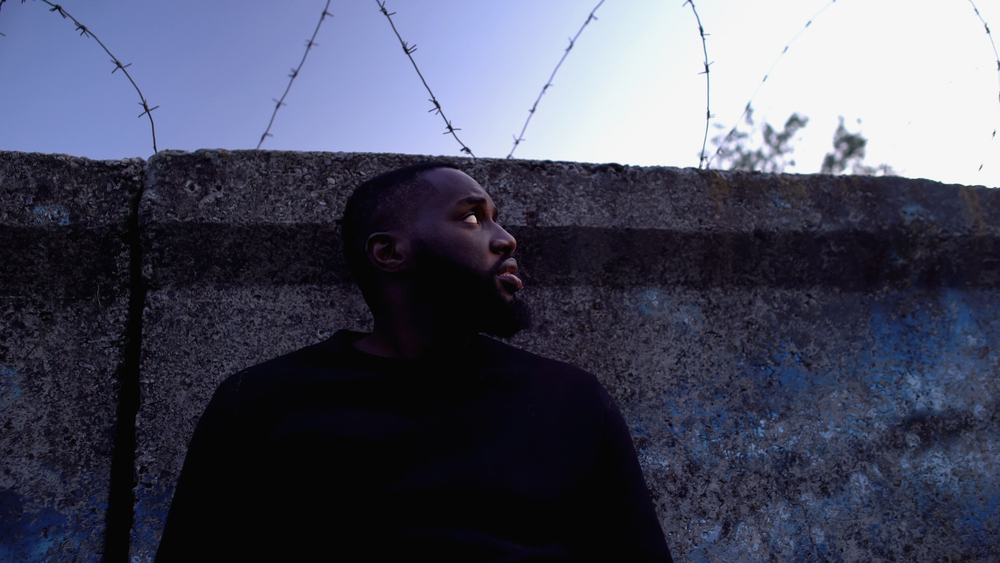
Imprisoned afro-american man looking at barbed wire, refugee camp, hopelessness


Jesus came to proclaim the gospel, which he described as “good news to the poor”, and he came to set the oppressed free. If we are to follow Jesus, the Gospel and justice go hand in hand. I wrote about the way Gospel and justice go together right from the start of the ministry of Jesus in Social Justice and Gospel Justice, Part I.

Among some evangelicals, though, we tend to see these things as almost diametrically opposed. Gospel and “justice” are almost viewed as the difference between orthodoxy and heresy, conservatism and liberalism. We have allowed a separation to creep in between the Gospel and Justice. And I dare say we have become unbalanced.

Of course, the same thing has happened in reverse. A “social justice” has developed that denies the gospel and is disassociated from the gospel. This, perhaps, explains the reaction of the orthodox church to the term “social justice”. 

I will try to make sense of this divorce of Justice from the Gospel in evangelical circles, and the divorce of the Gospel from Justice among non-evangelicals, in this blog post.

Continue reading “Social Justice and Gospel Justice, Part II”

Holland Digs Up the Root of Modern Western Values as Others Attempt to Dig It Out

The exposure and expose of a wildly popular myth

I have written about Tom Holland before and the book he published called Dominion: The Making of the Western Mind.

The story about the book has intrigued me since I heard him talk about it. I am taking my time reading through it. Holland is a historian with a particular focus on ancient, classical history. He chose dinosaurs over the Bible as a young child. He was more enamored with Pontius Pilate than Jesus Christ. The ancient, classical world and the likes of Julius Caesar captured his imagination.

His passion became both avocation and vocation. He became a historian. Holland is the best kind of historian, because he realizes that we all have basic assumptions that we bring to the table, and we need to be as candid challenging our own assumptions as we are challenging others.

We all have a perspective, right? We come to whatever we read or hear with certain assumptions that have developed in our thinking. Affirmations of those assumptions sit well, but challenges to those assumptions do not rest easy. You know what I am talking about.

Holland challenges assumptions from all sides, including his own. For that reason, it’s a challenging read, but all lasting growth of any kind comes through conflict and tension.

When Holland wrote a book, In the Shadow of the Sword: The Birth of Islam and the Rise of the Global Arab Empire, that was candid about Islam, Holland was criticized and challenged to do a similar history of the assumptions that underlie his worldview. The criticism was fair, so he set out to do it.

His worldview? Holland is an atheist and secular humanist. Holland’s basic philosophy of life is informed by the values of basic humans rights: the right to equality, fair treatment and freedoms that we might call inalienable, like the separation of church and state, the value of scientific endeavor and the social necessity of charity and good will.

When he set out to write a book tracing these values back to their sources, he was not predisposed to assume where he would find them, though he certainly had assumptions and presuppositions. Like the paleontologist sifting through layers of earth and civilization laid one on top of another, Holland did the painstaking, tedious work.

Beginning with Darius and the great Persian Empire, Holland sought to uncover the lineage of modern western thought from one empire to the next, tracing the rivulets of thinking to find the headwaters for modern secular humanism.

Holland was looking for the progression that evolved into ideas that inform the modern western mind. He did not focus on the usual events that historians dutifully catalogue, other than to look behind them for their motivation. He focused on thoughts as they developed and the people who championed them and events as they influenced those thoughts and ideas.

In the ancient world, as one might expect, many of those ideas were dressed in metaphysical garb. Holland’s focus, though, is always on the those thoughts and ideas that continue in our modern values today. The ones that died off, like the dinosaurs, are only interesting as side notes to that history.

Much of the book explores the world of discarded gods and beliefs that animated the ancient world. The beliefs of the ancients are the evolutionary precursors to our modern thought. In those layers of metaphysical and philosophical sediment lie traces of our modern values.

In sifting through the soils of history, Holland identifies the beginnings and ancestry of the ethics and values that ground his worldview as a humanist in the sedimentary layers in which they arose. As often is the case in such endeavors, Holland makes some startling discoveries.

What Holland carefully and methodically uncovers is one seismic development that diverted and defined the flow of thinking in western civilization – a metaphysical “Cambrian Explosion”. His find caught him off guard: that western thinking is founded on, permeated with and inextricably intertwined in Christian ideas.

Holland was always taught that the Church held back modern advances, like a stubborn dam that had to be blown up to let the river of progress flow. He assumed the narrative of the Enlightenment was true. Holland assumed we are Greek, and maybe a little Roman, in our modern, western values.

Holland had a nagging suspicion, however, that modern values are not so much connected to the thinking of ancient Greeks and Romans as they are connected to something else.

When Holland gets into the Enlightenment Era in his book, he finds that his suspicions were correct, and he is able to identify the disconnect – an incongruity that bears some candid analysis for its deviation from the origin and trajectory of the historical developments to that stage.

It was Christianity that changed the course of history and added the soil in which modern values took root. Holland also came to realize that Enlightenment thinking grew out of that rich soil that it sought to dig, and this is both ironic and dangerous, like the man sawing off the branch that supports him.

Continue reading “Holland Digs Up the Root of Modern Western Values as Others Attempt to Dig It Out”